
As dogs age, their needs change. That energetic puppy who once ran for miles now moves more slowly, sleeps more, and may struggle with stairs or long walks. It's tempting to let senior dogs rest and reduce their activity, but regular, gentle exercise remains one of the most important things you can do for an aging dog's health and quality of life. Daily dog walking for senior dogs isn't just about physical fitness - it's about maintaining mobility, managing pain, supporting cognitive function, and ensuring your older dog enjoys their golden years to the fullest.
This guide explores the benefits of walking senior dogs, how to adjust walks for aging pets in Fairfield County, Connecticut, and what Westport, Fairfield, Easton, and Stratford dog owners need to know about keeping their senior companions active, comfortable, and happy.

What Counts as a "Senior Dog"?
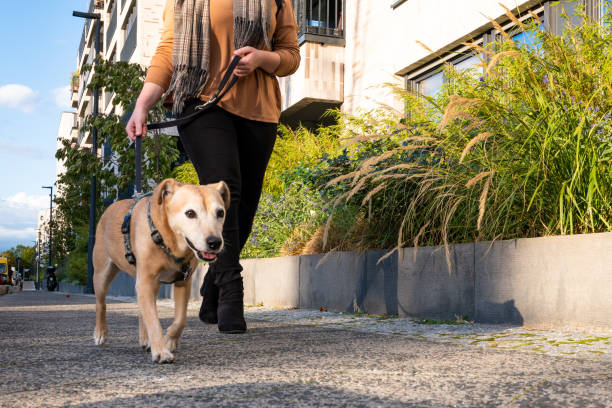
Regular walks help senior dogs maintain mobility and enjoy a better quality of life in their golden years.
Age ranges by breed size
Dogs age at different rates depending on their size. Generally:
- Giant breeds (Great Danes, Mastiffs, Irish Wolfhounds): Senior around 5-6 years old
- Large breeds (Labradors, Golden Retrievers, German Shepherds): Senior around 7-8 years old
- Medium breeds (Beagles, Border Collies, Cocker Spaniels): Senior around 9-10 years old
- Small breeds (Chihuahuas, Pomeranians, Toy Poodles): Senior around 11-12 years old
These are guidelines, not rigid rules. Individual dogs age differently based on genetics, overall health, and lifetime activity levels.
Signs of aging in dogs
Common signs that your dog is entering their senior years include:
- Gray muzzle and facial hair
- Decreased energy and longer naps
- Stiffness after rest, especially in the morning
- Slower on walks, reluctance to run or jump
- Weight gain or loss
- Changes in vision or hearing
- Increased confusion or disorientation
- Difficulty climbing stairs or jumping on furniture
If you notice these changes, it doesn't mean exercise should stop - it means exercise needs to be adjusted.
Physical Benefits of Daily Walks for Aging Dogs
Joint health and arthritis management
Arthritis affects 80% of dogs over age 8. While it might seem counterintuitive, gentle, consistent movement is one of the best treatments for arthritis pain.
How walking helps arthritic dogs:
- Maintains joint flexibility: Movement prevents joints from becoming stiff and immobile
- Strengthens supporting muscles: Stronger muscles around joints reduce stress on cartilage
- Reduces inflammation: Low-impact exercise can decrease inflammatory markers in the body
- Promotes synovial fluid production: This natural joint lubricant is produced during movement
The key is low-impact, consistent activity - not long, intense exercise. A 15-minute gentle walk twice a day is better for a senior dog than one 45-minute marathon walk.
Weight management and muscle maintenance
Senior dogs naturally lose muscle mass and tend to gain weight as their metabolism slows and activity decreases. This creates a harmful cycle:
- Less activity → weight gain
- Extra weight → more joint stress and pain
- More pain → less activity
Daily walks break this cycle by:
- Burning calories and preventing obesity
- Preserving lean muscle mass
- Supporting healthy metabolism
- Reducing strain on aging joints by keeping weight in a healthy range
Even short, slow walks make a significant difference in maintaining a healthy weight for senior dogs.
Cardiovascular health
Heart health doesn't stop mattering as dogs age - in fact, it becomes more critical. Senior dogs are at higher risk for heart disease, high blood pressure, and reduced cardiovascular efficiency.
Regular walking:
- Keeps the heart muscle strong
- Improves circulation
- Helps regulate blood pressure
- Supports oxygen delivery to tissues
Consult your veterinarian if your senior dog has been diagnosed with heart disease. They can help you determine safe activity levels and warning signs to watch for during walks.
Digestive health and regularity
Constipation and sluggish digestion are common in senior dogs. Movement stimulates intestinal activity and helps maintain regular bowel movements.
A predictable walking schedule also helps establish routine bathroom habits, which can be especially helpful if your senior dog is experiencing incontinence or other age-related digestive changes.
Mental and Emotional Benefits for Senior Dogs
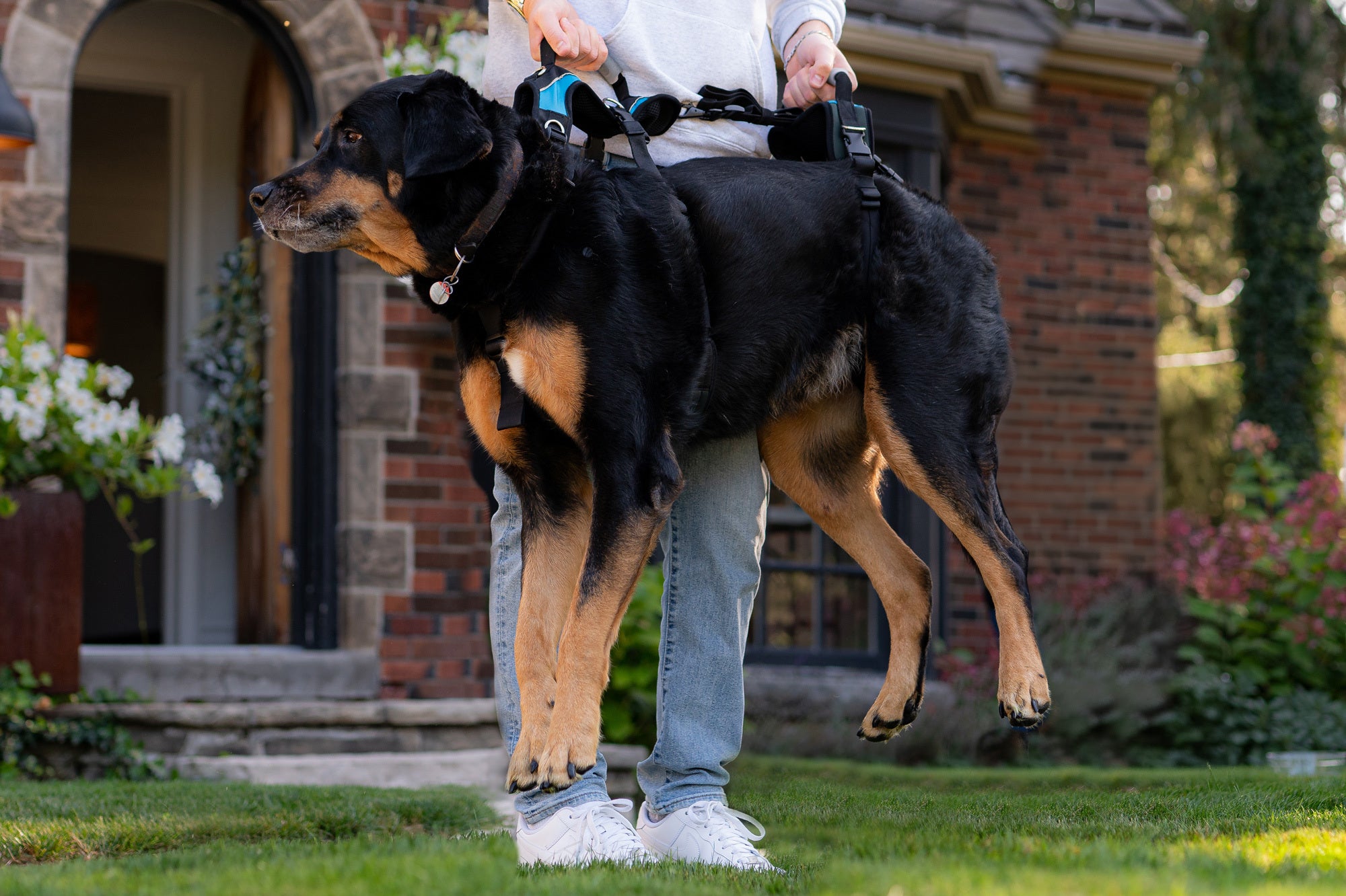
Proper equipment like supportive harnesses makes walks more comfortable for aging dogs.
Cognitive stimulation and mental sharpness
Canine Cognitive Dysfunction (CCD), similar to dementia in humans, affects many senior dogs. Symptoms include confusion, disorientation, changes in sleep patterns, and decreased interaction with family.
How walks help cognitive function:
- Sensory stimulation: New smells, sights, and sounds engage the brain
- Routine and structure: Predictable walks provide mental orientation
- Memory reinforcement: Familiar routes help maintain spatial memory
- Social interaction: Meeting other dogs and people keeps social skills active
Research shows that dogs who maintain regular physical and mental activity experience slower cognitive decline than sedentary dogs.
Reducing anxiety and depression in aging pets
Senior dogs can experience anxiety and depression, especially if they're experiencing:
- Loss of vision or hearing
- Chronic pain
- Changes in household routine
- Decreased interaction with family due to mobility issues
Daily walks combat this by:
- Providing one-on-one quality time with you
- Releasing endorphins that improve mood
- Maintaining a sense of purpose and routine
- Offering gentle adventure and environmental enrichment
Maintaining social connections
As dogs age and mobility decreases, they may spend more time isolated at home. Regular neighborhood walks keep them connected to:
- Friendly neighbors and regular passersby
- Other dogs on familiar routes
- The sights, sounds, and smells of their community
This social connection is especially important for dogs who've been social their whole lives.
How to Adjust Walks for Senior Dogs
Shorter, more frequent walks vs. one long outing
The "one long walk per day" approach doesn't work well for most senior dogs. Instead, break exercise into shorter sessions:
- Young/middle-aged dog: One 45-60 minute walk per day
- Senior dog: Two or three 15-20 minute walks per day
This prevents overexertion, reduces joint strain, and keeps your dog from getting too tired or sore. Shorter walks also allow stiff joints to loosen up multiple times throughout the day rather than once.
Pace and terrain considerations
Slow down: Let your senior dog set the pace. If they want to sniff every mailbox for five minutes, let them. Sniffing is mental enrichment, and a slow pace is easier on aging joints.
Choose gentle terrain:
- Best: Flat, paved sidewalks; smooth dirt trails; grass
- Avoid: Steep hills; rocky or uneven trails; deep sand or snow that requires extra effort
- Fairfield County tip: Downtown areas in Westport, Fairfield, and Stratford typically have well-maintained, flat sidewalks ideal for senior dogs
Weather adjustments for Connecticut winters and summers
Winter:
- Senior dogs are more sensitive to cold due to decreased body fat and circulation
- Use a warm coat, especially for short-haired or small seniors
- Booties protect paws from ice and salt
- Shorten walks in extreme cold - several 5-minute potty trips are safer than one 20-minute walk
Summer:
- Walk during cooler times (early morning or evening)
- Avoid hot pavement - test with your hand (if it's too hot for you, it's too hot for your dog)
- Bring water and take frequent breaks in shade
- Watch for signs of overheating: excessive panting, drooling, slowing down, or refusal to walk
Using supportive gear: harnesses, boots, and ramps
Supportive harnesses: Front-clip or no-pull harnesses reduce strain on the neck and give you better control. Look for padded options designed for senior dogs.
Booties: Protect paws from hot pavement, ice, and salt. They also provide traction on slippery surfaces, which is important for dogs with decreased coordination.
Ramps and steps: If your senior dog struggles with stairs or getting into the car, a ramp can prevent injury and make outdoor access easier.
Signs Your Senior Dog Needs a Vet Visit
When to adjust activity levels
Watch for these signs that walks may need to be shorter or easier:
- Limping or favoring one leg
- Sitting or lying down mid-walk
- Excessive panting or difficulty catching breath
- Reluctance to start walking or pulling toward home
- Stiffness that lasts more than a few minutes after the walk
These are not reasons to stop walking - they're signals to adjust pace, distance, or timing. Consult your vet for guidance.
Warning signs during walks that need immediate attention
Stop the walk and contact your veterinarian immediately if your senior dog shows:
- Sudden collapse or inability to stand
- Blue or pale gums
- Severe disorientation or confusion
- Uncontrolled panting or gasping for air
- Dragging back legs or loss of coordination
These symptoms could indicate a medical emergency like heart failure, heat stroke, or neurological issues.
Working with your vet to create a safe exercise plan
Your veterinarian is your best partner in determining appropriate activity for your senior dog. During regular wellness exams, discuss:
- Current mobility and joint health
- Pain management options (medications, supplements, physical therapy)
- Appropriate walk length and frequency
- Warning signs specific to your dog's conditions
- Alternative activities if walking becomes too difficult
Alternative Low-Impact Activities for Senior Dogs
Gentle swimming and water therapy
Swimming is one of the best exercises for senior dogs because it's zero-impact - the water supports their weight while they move all their muscles.
Benefits:
- Builds muscle without stressing joints
- Improves range of motion
- Provides cardiovascular exercise
- Reduces pain during movement
Safety tips:
- Use a dog life jacket for safety and buoyancy support
- Keep sessions short (5-10 minutes at first)
- Use warm water if possible (cold water can worsen arthritis pain)
- Dry your dog thoroughly after swimming, especially in winter
Sniffing walks and slow exploration
Not every walk needs to cover distance. "Sniff walks" or "decompression walks" focus on mental stimulation rather than exercise:
- Let your dog set the pace completely
- Allow extensive sniffing at every interesting spot
- Don't worry about distance - 100 feet of intense sniffing can be as tiring as a 20-minute walk
This approach is perfect for senior dogs with limited mobility or pain that prevents longer walks.
Indoor enrichment for severely limited mobility
If your senior dog reaches a point where even short walks are painful or impossible, focus on indoor mental stimulation:
- Scent work and nose games
- Gentle training sessions (teaching new tricks in a lying-down position)
- Food puzzle toys
- Short supervised visits with calm, friendly dogs
Mental enrichment can significantly improve quality of life even when physical activity is very limited.
How 203 Pet Service Supports Senior Dog Care
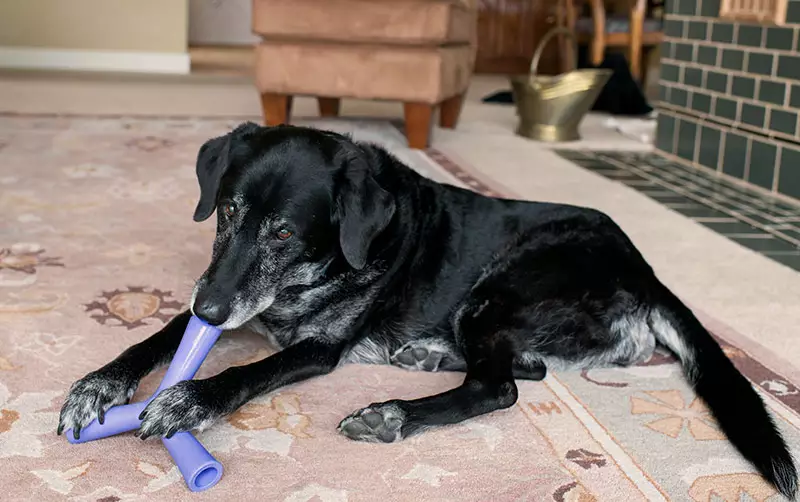
After a gentle walk, senior dogs deserve rest and comfort - professional care ensures they're not overexerted.
Experienced walkers trained in senior dog needs
At 203 Pet Service, our team understands that senior dogs require different care than younger, more energetic dogs. Our W-2 employees receive training in:
- Recognizing signs of pain or distress
- Adjusting pace and distance based on the dog's comfort
- Safe handling techniques for dogs with mobility issues
- When to end a walk early and alert you or your vet
We treat your senior dog with the patience, respect, and gentleness they deserve.
Customized walk lengths and pace
We don't believe in one-size-fits-all dog walking. For senior dogs, we work with you to create a customized plan that fits your dog's specific needs:
- Shorter visits: 15-20 minute walks instead of standard 30-minute walks
- Multiple daily visits: Two or three short walks instead of one longer walk
- Sniff-focused walks: Emphasis on mental stimulation rather than distance
- Flexible routes: Flat, easy terrain and familiar paths that minimize stress
Communication and updates for peace of mind
When you entrust your senior dog to our care, we provide detailed updates after every visit:
- Photos showing your dog during or after the walk
- Notes on behavior, energy level, and any concerns
- GPS tracking showing the exact route and distance
- Immediate contact if we notice anything unusual
You can log into our client portal anytime to review visit reports and see how your senior dog is doing.
Contact 203 Pet Service for gentle, reliable senior dog care
If your senior dog needs regular walks but you're concerned about their safety and comfort, 203 Pet Service offers the professional, compassionate care they deserve. Serving Westport, Fairfield, Easton, and Stratford, we've been helping aging dogs stay active and happy for over 20 years.
Call us at (203) 682-6443 or schedule a meet and greet to discuss your senior dog's needs. We'll create a customized care plan that keeps your aging companion healthy, comfortable, and enjoying life.
Conclusion: Giving Your Senior Dog the Best Years
Your senior dog may move slower and rest more, but they still benefit enormously from daily walks tailored to their abilities. Regular, gentle exercise keeps joints mobile, minds sharp, and spirits high. It's one of the most impactful ways to improve quality of life and extend the healthy, happy years you have together.
The key is adaptation: shorter walks, slower paces, comfortable gear, and close attention to your dog's signals. With these adjustments, you can keep your senior dog active, engaged, and comfortable well into their golden years.
Whether you walk your dog yourself or partner with a professional service like 203 Pet Service, consistency and compassion make all the difference. Your senior dog has given you years of love and loyalty - now it's your turn to give them the care, patience, and gentle activity they need to thrive.
For professional senior dog care in Fairfield County, contact 203 Pet Service at (203) 682-6443 or visit our contact page to learn more about our specialized services for aging dogs.