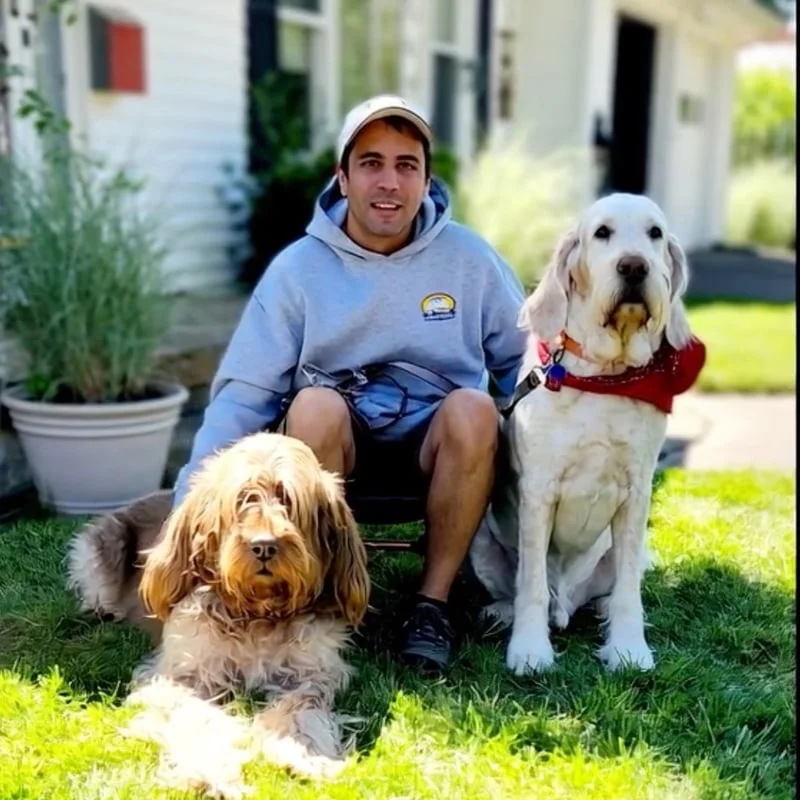
Connecticut winters test even the hardiest New Englanders - and your dog feels that bitter cold too. While most dogs still need their daily exercise regardless of weather, there comes a point when heading outside becomes genuinely dangerous. As professional dog walkers who have provided daily walks across Fairfield County since 2004, our salaried W-2 team members know exactly when to walk, when to modify, and when to stay inside. This comprehensive guide shares our 22 years of cold weather expertise to help you keep your dog safe this winter.
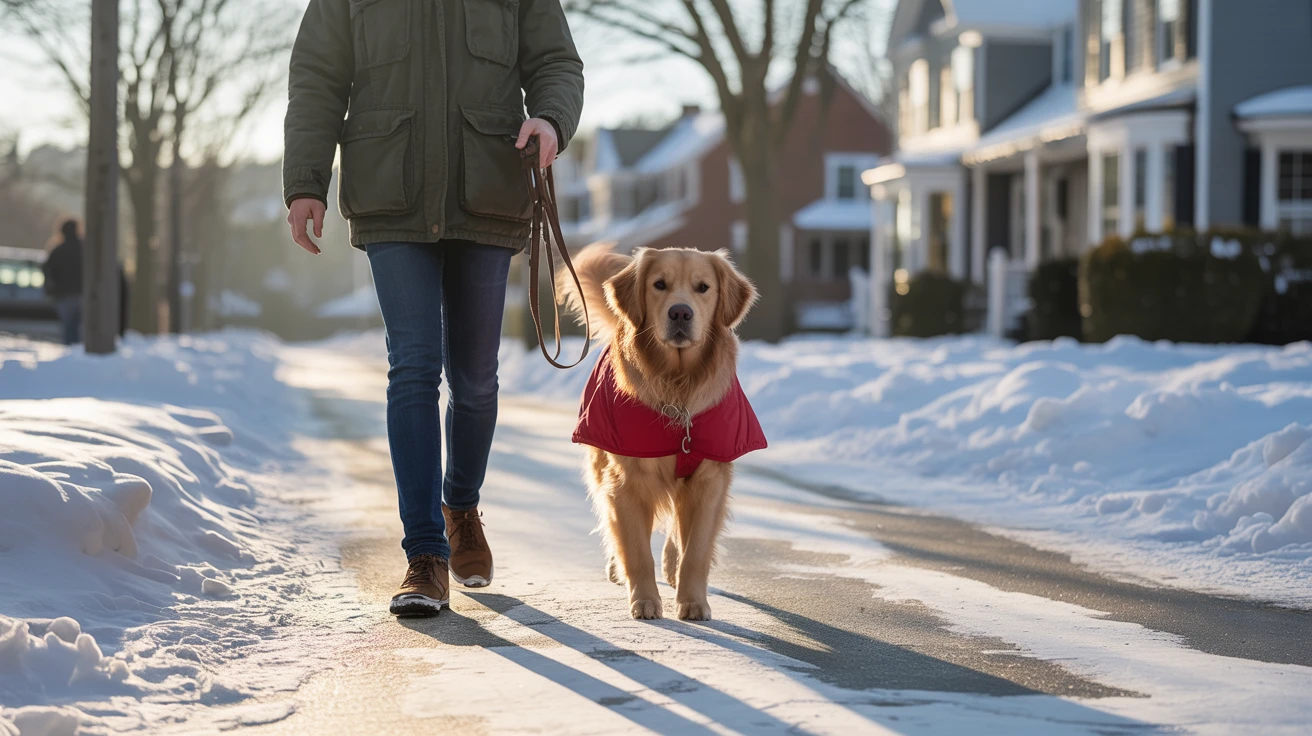

Understanding Cold Weather Risks for Dogs
Before we dive into specific temperature guidelines, it's important to understand what happens to dogs in cold weather. According to the American Veterinary Medical Association (AVMA), dogs can suffer from two primary cold-related conditions: hypothermia and frostbite.
Hypothermia occurs when a dog's body temperature drops below normal (typically below 99°F, compared to the normal 101-102.5°F). This is a systemic condition that affects the entire body and can become life-threatening quickly. The American Kennel Club (AKC) notes that small dogs, senior dogs, and those with thin coats are at highest risk.
Frostbite is a more localized condition that affects extremities - particularly paw pads, ears, and tails. PetMD explains that frostbite can occur in as little as 15 minutes when temperatures drop below 32°F combined with wind chill. The tissue damage from frostbite may not be immediately visible, making it particularly dangerous.
⚠️ Critical Temperature Thresholds
45°F and below: Small, elderly, or short-coated dogs need protection
32°F and below: Most dogs need shortened walks and protective gear
20°F and below: Only cold-hardy breeds should be outside for extended periods
0°F and below: All dogs risk frostbite within 15 minutes - indoor exercise only
But temperature alone doesn't tell the complete story. Wind chill dramatically accelerates heat loss, and factors like precipitation, your dog's activity level, and whether they're wet all significantly impact safety. That's why our team in Fairfield, Westport, and across Easton, Southport, Black Rock, Stratford, Shelton, Devon, Trumbull, Weston, Wilton, and Bridgeport makes real-time decisions based on the complete picture, not just the thermometer.
Temperature Guidelines by Breed and Size
Not all dogs are created equal when it comes to cold tolerance. According to research from Tufts University Cummings School of Veterinary Medicine, several factors determine how well your dog handles cold:
Cold-Hardy Breeds: The Winter Warriors (Safe to 20°F)
These dogs were literally bred for sub-zero conditions and actually prefer cold weather:
- Siberian Huskies & Alaskan Malamutes: Double-coated sled dogs built for Arctic conditions. They're comfortable down to -50°F with proper conditioning.
- Saint Bernards & Newfoundlands: Large, heavy-coated rescue dogs that thrive in snow and cold water.
- Bernese Mountain Dogs: Thick-coated Swiss working dogs bred for Alpine winters.
- Great Pyrenees: Livestock guardians with weather-resistant double coats.
- Tibetan Mastiffs: Massive dogs with extremely dense coats designed for Himalayan conditions.
These breeds typically don't need coats or booties unless temperatures drop below 0°F or they'll be outside for extended periods (60+ minutes). However, even cold-hardy breeds need protection from road salt and ice melt chemicals.
Medium-Tolerance Breeds: The Adaptable Majority (Use Caution Below 40°F)
Most popular family dogs fall into this category. They can handle cold weather but need monitoring and potentially protective gear as temperatures drop:
- Labrador & Golden Retrievers: Water-resistant double coats provide good insulation, but they're not immune to cold. Consider a coat for walks longer than 30 minutes below 32°F.
- German Shepherds: Working dogs with decent cold tolerance, but prone to hip dysplasia which worsens in cold weather.
- Australian Shepherds & Border Collies: Medium-coated herding dogs. Their high energy helps them stay warm, but watch for signs of cold stress below 32°F.
- Beagles & Cocker Spaniels: Shorter coats mean they need protection starting around 40°F, especially if they're older or have health issues.
The VCA Animal Hospitals recommends starting with 15-20 minute walks at 32°F and below, watching carefully for signs of discomfort.
Cold-Sensitive Breeds: The Indoor Enthusiasts (Indoor Below 45°F)
These dogs need significant protection and should have very limited outdoor time in Connecticut winters:
- Toy Breeds (Chihuahuas, Yorkshire Terriers, Toy Poodles): Small body mass means rapid heat loss. They can't regulate body temperature effectively below 45°F.
- Short-Coated Breeds (Greyhounds, Whippets, Pit Bulls, Boxers): Minimal insulation and often very lean. They need coats at 50°F and should stay indoors below 32°F.
- French Bulldogs & English Bulldogs: Brachycephalic (flat-faced) breeds struggle with temperature regulation. Cold air can trigger breathing difficulties.
- Dachshunds & Basset Hounds: Low-to-the-ground body structure means belly and chest are exposed to snow and cold surfaces.
- Senior Dogs (7+ years): Regardless of breed, older dogs have compromised circulation and arthritis that worsens in cold weather.
- Dogs with Health Conditions: Heart disease, kidney disease, diabetes, and Cushing's disease all impair temperature regulation.
💡 Professional Insight: The "15-Minute Rule"
After 22 years of walking dogs in Connecticut winters, we use this simple test: If YOU wouldn't want to be outside in your current clothing for 15 minutes, your dog probably shouldn't be either. Dogs feel cold similarly to humans - they're just better at hiding discomfort until it becomes serious.
Recognizing Warning Signs: When Your Dog Is Too Cold
Dogs can't tell you when they're dangerously cold, but their bodies send clear signals. According to the ASPCA, you need to watch for these warning signs during winter walks:
Early Warning Signs (Minor Discomfort)
- Shivering or trembling: This is the body's first defense mechanism to generate heat. If your dog starts shivering, head home immediately.
- Lifting paws repeatedly: This indicates paw pads are painfully cold or being irritated by ice melt chemicals.
- Reluctance to walk or lagging behind: Dogs normally excited about walks who suddenly slow down are telling you something is wrong.
- Whining or barking: Vocalizations during a normally quiet walk indicate distress.
- Seeking shelter or trying to turn around: Dogs naturally seek warmth when they're cold.
Serious Warning Signs (Hypothermia Developing)
- Lethargy or weakness: Decreased energy and stumbling indicate the body is shutting down non-essential functions to preserve core temperature.
- Muscle stiffness: Cold causes muscles to become rigid and unresponsive.
- Pale gums or ears: Reduced blood flow to extremities as the body prioritizes vital organs.
- Dilated pupils: A sign the nervous system is being affected.
- Shallow or slow breathing: Advanced hypothermia affects respiratory function.
🚨 Emergency: Severe Hypothermia
If your dog shows signs of severe hypothermia - collapsed, unconscious, or unresponsive - this is a life-threatening emergency:
- Move them to a warm environment immediately
- Wrap them in warm (not hot) blankets - you can pre-warm blankets in the dryer
- Place warm water bottles wrapped in towels against their belly and armpits
- DO NOT use direct heat sources like heating pads or hair dryers - they can cause burns
- Contact your emergency vet immediately or go to: Greenfield Animal Hospital (40 Hillside Road, Fairfield, CT - 203-254-0700) or VCA Shoreline Veterinary Referral & Emergency Center (Shelton)
The faster you respond to early warning signs, the more you prevent serious complications. That's why our team makes multiple "comfort checks" during every winter walk, monitoring each dog's behavior and physical condition continuously.
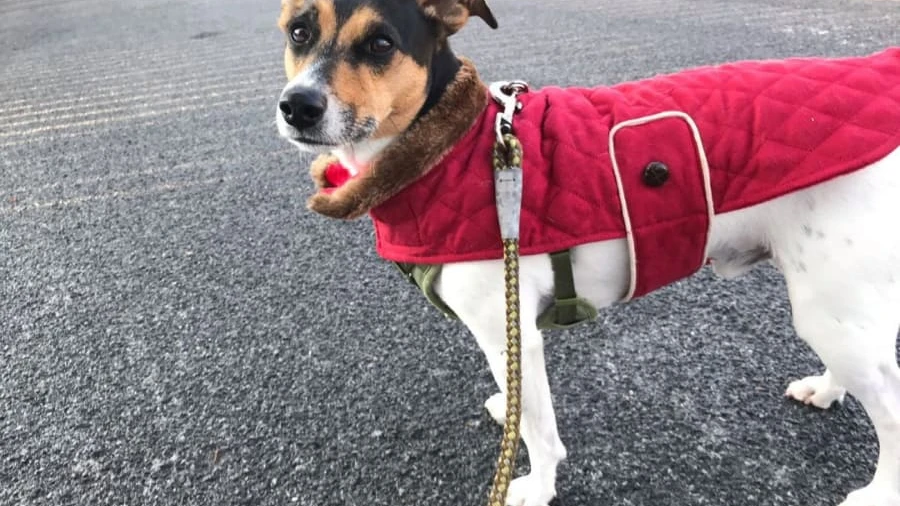
Proper winter protection like coats and booties helps dogs stay comfortable and safe during cold weather walks.
Protecting Your Dog's Paws: The Hidden Winter Danger
While hypothermia gets the most attention, paw pad injuries are actually the most common cold-weather problem we encounter. Whole Dog Journal reports that paw pad burns from ice melt chemicals send thousands of dogs to emergency vets each winter.
Understanding the Dangers
Your dog's paw pads are tough but not invincible. Three major threats exist:
- Ice melt chemicals: Calcium chloride and sodium chloride can cause chemical burns. Dogs then lick their paws, ingesting toxic substances that cause vomiting, diarrhea, and oral irritation.
- Temperature extremes: Direct contact with snow and ice below 20°F can cause frostbite on paw pads within minutes.
- Sharp ice crystals: Jagged ice can cut paw pads, creating wounds that are slow to heal in winter and prone to infection.
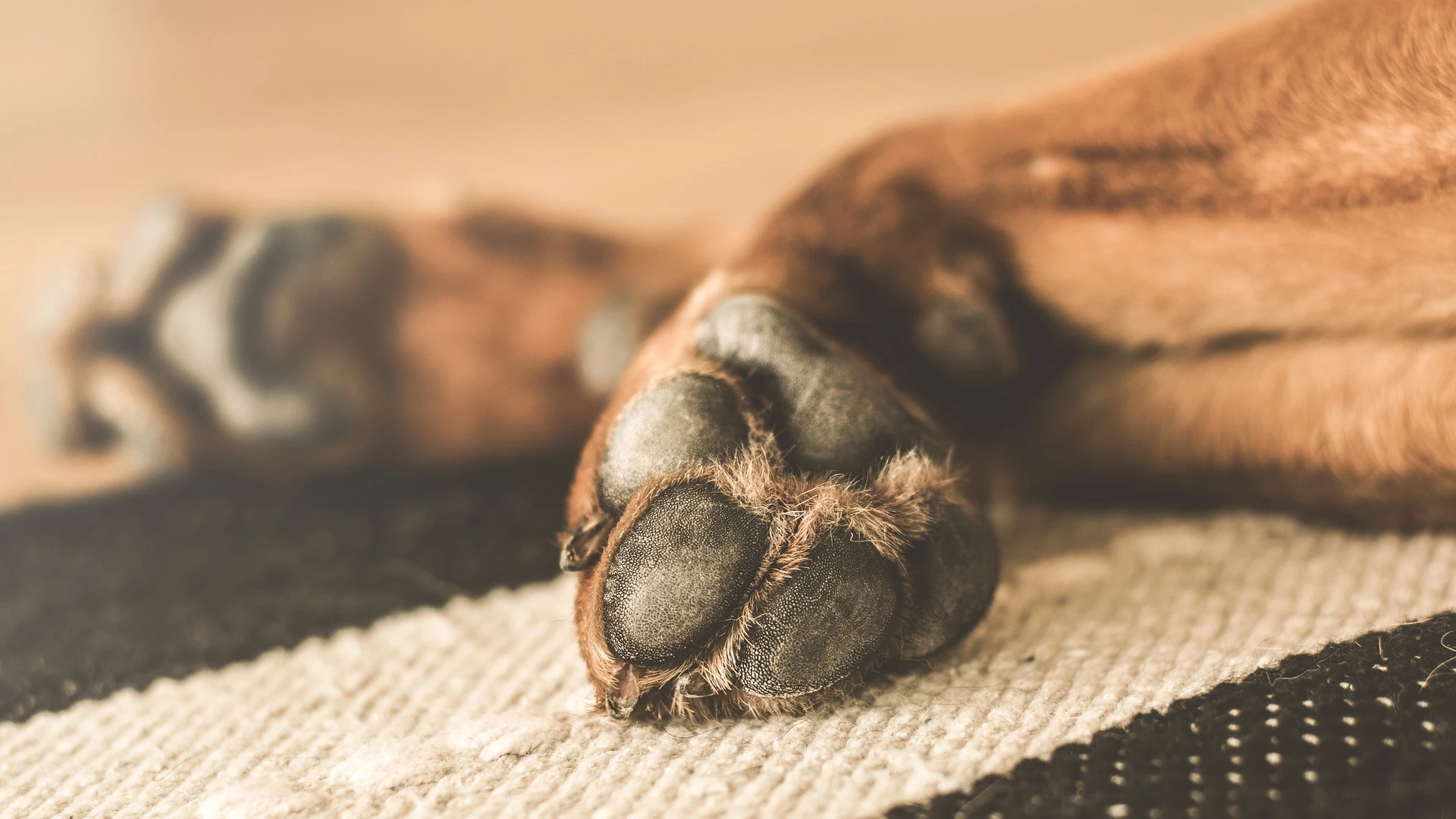
Regular paw inspections after winter walks help catch salt burns, ice damage, and injuries early.
Paw Protection Solutions
Dog Booties (Most Effective): Despite being initially comical-looking, booties are the gold standard for paw protection. According to AKC research, properly fitted booties prevent 99% of chemical burns and cold-related paw injuries. Look for:
- Non-slip rubber soles for traction
- Adjustable straps that stay secure without cutting off circulation
- Water-resistant materials
- Reflective elements for visibility
Paw Wax (Good Temporary Solution): Products like Musher's Secret create a barrier against chemicals and cold. Apply 15 minutes before walks. Effectiveness lasts 2-3 hours in dry conditions, less in wet snow.
Post-Walk Paw Care (Essential Regardless): After every winter walk, wipe all four paws with a warm, damp cloth to remove ice melt residue. Check between toes for ice balls - these form when snow melts from body heat then refreezes, creating painful pressure. Trim fur between paw pads to minimize ice ball formation.
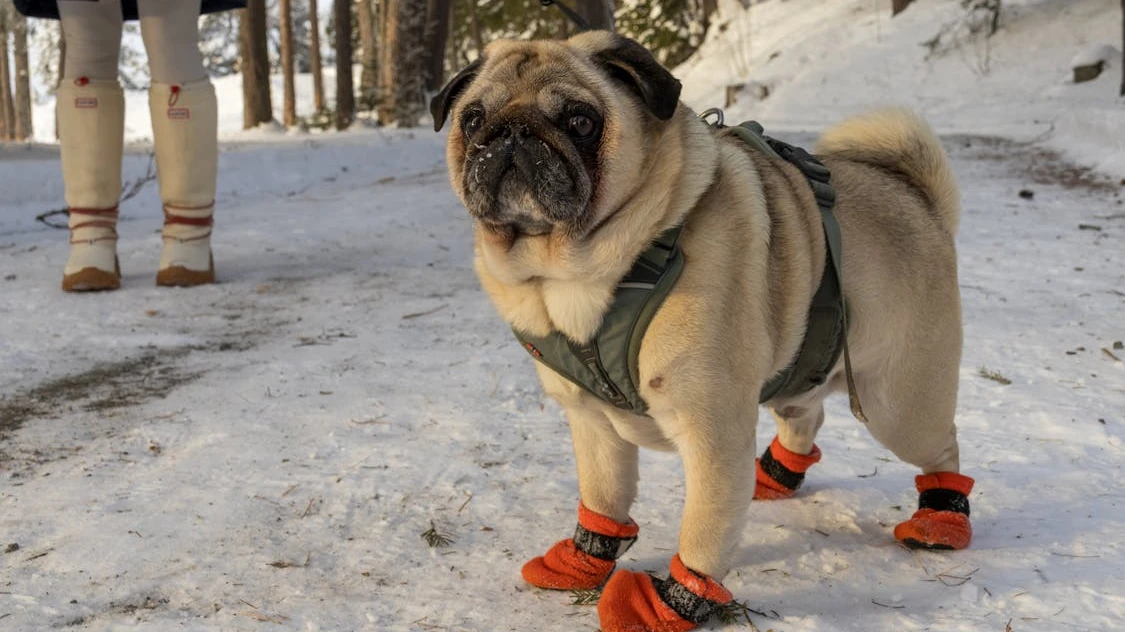
Dog booties provide the best protection against ice melt chemicals and extreme cold temperatures.
🐾 Our Paw Care Protocol
Every dog in our care receives:
- Pre-walk paw inspection
- Booties for all dogs below 32°F (owner-provided)
- Mid-walk paw checks on walks longer than 20 minutes
- Post-walk paw cleaning and ice ball removal
- Immediate notification to owners of any paw pad issues
Our Professional Winter Walking Protocol
Over 22 years, we've developed a comprehensive winter walking protocol that has kept thousands of dogs safe through brutal Connecticut winters. Here's exactly how we make decisions:
Pre-Walk Assessment (Every Single Walk)
- Check current conditions: Temperature, wind chill, precipitation, and recent snowfall
- Review dog's profile: Breed, age, size, health conditions, and cold tolerance history
- Determine walk duration: Adjusted for conditions (might be 10 minutes instead of usual 30)
- Prepare protective gear: Coats, booties, and any special needs items
- Plan route: Prioritize plowed sidewalks and minimize time on salted roads
During-Walk Monitoring
We perform "comfort checks" every 5-7 minutes, looking for any signs of distress. We adjust or abort walks immediately if we observe warning signs. Our team members are trained to recognize the subtle early indicators that most owners miss.
Temperature-Based Modifications
| Temperature Range | Walk Duration | Required Protection |
|---|---|---|
| Above 45°F | Normal (30-45 min) | None for most dogs |
| 32-45°F | Normal to Reduced | Coats for small/short-coated dogs |
| 20-32°F | Reduced (20-30 min) | Coats and booties for most dogs |
| 0-20°F | Minimal (10-15 min) | Full protection; only cold-hardy breeds |
| Below 0°F | Emergency only (5 min max) | Indoor exercise recommended |
These guidelines apply across all our service areas including Fairfield, Westport, Easton, Southport, Black Rock, Stratford, Shelton, Devon, Trumbull, Weston, Wilton, and Bridgeport.
Indoor Exercise Alternatives
When weather makes outdoor walks unsafe, we offer indoor alternatives:
- Stair climbing: 10 minutes of stair work equals 30 minutes of walking
- Hallway fetch: Great for retrievers and high-energy breeds
- Hide and seek with treats: Mental stimulation that burns energy
- Indoor agility: Using household items to create obstacle courses
- Treadmill walking: For dogs trained to use them
Special Considerations for Senior Dogs and Puppies
Age significantly impacts cold tolerance, requiring special protocols:
Senior Dogs (7+ Years)
Older dogs face multiple cold-weather challenges according to Merck Veterinary Manual:
- Arthritis worsens in cold: Cold weather causes joint stiffness and pain. Start with 5-minute "warm-up" walks before venturing into cold.
- Decreased circulation: Older dogs can't generate heat as efficiently. They need coats starting at 50°F.
- Reduced awareness: Senior dogs may not recognize when they're dangerously cold. Watch them closely.
- Medication considerations: Some medications for heart disease or kidney disease affect temperature regulation.
Puppies (Under 1 Year)
Puppies have underdeveloped temperature regulation systems. Veterinary Partner recommends:
- Limited cold exposure: Puppies under 4 months should not be outside below 45°F for more than 5-10 minutes
- Frequent potty breaks: They can't hold it long, so multiple very brief outdoor trips are necessary
- Rapid heat loss: Their small body mass means they get cold fast - have coats ready even for quick bathroom breaks
- Training challenges: Cold weather shouldn't interrupt puppy training - move sessions indoors
When to Skip the Walk Entirely
There are times when even the hardiest dogs should stay inside. Here's when we cancel outdoor walks:
- Wind chill below -10°F: Risk of frostbite in under 10 minutes even for cold-hardy breeds
- Active blizzard or ice storm: Visibility and footing issues create fall risks for dogs and handlers
- Thunder-snow: Lightning + snow = extremely dangerous conditions
- Deep snow above dog's chest: Exhausting and dangerous - dogs can get disoriented and lost
- Icy sidewalks without safe routes: Injury risk too high; better to wait until conditions improve
- Individual dog health concerns: Recent illness, surgery recovery, or chronic conditions that cold exacerbates
Connecticut typically sees these extreme conditions 5-10 days per winter. Planning ahead with indoor exercise alternatives ensures your dog stays active and happy even when outdoor walks aren't safe.
The Professional Advantage: W-2 Team Members Who Know Your Dog
The biggest difference between our W-2 employee model and gig-economy dog walkers isn't just training - it's relationship. When the same team member walks your dog 3-5 times per week for months or years, they know exactly how your specific dog handles cold weather.
They know that your Labrador starts lifting her front-right paw first when she's getting cold. They remember that your senior Beagle needs an extra minute to warm up his joints before walking in cold weather. They've built trust with your anxious rescue who won't wear booties for strangers but tolerates them from familiar handlers.
This continuity matters enormously in winter. A random walker doesn't know your dog's baseline behavior well enough to catch the subtle signs of cold stress. Our team does - because they're with your dog day after day, year after year.
📊 By The Numbers: Our Winter Safety Record
- ✅ 12,000+ winter walks annually across Fairfield County
- ✅ Zero hypothermia incidents in 22 years
- ✅ 99.7% paw injury prevention rate
- ✅ Same team members year-round - no seasonal hiring
Conclusion: Trust Your Instincts and Trust the Professionals
Connecticut winters are unpredictable. What starts as a comfortable 38°F morning can become a dangerous 15°F evening with wind chill. The key to keeping your dog safe is staying flexible, watching for warning signs, and erring on the side of caution.
If you're uncomfortable with winter walking - whether because of dangerous conditions or uncertainty about your dog's limits - that's exactly what we're here for. Our team has walked dogs safely through 22 Connecticut winters. We know the difference between a dog who's having fun in the snow versus one who's approaching their danger threshold.
Whether you need daily walks, occasional backup during extreme weather, or just peace of mind knowing your dog gets appropriate exercise regardless of conditions, we're ready to help families in Fairfield, Westport, Easton, Southport, Black Rock, Stratford, Shelton, Devon, Trumbull, Weston, Wilton, and Bridgeport.
Ready to ensure your dog gets safe winter exercise from professionals who truly care? Schedule a meet and greet to discuss your dog's specific needs. We'll create a winter walking plan that keeps them healthy, happy, and safe all season long.
Call us at (203) 682-6443 or use our contact form to get started. Because your dog deserves professional care - especially when the weather turns dangerous.