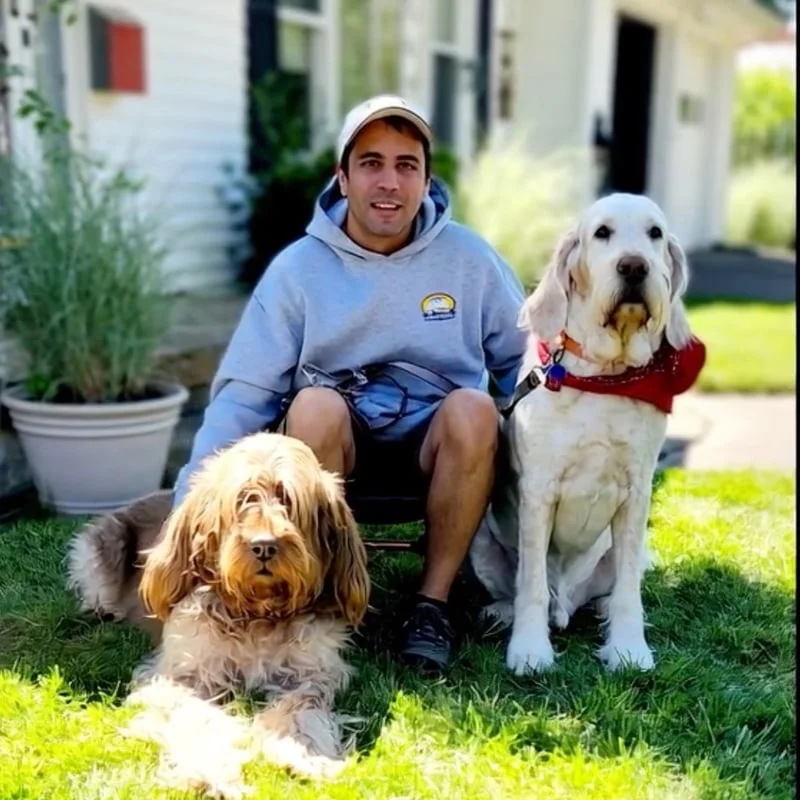

Winter in Fairfield County, Connecticut, often means icy sidewalks, freezing rain, and days when even a bundled-up walk feels miserable for both you and your dog. When the weather keeps you indoors, your dog still needs mental stimulation and physical activity. Without it, pent-up energy can lead to destructive behavior, anxiety, and boredom. The good news? You don't need a big backyard or fancy equipment to keep your dog happy, tired, and well-behaved all winter long.
This guide covers creative indoor dog activities for winter, mental enrichment ideas, and practical ways to exercise your dog when outdoor walks are limited. Whether you live in a Westport apartment, a Fairfield condo, or an Easton home, these activities will help you and your pup survive (and even enjoy) the coldest Connecticut months.

Why Indoor Mental Enrichment Matters in Winter

Puzzle toys and food dispensers challenge your dog's problem-solving skills and provide hours of entertainment.
The risks of boredom and under-stimulation
Dogs are intelligent, social animals bred to work, hunt, herd, or guard. When they don't have enough to do, problems emerge:
- Destructive behavior: Chewing furniture, scratching doors, digging at carpets
- Excessive barking or whining: Especially in apartments where neighbors are close
- Restlessness and hyperactivity: Inability to settle down, pacing, constantly seeking attention
- Weight gain: Less activity in winter can lead to obesity if not balanced with portion control
- Anxiety and stress: Boredom can manifest as separation anxiety or general nervousness
Winter amplifies these issues. Shorter daylight hours mean fewer opportunities for outdoor play, and cold weather naturally keeps both dogs and owners inside more. Without a plan, your energetic pup can become frustrated and difficult to manage.
How mental games tire dogs as much as physical exercise
Many people assume dogs only need physical exercise - long walks, running, fetch. While physical activity is important, mental stimulation can be just as tiring, if not more so.
Think about it: after a challenging puzzle, reading session, or day of intense focus, you feel mentally drained even if you didn't move much. Dogs are the same. Activities that require problem-solving, sniffing, decision-making, and learning new skills engage their brains and leave them content and calm.
The beauty of mental enrichment is that it works in small spaces and doesn't require extreme weather or outdoor access. A 15-minute training session or puzzle game can be as satisfying to your dog as a 30-minute walk.
Physical Indoor Exercises for Active Dogs
Indoor fetch (with rules and boundaries)
Fetch doesn't have to be an outdoor-only game. With some adjustments, you can play safely indoors:
- Choose the right space: A hallway, long living room, or basement works best. Clear obstacles and fragile items.
- Use soft toys: Plush toys, rope toys, or soft rubber balls prevent damage to walls and furniture.
- Add impulse control: Make your dog sit and wait before each throw. This adds mental work to the physical exercise.
- Short bursts: 5-10 minutes at a time to avoid overexcitement and indoor accidents.
Tip for apartments: If you live in a condo or apartment in Fairfield or Westport, try rolling the toy along the floor instead of throwing it high. This reduces noise for downstairs neighbors.
Tug-of-war (done safely with good manners)
Tug is one of the best indoor games for burning energy and building a bond with your dog. Done correctly, it teaches self-control and is safe for dogs of all sizes.
Rules for safe tug play:
- Teach a solid "take it" and "drop it" cue before starting
- If your dog's teeth touch your skin, the game stops immediately
- Pause frequently to practice impulse control (ask for a sit or down mid-game)
- Let your dog "win" sometimes - it builds confidence and makes the game more fun
- Use a designated tug toy, not household items or clothing
A few intense 5-minute tug sessions throughout the day can significantly reduce hyperactivity.
Stair exercises (if safe for your dog)
If your home has stairs and your veterinarian has cleared your dog for this activity, stairs can be excellent exercise:
- Fetch up the stairs: Toss a toy a few steps up, let your dog retrieve it, and return
- Controlled climbs: Walk your dog up and down on leash at a steady pace
- Hide and seek on stairs: Hide treats on different steps for your dog to find
Important safety note: Avoid stair exercises for:
- Puppies under 1 year (growing joints are vulnerable)
- Senior dogs with arthritis or mobility issues
- Dogs with hip dysplasia, back problems, or short legs (Dachshunds, Corgis)
- Overweight dogs (puts extra stress on joints)
If your dog doesn't fit these categories, check with your vet before using stairs for exercise.
Mini obstacle courses using household items
Transform your living room into an agility course using everyday objects:
- Cushions and pillows: Place them in a line for your dog to step over or weave around
- Broomstick "jumps": Lay a broomstick on the floor (no actual jumping required) and teach your dog to step over on cue
- Cardboard boxes: Create a tunnel or maze for your dog to navigate
- Laundry baskets: Use as "gates" to weave around
- Yoga mat stations: Place mats around the room and teach your dog to go to each one on cue
Start simple and reward every small success. The goal is mental engagement and fun, not perfection.
Mental Stimulation Games and Puzzles
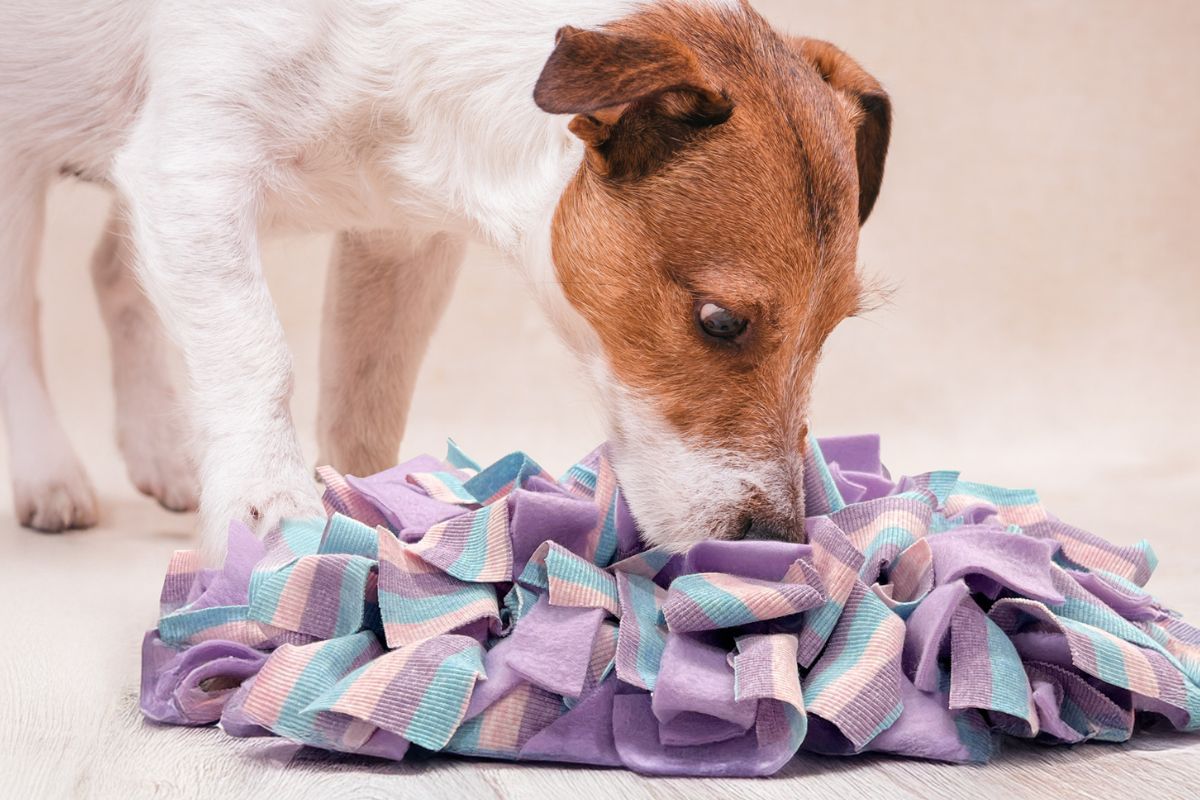
Snuffle mats turn mealtime into an engaging foraging activity that tires dogs mentally.
Food puzzle toys and slow feeders
One of the easiest ways to add mental enrichment to your dog's day is to make them work for their food. Instead of eating from a bowl in 30 seconds, food puzzles extend mealtime to 10-20 minutes of focused problem-solving.
Popular puzzle toy options:
- Kong Classic: Stuff with kibble, wet food, peanut butter, or yogurt and freeze for longer-lasting challenge
- Snuffle mats: Hide kibble in fabric strips; dogs use their nose to forage
- Puzzle feeders: Interactive toys with sliding compartments, flip lids, or rotating pieces
- Slow feeder bowls: Ridges and mazes slow eating and add mild mental work
DIY option: Use a muffin tin as a puzzle feeder. Place kibble in some cups and cover all cups with tennis balls. Your dog must remove the balls to find the food.
DIY snuffle mats and towel rolls
You don't need to buy expensive toys. Make your own enrichment activities with items you already have:
Towel Roll Foraging Game:
- Lay a bath towel flat on the floor
- Sprinkle kibble or small treats along the towel
- Roll the towel up loosely
- Let your dog unroll and sniff to find the food
Cardboard Box Treasure Hunt:
- Save a few small cardboard boxes or paper bags
- Place treats in some of them
- Let your dog sniff, paw, and tear them apart to find the goodies
Always supervise these activities to prevent ingestion of non-food items.
Scent work and "find it" games
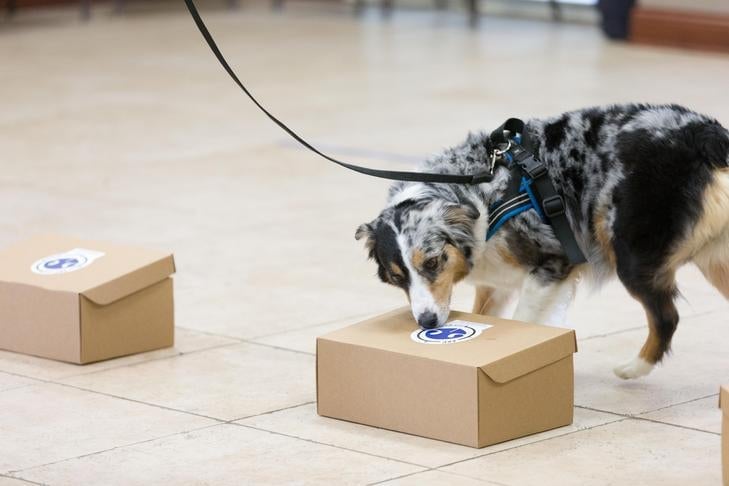
Scent work activities engage your dog's powerful nose and provide deep mental satisfaction.
Dogs experience the world primarily through their nose. Scent work games tap into this natural ability and are incredibly tiring mentally.
Basic "Find It" Game:
- Show your dog a high-value treat
- Have them sit and stay (or hold them gently if they don't know stay yet)
- Place the treat somewhere easy at first (in plain sight)
- Release them with "Find it!"
- Celebrate when they find it
- Gradually make hiding spots harder: under a cushion, behind a door, in another room
Toy Hide and Seek: Hide your dog's favorite toy instead of treats. This works well for dogs who are more toy-motivated than food-motivated.
Hide and seek with family members
This game combines physical exercise, mental work, and bonding - perfect for families with kids home during winter break or snow days.
How to play:
- One person holds the dog while another family member hides
- The hider calls the dog's name
- Release the dog to search
- When the dog finds the person, reward with praise, pets, or treats
- Take turns hiding so everyone gets a chance
This game teaches your dog to come when called, which is excellent recall training disguised as fun.
Training Sessions as Winter Enrichment
Teaching new tricks keeps dogs engaged
Winter is the perfect time to work on training. Even 5-10 minutes a few times a day keeps your dog's brain active and improves behavior year-round.
Easy tricks to teach indoors:
- Spin/Twirl: Lure your dog in a circle with a treat
- Paw/Shake: Classic trick that's easy to learn
- Go to Your Bed: Teach your dog to settle on a mat or bed on cue
- Touch: Teach your dog to touch their nose to your hand - great foundation for other tricks
- Roll Over: Fun party trick that also helps with body awareness
- Play Dead: Builds on "down" and "stay" commands
Reinforcing basic obedience in different rooms
If your dog already knows basic commands like sit, down, stay, and come, practice them in new locations around your home. Dogs don't automatically generalize - just because they sit in the kitchen doesn't mean they understand "sit" in the bedroom or hallway.
Practice routine:
- Walk to different rooms in your home
- In each room, ask for a few basic cues
- Reward compliance
- Gradually add distractions (toys on the floor, family members walking by)
This type of training builds reliability and gives your dog productive mental work.
Impulse control exercises (wait, stay, leave it)
Impulse control is one of the most valuable skills a dog can learn. It helps with door manners, greeting guests, walking on leash, and general calmness.
Winter impulse control games:
- "Wait" at thresholds: Teach your dog to wait at doorways and only pass when you give permission
- Food bowl patience: Have your dog sit and stay while you place their food bowl down, then release them to eat
- "Leave it" with treats: Place a treat on the floor, cover it with your hand, and reward your dog for ignoring it
- Settle on a mat: Reward your dog for lying calmly on a designated mat or bed for increasing lengths of time
Interactive Toys and Enrichment Tools
Best puzzle toys for different dog sizes and skill levels
Not all puzzle toys work for every dog. Choose based on your dog's experience, size, and motivation level:
Beginner puzzles (for dogs new to enrichment toys):
- Kong Wobbler
- Outward Hound Beginner Puzzle
- Basic snuffle mat
Intermediate puzzles:
- Nina Ottosson Interactive Puzzles
- West Paw Toppl (freezable treat toy)
- IQ Treat Ball
Advanced puzzles (for smart, persistent dogs):
- Outward Hound Tornado Puzzle
- Nina Ottosson Dog Casino
- Layered treat puzzles with multiple steps
Rotating toys to keep them interesting
Even the best toy gets boring if it's available 24/7. Keep enrichment activities novel by rotating them:
- Divide toys into 3-4 groups
- Only have one group available each week
- Store the others out of sight
- When you bring back a toy after a few weeks, it feels new again
This simple strategy makes your current toys more exciting without spending money on new ones.
Frozen treats and long-lasting chews
For dogs who love to chew, frozen treats provide extended entertainment:
- Frozen Kong: Fill with wet food, kibble, peanut butter, or plain yogurt, then freeze for 2-3 hours
- Frozen broth cubes: Freeze low-sodium chicken or beef broth in ice cube trays
- Long-lasting chews: Bully sticks, yak chews, dental chews (supervise to prevent choking)
These work especially well during times when you need your dog to settle - during Zoom meetings, while cooking dinner, or when guests arrive.
Adapting Activities for Small Spaces (Apartments and Condos)
Noise-conscious exercises for apartment living
If you live in a Fairfield or Westport apartment or condo, noise is a concern. These activities keep your dog entertained without disturbing neighbors:
- Roll the ball instead of throwing it
- Sniffing and scent work games (completely silent)
- Training sessions with hand signals and whispered cues
- Puzzle feeders and chew toys
- Quiet tug sessions on carpet
Avoid activities that involve jumping, running at full speed, or dropping heavy toys on hard floors, especially during early morning and late evening hours.
Using vertical space and hallways effectively
Even a small apartment has more usable space than you think:
- Hallways: Perfect for short fetch games, training recall, or setting up mini obstacle courses
- Under furniture: Hide treats under couches, chairs, or tables for your dog to find
- Doorways: Practice "wait" and impulse control exercises
- Between rooms: Play hide and seek with family members in different rooms
Balancing indoor play with short potty breaks
Indoor activities are great, but dogs still need bathroom breaks and fresh air. On frigid or icy days:
- Take short, frequent potty trips instead of long walks
- Use protective gear (coat, booties) to make brief outings comfortable
- Follow up outdoor breaks with indoor enrichment
- Consider midday dog walking services for exercise when you're at work
How 203 Pet Service Can Help During Winter Months
Midday walks on warmer winter days
When temperatures rise above freezing and sidewalks are clear, midday walks are ideal. Our professional team can provide regular walks during the warmest part of the day while you're at work, ensuring your dog gets outdoor time even when mornings and evenings are too cold.
Indoor enrichment and play visits for extreme weather days
On days when it's simply too cold, icy, or dangerous to walk outside, 203 Pet Service offers indoor enrichment visits. Our experienced staff can come to your home and provide:
- Training sessions and trick practice
- Interactive games and puzzle toys
- Indoor fetch and tug play
- Mental stimulation activities tailored to your dog's needs
This gives your dog the attention, engagement, and exercise they need without braving harsh weather.
Consistency when your schedule gets disrupted by winter storms
Snowstorms, school closures, and winter illnesses can throw off your routine. When you're stuck working from home, managing kids' snow days, or dealing with power outages, we provide backup care so your dog's needs don't get neglected.
Our team lives and works in Fairfield County, so we understand local weather patterns and adjust services accordingly. If you need help keeping your dog happy and exercised this winter, call 203 Pet Service at (203) 682-6443 or contact us online to discuss flexible winter care options.
Sample Daily Winter Enrichment Schedule
Morning routine (15 minutes)
- 7:00 AM: Quick potty break outside (5 minutes)
- 7:15 AM: Breakfast in a puzzle feeder or Kong (10 minutes of engaged eating)
Midday activities (30 minutes total)
- 12:00 PM: Short outdoor walk if weather permits (15 minutes), or indoor fetch and tug session
- 12:20 PM: Training session - practice 2-3 tricks or commands (10 minutes)
- 12:30 PM: Snuffle mat or scent work game (5 minutes)
Evening wind-down (20 minutes)
- 5:00 PM: Potty break (5 minutes)
- 6:00 PM: Dinner in a slow feeder or towel roll foraging game (10 minutes)
- 7:00 PM: Hide and seek or "find it" game (5 minutes)
- 8:00 PM: Frozen Kong or long-lasting chew while you relax
This schedule provides multiple enrichment opportunities spread throughout the day, preventing boredom and hyperactivity without requiring extreme weather outdoor time.
Conclusion: Surviving Connecticut Winters with a Happy Dog
Winter doesn't have to mean a bored, destructive, or anxious dog. With a little creativity and the activities in this guide, you can keep your dog mentally and physically satisfied even when outdoor walks are limited. The key is variety - mix physical games, mental puzzles, training sessions, and quiet enrichment activities throughout the day.
Remember: a tired dog is a happy dog, and mental stimulation tires dogs just as effectively as physical exercise. Whether you're using DIY towel games, puzzle feeders, or hide-and-seek, these activities strengthen your bond with your dog while keeping them calm and content all winter long.
If you need extra support during the coldest Fairfield County months, 203 Pet Service is here to help. We offer midday walks, indoor enrichment visits, and flexible scheduling to fit your winter needs. Call us at (203) 682-6443 or schedule a meet and greet to learn how we can help your dog thrive this winter.