
Valentine's Day sends more pets to emergency veterinary clinics than nearly any other holiday except Christmas. Between heart-shaped boxes of chocolate, romantic flower arrangements, and festive decorations, your home becomes a minefield of potential pet hazards. As professional pet sitters serving Fairfield County since 2004, our salaried W-2 team has seen the aftermath of too many Valentine's emergencies. This comprehensive guide will help you celebrate love safely while protecting your furry family members.
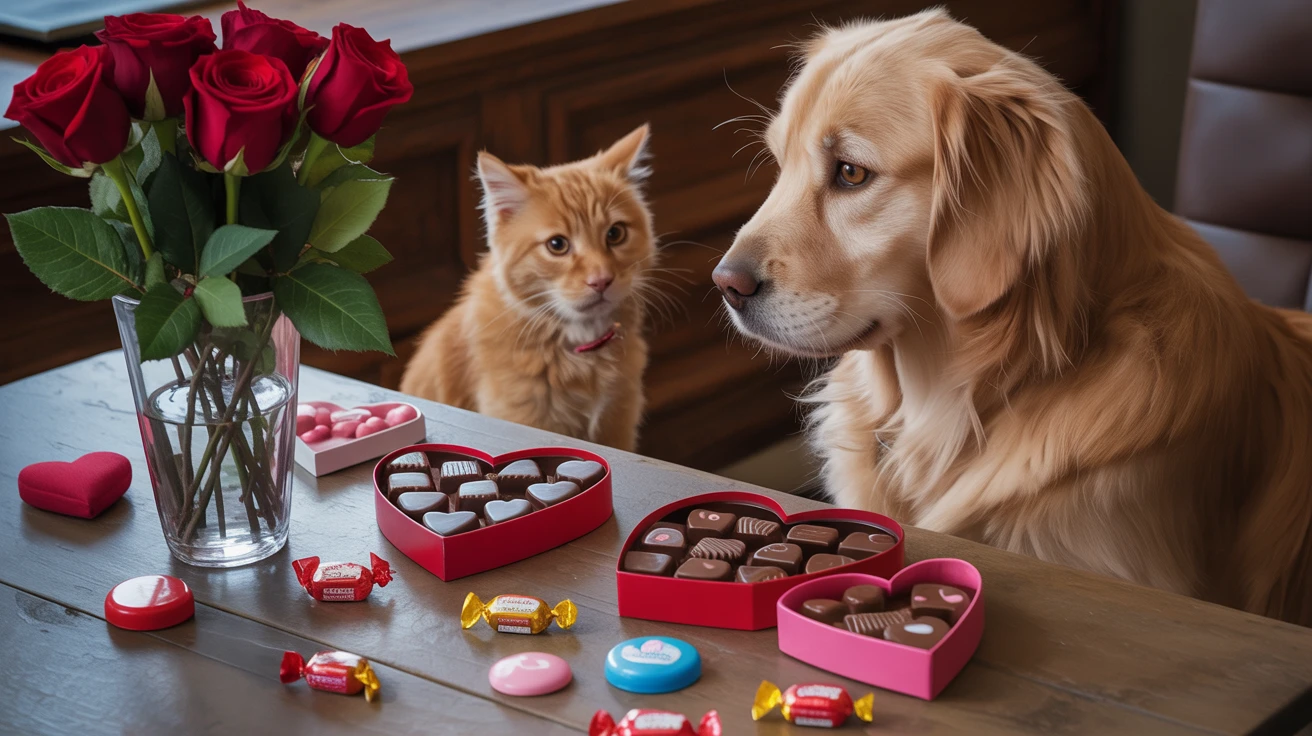

The Chocolate Crisis: Why Valentine's Day Is Especially Dangerous
According to the ASPCA Animal Poison Control Center, chocolate poisoning cases spike 200% during the week surrounding Valentine's Day. The combination of higher quantities of chocolate in homes and the premium dark chocolates typically given as romantic gifts creates a perfect storm of danger.
Chocolate contains two toxic compounds for pets: theobromine and caffeine. Dogs metabolize these substances incredibly slowly compared to humans - what takes us hours to process can take dogs 17+ hours. According to American Kennel Club research, theobromine accumulates in a dog's system, making even small amounts over time potentially lethal.
⚠️ Critical Chocolate Toxicity Levels
Mild toxicity: 20 mg of theobromine per pound of body weight
Severe toxicity: 40-50 mg per pound
Potentially lethal: 60+ mg per pound
Example: Just 1 ounce of dark chocolate (150-160 mg theobromine) can cause severe toxicity in a 10-pound dog.
Chocolate Types Ranked by Danger Level
Not all chocolate is equally dangerous. PetMD provides this breakdown of theobromine content:
| Chocolate Type | Theobromine per oz | Danger Level |
|---|---|---|
| Baking Chocolate | 400-450 mg | EXTREME |
| Dark Chocolate (70-85%) | 150-170 mg | VERY HIGH |
| Semi-Sweet Chocolate | 60-70 mg | HIGH |
| Milk Chocolate | 45-60 mg | MODERATE |
| White Chocolate | 0.25 mg | Very Low (still unsafe) |
The Valentine's Day danger comes from those premium dark chocolate truffles and chocolate-covered strawberries. A single Russell Stover dark chocolate truffle (about 0.5 oz) contains roughly 75-85 mg of theobromine - enough to cause mild toxicity in a 10-pound dog.
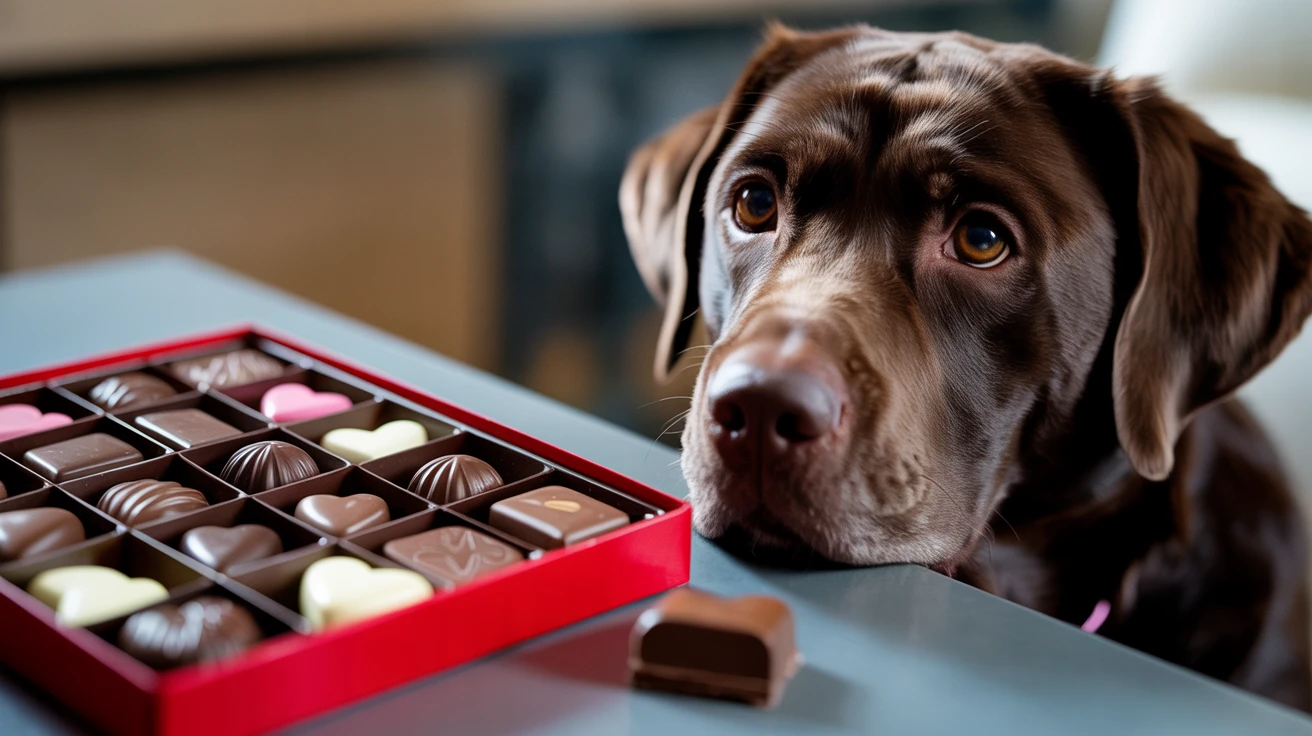
Even small amounts of chocolate can be toxic to dogs, especially dark chocolate and baking chocolate.
Recognizing Chocolate Poisoning Symptoms
According to American Veterinary Medical Association guidelines, symptoms typically appear 6-12 hours after ingestion but can occur as quickly as 1 hour with dark chocolate:
Early Symptoms (Mild Toxicity)
- Vomiting and diarrhea: Often the first visible sign
- Restlessness and hyperactivity: The caffeine and theobromine stimulate the nervous system
- Increased thirst and urination: The body attempts to flush toxins
- Panting and drooling: Indicates discomfort and elevated heart rate
Advanced Symptoms (Severe Toxicity)
- Rapid or irregular heartbeat (arrhythmia): Theobromine directly affects heart muscle
- Tremors and seizures: Central nervous system is overwhelmed
- Muscle rigidity: Particularly in the abdomen
- Elevated body temperature: Can lead to organ damage
- Blue-tinged gums: Indicates oxygen deprivation
💡 Professional Tip: The 2-Hour Window
If you catch your dog eating chocolate within 2 hours, your vet can induce vomiting to remove most of the toxin before it's absorbed. After 2 hours, treatment becomes more complicated and expensive. This is why immediate action is critical - don't "wait and see."
What To Do If Your Pet Eats Chocolate
- Don't panic, but act immediately. Time is critical for treatment success.
- Identify what they ate: Find the packaging if possible. You need to know the type and amount of chocolate.
- Calculate their weight: Toxicity is dose-dependent based on body weight.
- Call your vet or poison control IMMEDIATELY: Don't wait for symptoms. Call Greenfield Animal Hospital (203-254-0700) or ASPCA Poison Control (888-426-4435).
- Follow professional guidance exactly: They may tell you to induce vomiting at home or come in immediately.
- Never induce vomiting without veterinary guidance: It can be dangerous in certain situations.
Toxic Flowers: Beauty That Can Kill
Those stunning Valentine's bouquets pose serious threats to pets, particularly cats. The ASPCA maintains a comprehensive toxic plant database with over 400 dangerous species. Here are the Valentine's culprits:
Extremely Toxic: These Can Kill
Lilies (All True Lilies): If you have cats, lilies should never enter your home. According to Merck Veterinary Manual, even tiny amounts cause acute kidney failure in cats:
- Tiger lilies, Easter lilies, Asiatic lilies, Stargazer lilies: ALL parts are toxic - flowers, leaves, pollen, stems, even the water in the vase
- Ingestion of just 2-3 leaves or petals: Can be fatal
- Even indirect exposure: A cat grooming pollen off their fur can ingest lethal amounts
- Symptoms appear quickly: Vomiting within 2 hours, kidney failure develops over 24-72 hours
- Treatment window: Must begin within 18 hours for survival chance
Dogs and lilies: Less sensitive than cats but still develop gastrointestinal upset. The concern with dogs is usually the Peace Lily (not a true lily), which causes severe mouth pain and swelling.

Lilies are extremely toxic to cats and can cause fatal kidney failure even from small exposures to pollen.
Moderately Toxic: Dangerous But Usually Not Fatal
Tulips and Hyacinths: Popular spring Valentine's flowers with concentrated toxins in the bulbs. Pet Poison Helpline reports:
- Symptoms: Drooling, vomiting, diarrhea, depression
- Severity increases if pet digs up and eats bulbs
- Can cause cardiac issues in large quantities
Carnations: Mild toxicity causing gastrointestinal upset and dermatitis
Baby's Breath (Gypsophila): Often used as filler in bouquets, causes vomiting and diarrhea
Roses: The Safer Option (With Caveats)
Roses themselves aren't toxic, but they present other dangers:
- Thorns: Can puncture mouth, throat, or intestines if swallowed
- Pesticides: Cut flowers are heavily treated with chemicals toxic to pets
- Preservatives: The packets that come with cut flowers contain chemicals harmful if ingested
🌸 Pet-Safe Valentine's Flower Alternatives
If you want flowers that won't kill your pets, choose:
- Roses (pesticide-free, displayed out of reach)
- Orchids
- Sunflowers
- Snapdragons
- Gerbera daisies
- African violets
Best option: Skip cut flowers entirely and give potted herbs like basil or rosemary - safe for pets AND useful in the kitchen.
The Hidden Valentine's Dangers
Xylitol: The Silent Killer in Sugar-Free Treats
Many Valentine's sugar-free chocolates, candies, and baked goods contain xylitol, an artificial sweetener that's far more dangerous than chocolate. According to FDA warnings, xylitol causes:
- Rapid insulin release: Blood sugar plummets within 10-60 minutes
- Liver failure: Can occur with doses as small as 0.1g per kilogram of body weight
- Extremely low toxic threshold: A single piece of sugar-free gum can kill a small dog
- Symptoms: Vomiting, lethargy, loss of coordination, seizures, collapse
Check labels carefully. Xylitol appears under many names: birch sugar, birch bark extract, or simply listed in "natural flavors."
Alcohol in Chocolates and Desserts
Those fancy liqueur-filled chocolates and rum cakes are dangerous. AKC research shows dogs are far more sensitive to alcohol than humans:
- Even small amounts cause vomiting, disorientation, and difficulty breathing
- Can lead to dangerous drops in blood sugar, blood pressure, and body temperature
- In severe cases: seizures, respiratory failure, and death
Packaging Hazards
The non-edible parts of Valentine's gifts cause surprisingly serious problems:
- Foil and cellophane wrappers: Cause intestinal blockages requiring surgery
- Ribbons and bows: Particularly dangerous for cats; can cause linear foreign body obstruction where intestines bunch up accordion-style
- Plastic candy containers: Sharp edges when chewed can lacerate mouth and throat
- Cardboard boxes: Not toxic but can cause blockages, especially the hard dividers in chocolate boxes
Stuffed Animals and Plush Toys
That giant teddy bear isn't a dog toy:
- Button eyes and plastic noses: Choking hazards
- Stuffing material: Causes intestinal blockages
- Squeakers: Can be swallowed and lodge in throat
Pet-Proofing Your Valentine's Celebration
Before Gifts Arrive
- Designate a pet-free gift zone: High shelf or closed room for storing Valentine's items
- Brief family members and visitors: No feeding pets treats, no leaving gifts accessible
- Have emergency numbers posted: Your vet, emergency clinic, and ASPCA Poison Control (888-426-4435) where you can see them
- Check your pet first aid kit: Hydrogen peroxide (for inducing vomiting if directed by vet), activated charcoal, saline solution
During the Celebration
- Open gifts in a pet-free area: Or crate/confine pets during gift opening
- Immediately dispose of all wrapping: In a closed, pet-proof trash container
- Keep chocolate boxes closed and elevated: Never "out of reach" - if they really want it, they'll find a way
- Display flowers in rooms pets can't access: Or consider flowers in closed terrariums
- Never leave dinner plates unattended: Even for a minute - pets are opportunistic
After the Holiday
- Store all leftover candy in sealed containers in cabinets: Not on counters
- Take trash out immediately: Don't let it sit overnight
- Remove wilting flowers promptly: They're even more toxic as they decay
- Monitor your pet's behavior: Watch for any signs of illness in the days following
💚 Our Valentine's Pet-Sitting Safety Protocol
When we provide pet-sitting services during Valentine's week, we:
- Ask clients about any Valentine's items in the home
- Do a visual sweep for accessible hazards during first visit
- Keep emergency vet information readily available
- Monitor pets extra carefully for any signs of illness
- Send photo updates showing pets are safe and happy
Local Emergency Resources in Fairfield County
If your pet experiences a Valentine's emergency, time is critical. Have these numbers programmed in your phone now:
24/7 Emergency Veterinary Care
- Greenfield Animal Hospital: 40 Hillside Road, Fairfield, CT - (203) 254-0700
- VCA Shoreline Veterinary Referral & Emergency Center: 895 Bridgeport Avenue, Shelton, CT - (203) 929-6291
- Pieper Memorial Veterinary Center: 3270 Post Road, Southport, CT - (203) 259-3700
Poison Control Hotlines
- ASPCA Animal Poison Control: (888) 426-4435 - $95 consultation fee, but worth every penny
- Pet Poison Helpline: (855) 764-7661 - $85 consultation fee
Both hotlines have veterinary toxicologists available 24/7 who can calculate exact toxicity based on your pet's weight and what they ingested.
When You Need Extra Help: Professional Pet Care
If you're planning a Valentine's dinner out or a romantic getaway, don't leave pets home alone with Valentine's temptations. Our W-2 employee team provides experienced pet care across Fairfield, Westport, Easton, Southport, Black Rock, Stratford, Shelton, Devon, Trumbull, Weston, Wilton, and Bridgeport.
What sets us apart during holiday weeks:
- Same team members you know and trust: Not random gig workers who don't know your pets
- Training in pet emergency recognition: Our team knows warning signs of toxicity
- Immediate emergency response protocols: We have relationships with local emergency vets
- Detailed visit reports: Photo updates so you can enjoy your evening worry-free
Conclusion: Love Your Pet By Protecting Them
Valentine's Day is about celebrating love - and there's nothing loving about a midnight emergency vet visit. With awareness and simple precautions, you can enjoy your romantic celebration while keeping your pets safe.
The most important takeaways:
- ❌ No chocolate ever - even small amounts of dark chocolate are dangerous
- ❌ No lilies in homes with cats - zero tolerance policy
- ❌ Read labels for xylitol in any sugar-free products
- ✅ Store all gifts immediately in pet-proof locations
- ✅ Have emergency numbers programmed in your phone
- ✅ When in doubt, call the vet immediately - better safe than sorry
Need reliable pet care for your Valentine's celebration? Schedule a meet and greet with our professional team. We'll make sure your pets are safe, happy, and well-cared-for while you focus on romance.
Call us at (203) 682-6443 or use our contact form. Because the best Valentine's gift you can give your pet is their safety.