
Quick Answer
You should strongly favor a dog walking company that uses W‑2 employees, not independent contractors, because it usually means better training, real oversight, and stronger insurance that protects both your pet and your home. In Fairfield County, W‑2 walkers are more likely to be properly covered if they get hurt, held to clear standards, and committed to your dog as a long‑term job, not just a side gig.
When you hire a dog walker in Fairfield County, Connecticut, one of the most important questions you should ask is: "Are your walkers W-2 salaried employees or independent contractors?" Most pet owners don't realize this distinction exists - or why it matters. But the difference between a W-2 salaried employee and an independent contractor directly affects your pet's safety, service reliability, your own liability protection, and the quality of care your pet receives.
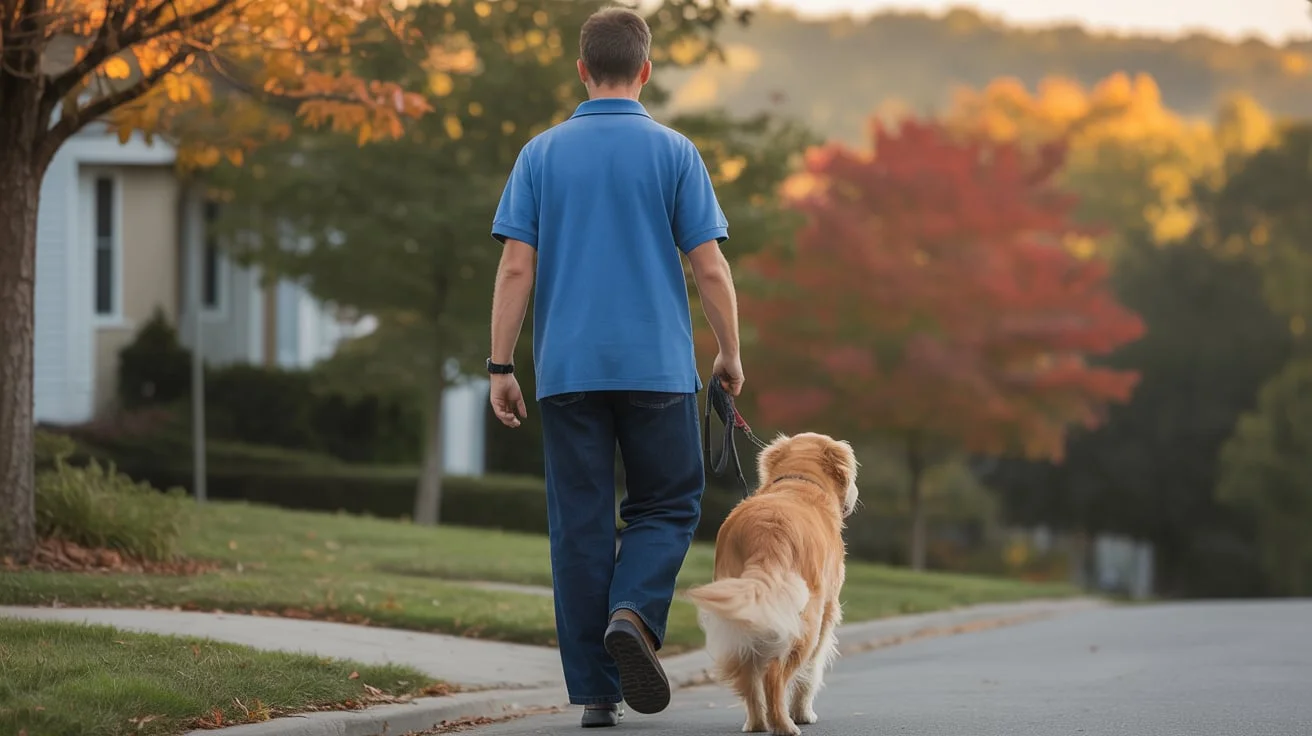
This guide explains the differences between W-2 salaried employees and independent contractor dog walkers, why employment status matters for Westport, Fairfield, Easton, and Stratford pet owners, and what questions to ask before trusting someone with your home and your pet.

What Is a W-2 Salaried Employee vs. Independent Contractor?
W-2 Salaried Employee: What it means
A W-2 salaried employee is hired directly by a company, receives a regular salary (not variable hourly gig pay), and has taxes withheld from their paycheck. This employment structure provides stability and professional commitment. The employer is responsible for:
- Payroll taxes: Social Security, Medicare, unemployment insurance
- Workers' compensation insurance: Coverage if the employee is injured on the job
- Supervision and training: Ongoing oversight, performance standards, and accountability
- Fair living wages: Salaried employees earn consistent, reliable income that supports professional dedication to pet care
- Employee benefits: Some companies provide health insurance, paid time off, or retirement contributions

W-2 salaried employees receive official payroll documentation with tax withholdings
Example: 203 Pet Service employs W-2 salaried staff members. Every dog walker is a direct salaried employee of the company, receives a regular paycheck with tax withholdings, and is covered by the company's workers' compensation and liability insurance. This employment structure means staff members earn fair living wages, which translates to better care for your pets, greater job security for the staff, and more reliable, consistent service for you.
Independent Contractor: What it means
An independent contractor is self-employed and operates their own business. They're hired to perform specific services but are not employees. Key characteristics:
- Self-employed: They handle their own taxes, insurance, and business expenses
- No employer oversight: They set their own schedule, rates, and methods
- No employee benefits: No workers' comp, health insurance, or paid time off
- Limited accountability: The company hiring them has less control over quality, consistency, and reliability
Example: Many app-based dog walking platforms (Rover, Wag, Care.com) classify their walkers as independent contractors. The platform connects clients with walkers but doesn't employ them directly.
Why Does This Distinction Matter for Pet Owners?
Here's a side-by-side comparison of what you get with W-2 salaried employees versus independent contractors:
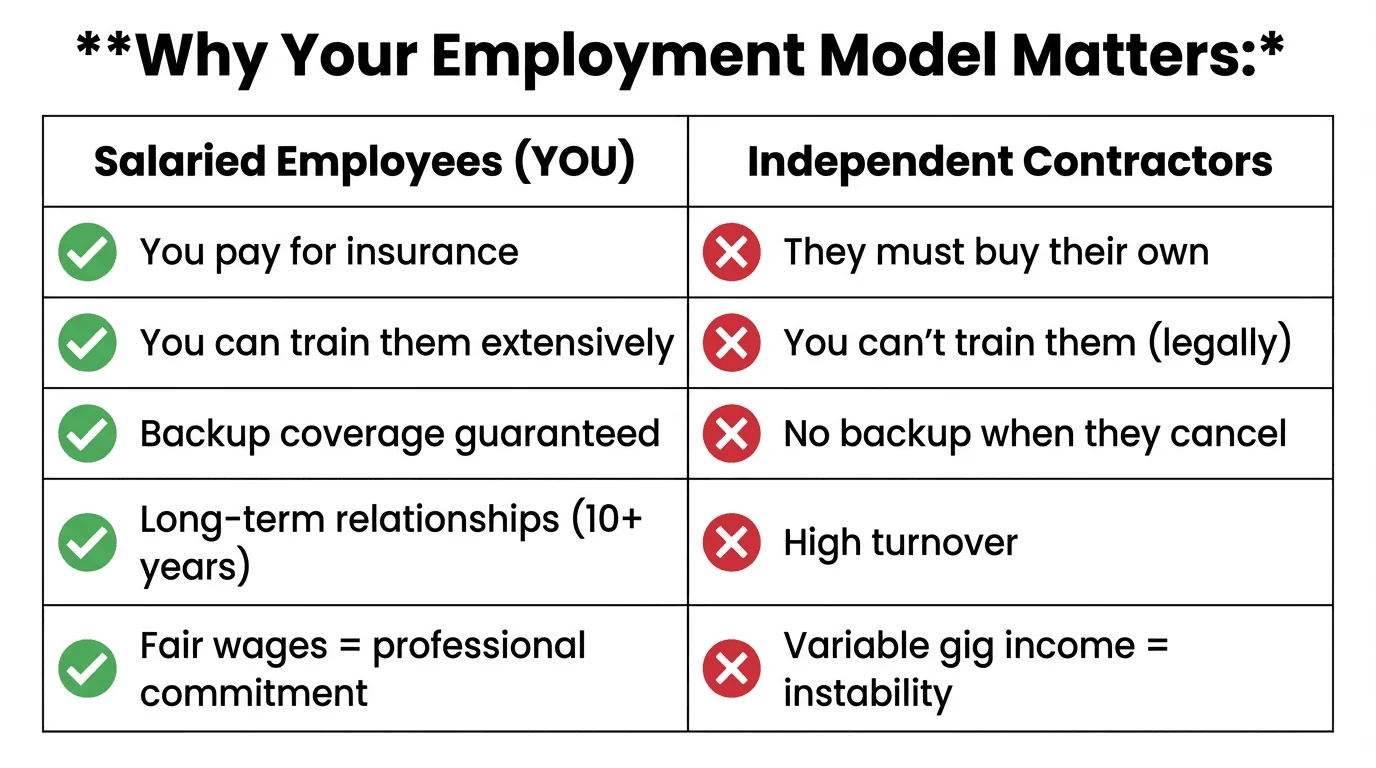
The employment model directly impacts service quality, safety, and reliability
Let's break down each of these differences in detail:
1. Background Checks and Vetting
W-2 Salaried Employees:
- Employers typically run comprehensive background checks before hiring
- Drug screening, criminal history checks, and reference verification are standard
- Ongoing supervision and performance monitoring
- Salaried positions attract career-oriented professionals with stable employment histories
Independent Contractors:
- Platforms may run limited checks, but depth varies widely
- Some contractors are never screened at all
- No ongoing oversight or performance standards
- Gig-based work attracts transient workers with higher turnover
Bottom line: When you hire a W-2 salaried employee-based service, you know someone vetted that person and compensates them fairly for professional, long-term commitment. With independent contractors, you may not know who's entering your home.
2. Insurance and Liability Protection
W-2 Salaried Employees:
- Company carries liability insurance covering employee actions
- Workers' compensation protects you if the employee is injured in your home
- Company is responsible for any damages, injuries, or accidents
Independent Contractors:
- May or may not have their own insurance (many don't)
- Platform insurance (if it exists) often has low coverage limits and many exclusions
- If the contractor gets hurt in your home and doesn't have insurance, you could be liable
⚠️ Critical Question for Contractor-Based Services
If you're considering a service that uses independent contractors, ask: "What process do you have to verify each contractor carries their own liability insurance?"
What they SHOULD say:
- "We require all contractors to carry minimum $1 million liability insurance plus animal bailee coverage"
- "We collect certificates of insurance from each contractor before they can accept jobs"
- "We verify insurance is current and re-verify annually"
- "Contractors who don't maintain insurance are removed from our network"
Red flags to watch for:
- "We have an umbrella policy that covers all our contractors" ← This is problematic (see below)
- "Our contractors can work under our insurance" ← This means they're treating contractors as employees (misclassification)
- "We don't track contractor insurance" ← Run away
The "Umbrella Policy" Problem
Some pet care membership organizations (like NAPPS or Pet Sitters International) offer "umbrella policies" through providers like Insurance of the Carolinas that claim to cover independent contractors working under your business.
Here's the problem: If the company pays for insurance that covers contractor work, they're treating contractors as employees. This creates a misclassification issue because:
- The IRS "Financial Control" test asks: "Who pays for business expenses?"
- If the company pays insurance premiums that cover contractor work = the contractor has no business expenses
- No business expenses = economically dependent on the company = employee, not contractor
Why this matters to you as a client: Even though an "umbrella policy" might provide coverage for damages, it's built on a fraudulent employment relationship. If the IRS or Connecticut Department of Labor determines the contractors are actually employees, the whole insurance structure could collapse, and you might not be covered after all.
The Legal Way to Handle Contractor Insurance
If a company legitimately uses independent contractors, here's what they CAN and CANNOT do:
✅ Legal (Contractor Model):
- REQUIRE contractors to carry their own insurance as a condition of network participation
- VERIFY contractors have insurance by collecting certificates
- SET MINIMUMS for coverage amounts (e.g., "$1M liability required")
- Allow contractors to purchase insurance through a group program where each contractor pays their own premium (like some PetSitLLC models)
❌ Illegal (Crosses into Employee Classification):
- PAY for contractors' insurance premiums
- PROVIDE an "umbrella policy" that you pay for to cover contractor work
- REIMBURSE contractors for their insurance costs
Bottom line: Hiring an uninsured independent contractor puts your financial security at risk. And hiring from a service that uses an "umbrella policy" to cover contractors may expose you to misclassification liability. W-2 salaried employees eliminate both these risks - the company legally pays for insurance, and you're fully protected.
3. Accountability and Service Quality

W-2 salaried employees receive ongoing training and supervision for consistent service quality
W-2 Salaried Employees:
- Company can legally train, supervise, and discipline employees on how to perform their work
- Consistent service standards and protocols across all staff members
- If something goes wrong, the company is accountable
- Fair salaries lead to long-term employment = familiar faces and lasting relationships with your pet
- Professional commitment supported by stable income and job security
Independent Contractors:
- Companies cannot legally train contractors on how to do the work without crossing into employee classification - this is a key IRS test for determining employment status
- Platforms have limited control over contractor behavior and service methods
- Quality varies widely depending on who accepts the job
- High turnover - you may never see the same person twice
- Limited recourse if service is poor
⚖️ Legal Note: The Training Test
The IRS uses "behavioral control" as one of three primary tests to determine if someone is truly an independent contractor or should be classified as an employee. If a company extensively trains someone on HOW to do the work (not just WHAT needs to be done), that indicates an employer-employee relationship. This means companies using independent contractors cannot maintain service standards through training without risking misclassification - which is why quality and consistency suffer with contractor-based models.
Bottom line: W-2 salaried employees provide consistency, reliability, and accountability that independent contractors legally cannot match. Fair wages support professional dedication, and proper training ensures your pet receives expert care every single visit.
4. Reliability and Backup Coverage
W-2 Salaried Employees:
- Company provides backup if your regular walker is sick or on vacation
- Someone at the office coordinates and ensures visits happen
- Salaried employees are held accountable for showing up on time and maintaining professionalism
- Fair compensation reduces turnover and ensures familiar, trusted staff members
Independent Contractors:
- If your contractor cancels, you may need to find someone else yourself
- No company oversight or backup system
- Cancellations can happen last-minute with little recourse
- Variable gig-based income creates instability and higher turnover
Bottom line: W-2 salaried employee-based services offer peace of mind through structured backup, accountability, and consistent staff who earn fair living wages.
Legal and Tax Implications
Why do companies use independent contractors?
The honest answer: It's cheaper and easier for the company.
When a company classifies workers as independent contractors instead of employees:
- They avoid paying payroll taxes (Social Security, Medicare, unemployment)
- No workers' compensation insurance required
- No employee benefits like health insurance or paid time off
- Less legal liability for worker actions
- Less administrative burden (no W-2 forms, payroll processing, etc.)
This saves the company thousands of dollars per worker - but shifts costs and risks to the worker (and to you, the client).
Misclassification concerns
In many cases, companies classify workers as independent contractors even when they should legally be employees. This is called "misclassification."
The IRS and Connecticut Department of Labor look at factors like:
- Does the company control when, where, and how the work is done?
- Does the worker use company equipment or branding?
- Is this the worker's primary source of income?
- Does the relationship have the characteristics of an employment relationship?
If the answer to these questions is "yes," the worker is likely an employee, not a contractor - even if the company calls them one.
Why this matters to you: If a company misclassifies employees as contractors and someone gets hurt or causes damage, you could be caught in legal disputes about who's responsible.
What Fairfield County Pet Owners Should Ask
Questions to ask any dog walking service
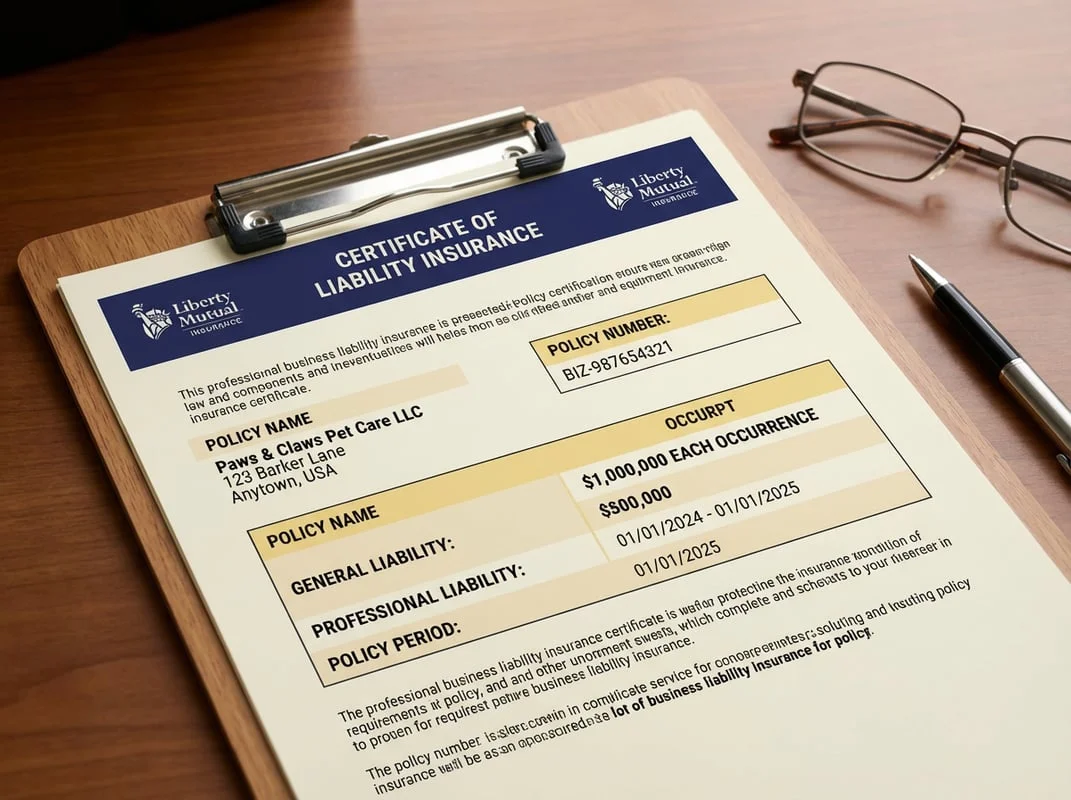
Always request proof of comprehensive liability insurance coverage
Before hiring a dog walker in Westport, Fairfield, Easton, or Stratford, ask these questions:
- Are your dog walkers W-2 salaried employees or independent contractors?
- If they say "contractors," ask why and what protections you have
- If they say "employees," ask if they're hourly or salaried - salaried positions indicate fair wages and professional commitment
- Verify they have workers' comp and liability insurance regardless of employment status
- Do you conduct background checks on all staff?
- What kind of background checks? Criminal history? Drug testing?
- Are they conducted before hiring or only after complaints?
- What insurance coverage do you have?
- General liability insurance? Animal bailee insurance?
- Workers' compensation for employees?
- Can you provide a certificate of insurance?
- What happens if my regular walker is sick or unavailable?
- Is there a backup system?
- Will I be notified in advance?
- How do you train and supervise your staff?
- Ongoing training? Performance reviews?
- Who oversees day-to-day operations?
Red flags to watch for
- Vague answers about employment status ("We work with a network of pet care providers")
- No insurance documentation or refusal to provide proof
- No background checks or only "basic" checks without details
- Suspiciously low prices (may indicate corners are being cut on insurance, vetting, or wages)
- High turnover (if you never see the same walker twice, that's a sign of contractor churn)
The Reality of Platform-Based Pet Care: Documented Incidents
While platforms like Rover, Wag, and Care.com market convenience, their failure to require or verify contractor insurance has led to documented tragedies:
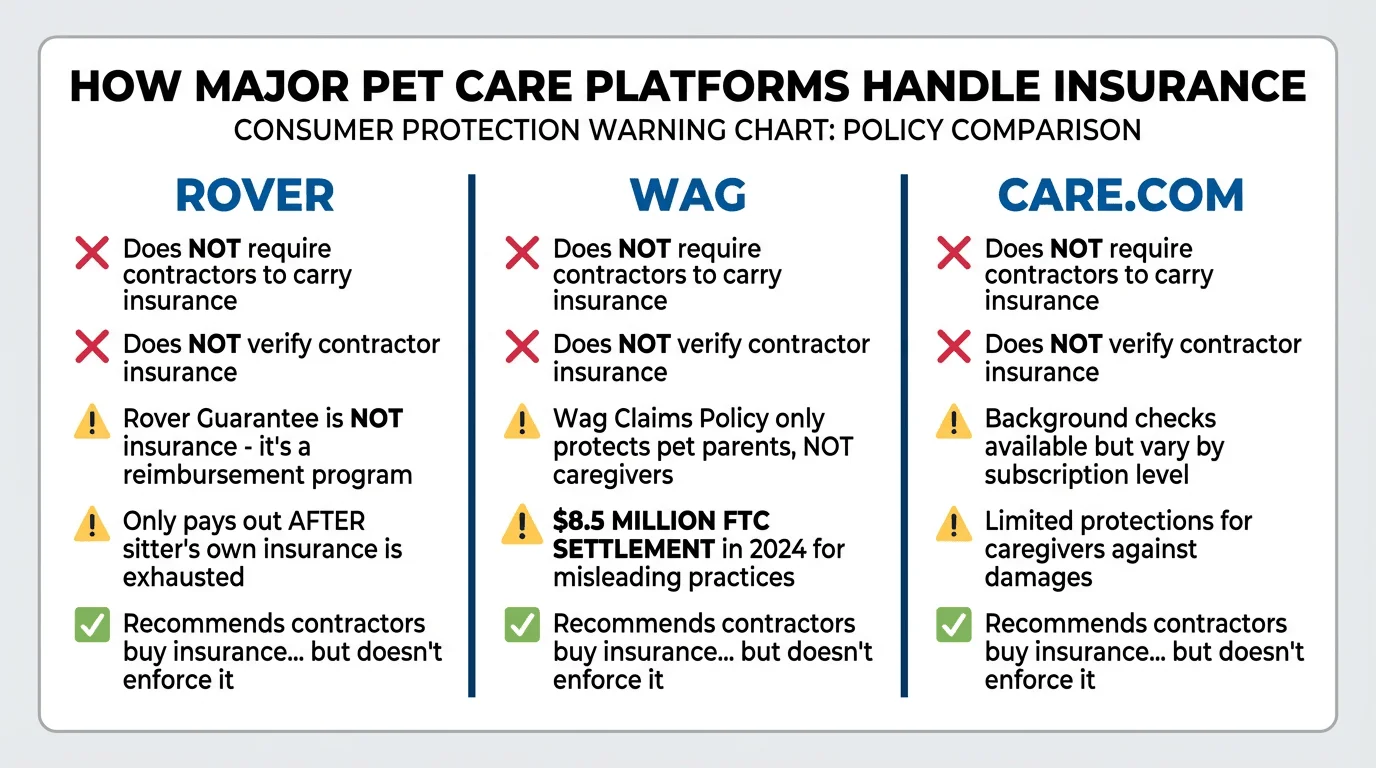
Major platforms don't require or verify contractor insurance, leaving consumers exposed
Houston Heatstroke Deaths (July 2024)
Three dogs died over a single weekend while in the care of a Rover sitter who kept pets in a backyard shed when the air conditioning failed, despite 95-degree temperatures. Owners believed their pets would be kept inside. A necropsy revealed heatstroke and traces of rat poison. As of February 2025, no criminal charges have been filed, and the case remains with the Harris County District Attorney's Office.[1][2]
Miami Dog Death Cover-Up (August 2025)
A 12-year-old Maltese-Shih Tzu named Aria was killed when attacked by another dog while in a Rover sitter's care. The sitter cremated the dog without owner consent and fabricated a story about the dog dying peacefully. Cremation records revealed the dog had a detached scalp and bulging eye. The sitter had left the dogs with her partner (not disclosed to the owner) while she attended a jiu-jitsu tournament. Rover offered a $1,000 settlement, which the owner refused, demanding accountability instead.[3][4][5]
Additional Documented Incidents
- Dogs lost during walks and killed by vehicles[6]
- Pets returned with severe injuries requiring 50+ stitches[7]
- Walker instructions ignored, leading to preventable deaths[6]
Why These Incidents Happen
None of these platforms require or verify contractor insurance. According to their own policies:
- Rover does NOT require contractors to carry insurance[8]
- Wag does NOT require contractors to carry insurance[9]
- Care.com does NOT require contractors to carry insurance[10]
The "Rover Guarantee" and "Wag Claims Policy" are not insurance, they're reimbursement programs that only pay out AFTER the contractor's own insurance (if any) is exhausted.[8][9] Since most contractors don't buy insurance, pet owners are left completely unprotected.
The Platform Business Model Prioritizes Volume Over Safety
These platforms avoid requiring insurance because doing so would cross the line into employee classification. By keeping hands off, they avoid legal responsibility, but transfer ALL risk to you, the pet owner.
Is saving a few dollars worth your pet's safety?
The False Economy of "Cheap" Pet Care
Platform-based services often advertise lower rates than professional pet care companies. But what's the real cost?
What you're NOT paying for:
- Verified insurance coverage
- Background-checked professionals
- Guaranteed backup coverage
- Professional training and oversight
- Accountability when something goes wrong
What you're risking:
- Your pet's safety
- Your financial liability (if uninsured contractor gets hurt in your home)
- No recourse when incidents occur
- Emotional trauma of losing a beloved pet
Rover, Wag, and Care.com are spending millions on social media advertising to make their services look appealing. But beneath the glossy ads is a business model that prioritizes their profit margins over your pet's safety.
Is saving $10-15 per walk worth the risk of your pet being injured, lost, or killed by an uninsured, unvetted gig worker?
With W-2 Salaried Employees, You Pay Slightly More, But You Get:
- Fully insured professionals
- Comprehensive background checks and drug screening
- Guaranteed backup coverage
- Decade-long relationships (our average employee tenure is 10+ years)
- Complete accountability backed by our business insurance
- Peace of mind knowing your pet is in expert hands
⚠️ What About Hiring Your Neighbor's Kid or a Friend?
While hiring someone you know personally might feel safer, it comes with its own serious risks. If they're injured in your home, your homeowner's insurance may not cover it. If your pet is injured, lost, or causes damage, you may have no recourse. And friendships can be permanently damaged when problems arise.
The same critical questions apply: Do they have liability insurance? What happens if something goes wrong? Can you see proof of coverage? If the answer is no, you're taking a massive financial and emotional risk.
Protect Your Pet: Critical Questions to Ask ANY Pet Care Provider
Whether you're considering platform services or professional companies, here are the non-negotiable questions every pet owner should ask:
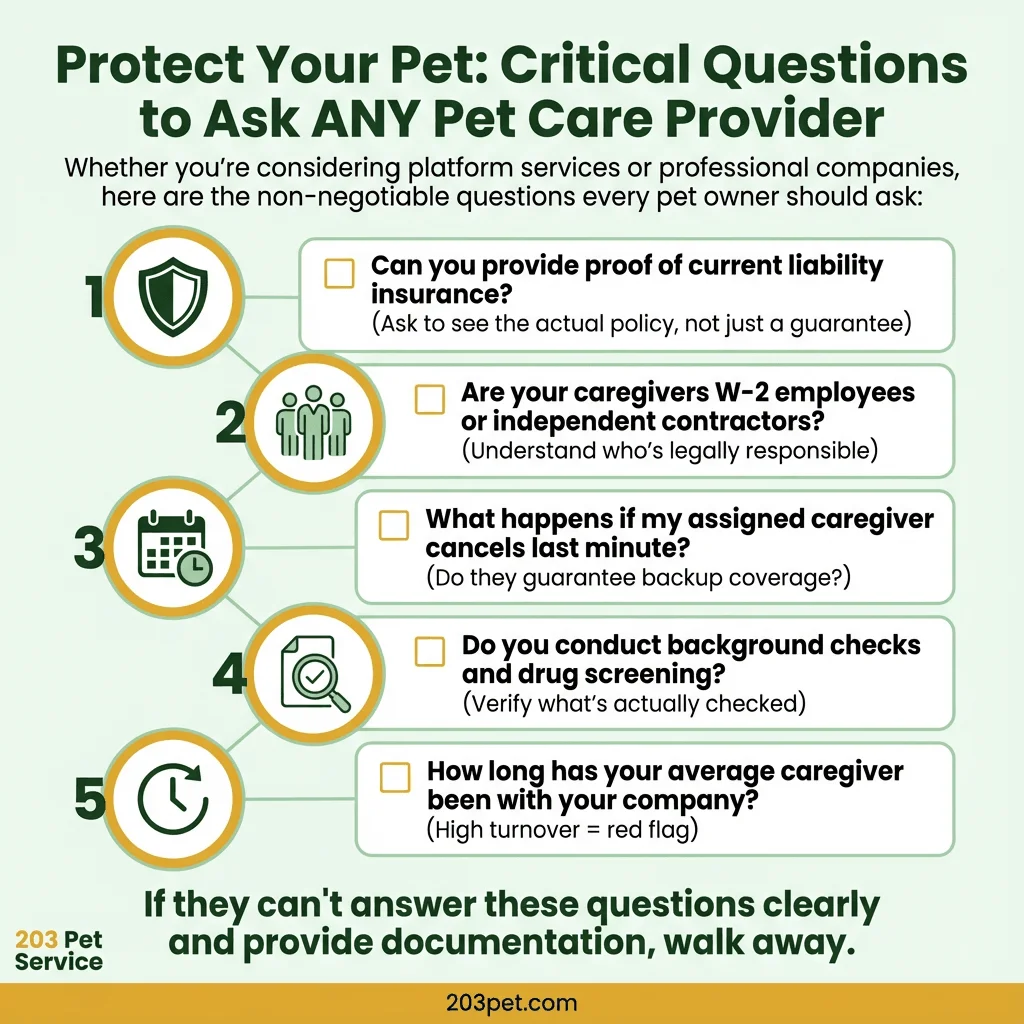
- 1. "Can you provide proof of current liability insurance?" (Ask to see the actual policy, not just a "guarantee")
- 2. "Are your caregivers W-2 employees or independent contractors?" (Understand who's legally responsible)
- 3. "What happens if my assigned caregiver cancels last minute?" (Do they guarantee backup coverage?)
- 4. "Do you conduct background checks and drug screening?" (Verify what's actually checked)
- 5. "How long has your average caregiver been with your company?" (High turnover = red flag)
If they can't answer these questions clearly and provide documentation, walk away.
📥 Download Free PDF Checklist
Save this checklist and take it with you when evaluating pet care providers.
Why 203 Pet Service Uses W-2 Salaried Employees
Our commitment to quality and accountability
At 203 Pet Service, we've always believed that professional pet care requires professional salaried employees who earn fair living wages. Here's how we do things differently:
- W-2 salaried employees only: Every dog walker and pet sitter is a direct salaried employee, not an independent contractor or hourly gig worker
- Fair living wages: We pay our staff salaries that support professional dedication and long-term commitment to pet care excellence
- Comprehensive background checks: Criminal history screening and drug testing before hiring
- Full insurance coverage: General liability, animal bailee, and workers' compensation
- Ongoing training: Pet first aid, CPR, safe handling practices, and customer service - training we can legally provide because they're employees
- Long-term relationships: Average employee tenure is over 10 years - your pet sees familiar faces because we retain quality staff through fair compensation
- Backup coverage: If your regular walker is unavailable, we provide a trained backup from our team
The cost of doing it right
Yes, employing W-2 salaried staff costs more than using independent contractors. We invest in:
- Payroll taxes
- Workers' compensation insurance
- Professional liability insurance
- Fair salaries that provide stable income and attract career-oriented pet care professionals
- Professional development and ongoing training
These investments result in better care for your pets, better security for your home, and better service quality overall. When our staff members earn fair living wages with job security, they bring professional dedication to every visit. That's a tradeoff we're proud to make - and one your pet deserves.
Conclusion: Choose Wisely
When it comes to dog walking and pet care, cheaper isn't always better. The difference between hiring a W-2 salaried employee-based service and an app-based independent contractor platform can mean the difference between reliable, accountable, professionally-trained care and a risky gamble with your pet's safety and your own liability.
Fair wages lead to better care. When pet care professionals earn salaries instead of variable gig-based income, they can commit to long-term excellence, receive proper training, and build lasting relationships with your pets. This isn't just good for the staff - it's better for your pet's safety, your home's security, and your peace of mind.
Before you hand over your house keys and trust someone with your pet, make sure you understand:
- Who is entering your home (background checks matter)
- Who's responsible if something goes wrong (insurance matters)
- Who's overseeing the quality of care (accountability matters)
If you're looking for a dog walking service in Fairfield County that prioritizes your pet's safety and your peace of mind, 203 Pet Service offers W-2 employee-based care with over 20 years of experience serving Westport, Fairfield, Easton, and Stratford.
Call us at (203) 682-6443 or schedule a meet and greet to learn more about our team and how we can help keep your pet happy, healthy, and safe.
Frequently Asked Questions
About This Topic
Why should I care if my Fairfield County dog walker is W-2?
Your walker’s status affects safety, insurance, and reliability. W‑2 employees are trained, supervised, and usually covered by workers’ comp if they’re hurt in your home, which helps protect you from liability. 203 Pet Service uses W‑2 salaried dog walkers so you’re not relying on a random gig worker with unclear coverage.
What’s the actual difference between a W-2 dog walker and contractor?
"A W 2 walker is a true employee: on payroll, formally trained, supervised, and covered under the company’s policies. Contractors are more like freelancers and often set their own methods, hours, and most independent contractors (ICs) in the industry do not carry liability insurance or Workers' Compensation insurance. 203 Pet Service’s walkers are W 2 salaried employees, so we can set standards and hold people accountable for your dog’s care."
Am I liable if a contractor dog walker slips and falls at my home?
You could be, depending on the situation and their insurance. Many independent contractors don’t have workers’ comp, so they may look to your homeowner’s policy if they’re injured. That can mean claims, higher premiums, or disputes. With 203 Pet Service’s W‑2 employees, workers’ comp is in place, which helps shield you from that risk.
Does using W-2 dog walkers really make my dog’s care more consistent?
Usually yes, because W‑2 employees are treated as long‑term team members, not one‑off gig workers. They’re more likely to stick with regular routes, follow company protocols, and communicate with you and the office. At 203 Pet Service, salaried W‑2 walkers get structured training and oversight, so your dog sees familiar faces who know your routine.
How can I tell if a Fairfield County dog walking company uses contractors?
Ask directly: “Are your walkers W‑2 employees or independent contractors?” and listen for a clear answer. You can also check their website for language about “independent professionals” or “platform” services, which can signal contractors. 203 Pet Service is upfront that our team are W‑2 salaried employees, hired, trained, and supervised by us.
Is a contractor dog walker’s personal insurance enough to protect my home?
Not always. Some contractors carry only basic liability, and many don’t have workers’ comp, which matters if they’re injured on your property. There can also be gray areas over what’s covered when they’re in your home. With 203 Pet Service, our W‑2 walkers are covered under our business insurance and workers’ comp, offering clearer protection.
Do W-2 dog walkers cost more than independent contractors in Fairfield County?
Rates might be slightly higher, but you’re paying for professional structure, insurance, and oversight. Companies with W‑2 employees cover payroll taxes, workers’ comp, and training instead of cutting corners. 203 Pet Service prices reflect that we employ, train, and supervise our walkers, so you get dependable care rather than the cheapest gig option.
What should I ask a dog walking company before giving them house keys?
Ask if walkers are W‑2 employees or contractors, what insurance they carry, and how walkers are trained and supervised. Also ask who has access to your keys and how issues are handled if something goes wrong. 203 Pet Service is happy to walk you through our W‑2 staffing model, insurance coverage, key protocols, and communication process before you commit.
About 203 Pet Service
What areas does 203 Pet Service cover in Fairfield County?
We provide professional dog walking, pet sitting, and training services across Eastern Fairfield County, Connecticut. We proudly serve families in Fairfield, Stratford, Westport, Easton, Southport, Black Rock, Bridgeport, Shelton, Devon, Trumbull, Weston, and Wilton. 203 Pet Service has cared for pets in Fairfield County since 2004, and every visit is handled by a trained, W-2 salaried employee who is background checked and fully insured.
Why does 203 Pet Service use salaried W-2 employees instead of independent contractors?
We believe salaried W-2 employees provide more reliable, accountable, and professional pet care. Unlike independent contractors, our salaried employees go through careful background checks, full training, and are fully insured. This employment structure means consistency, accountability, and peace of mind for Fairfield County pet families.
How does 203 Pet Service handle pet emergencies?
In an emergency, our sitter or walker immediately calls Robyn, our office manager, so she can contact you while our salaried employee stays with your pet. This protocol means your pet gets constant care while we coordinate with you about next steps. Our team is trained to stay calm and put your pet's safety first in any situation.