
Walk and Train
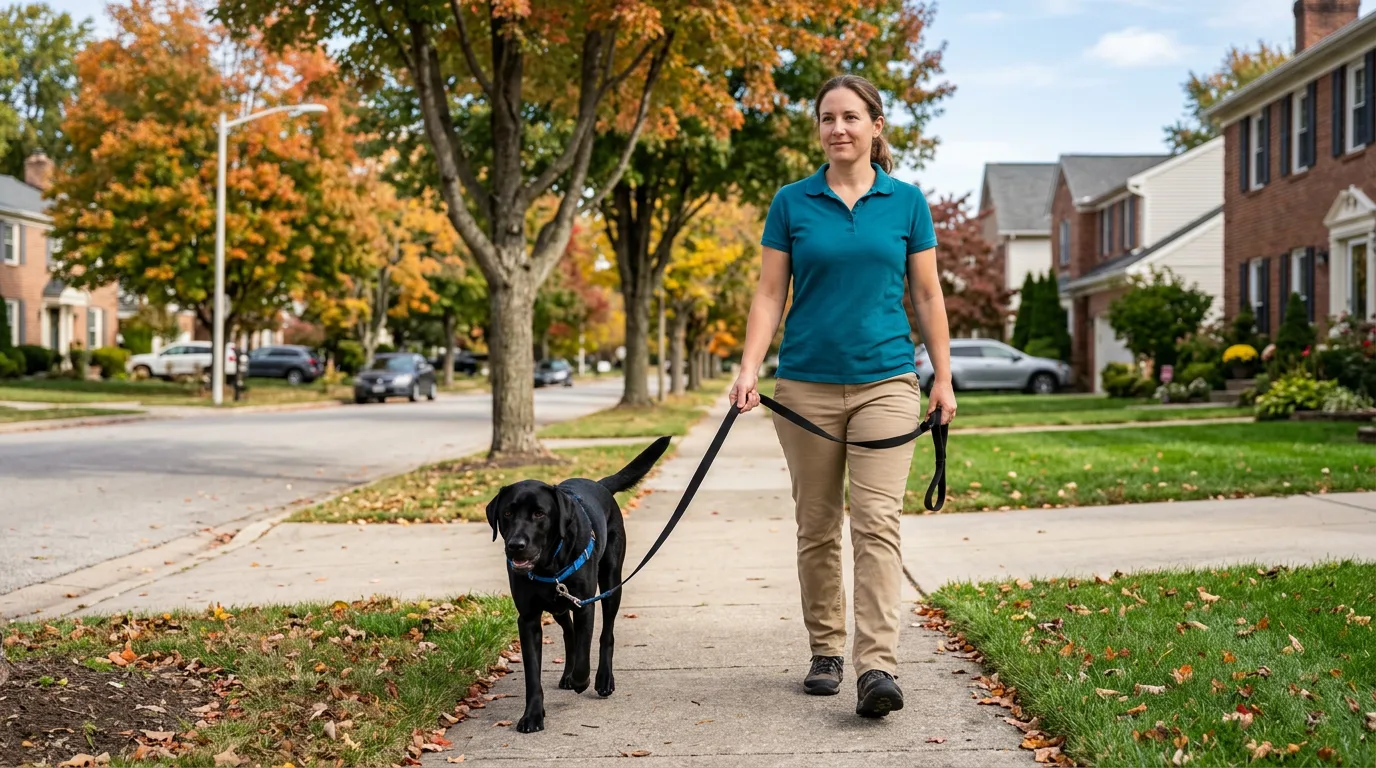
Thirty minutes of training practice during a walk, handled by our team while you are away. Add it to any walk or book it on its own. It is a simple way to keep your dog learning even on a busy week.
Member Add-On
Add it to any walk with no minimum commitment. Total about $60 to $65 per session.
Members save $10 to $15 per session compared to the standalone rate.
Standalone
Minimum one session per week on a three-month plan.
Why Training on a Walk Works
Most of what frustrates dog owners happens on a walk. The pulling, the lunging at other dogs, the refusing to move, the barking at the mail carrier. Those behaviors do not show up in a quiet training room, which is exactly why training in a quiet training room often does not fix them.
Walk and Train works on the problem where the problem lives. Same sidewalk, same neighbors, same squirrels, same trash cans. Your dog is learning to handle the real world, not a controlled one.
The other reason it works is frequency. A dog that gets a short training session several times a week will progress faster than a dog that gets one long session on a Saturday. Repetition is what builds a habit, and a weekday walk is already happening anyway.
And there is the practical part. You are at work. Your dog needs out. Rather than that being a bathroom break, it becomes 30 minutes of useful work.
What We Practice
We build the session around what you actually want fixed.
Loose leash walking
The number one request. Teaching your dog that a slack leash is what moves them forward and pulling is what stops everything.
Passing other dogs
Attention on the handler instead of locking on. Built up gradually with real dogs at real distances.
Door manners
Waiting at the threshold instead of exploding out. This is a safety skill as much as a manners one.
Recall
Coming when called, practiced in safe spaces. The most important cue your dog will ever learn.
Curb and street safety
Automatic sit or wait at every curb. It becomes a habit fast and it can save a dog life.
Impulse control
Leave it, ignoring food on the ground, not lunging at squirrels. The underlying skill behind most of the rest.
Walk and Train or Private Training?
Choose Walk and Train if
- You work full time and cannot be home for sessions
- The problem is mostly leash and outdoor behavior
- Your dog already needs a midday walk anyway
- You want frequent short practice instead of one long session
Choose Private Training if
- The problem happens inside the house
- You need to learn the handling yourself
- There is reactivity or aggression to assess in person
- Multiple people in the home need to be on the same page
Plenty of clients do both. Private training sets the plan, Walk and Train keeps the reps up during the week.
Frequently Asked Questions
What is Walk and Train?
It is 30 minutes of structured training practice built into a walk, handled by our team while you are at work. Your dog gets exercise and skill work in the same visit, and you do not need to be home.
Do I have to be home?
No. That is the whole point. Our team works with your dog during the walk, so the training happens on a weekday while you are busy instead of on a weekend you were hoping to have off.
How much does it cost?
As a dog walking member add-on, it is an extra $30 per session with no minimum commitment, for a total of about $60 to $65 per session. As a standalone service it is $75 per session, with a minimum of one session per week on a three-month plan.
Why is the standalone version more expensive?
Because with a membership we are already coming to your home on a set schedule. The add-on price is just the training layered onto a visit that is already happening. Standalone means a dedicated trip for the training alone.
How is this different from private training?
Private training is a one-hour in-home session with you present, focused on teaching you to handle the behavior. Walk and Train is our team practicing and reinforcing skills with your dog while you are away. Many clients use both, and they work well together.
What can you actually work on during a walk?
Loose leash walking, heel, sit and wait at curbs, recall in safe spaces, polite passing of other dogs and people, door manners on the way out and back, and general impulse control. Anything that shows up on a walk can be worked on during a walk.
Will the training transfer to me?
Partly, and this is worth being honest about. Your dog will get genuinely better at these skills, but dogs are context specific and they learn who they have to listen to. We send you notes on what we worked on so you can practice the same way. Clients who follow up at home get much better results than clients who do not.
How long before I see a difference?
For simple leash manners, often a few weeks of consistent sessions. For deeper issues like reactivity, longer. Consistency is what drives it, which is why the standalone version requires a weekly minimum.
Is this a good fit for a reactive dog?
Sometimes, but not always. It depends on the severity and on what triggers it. Tell us specifically what happens and we will give you an honest answer about whether Walk and Train or private in-home training is the better place to start.
Can this lead to a full walking plan?
Yes, and it often does. Many clients start with Walk and Train and move to a regular dog walking membership, which brings the per-session cost down and gives the dog the daily routine that makes the training hold.
Ready to Get Started?
22 years of trusted pet care in Fairfield County. We stand behind every service with our 3-day satisfaction guarantee.