
100 Blog Posts Later: Thank You, Fairfield County
Quick Answer
203 Pet Service is using its 100th blog post to say a big, heartfelt thank you to the pet parents of Eastern Fairfield County who have trusted them since 2004. They share how the business grew from a few local walks to a full-time career built on in-home care, vet tech experience, and long-term relationships with local dogs, cats, and families.
100 Blog Posts Later: Thank You, Fairfield County
This is blog post number 100 for 203 Pet Service, and that still feels a little wild to say. We started writing to help local pet parents solve real problems, not to chase a number. But hitting 100 is a good excuse to pause, look back, and say something simple to Fairfield County.
Thank you. Really. Thank you for trusting us with your dogs, your cats, and your homes, and for reading along as we have written our way through everyday pet life in Eastern Fairfield County.
How did 203 Pet Service get here from one dog walk to a full career?
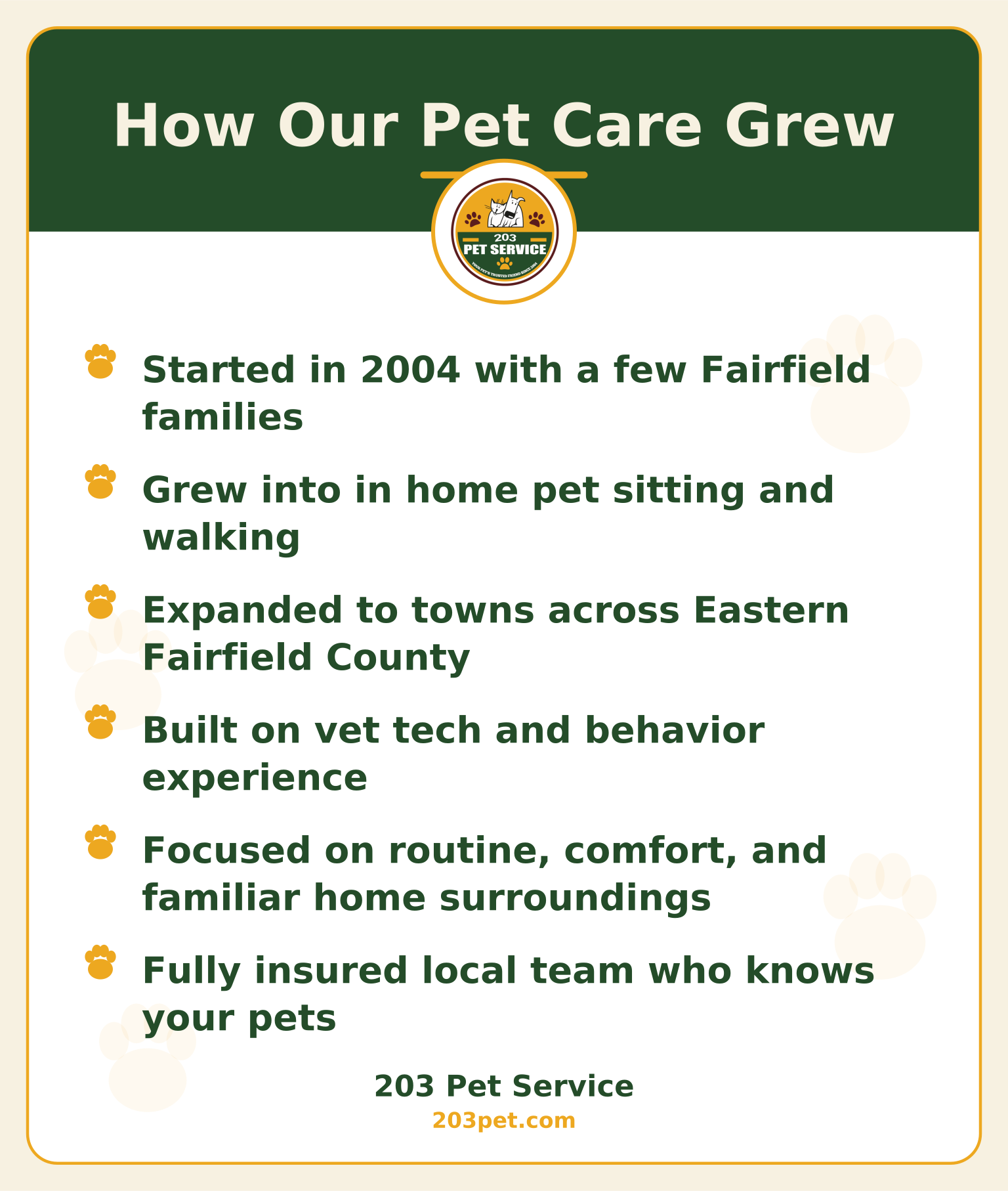
We got here one walk, one visit, and one relationship at a time. 203 Pet Service opened in 2004 with a simple idea, keep local pets happy, safe, and comfortable in their own homes while their people work or travel.
Back then, it was just a handful of families in Fairfield who needed help with mid-day walks and vacation care. Some had puppies still learning where to potty. Others had senior dogs who just needed a slow stroll and a lot of patience. A few had shy cats who only came out at night.
Over the years we added more walks, more sitters, and more towns. Today, we care for pets in Stratford, Westport, Easton, Southport, Black Rock, and Bridgeport, along with nearby places like Shelton, Devon, Trumbull, Weston, and Wilton. The map is bigger now, but the mission really hasn't moved an inch.
We still focus on what your dog or cat needs to feel secure. Routine. Familiar smells. The same door, the same yard, the same couch. that's why we built our business around in-home pet sitting and membership-style dog walking, instead of quick one-off visits from whoever has the app open.
Jason, our founder, brought a veterinary background into this from day one. He worked as a vet tech for 5 years at Greenfield Animal Hospital in Fairfield, then managed a pet store, then started this business. That mix of medical training, behavior work, and real-world problem solving shaped how we walk dogs, how we write policies, and even how we write these blogs.
Why do we spend so much time writing about pet care?

We write these posts so you can make calm, informed choices for your pets. Not to scare you. Not to hard-sell you. Just to share what we've learned walking dogs and caring for cats in Fairfield County for more than two decades.
Over 100 posts, a few themes keep coming back. We talk a lot about puppy basics, because a solid start makes life easier for everyone. The American Kennel Club has a great checklist for getting your home ready for a new puppy, from gates and crates to safe chew toys, and we build on those ideas when we talk to new puppy clients in Westport and Southport in their puppy preparation guide.
We talk about health and safety too. Things like how often your puppy should see the vet for vaccines, and why those early visits matter. The AKC lays out a full puppy shot schedule with timing and what each vaccine protects against, which matches what we see local veterinarians recommend here in Fairfield County in their vaccination schedule guide.
We have written about crate training, potty training, and how to stop your dog from jumping on every guest who walks in the door. The AKC walks through step-by-step housebreaking, from tight schedules to reward timing, which lines up closely with what Jason teaches in our dog training sessions in their potty training guide.
We talk about senior dog comfort, cat health basics, and what to do when something changes suddenly. Cornell's feline health center has a deep library of cat topics, from kidney disease to behavior shifts, and we often point worried cat owners there for clear, vet-backed explanations when their cat in Bridgeport starts acting unlike themselves in their feline health topics.
We also write about safety through the seasons. Heat, ice, fireworks, holiday foods. UC Davis shares research-based tips on all kinds of animal health issues, including heat stress, toxins, and behavior changes, which support the safety advice we share with dog walking members in Black Rock and Easton in the summer and winter months in their animal health topics.
Under all those topics, there's one big goal. We want you to feel like you've a calm, knowledgeable friend in your corner while you raise your dog or care for your cat. Someone local. Someone who knows your streets, your weather, and your kind of schedule.
What have we learned from 22 years of walking dogs in Fairfield County?

we've learned that dogs need more structure and more exercise than many people expect. But we've also learned that you do not have to be perfect to be a good dog parent. You just need a plan that fits your life.
A high energy dog in Stratford or Bridgeport might need an hour of fast walking or play every day to stay sane. A small older dog in Southport might only need a few shorter strolls. The AKC points out that exercise needs vary a lot by breed, size, and age, and that mental stimulation matters almost as much as miles on the leash in their exercise needs guide.
that's why we talk about our dog walking service as an ongoing walking membership. Not a one-time fix. Dogs do best with regular movement and routine. When we walk your dog three or four times every week, we learn their pace, their quirks, and what normal looks like for them. You get fewer wild zoomies at 9 pm and more relaxed evenings.
we've also learned that early training pays off for years. Jason is an Animal Behavior College certified dog trainer, and he sees the same thing in home after home from Fairfield to Westport. Puppies that start learning simple behaviors, like sit and come, in those first months grow into calm, confident dogs. The AKC puppy training timeline backs that up, showing how much young dogs can learn between 8 weeks and 6 months when you teach consistently in their training timeline.
On the cat side, we've learned that routine and quiet matter even more. Many of our pet sitting clients in Easton and Black Rock tell us their cats hide from everyone. By keeping visits calm and predictable, and by following feeding and litter routines exactly, those same cats start coming out to say hello after a few days.
We have learned that most emergencies do not look like what people expect. Sometimes it's not a dramatic collapse. it's a dog who seems just slightly off, or a kitten who feels a little cooler than normal. The ASPCA notes that newborn kittens can't regulate their own body temperature and need careful warmth and feeding to stay stable, something we keep in mind on visits with young litters in their newborn kitten care guide.
And we've learned that when something is wrong, clear steps matter more than panic. that's where our emergency protocol, and Jason's first aid and CPR training, come in.
What really makes 203 Pet Service different from an app sitter?

203 Pet Service uses W-2 employees, not contractors or gig workers. That single choice changes how we hire, how we train, and how we show up in your home.
When we say salaried employees, we mean people who work for 203 Pet Service as their real job, not a side hustle that gets attention only when it's convenient. We background check and train every walker and sitter. We carry full business insurance. And because we keep people on as employees, not one-off helpers, you see the same faces on your schedule instead of a new stranger every week.
Jason builds our training around his 29 years in animal care. Five years as a veterinary technician in Fairfield. Two years running a pet store. Twenty two years owning this business. He is an ABC Certified Dog Trainer and a certified Pet First Aid and CPR instructor, so health and safety show up in every part of our work, from how we handle leashes to how we choose walking routes.
Emergency care is built into our structure too. If your dog or cat has an emergency during a visit, the sitter or walker calls Robyn, our office manager, right away. Robyn contacts you to explain what is going on and discuss next steps. In the meantime, your sitter stays with your pet until you or your vet give clear instructions. No one just drops the leash and leaves.
When a vet visit is needed, we work with local hospitals and clinics that we know and trust. Jason worked at Greenfield Animal Hospital in Fairfield, and we often recommend MedVet Norwalk for serious emergencies. For more complex cases, we lean on evidence-based veterinary research so our advice stays current and accurate, including the published material in their animal health topics.
That mix of W-2 employees, clear emergency steps, and veterinary-informed training is not flashy. It is just solid, local, professional care.
How do you know who to trust with your dog or cat?

You trust the person who is prepared before something goes wrong, not the one who makes big promises and hopes for the best. that's how we look at it, both as professionals and as pet owners ourselves.
When you choose someone to walk your dog or watch your cat, look at a few clear things. Are they employees or just names on an app. Do they have written emergency steps. Are they insured. Do they know local vets and hospitals. Can they explain how they handle keys, alarms, and doors in plain language.
You should also ask how they handle training and behavior. Jason teaches our salaried employees to use reward-based methods, not fear or pain. The AKC recommends positive reinforcement and early structure so puppies learn good habits before bad ones set in, which is the same approach we take in our dog training work with families in Fairfield County in their training timeline.
First aid knowledge matters too. The AKC outlines basic dog first aid skills, like how to handle cuts, choking, and heat stress, and when you need to get to the vet right away in their dog first aid guide. Jason teaches those same skills in his Pet First Aid and CPR classes, and we fold them into our daily work. It shows up in small ways, like how we watch for early signs of heat trouble on hot walks in Bridgeport, or how we adjust routes for icy sidewalks in Black Rock.
Food and treat choices matter more than most people realize. Plenty of human foods are safe in small amounts, like plain cooked chicken or certain fruits, but others are dangerous. The AKC lists foods like grapes, raisins, onions, and xylitol-sweetened items as unsafe, and we keep that in mind when we see snacks left on coffee tables in their human foods for dogs guide.
So when you compare sitters or walkers, look for someone who can talk calmly and clearly about all that. Not in a scary way. In a "we've a plan" kind of way.
Video: Teaching a reliable recall command can make everyday life with your dog much easier and safer.
We like recall work a lot in our training sessions. That one skill, "come when called," makes off-leash play safer, helps in emergencies, and lowers your stress on walks in busy spots around Fairfield County.
How has our blog helped real Fairfield County pet families?
Over 100 posts, we have watched the same thing happen again and again. Someone searches for help, reads an article, tries a tip, and then calls or emails to say, "That finally made sense."
A family in Fairfield used one of our puppy setup posts, along with the AKC puppy prep checklist, to get their house ready before bringing home a Lab mix from a local rescue in the AKC puppy preparation guide. They set up gates, picked a feeding spot, and created a crate corner that felt like a den. When we came for the first mid-day visit, their little guy already had a clear routine and far fewer accidents than we usually see at that age.
A client in Westport read one of our senior cat posts and then followed up by digging into Cornell's cat health articles. That combination helped her catch early kidney issues when she noticed subtle changes in thirst and litter box use, which her vet later confirmed through Cornell's feline health topics. She told us later that those few days of reading probably bought her cat extra good months.
Another family in Stratford used our training and potty posts together. They blended Jason's house call training with the AKC potty guide and crate training tips to help their rescue dog settle in faster than expected using the AKC crate training guide. That dog now gets regular walks as part of our membership plan and has turned into one of those solid, go-anywhere dogs you love walking down Main Street.
we've heard from new kitten owners who used ASPCA newborn kitten guidance to support bottle babies until they were old enough for regular visits, and then brought us in for daily care while they went back to the office. we've heard from parents juggling school pickups, sports, and late train commutes who used our walking membership posts to finally feel like their dog was getting what they needed during the week.
If one short article helped you feel less alone with a problem, that makes all the hours of writing worth it.
Why do we keep talking about "real pet professionals"?

We talk about professional pet care so much because the word "experience" gets used very loosely in this field, especially when people compare it with Jason's 29 years in animal care. Growing up with dogs is lovely, but it's not the same as 29 years of hands-on work with all kinds of animals.
Jason says it plainly. Owning a dog doesn't make you a pet care professional, just like using a toilet does not make you a plumber. What matters for your dog or cat is training, structure, and a long history of solving problems when things don't go smoothly.
Professional care means we study and stay current. We read sources like the AKC, ASPCA, Cornell, and UC Davis. We look at veterinary-backed advice on topics like pregnancy and whelping, which the AKC explains clearly for breeders and owners in their dog pregnancy guide. Then we use that knowledge if we happen to care for a pregnant dog or a new litter in a client's home.
Frequently Asked Questions

About This Topic
What does your 100th blog post milestone mean for local pet parents?
Hitting 100 blog posts means we’ve spent years answering real questions from Fairfield County pet parents, not just posting cute photos. It’s a sign that families keep coming back, trusting us with in‑home pet sitting and dog walking since 2004. We’ll keep using the blog to share practical tips, local info, and behind‑the‑scenes stories that help you care for your pets.
Are you doing anything special for clients to celebrate 100 blog posts?
This post is mainly a big thank‑you to the dogs, cats, and families that have stuck with us since 2004, but we’re also using it as a reset. We’re reviewing what clients ask most and planning future posts, guides, and checklists around that. If there’s a topic you want covered, you can always email 203 Pet Service and we’ll add it to the list.
How has 203 Pet Service changed since those first few dog walks?
We started with just a handful of mid‑day dog walks and vacation visits in Fairfield. Now we’ve grown into a full‑time team offering in‑home pet sitting and membership‑style dog walking across towns like Stratford, Westport, Easton, Southport, Black Rock, Bridgeport, and nearby areas. What hasn’t changed is the focus on keeping pets in their own homes, on their own couches, with familiar routines.
I’m new here, what services do you offer beyond what’s in the blog?
The blog shares education and stories, but our day‑to‑day work is hands‑on pet care. We provide in‑home pet sitting for dogs and cats, plus recurring, membership‑style dog walking so your pup sees the same walker and routine. If you live in Eastern Fairfield County, you can reach out for a custom schedule that fits your work or travel plans.
Why do you emphasize in-home care instead of boarding at a facility?
Most of the pets we care for relax best at home, with their own smells, yard, and favorite couch. That’s why we’ve built 203 Pet Service around in‑home pet sitting and regular dog walking instead of rotating, on‑demand app visits or crowded boarding. It keeps routines consistent, which is especially important for puppies, seniors, shy cats, and pets with medical needs.
How can I suggest topics for your next 100 pet care blog posts?
If there’s a question you’ve Googled about your dog or cat, we probably want to write about it. You can email 203 Pet Service, mention it during a pet sitting meet‑and‑greet, or reply to our newsletters with ideas. We use client questions to shape future posts, so your suggestion may become a full guide other local pet parents can use.
About 203 Pet Service
What areas does 203 Pet Service cover in Fairfield County?
We provide professional dog walking, pet sitting, and training services across Eastern Fairfield County, Connecticut. We proudly serve families in Fairfield, Stratford, Westport, Easton, Southport, Black Rock, Bridgeport, Shelton, Devon, Trumbull, Weston, and Wilton. 203 Pet Service has cared for pets in Fairfield County since 2004, and every visit is handled by a trained, W-2 salaried employee who is background checked and fully insured.
Why does 203 Pet Service use salaried W-2 employees instead of independent contractors?
We believe salaried W-2 employees provide more reliable, accountable, and professional pet care. Unlike independent contractors, our salaried employees go through careful background checks, full training, and are fully insured. This employment structure means consistency, accountability, and peace of mind for Fairfield County pet families.
How does 203 Pet Service handle pet emergencies?
In an emergency, our sitter or walker immediately calls Robyn, our office manager, so she can contact you while our salaried employee stays with your pet. This protocol means your pet gets constant care while we coordinate with you about next steps. Our team is trained to stay calm and put your pet's safety first in any situation.