
Dog parks seem like the perfect solution for busy pet owners - a free place where your dog can run, play, and socialize while burning off energy. But after serving as professional dog walkers in Fairfield County since 2004, our salaried W-2 team has treated countless injuries, behavioral problems, and diseases that started at dog parks. This comprehensive comparison will help you understand the real risks and benefits of both options so you can make the best choice for your dog's physical and mental health.
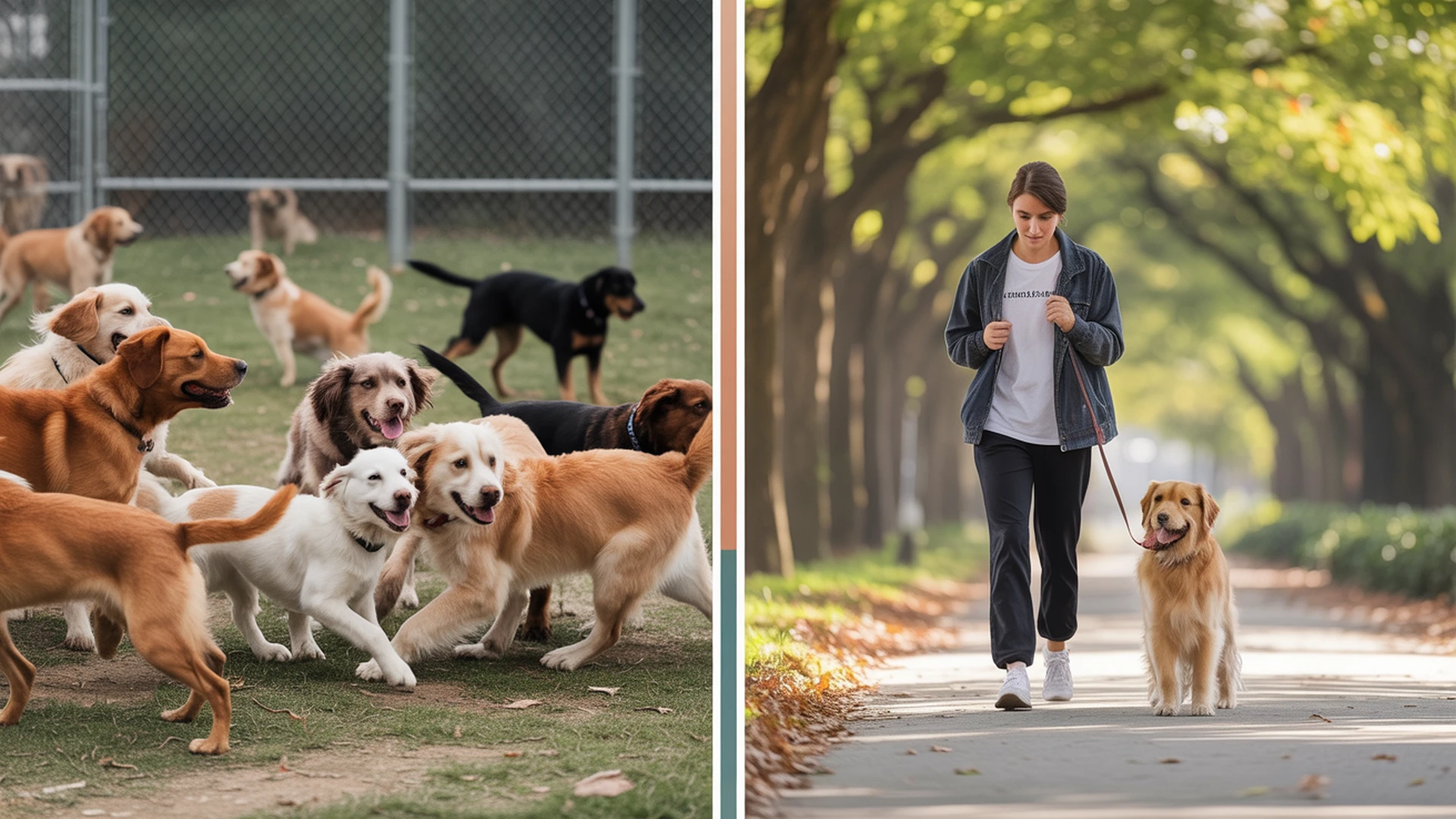

The Hidden Risks of Dog Parks
Dog parks offer an appealing value proposition: free off-leash exercise in a contained space with other dogs. But according to the American Veterinary Medical Association (AVMA), dog parks present significant risks that many owners don't discover until after something goes wrong.
Disease Transmission: The Invisible Threat
Dog parks are, fundamentally, shared bathrooms. The Centers for Disease Control (CDC) identifies dog parks as high-risk environments for disease transmission because:
- Concentrated waste: Even with poop bag stations, fecal matter, urine, and contaminated soil accumulate
- Shared water bowls: Communal water sources spread oral bacteria and viruses
- Unknown vaccination status: You have no way to verify if other dogs are current on vaccines
- Asymptomatic carriers: Dogs can be contagious before showing symptoms
⚠️ Common Dog Park Diseases
Kennel Cough (Bordetella): Highly contagious respiratory infection. Symptoms appear 3-10 days after exposure.
Canine Influenza: Dog flu spreads rapidly in enclosed spaces. More severe than kennel cough.
Parvovirus: Can survive in soil for years. Fatal without immediate treatment, especially dangerous for puppies.
Giardia: Intestinal parasite causing severe diarrhea. Spread through contaminated water and fecal matter.
Leptospirosis: Bacterial infection spread through urine. Can cause liver and kidney failure.
According to PetMD research, dogs that frequently visit dog parks are 50% more likely to contract kennel cough and 30% more likely to have intestinal parasites compared to dogs who get exercise through individual walks.
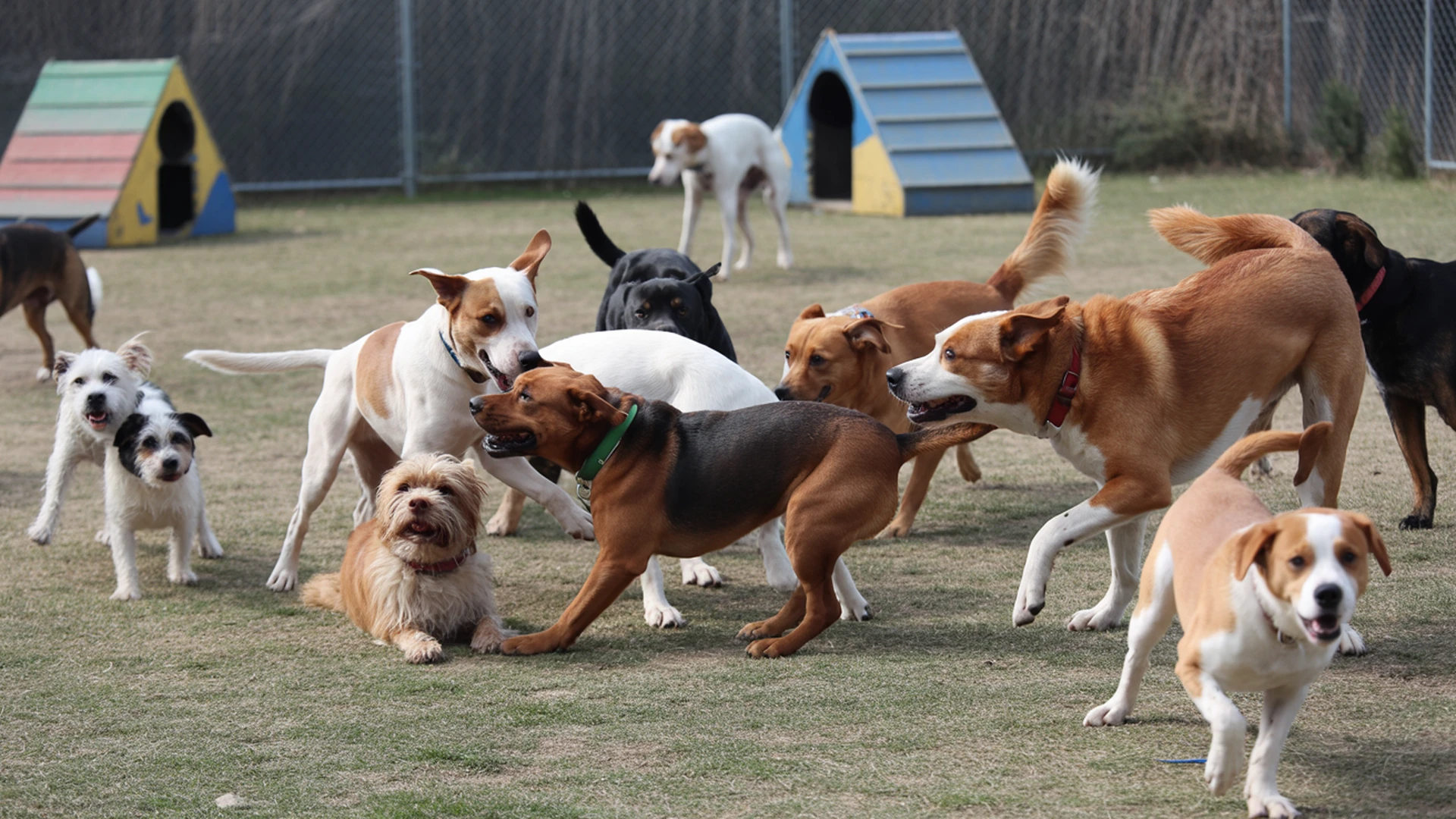
Crowded dog parks with unsupervised play can lead to disease transmission, behavioral problems, and injuries.
Behavioral Problems: When Socialization Goes Wrong
Dog parks are often promoted as essential for "socialization," but the American Kennel Club (AKC) warns that uncontrolled group play can actually create behavioral problems:
Resource Guarding and Food Aggression
When treats come out at dog parks (which responsible owners shouldn't do, but many do), dogs learn to compete aggressively for resources. This behavior then transfers to home environments.
Leash Reactivity
Dogs who play off-leash at parks often develop frustration when they see other dogs while leashed on walks. They've learned that "dog equals playtime," so being restrained creates anxiety and aggressive pulling.
Rude Play Behavior
Not all play is healthy. Whole Dog Journal explains that dog parks often lack intervention when play becomes too rough. Dogs learn:
- Mounting other dogs is acceptable
- Ignoring social cues from uncomfortable dogs is fine
- Overwhelming smaller or shy dogs is normal play
- Bullying behaviors get rewarded with more attention
Fear and Anxiety Development
A single frightening experience at a dog park can create lasting behavioral issues. Common triggers include:
- Being knocked over by larger dogs
- Being cornered or chased aggressively
- Witnessing dog fights
- Overwhelming sensory stimulation (too many dogs, too much noise)
💡 Professional Insight: The "Wrong Dogs" Problem
After 29 years of experience, we've noticed that well-trained, socially balanced dogs rarely need dog parks - their owners provide structured exercise. Dog parks tend to attract either inexperienced owners who don't know better alternatives, or owners with behavioral problem dogs hoping the park will "fix" the issues. This creates environments where poorly supervised, poorly trained dogs interact, reinforcing bad behaviors.
Physical Injuries: When Play Turns Dangerous
The ASPCA reports that dog parks see higher injury rates than any other dog activity. Common injuries include:
- ACL tears and joint damage: Sudden pivots and abrupt stops during chase play
- Bite wounds: Even "friendly" dogs can bite during overstimulated play
- Eye injuries: Paws and sticks during rough play
- Heat exhaustion: Dogs playing too hard in hot weather without breaks
- Laceration from fencing or equipment: Sharp edges on worn playground equipment
The financial cost of these injuries is significant. According to pet insurance data, the average dog park injury claim is $1,800, with surgical repairs for ACL tears costing $3,000-5,000.
Inconsistent Exercise Quality
Even when nothing goes wrong, dog parks provide inconsistent exercise:
- Standing around: Many dogs spend more time sniffing and standing than actually running
- Inappropriate intensity: Either too much (leading to exhaustion) or too little (defeating the purpose)
- Weather-dependent: Parks empty out in bad weather, hot summers, or cold winters
- Crowd-dependent: Some dogs won't play without other dogs; others are overwhelmed by crowds
Why Professional Dog Walking Provides Superior Benefits
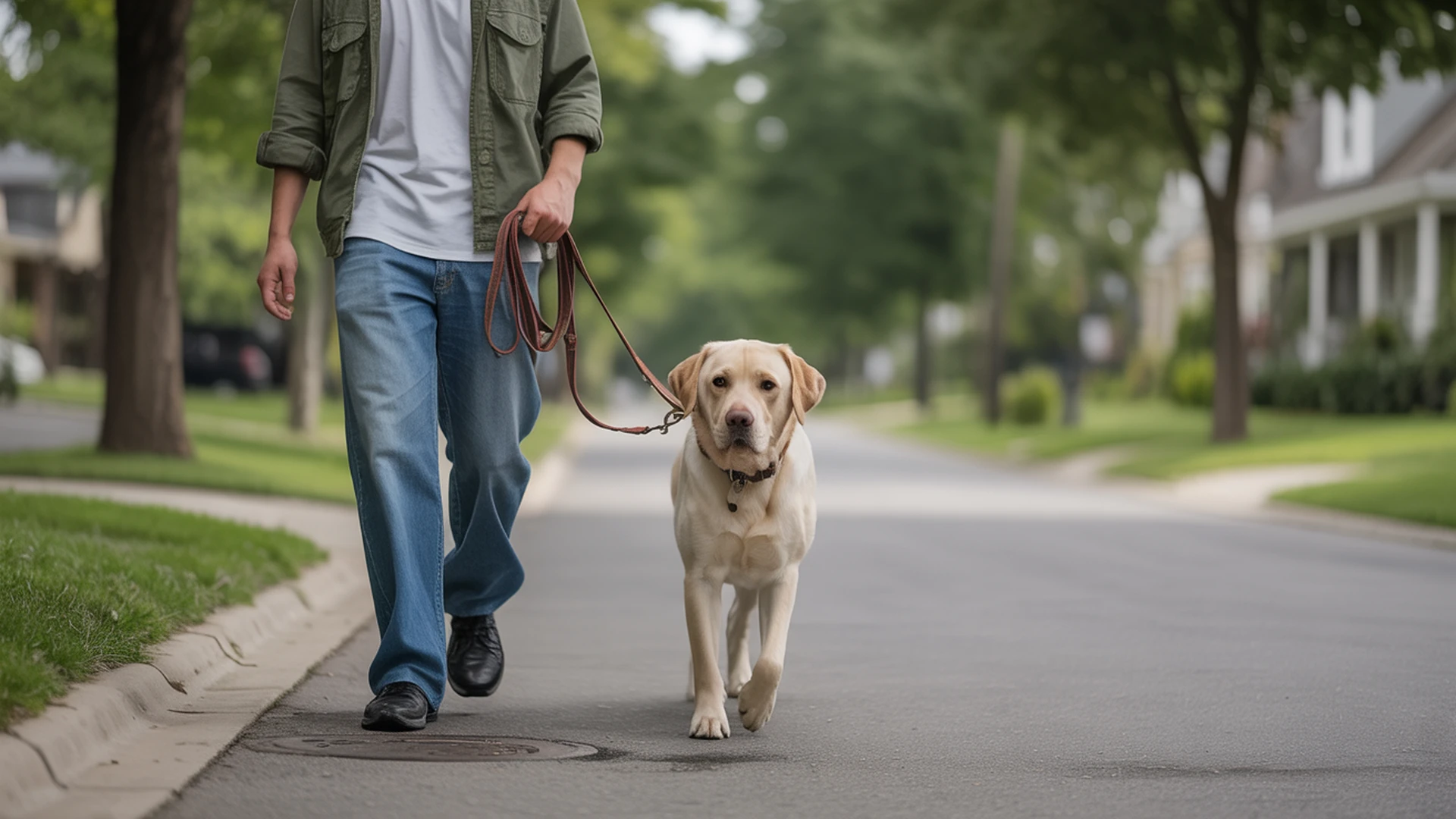
Professional dog walking provides controlled, individualized exercise tailored to each dog's specific needs.
1. Controlled, Appropriate Exercise
Professional dog walking provides exercise that's tailored to your specific dog's needs. According to Tufts University Veterinary School, appropriate exercise should be:
- Age-appropriate: Walks are adjusted for puppies, adult dogs, and senior dogs with different needs
- Breed-specific: A Border Collie gets a different walk than a French Bulldog. We adjust distance, pace, and intensity accordingly
- Health-accommodating: Dogs recovering from surgery, managing weight, or with medical conditions get exercise that supports their health - not random bursts of activity
- Weather-adjusted: We modify walks for heat, cold, rain, and snow using professional protocols
- Consistent: Same time, same quality, same care - every single day regardless of conditions
| Exercise Type | Dog Parks | Professional Walking |
|---|---|---|
| Consistency | Highly variable | Guaranteed daily |
| Intensity Control | Uncontrolled | Precisely managed |
| Age Appropriateness | One-size-fits-all | Fully customized |
| Health Considerations | None | Fully accommodated |
| Weather Adaptation | Skip if bad weather | Adjusted, not cancelled |
2. Disease Prevention
Professional walks eliminate disease transmission risks because:
- No dog-to-dog contact: Individual or small, known-group walks only
- Verified vaccination records: We require documentation before group walks
- Controlled environments: We avoid contaminated areas and standing water
- Fresh air and sunlight: Natural UV light kills many pathogens that thrive in enclosed dog parks
- Early symptom detection: Our team notices subtle health changes because we see your dog regularly
3. Mental Stimulation and Enrichment
Professional walks provide mental enrichment that dog parks simply can't match. Canine behavior research shows that mental stimulation is often more tiring than physical exercise alone:
- Novel environments: Walks explore different neighborhoods, exposing dogs to new sights, sounds, and smells
- Structured sniffing time: We build in "sniff breaks" - critical for mental health but often rushed by owners
- Training reinforcement: Every walk reinforces leash manners, recall, and impulse control
- Calm energy: Dogs learn to exist in calm, confident states - not just the chaos of dog park excitement
4. True Socialization vs. Chaos
According to the AKC's guidelines on proper socialization, healthy social development requires:
- Controlled interactions: Not overwhelming free-for-alls
- Positive associations: Every interaction should end well
- Appropriate play partners: Dogs matched by size, age, and play style
- Human supervision: Trained professionals intervene before problems escalate
Our structured group walks (maximum 3 dogs, all known to each other) provide socialization benefits without the risks. We carefully match temperaments and monitor body language constantly.
5. Relationship Building and Trust
The biggest difference between our W-2 employee model and dog parks? Relationship. When the same team member walks your dog 3-5 times per week for months or years, they develop deep understanding:
- They know your dog's quirks: Your Labrador always needs to pee twice on walks. Your rescue gets nervous near skateboards
- They detect subtle health changes: Slight limp, lower energy, unusual bathroom habits - caught early before they're problems
- They provide consistency: Dogs thrive on routine. Same person, same time, same quality
- They genuinely care: Your dog isn't a transaction - they're part of our team member's daily life
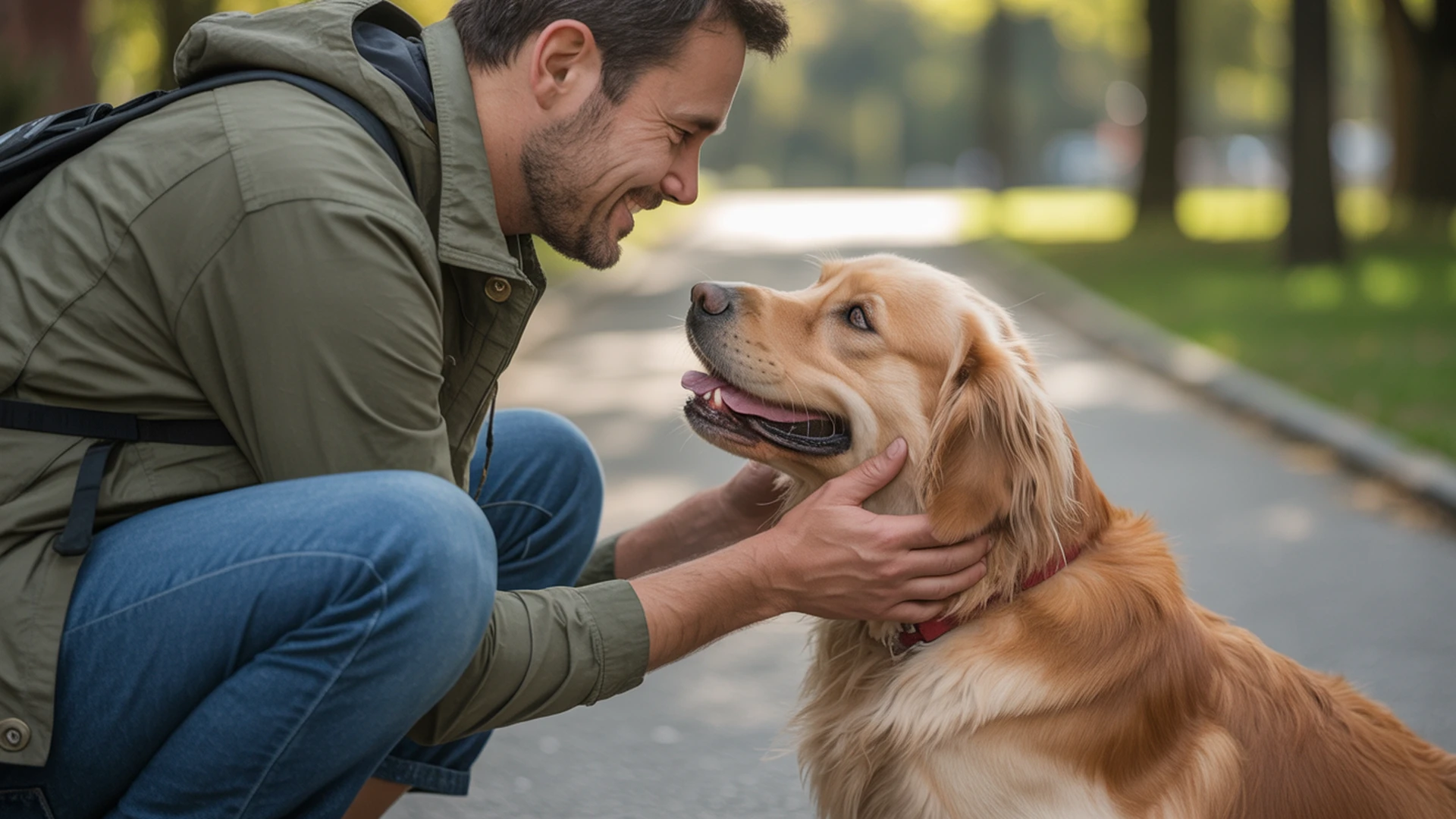
The relationship between professional walkers and dogs builds trust, consistency, and genuine care over time.
📊 By The Numbers: Dog Park vs Professional Walking
Average dog park visit:
- Duration: 45 minutes (including travel)
- Actual exercise: ~15 minutes
- Owner supervision: Minimal (chatting with other owners)
- Disease exposure: High
- Cost: Free (but potential vet bills)
Professional dog walk:
- Duration: 30-45 minutes of continuous movement
- Actual exercise: 30-45 minutes
- Professional supervision: Constant, trained observation
- Disease exposure: Minimal to none
- Cost: Investment in long-term health and happiness
When Dog Parks Might Work (With Serious Caveats)
We're not saying dog parks are universally terrible for every dog. They can work for:
The "Ideal Candidate" Profile
- Adult dogs (2-7 years): Not puppies or seniors
- Well-socialized: Already has excellent dog social skills
- Obedient: Reliable recall and owner focus
- Healthy: Current on all vaccines, no chronic conditions
- Size-appropriate: Goes to parks with size-separated areas and uses the correct section
- With engaged owners: Owner watches their dog constantly, not their phone
Safety Rules If You Choose Dog Parks
- Visit during off-peak hours: Early morning weekdays have fewer dogs and more serious owners
- Leave at first sign of trouble: Don't try to "tough it out" if your dog seems uncomfortable
- Stay alert and near your dog: Put your phone away
- Don't bring treats, toys, or balls: These trigger resource guarding
- Know body language: Learn the difference between healthy play and bullying
- Visit your vet if anything seems off: New cough? Diarrhea? Don't wait
Making the Switch: From Dog Parks to Professional Walking
If you've been relying on dog parks and are considering professional walking, here's what to expect:
Transition Period
Dogs addicted to dog park chaos may need 1-2 weeks to adjust to structured walks. You might notice:
- Initial disappointment when you pass the dog park
- Extra sniffing as they explore new walking routes
- Calmer behavior at home as they're mentally fulfilled, not just physically tired
- Improved leash manners with consistent training reinforcement
Cost Comparison
While dog parks are "free," consider the hidden costs:
- Your time: 30 minutes driving + 45 minutes at park = 1.25 hours per visit
- Veterinary bills: Average kennel cough treatment: $200-500. Giardia: $300-600. Fight injuries: $800-3,000
- Behavioral training: If dog park experiences create behavioral problems: $500-2,000 for professional training
Professional walking provides predictable costs with predictable (excellent) outcomes.
Our Approach: Professional Dog Walking in Fairfield County
Since 2004, we've provided professional dog walking services across Fairfield, Westport, Easton, Southport, Black Rock, Stratford, Shelton, Devon, Trumbull, Weston, Wilton, and Bridgeport. Here's what makes our approach different:
W-2 Employee Model
Unlike gig-economy apps where random strangers show up each day, our team consists of:
- Full-time professionals: This is their career, not a side hustle
- Extensively trained: Canine first aid, behavior recognition, breed-specific needs
- Background checked: All team members undergo comprehensive screening
- Consistently assigned: Same walker(s) for your dog, building trust and relationship
Customized Walk Plans
Every dog gets an individualized plan based on:
- Age and energy level
- Breed characteristics and physical capabilities
- Health conditions or limitations
- Behavioral considerations and training goals
- Seasonal and weather adjustments
Communication and Updates
After every walk, you receive:
- Photo updates showing your happy dog
- Walk notes including distance, duration, and any observations
- Bathroom reports (important for monitoring health)
- Immediate notifications if anything seems unusual
Conclusion: Choose What's Best for Your Dog, Not What's Convenient
Dog parks have their place for a small subset of dogs with engaged, educated owners. But for most dogs, professional walking provides superior benefits:
- ✅ Consistent, appropriate exercise
- ✅ Zero disease transmission risk
- ✅ Positive behavioral reinforcement
- ✅ Mental stimulation and enrichment
- ✅ Relationship with trusted professionals
- ✅ Peace of mind knowing your dog is safe and well-cared-for
If you've been using dog parks because you don't have time for walks, or because you thought it was the only way for your dog to socialize, we're here to show you there's a better option.
Ready to see the difference professional care makes? Schedule a meet and greet with our team. We'll discuss your dog's specific needs and create a walking plan that keeps them healthy, happy, and safe - without the risks of dog parks.
Call us at (203) 682-6443 or use our contact form. Because your dog deserves professional care from people who genuinely love what they do.