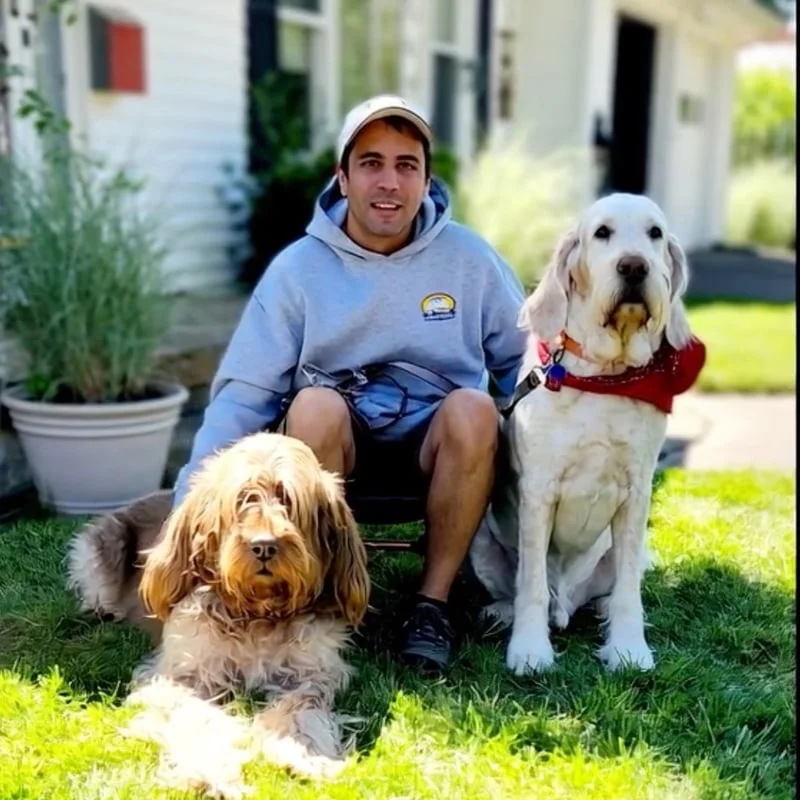

Dog Training and Behavior Tips for Fairfield County Dog Owners
Photo by John Tuesday on Unsplash
Quick answer: To raise a well behaved dog in Fairfield County, use clear rules, reward based training, and a steady daily routine that fits your busy local life.. Start early with short, fun lessons at home, then practice around real world distractions like town sidewalks, parks, and apartment halls, and get help from consistent, trained pros when you need extra support.
Dog Training Tips for Fairfield County Owners
Good dog training in Fairfield County starts with one simple idea. Your dog needs clear rules and regular routines that fit real life in our Connecticut towns. When you combine that with kind, reward-based training, you get a dog who can handle busy sidewalks in Fairfield and Westport, apartment hallways in Bridgeport and Black Rock, and quiet country roads in Easton, Weston, and Wilton.
Life here moves fast. You might juggle kids, Metro-North trains from Trumbull or Shelton, errands in Stratford or Devon, and weekend trips to the beach in Southport. A well-trained dog makes all of that easier and safer. In this guide, we'll walk through puppy foundations, socialization, crate and potty training, common behavior problems, leash manners, and daily routines that work in Fairfield County.
Since 2004, 203 Pet Service has helped local dogs and their people build these habits the right way. We use only W-2 salaried employees, not gig workers, so you get consistent, trained caregivers who follow your plan every visit. Our training program is designed by ABC-certified trainer Jason Hofmann and backed by 22 years of hands-on local experience. You can learn more about our background and philosophy on our About page.


You set your puppy up for good behavior by starting training early, keeping it positive, and matching your plan to real life in Fairfield County. That means you build skills in small steps at home first, then practice around the people, traffic, and noise your puppy will see in towns like Fairfield, Westport, Bridgeport, and Stratford.
Understanding your puppy’s training timeline
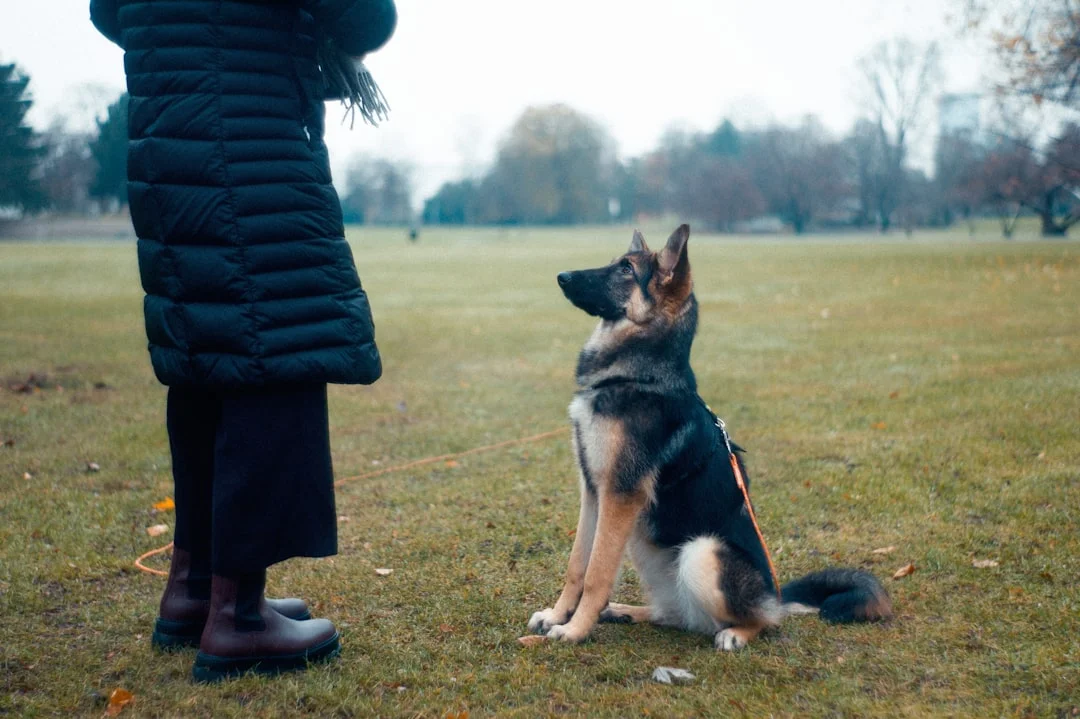
Puppies are not blank slates forever. They go through specific stages where learning comes easier. The American Kennel Club lays out a useful timeline from 7 to 8 weeks through adulthood, with a strong focus on early socialization and basic manners in the first few months of life
Photo by John Tuesday
That matters a lot in places like Southport, Devon, and Black Rock. Puppies here hear trucks, leaf blowers, trains, and kids on scooters from day one. If you start teaching them how to handle all that early, they grow up with confidence instead of fear.
Here is a simple milestone guide based on that AKC framework:
- 8-12 weeks: Name recognition, coming when called in the house, gentle handling, short car rides, being calmly picked up and touched.
- 12-16 weeks: Sit, down, simple “leave it,” starting loose leash walking in quiet areas, learning to relax in a crate for short periods.
- 3-6 months: Stay, better recall, longer walks, impulse control games like waiting at the door or for a food bowl.
- 6 months and up: Longer stays, better focus around distractions, stronger recall at parks, more advanced leash manners.
You don't need to nail everything in one week. You just need steady progress and consistent rules.
Foundational skills every Fairfield County puppy should learn
Every puppy in Fairfield County should learn a small set of core skills that you can use in almost any situation. The AKC timeline highlights the same basics, taught in short, fun sessions that match your puppy’s age and attention span in their AKC puppy foundations guide.
Start with:
- Name recognition: Say your pup’s name once, reward when they look at you. This is your “pay attention” button.
- Sit and down: Great for impulse control at doors, crosswalks, and vet visits.
- Come: Practice on a long line first. Think of crowded Fairfield and Westport beaches, or even just your fenced yard in Easton or Wilton. A solid “come” can keep your puppy safe.
- Leave it: Perfect for dropped food on sidewalks in Bridgeport or goose poop by the water in Southport.
- Settle on a mat: Teach your puppy to relax on a bed or mat. This helps when guests pile into your Trumbull or Shelton home after school, or when you bring your pup along to a dog-friendly patio in Weston.
Use treats, praise, and play. Mark the moment your puppy does something you like, then reward. You want your puppy to think, “Listening to my person pays well.”
When to call in local help
Some puppies need more help. That doesn't mean you're doing anything wrong. It just means you shouldn't wait and hope it goes away.
Call a trainer or a professional who understands puppy development if you see:
- Intense fear of everyday things like garbage trucks, people with hats, or other dogs.
- Persistent hard nipping that bruises or breaks skin, even with normal play limits.
- Extreme shyness, hiding, or freezing during the socialization period.
The AKC explains that early guidance during sensitive periods can prevent bigger behavior problems later in their early behavior guidance article.
Puppies in busy downtown Bridgeport or Stratford apartments especially benefit from extra support. They see a lot very fast. Regular visits from a knowledgeable walker or sitter who follows your training plan can make a big difference. Our W-2 salaried employees can reinforce your cues and routines during workdays through structured visits and walks. You can read about our puppy-friendly visits under our Dog Walking services and our in-home care on the Pet Sitting page.

How can I socialize my puppy safely around Fairfield County?
You socialize your puppy safely by giving them many different good experiences without scaring them. The key is calm, controlled exposure to people, places, and sounds they'll see in Fairfield County, at a pace that keeps them curious but not overwhelmed.
The critical socialization window
Socialization just means helping your puppy learn that the world is safe and interesting. PetMD explains that there's a sensitive window, usually from about 3 to 16 weeks old, when puppies learn the fastest and shape many of their long-term feelings about the world PetMD puppy socialization guide.
During that time, you want your puppy to experience:
- People of different ages, sizes, and clothing styles.
- Surfaces like boardwalks, grass, gravel, and indoor floors.
- Sounds like traffic, trains, kids playing, and leaf blowers.
You don't flood your puppy with chaos. You let them watch from a distance they can handle, reward calm behavior, and leave before they get overwhelmed. That balance of safe exposure and respect for their limits is what PetMD stresses as well in their exposure tips guide.
Local socialization ideas in Fairfield, Westport, and beyond
Fairfield County gives you all kinds of training backdrops if you plan your outings.
- Quiet starts: Begin with slow walks in calm neighborhoods in Easton and Southport. Short, low-traffic streets are perfect first steps.
- Moderate bustle: Move up to busier, but not packed, areas near shops in Fairfield or Westport. Let your puppy sit on the outskirts and watch people pass, while you feed small treats.
- Parks and trails: Use town trails in Wilton, Weston, and Trumbull for new smells and sights without constant noise. Keep your puppy on leash and let them explore at their own pace.
When your puppy meets people, keep it simple. Ask friendly strangers to let your puppy come to them, not the other way around. If your puppy ducks behind your legs or licks their lips, yawns, or turns away, that's a sign you should give them more space. PetMD describes those subtle stress signals as an early warning that a pup needs a break in their guide to reading puppy stress.
Preventing fear and anxiety as your dog grows
Good experiences early in life can lower the chance of fear-based problems later. That holds for dogs and other pets. VCA Animal Hospitals explains how careful socialization and gentle handling in young cats reduces fear and stress behaviors as they grow up, and the same basic principle applies to puppies too in their socialization and fear prevention article.
Think of your outings as deposits in your dog’s “confidence bank.” Short, happy trips with treats and rest breaks add to that account. Scary, forced encounters drain it. When the balance stays high, your dog is less likely to develop reactivity, sound sensitivities, or separation issues later.
If you work long hours in Fairfield, Westport, Bridgeport, or Stratford, you might not have time every day for supervised social trips. that's where regular walks and visits by trained, consistent caregivers help. Our W-2 salaried employees can practice calm leash skills and positive interactions while you're at work. You can see how that fits into our Dog Walking and Pet Sitting services.
Watch this short video for more ideas on using simple training to support daily manners and confidence.
Video: Trainer Victoria Stilwell shares three simple, positive training tips that build better everyday behavior.
How do I crate train and potty train my dog in a CT home or apartment?
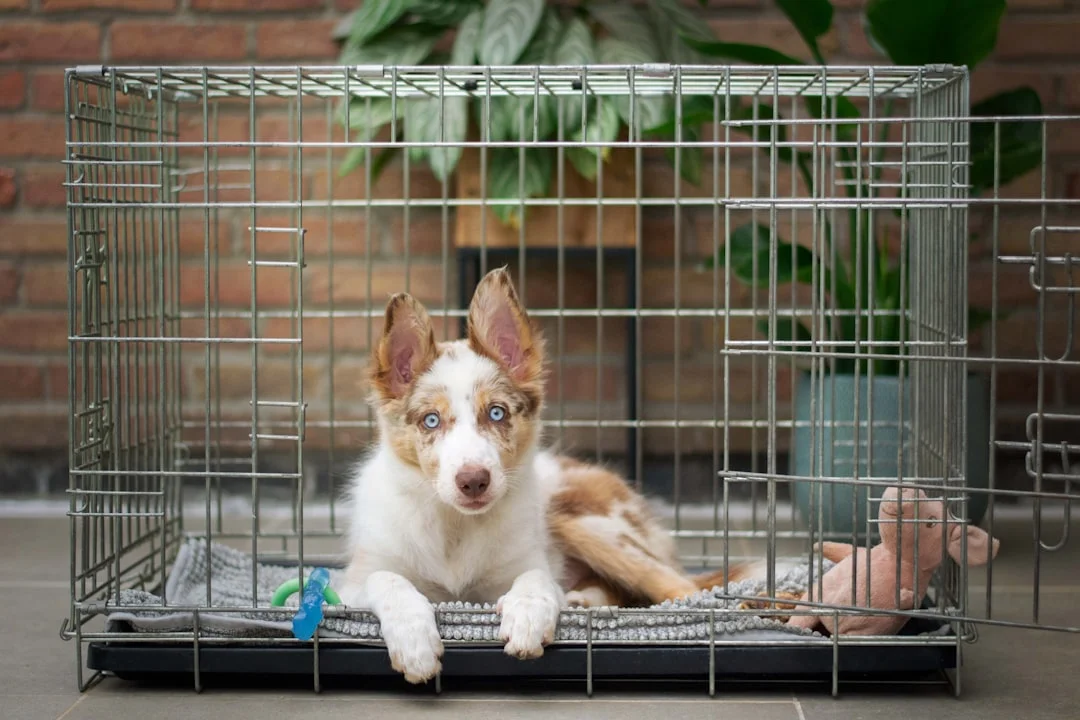
Crate and potty training work best when you treat them like a clear, consistent routine, not a punishment. In Fairfield County, that means picking a plan that fits apartment life in Bridgeport, Black Rock, or Stratford, or a single-family home in Fairfield, Shelton, or Trumbull, and then sticking with it.
Crate training that works for Fairfield County lifestyles
A crate can be a safe, quiet bedroom for your dog. The AKC notes that the right crate size lets a puppy stand, turn around, and lie down comfortably, but not pace or use one corner as a bathroom AKC crate training guide.
For condos and apartments in Bridgeport, Black Rock, and Stratford, a crate helps with:
- Keeping your puppy safe from chewing wires or doors while you're out.
- Reducing barking at hallway noises when they need to rest.
- Meeting building rules about unsupervised dogs.
Set the crate up in a lived-in room, not the basement. Start by tossing treats in, feeding meals near or inside it, and letting your puppy go in and out freely. The AKC stresses that you should build duration slowly and avoid forcing a puppy to stay inside for long periods too soon in their crate steps and mistakes guide.
A crate also helps during:
- Vet trips to places like Greenfield Animal Hospital in Fairfield.
- Emergency visits to MedVet Norwalk or VCA Shoreline Animal Hospital in Shelton.
- Times when contractors are in and out of your Fairfield or Westport home and doors stay open.
Potty training in mixed weather and busy schedules
Potty training works best when you control two things: when your puppy eats and drinks, and where they go to the bathroom. The AKC recommends a steady schedule of outdoor trips, usually every 1 to 2 hours for young puppies, plus right after sleep, play, and meals in their potty training schedule guide.
For Fairfield County owners, think about:
- Commuters from Shelton, Trumbull, or Devon: If you leave early and return late, plan early-morning and late-night potty trips, and arrange midday help so your puppy is not forced to hold it all day.
- Houses with yards in Easton or Weston: Pick one “bathroom zone” in the yard and always take your puppy there on leash at first, so they connect that spot with going.
- Shared outdoor spaces in Bridgeport: Use the same exit and path each time if possible, and bring treats to reward going in the right spot, away from entrances and walkways.
New England weather adds its own challenge. On cold, snowy, or rainy days, many puppies refuse to go outside. Stick to the same routine anyway. Bring a towel, go to the same spot, and keep trips short but frequent. If you need backup, you can pair outdoor trips with a temporary indoor option like a grass patch or pad, but don't swap locations constantly or your puppy may get confused.
Common setbacks and when to get help
Even with a solid plan, accidents happen. The AKC points out that regressions are normal during growth spurts, schedule changes, or when owners give puppies too much freedom too soon in their potty troubleshooting guide.
If potty training stalls, check:
- Did anything in your schedule change, like a new job or school routine?
- Is your puppy roaming the house unsupervised between trips?
- Do accidents happen at certain times, like late afternoon or after big drinks?
Crates can support the process, as long as you don't use them for unrealistic stretches. The AKC crate guide ties crate time to age and reminds owners that long confinement or punishment in the crate often backfires in their crate and potty support section.
If you're gone for long workdays, your puppy simply may not be able to hold it. Regular, scheduled visits from a trusted walker for midday potty breaks in Fairfield, Stratford, or Bridgeport can keep training on track and protect your floors. that's exactly what our Dog Walking visits are built for.
How can I solve common dog behavior problems at home?
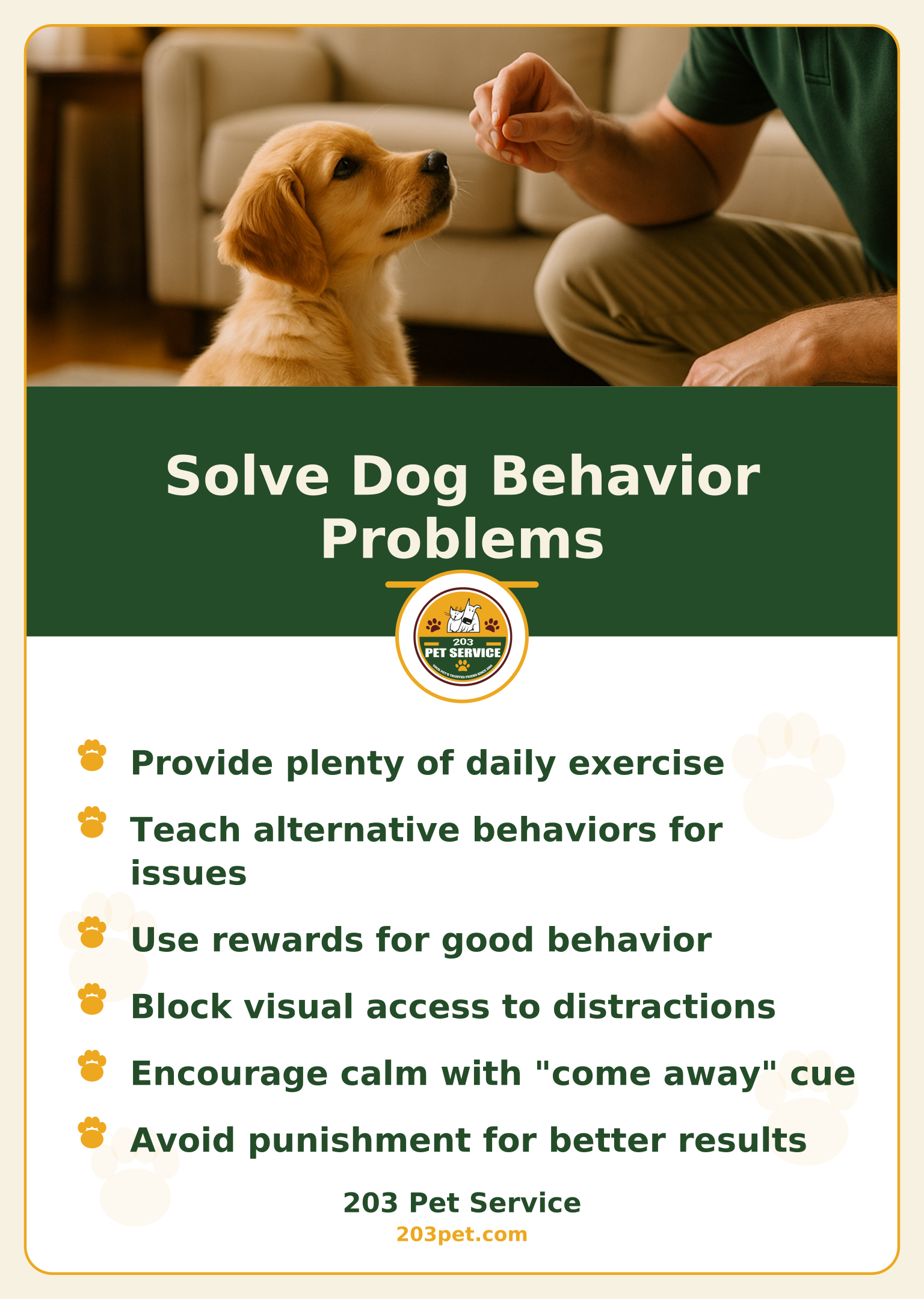
You solve most common behavior problems by giving your dog enough exercise, teaching an alternative behavior, and rewarding it heavily. Punishment alone usually makes things worse, especially with fear or aggression.
Barking, chewing, and jumping on guests
In Fairfield County, life outside your front door can trigger a lot of barking. Delivery trucks in Fairfield, kids walking home from school in Stratford, and footsteps in Black Rock condo hallways can all set a dog off. The ASPCA lists barking, destructive chewing, and jumping as some of the most common dog behavior issues, and notes that they often come from boredom, stress, or confusion about rules in their common behavior issues guide.
Some simple fixes:
- Barking at windows: Block visual access where you can and teach a solid “come away” cue. Reward your dog for leaving the window and settling on a bed.
- Chewing: Give a rotation of safe chew toys and food puzzles. Many dogs who chew baseboards or furniture in Trumbull or Shelton are just under-exercised and under-stimulated.
- Jumping on guests: Practice “sit for greetings” with family first. Ask guests in your Fairfield, Weston, or Wilton home to ignore jumping and only pet when all four paws are on the floor or your dog is sitting.
Separation anxiety and dogs home alone in Fairfield County
True separation anxiety is more than a dog who is a little bored. VCA Animal Hospitals describes it as a panic disorder that appears only when a dog is separated from their person, with signs like intense vocalization, destruction at doors or windows, drooling, pacing, and accidents that don't happen when the owner is home in their separation anxiety overview.
Both VCA and the ASPCA talk about similar core steps to help these dogs:
- Very gradual alone-time training, starting with seconds, not hours.
- Teaching your dog to relax on a bed or mat independent of you.
- Avoiding big emotional exits and reunions.
Moderate to severe cases often need a veterinarian involved. VCA notes that anti-anxiety medication or supplements can be part of the plan in these cases, alongside behavior work VCA separation treatment.
Aggression and reactivity: when behavior becomes a safety issue
Reactivity and aggression are not the same thing, but they can look similar on the sidewalk in Westport, Fairfield, or Bridgeport. A reactive dog might bark and lunge on leash because they're scared and over-aroused, not because they want to bite.
The ASPCA breaks aggression into types, such as fear-based, territorial, and resource guarding, and stresses that punishment often makes these behaviors worse by increasing fear and stress ASPCA dog aggression overview. Their general behavior guide also reminds owners that pain, illness, and poor socialization often sit under aggressive behavior ASPCA aggression as behavior issue.
Take aggression seriously if:
- Your dog snaps, growls, or bites around food, toys, or resting spots.
- You see escalating stiff body language, hard staring, and slow tail wags when people approach.
- Fights break out between dogs in your own home.
Safety comes first. Use management tools like gates and muzzles when needed, avoid known triggers, and get help from a qualified trainer or veterinary behaviorist. don't try harsh corrections or “alpha” techniques. Those often increase the risk of a bite.
Frequently Asked Questions
About This Topic
How do I start basic training with my new puppy at home?
Begin with tiny five-minute sessions a few times a day in a quiet room. Teach simple cues like sit, down, and come using small treats and a happy voice, never punishment. Keep your rules the same every day, no couch sometimes, couch never. If you want a structured plan, 203 Pet Service can set up a step‑by‑step puppy routine for your Fairfield County home.
My dog pulls on busy Fairfield sidewalks, how can I fix it?
Switch to a well-fitted front-clip use and reward your dog any time the leash goes slack. Practice on quiet streets first, then gradually move to busier sidewalks in Fairfield, Westport, or Southport. Keep walks short at the start so you’re not rehearsing pulling. 203 Pet Service can also do leash‑manners walks around your actual neighborhood routes.
What’s the best way to potty train a puppy in an apartment?
Take your puppy out every 2, 3 hours, plus right after sleep, play, and meals, using the same exit and spot near your building each time. Praise and treat the second they finish, then bring them back inside so outdoors doesn’t become playtime only. Use a crate between trips to prevent accidents. 203 Pet Service can handle mid‑day potty breaks if you commute to the city.
How do I socialize my puppy safely around Fairfield County distractions?
Think calm, controlled exposure instead of chaotic dog-park free‑for‑alls. Sit on a bench near a downtown Fairfield sidewalk, outside a café in Westport, or by a park in Trumbull and treat your puppy for calmly noticing people, strollers, bikes, and other dogs. Keep sessions short and leave while they’re still relaxed. 203 Pet Service offers structured socialization visits tailored to your town.
My dog barks like crazy in our condo hallway, what can I do?
First, block the view with a baby gate or frosted film so your dog doesn’t see everyone coming and going. Then practice with staged hallway passes: have a helper walk by while you reward your dog for staying quiet and looking at you. Start with doors cracked, then open, building slowly. Our trainers at 203 Pet Service can run these practice reps in your actual building.
How can I keep my dog’s routine consistent with my Metro-North commute?
Pick realistic anchor times you can stick to most days, like a quick morning walk, a late‑afternoon potty break, and an evening training session. Prep treats, leashes, and food the night before so you’re not scrambling. Use the same simple commands and rules so your dog knows what to expect. When you’re gone long days, 203 Pet Service can fill the gaps with scheduled walks and training check‑ins.
My dog seems anxious when I leave for work, what helps?
Start with super-short absences: pick up your keys, walk out for 30 seconds, return calmly, and slowly build to longer times. Give a stuffed Kong or long‑lasting chew right before you leave so your dog associates departures with something great. Avoid big emotional goodbyes or greetings. If things aren’t improving, 203 Pet Service can create a customized separation‑anxiety plan and daily support visits.
Do I really need a crate, and how do I use it kindly?
A crate, used correctly, is like a safe bedroom, not a jail. Feed meals in the crate with the door open at first, then briefly close it while you’re nearby and calmly let your dog out before they fuss. Never use it as punishment or leave them crated for long workdays. If you’d like help choosing and introducing a crate, 203 Pet Service can walk you through it at home.
About 203 Pet Service
What areas does 203 Pet Service cover in Fairfield County?
We provide professional dog walking, pet sitting, and training services across Eastern Fairfield County, Connecticut. We proudly serve families in Fairfield, Stratford, Westport, Easton, Southport, Black Rock, Bridgeport, Shelton, Devon, Trumbull, Weston, and Wilton. 203 Pet Service has cared for pets in Fairfield County since 2004, and every visit is handled by a trained, W-2 salaried employee who is background checked and fully insured.
Why does 203 Pet Service use salaried W-2 employees instead of independent contractors?
We believe salaried W-2 employees provide more reliable, accountable, and professional pet care. Unlike independent contractors, our salaried employees go through careful background checks, full training, and are fully insured. This employment structure means consistency, accountability, and peace of mind for Fairfield County pet families.
What qualifications do 203 Pet Service employees have?
Every member of our salaried W-2 team goes through careful background checks, professional pet care training, and ongoing education in animal behavior and safety. Owner Jason Hofmann personally trains each employee, drawing on 29 years as a veterinary technician, pet store manager, and ABC-certified dog trainer. We don't hire hobby pet sitters. We employ career pet care professionals.