
Drop-In Pet Visits: A Calm, Safe Choice at Home
Quick Answer: Drop in pet visits are short, scheduled visits where a trusted sitter comes to your home so your dog or cat can stay in their own space, follow their normal routine, and avoid the stress of boarding. Your sitter handles feeding, water, potty breaks or litter, walks or play, and home checks, so your pet stays calm and safe and you get real peace of mind while you're away.
Drop-In Pet Visits: A Calm, Safe Choice at Home
If your dog or cat gets stressed in new places, drop-in pet visits let them stay calm at home while you're away. A sitter comes to your house for short, focused visits, so your pet keeps their normal routine, smells, and favorite spots.
One of my favorite examples is Milo, a nervous rescue dog in Fairfield. His family tried boarding once. He came home hoarse from barking, with diarrhea, and he hid for days. The next trip, we set up drop-in visits at home instead. Same dog, totally different story. He ate, slept on his own couch, went for his usual neighborhood walks, and greeted his family at the door like nothing ever changed.
That is the power of keeping pets in their own space with the right sitter.
What does a drop-in pet visit really look like for your pet?

A good drop-in visit covers your pet’s physical needs and their emotional needs in about 20 to 30 minutes. Your sitter should handle food, water, bathroom breaks or litter, a quick walk if needed, and real one-on-one attention, not just in-and-out chores.
With 203 Pet Service, a typical drop-in visit for a dog in Stratford looks like this:
- We arrive on time, use your key or lockbox, and announce ourselves so your dog is not startled.
- We greet your dog the way you prefer, with calm body language and clear rules, especially if they're jumpy or mouthy.
- We take them out right away for a potty break in the yard or a short walk, so they get to move and sniff.
- We refresh water, feed as instructed, and follow any special feeding rules like slow feeders or separate rooms.
- We give playtime, training refreshers, or cuddle time, depending on your dog’s age and personality.
- We double-check doors, gates, lights, and anything else you flagged for the home.
Cats get the same level of attention, just in a more cat-appropriate way. For a shy older cat in Westport, that might mean:
- Quietly entering and talking in a soft voice.
- Checking litter boxes, food, and water first, so we do not crowd them right away.
- Sitting nearby and letting them approach if they want contact, instead of chasing them around the house.
- Brushing, play with wand toys, or lap time for more social cats.
We also handle small but important safety details. If you're gone for a long weekend, we bring in packages, adjust blinds, switch lights, and make sure the house still looks lived in. Those small touches help deter problems and make you feel better when you're away.
What updates do you get after a drop-in visit?
You should always know what happened at each visit. That is non-negotiable, especially if you've a puppy, a senior pet, or medications in the mix.
After each drop-in visit we send:
- A quick written summary of the visit.
- Bathroom notes, how they ate, and any odd behavior.
- Photos of your dog on their walk or your cat in their favorite window spot.
PetMD points out that clear communication and detailed updates are key things to look for when you choose a sitter, along with training and professionalism. Those updates are not just “nice to have”. They let you spot changes early, like a dog skipping meals or a cat having litter issues.
If something looks off, our sitter calls Robyn, our office manager. Robyn reaches out to you right away, and your sitter stays with your pet until you give instructions. If we agree that your pet needs a vet, we may head to your regular hospital, Greenfield Animal Hospital in Fairfield, or to MedVet Norwalk for emergencies, depending on what you prefer on your intake form.
Why does staying home feel safer and calmer for most pets?
Most dogs and cats feel calmer and safer in their own home because they know the smells, sounds, and routines. They don't have to adjust to new animals, new people, or a new sleeping space at the same time you are gone.
Think of your house from your pet’s point of view. Their bed smells like them and like you. Their food bowls sit in the same corner. Their favorite window has the same chipmunk show every afternoon. That predictability lowers stress, especially for anxious or older pets.
When you move them to a new place, you stack stress on stress. Strange dogs barking. Different cleaning products. Different feeding schedule. Different floor textures. For a confident, social dog, that can feel fun. For many pets, especially shy ones, it feels like too much at once.
Which pets benefit most from drop-in visits at home?
In our years serving pets in Bridgeport, Easton, and along the coast in Southport, we see the same pattern over and over. Certain pets truly need the calm of home.
Drop-in visits tend to be best for:
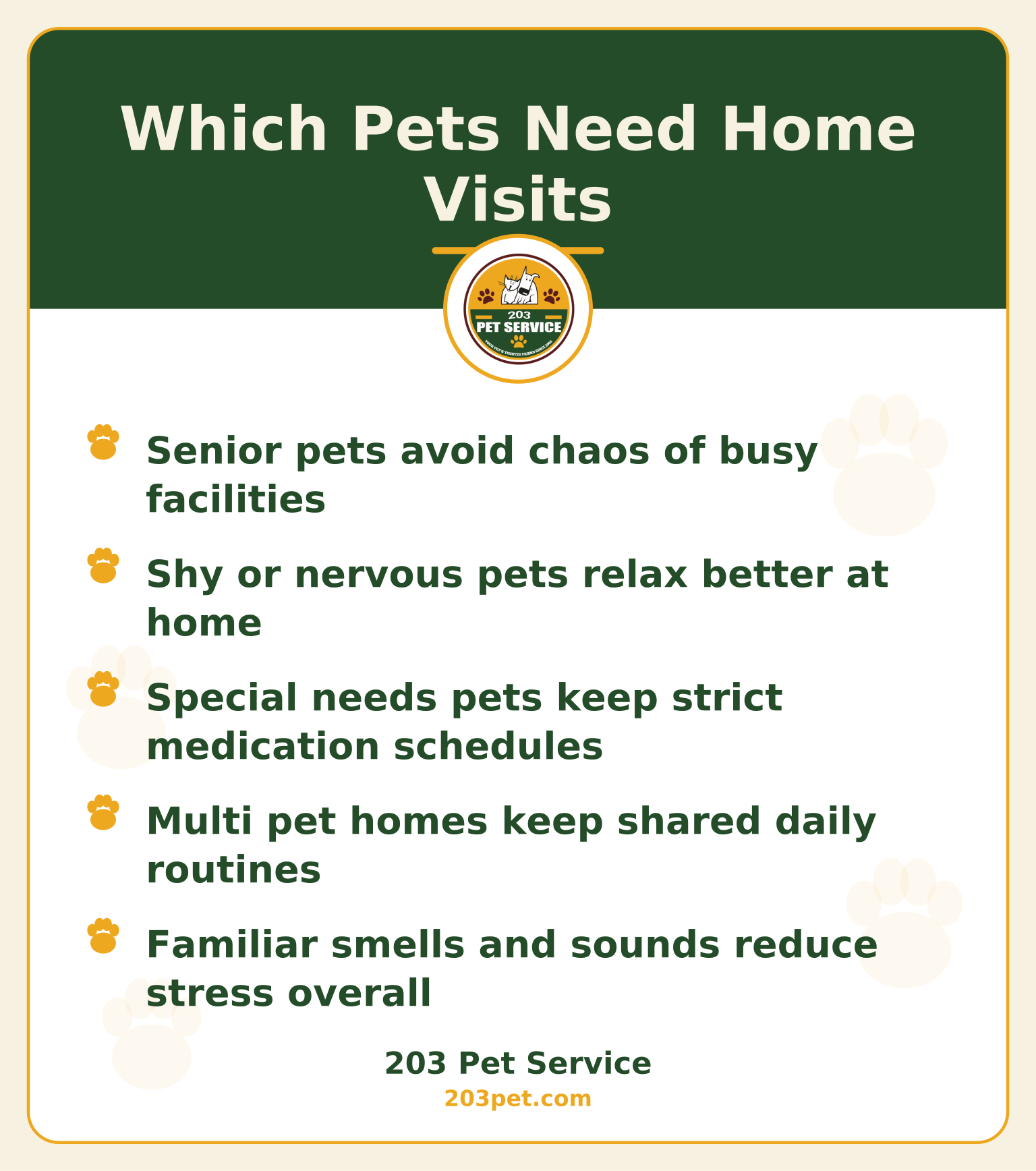
- Senior dogs and cats with arthritis or slower pace. They do not want the chaos of a busy facility.
- Shy or nervous pets who bark, hide, or shake in new spaces.
- Special needs pets who need medications on a schedule or careful handling.
- Multi-pet households where you want everyone to stay together and keep the same routine.
For example, one of our clients in Westport has two senior cats and a 13 year old dog with heart medication. They tried boarding once and spent the whole trip worrying about whether everyone got the right pills on time. Now they use drop-in visits, and we follow a tight medication schedule, including reminders based on Jason’s training as an Animal Behavior College certified dog trainer and Pet First Aid and CPR instructor.
Good home care also supports your training and safety groundwork. The American Kennel Club talks about setting up safe spaces and routines for puppies so they feel secure and learn faster. The same idea applies when you are away. A sitter who respects your rules and routines keeps that training solid.
We also make sure your dog’s ID tags and microchip, if they've one, are up to date before you travel. The ASPCA notes that microchipped pets who are registered have a much higher chance of making it home if they ever get lost. that's one more layer of safety on top of keeping them in their own space.
Drop-in visits vs boarding: how do you know what fits your pet best?

If your dog is social, healthy, and loves other dogs, a good boarding facility or daycare can work well. If your pet is anxious, older, or has health issues, drop-in visits at home often fit better and feel safer.
You do not have to guess. You just need to look honestly at your pet’s age, health, and personality.
When is boarding a better choice?
Boarding can suit some dogs in Fairfield County, especially if:
- They love other dogs and handle noise and activity well.
- They are young, healthy, and have no special medical needs.
- they've already done well in group settings like daycare.
- Your home has safety issues, like a yard they can escape from, that you cannot fix in time.
In that case, a high quality facility with trained employees and clear vaccination rules can give them a nice social outlet. VCA notes that when you travel with pets or move them between environments, you want to think through vaccine status, stress, and safety each time. Good boarding facilities treat that seriously.
When are drop-in visits the better fit?
Drop-in visits make more sense when:
- Your pet gets stomach issues or stops eating at the kennel.
- Your dog is reactive or fearful around unfamiliar dogs or people.
- Your cat is terrified of car rides or new places.
- you've multiple pets with different needs and routines.
- you've a puppy or senior dog who needs more bathroom breaks than a boarding schedule allows.
For many of our clients in Easton, Stratford, and along the water, we mix drop-in visits with our ongoing dog walking membership. Their dog already knows our walkers from regular weekday walks. When it's time for a trip, we simply add extra visits and sometimes an evening check-in so the routine stays steady.
You also have more control over food and treats. The AKC keeps a clear list of safe and unsafe human foods for dogs, and many common snacks, like grapes or xylitol sweetened products, can be dangerous according to the American Kennel Club. When we care for your pet at home, we stick to your feeding rules, your treats, and your vet’s diet plan, instead of a one-size-fits-all kennel menu.
If you are not sure which way to go, reach out and tell us about your pet. we're happy to be honest if we think a different option fits better. Sometimes that even means recommending a facility instead of drop-in visits. Your pet’s well-being comes first.
How do you know your pet and home are truly safe with a sitter?

You know your pet and home are safe when your sitter is a trained professional, the company uses W-2 employees, and there is a clear system for keys, alarms, and emergencies. You should never feel like “someone random from an app” is making it up as they go.
203 Pet Service uses salaried W-2 employees, not contractors. That matters. It means we train our people, insure them, and keep them long term. PetMD notes that when you choose a sitter, you should look for real experience, training, insurance, and clear emergency plans according to PetMD. Our whole business model was built around that idea.
How we handle keys, alarms, and home checks
Before your first set of drop-in visits, we meet you at your home. We walk through your pet’s routine and your house rules. We talk through alarms, doors, and any “don't open” areas.
During visits, we:
- Use lockboxes or labeled keys stored in a secure system, never with your full name or address written on them.
- Arm and disarm alarms the way you show us, and test that at least once while you are still home.
- Check doors, basic windows, and gates at each visit so nothing is accidentally left open.
In winter, we watch for ice, salt, and cold exposure on walks. VCA explains that pets can struggle with hypothermia and salt irritation in cold weather, so you want short, supervised outdoor time and good paw care according to VCA Animal Hospitals. In summer, we adjust visit times, keep walks short on hot pavement, and use shade. PetMD reminds owners that dogs can overheat fast in hot weather and need extra care with sun and humidity according to PetMD.
Our walkers follow safety guidelines from veterinary sources on leash handling, equipment, and avoiding risky situations on walks according to VCA Animal Hospitals. Jason’s years as a veterinary technician at Greenfield Animal Hospital in Fairfield and his certification in Pet First Aid and CPR shape how we train our employees.
What if there's an emergency during a drop-in visit?
If your pet has an emergency during a visit, our sitter calls Robyn, our office manager, right away. Robyn contacts you, explains what is happening, and talks through next steps. Your sitter doesn't leave your pet alone. They stay until you and Robyn decide what to do.
Sometimes that means monitoring your pet at home with your vet on the phone. Other times it means heading to your regular clinic or to MedVet Norwalk, which we use as a preferred emergency hospital in Fairfield County. Our employees carry basic first aid skills. The AKC and PetMD both remind owners that early first aid and fast contact with a veterinarian can make a big difference in many emergencies, from wounds to heatstroke according to the American Kennel Cluband PetMD.
You should never feel like your sitter is improvising in a crisis. You want them to know who to call, where to go, and how to keep your pet as stable as possible until a vet takes over.
Video: A friendly look at how drop-in pet visits help dogs relax and make new friends right in their own space.
How do we customize drop-in visits in eastern Fairfield County?

We customize drop-in visits based on your pet’s age, health, and routine, plus the town and neighborhood you live in. A mid-day puppy visit in Black Rock is not the same as an evening senior cat visit in Black Rock or a multi-pet household in Southport.
Because our W-2 employees work for us long term, they get to know you and your pets. In many homes, the same sitter handles both daytime pet sitting drop-ins and ongoing weekday dog walking membership visits. That consistency matters more than any fancy perk.
Puppy drop-in visits
Puppies in places like Fairfield, Stratford, and Easton usually need more frequent bathroom breaks and short bursts of play, not long walks. We often set up two or three drop-in visits a day at first, then stretch the time as their bladder control improves.
During puppy visits we might:
- Take them straight out for a bathroom break, using the same spot and cue words you use.
- Practice basic manners like sit, wait at the door, and gentle leash walking.
- Rotate safe toys and short training games to work their brain, not just their body.
The AKC stresses that a safe setup and a regular routine help puppies learn faster and avoid trouble, from potty training mistakes to chewing hazards according to the American Kennel Club. With drop-in visits, we work inside that structure, not against it.
Adult and senior dog drop-in visits
For adult dogs, especially those already in our dog walking program, drop-in visits during your trip feel like a normal weekday, just with more visits. We keep their usual walk routes, feeding times, and bedtime routine whenever possible.
Senior dogs may need:
- More frequent but shorter bathroom breaks.
- Help with stairs or ramps.
- Soft bedding checks and small adjustments to keep them comfortable.
- More careful monitoring for signs of pain or confusion.
We also pay attention to weather. Cold and icy sidewalks in Bridgeport or windy days near the shore can be tough on older joints. VCA’s winter safety tips mention limiting time in extreme cold, watching for shivering, and checking paws for cracks and irritation. We adjust walks and yard time based on that guidance and on what your dog’s vet recommends.
Cat-focused drop-in visits
Cats often get written off as “fine on their own”. In real life, many cats in Fairfield County do best with daily or twice daily visits, especially older cats or those with special diets or medications.
During cat visits we:
- Check food, water, and litter carefully.
- Watch for changes in appetite, urination, or hiding behavior.
- Offer play and affection at the pace your cat chooses.
If you ever bring a new cat into your home, you want that introduction handled slowly and thoughtfully. PetMD has a step by step guide on introducing cats that focuses on separation, scent swapping, and short, supervised meetings. We follow similar principles when we first meet nervous cats, so we build trust instead of scaring them.
Medications, special diets, and house care
In a lot of homes in Westport, Southport, and Bridgeport, drop-in visits include more than just pet care. They include medications, detailed diets, and house tasks so everything keeps running while you're away.
We can often handle:
Frequently Asked Questions

About This Topic
How are drop-in visits different from boarding my dog at a kennel?
With drop-in visits, your dog stays in their own home, on their normal schedule, instead of being in a loud, unfamiliar kennel. A sitter from 203 Pet Service comes to you to handle walks, feeding, and attention. This is especially helpful for nervous or rescue dogs, like Milo, who get stressed or sick when boarded.
My dog is really anxious when we travel, are drop-in visits better?
For anxious dogs, staying home is usually much calmer than boarding. Drop-in visits let your dog keep their usual smells, couch, and walking routes while a 203 Pet Service sitter handles potty breaks, meals, and play. We use calm body language, follow your rules, and keep visits predictable so your dog knows what to expect each time.
What exactly happens during a typical 20, 30 minute drop-in dog visit?
A standard visit with 203 Pet Service starts with a calm arrival and greeting, then an immediate potty break or short walk. We refresh water, feed as directed, and follow any special instructions like slow feeders or separate rooms. Then your dog gets playtime, training refreshers, or cuddles, and we finish by checking doors, gates, and anything you flagged for the house.
How do drop-in visits work for shy or older indoor cats?
Shy or senior cats get a quieter, slower approach so they feel safe. We clean the litter box, refresh water, and feed exactly as instructed, then offer gentle interaction on their terms. For many cats, that means quiet company, brushing, or play with favorite toys. Keeping them in their own home avoids the stress of a noisy boarding environment.
Can you follow my pet’s special feeding, medication, or behavior routines exactly?
Yes, that’s a big part of why drop-in visits work so well. During the meet-and-greet, 203 Pet Service notes your exact feeding schedule, medication doses, and behavior rules, like no jumping or separate feeding areas. We stick to your routine so your pet feels secure and you know nothing important is missed while you’re away.
How often should I schedule drop-in visits if I’m gone all day?
For most dogs, we recommend at least one mid-day visit for potty, movement, and mental stimulation, and more if they’re young or have a small bladder. Cats often do well with one or two visits a day, depending on age and health. 203 Pet Service can help you build a schedule that fits your pet’s normal routine and comfort level.
Will you also keep an eye on my home during visits?
Yes, part of every 203 Pet Service drop-in visit is a quick home check. We make sure doors and gates are secure, lights are as requested, and anything you’ve flagged, like plants, blinds, or packages, is handled. You’ll get visit updates so you know both your pet and your home are being watched while you’re away.
What information do you need before you start drop-in visits with my pet?
We’ll ask about your pet’s daily routine, feeding schedule, health issues, medications, and behavior quirks, like fear of strangers or door darting. We also need details on your vet, emergency contacts, and how to access your home safely. During the meet-and-greet, 203 Pet Service walks through everything with you so visits run smoothly from day one.
About 203 Pet Service
What areas does 203 Pet Service cover in Fairfield County?
We provide professional dog walking, pet sitting, and training services across Eastern Fairfield County, Connecticut. We proudly serve families in Fairfield, Stratford, Westport, Easton, Southport, Black Rock, Bridgeport, Shelton, Devon, Trumbull, Weston, and Wilton. 203 Pet Service has cared for pets in Fairfield County since 2004, and every visit is handled by a trained, W-2 salaried employee who is background checked and fully insured.
Why does 203 Pet Service use salaried W-2 employees instead of independent contractors?
We believe salaried W-2 employees provide more reliable, accountable, and professional pet care. Unlike independent contractors, our salaried employees go through careful background checks, full training, and are fully insured. This employment structure means consistency, accountability, and peace of mind for Fairfield County pet families.
How do I schedule a meet and greet with 203 Pet Service?
Just call us at (203) 682-6443 or fill out our contact form. We will schedule a meet and greet where you can meet your potential sitter or walker, talk through your pet's needs, and see firsthand why Fairfield County families have trusted us since 2004. there's no obligation, just a chance to see our professional approach to pet care.
How does 203 Pet Service handle pet emergencies?
In an emergency, our sitter or walker immediately calls Robyn, our office manager, so she can contact you while our salaried employee stays with your pet. This protocol means your pet gets constant care while we coordinate with you about next steps. Our team is trained to stay calm and put your pet's safety first in any situation.