
Fall Dog Walking Safety in Eastern Fairfield County
Quick Answer: To keep your dog safe on fall walks in Eastern Fairfield County, slow down for wet leaves, use good leashes and harnesses, add lights and reflective gear for early dark, and plan for loud holiday noise. Stick to cleared, well lit routes, avoid big leaf piles and busy cut throughs, and give sound sensitive dogs shorter, calmer walks on noisy nights.
Fall Dog Walking Safety in Eastern Fairfield County
Fall dog walking safety in Eastern Fairfield County comes down to three big things: slippery leaves, early darkness, and loud holiday noise. If you plan for those, you can keep your dog safe, calm, and happy all season.
In our 22 years walking dogs in Fairfield, Stratford, Bridgeport, Westport, Easton, Southport, and Black Rock, we have seen the same patterns every fall. Dogs get more excited with the cool air, but the ground gets slick, the streets get busier, and noises pick up around Halloween and into the holidays.
This guide walks you through what to watch for and how to adjust your walks. It is written for real life in Eastern Fairfield County, like the hills off North Benson in Fairfield, side streets by Stratford Avenue in Bridgeport, and beach neighborhoods in Southport and Black Rock. If you walk there, this is for you.
How dangerous are wet leaves and fall yard clutter for dog walks?

Wet leaves and fall yard clutter can trip you, twist your dog’s paws, and hide sharp objects. The risk goes up fast once the first big storms bring leaves down. You and your dog do not have to avoid walks, but you do need to walk smarter.
On Fairfield sidewalks, especially near the university and downtown, leaves pile up at street corners and driveway edges. When they get wet, they turn slick like ice. Your dog might charge ahead to sniff a pile and suddenly lose traction. Your feet can slide too.
Under those leaves you often find:
- Broken sticks that can jab paws
- Acorns and small stones that can bruise pads
- Uneven pavement and potholes that can twist ankles
- Leftover yard tools or toys hidden in the mess
According to PetMD’s guide to dog walking, a safe walk starts with watching the surface you and your dog step on. That sounds simple, but once those leaves cover everything, it takes real focus.
How we guide dogs on leaf covered routes
Our salaried employees walk dogs every fall through these same streets. We train them to treat heavy leaf areas the way you would treat black ice. Slow down, shorten the leash, and pick a cleaner line whenever possible.
Typical adjustments we make on leaf covered routes:
- Use a shorter, 4 to 6 foot fixed leash, not a retractable, for better control
- Keep dogs off big leaf piles at the curb where you cannot see the surface
- Cross the street to a cleaner sidewalk if one side is buried
- Step around soggy piles near driveways and storm drains
We also match the route to the dog. A young Lab who walks daily in our ongoing dog walking membership can handle a slightly trickier path than a senior Shih Tzu with knee issues. Same town, same street, totally different decisions.
Checking paws and nails after fall walks
After any walk in heavy leaves, a quick paw check helps catch small problems before they turn into limping or infections. The Merck Veterinary Manual notes that paw pads take a lot of abuse and small injuries often hide between the toes.
Post walk, get your dog on a mat or towel and:
- Look between each toe for stuck leaves, acorns, or stones
- Check nail tips for cracks, chips, or bleeding
- Feel the pads for any sore spots or cuts
- Wipe off mud so you do not track it through the house
Our walkers factor paw checks into visit time, especially for dogs in heavy leaf neighborhoods in Bridgeport and Easton. It only takes a minute, but it can save you a surprise vet visit later.
How do I keep my dog safe on darker fall walks?
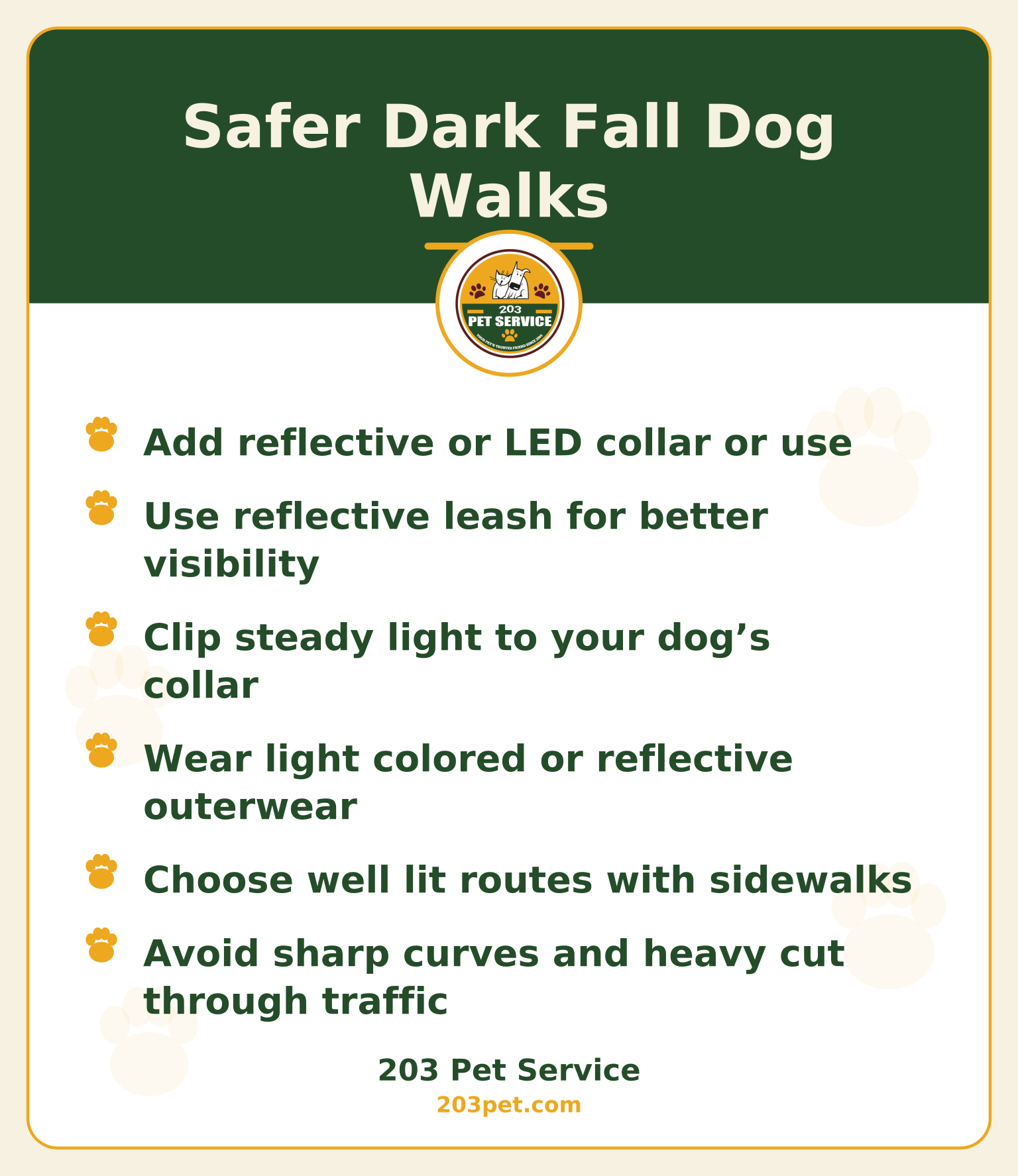
To keep your dog safe on darker fall walks, make both of you easy to see, pick better routes, and adjust your timing. Eastern Fairfield County sunsets slide earlier every week in October and November, so your normal 5 pm walk quickly turns into a dusk or full dark walk.
In Stratford, Bridgeport, and nearby Trumbull, many of our clients work standard office hours. That means by the time they get home, it is already dim, especially in side streets without strong streetlights.
Reflective gear that actually helps drivers see you
Reflective and lighted gear can make a big difference. According to VCA Animal Hospitals’ dog walking safety tips, visibility is one of the most overlooked parts of safe walking.
For darker fall walks, we like:
- A reflective or LED collar or harness for your dog
- A reflective leash, not just a dark nylon one
- A clip on light on the collar or harness, set to steady, not flashing, if your dog is noise or motion sensitive
- A light colored or reflective vest or jacket for you
Think of it like this. Drivers see a moving block of light and reflection much faster than they see a person in a dark jacket with a black leash.
Choosing safer, well lit routes
You do not have to walk your usual loop if it turns into a dark, blind corner maze in November. Many of our clients in Westport and Southport switch to brighter streets for fall and winter.
Look for routes that have:
- Consistent street lighting
- Sidewalks that keep you off the road
- Fewer sharp curves that block driver sightlines
- Less cut through traffic during rush hours
We often move evening dogs in Bridgeport from narrow side streets to wider roads with better lighting for the main part of the walk, then finish with a quick potty break near home. A small route tweak can mean drivers spot you several seconds sooner. That matters.
How our walkers handle dusk and dark visits
Because 203 Pet Service uses W-2 salaried employees, not gig workers, we train every walker to follow specific safety rules for low light walks. We match visit times and routes to each dog’s needs and the local lighting.
For our ongoing walking membership clients, we often shift mid afternoon visits a bit earlier in late fall. That way young, high energy dogs still get their primary exercise in daylight, and you handle only a quick potty trip later that night. It is better for their eyes, their confidence, and your nerves.
If you know your schedule will stay tight through the fall, setting up steady weekday walks through our dog walking service can keep your dog on a safe, bright routine while you commute in the dark. How do fall allergies and moldy leaves affect my dog’s paws?
📺 Winter Pet Safety Tips - 203 Pet Service
Fall allergies and moldy leaves can make your dog’s paws red, itchy, and sore. If your dog licks or chews their feet after walks, especially in September and October, it might be more than a quirk. Ragweed, mold in leaf piles, and lawn treatments all play a part.
In Fairfield County, we see a lot of dogs who are fine all summer, then start paw licking once the first big leaf piles sit in damp corners. Mold loves those piles. When your dog walks through them, the spores and bits of debris stick to their pads and between their toes.
The VCA cold weather safety guide reminds pet owners that irritants on paws can cause as much trouble as cold itself. Same idea here. What your dog walks through can bother their skin long after the walk ends.
Common signs of fall itch and discomfort
You might notice:
- Persistent licking or chewing at paws after walks
- Redness between toes
- Brown staining in fur from constant licking
- Odor or dampness between pads
- More scratching of ears and belly too
Allergies can look like simple annoyance at first, but they can turn into infections. PetMD’s first aid guide for dogs notes that ongoing licking and chewing can break the skin and open the door to bacteria.
A simple paw rinse routine after walks
A quick paw rinse and wipe after fall walks helps a lot. You do not need a full bath after every outing.
Here is a simple routine we suggest to clients:
- Set up a small bin, bowl, or cup of lukewarm water near the door.
- Have clean towels ready. Microfiber works well.
- Dip or pour water over each paw, one at a time, gently spreading the toes.
- Wipe between toes and pads to remove leaf bits and dirt.
- Dry thoroughly so the paws do not stay damp.
If your dog is nervous about water, start with a damp cloth and work up slowly. Short, calm sessions help them accept the routine. Our walkers will follow whatever paw care steps you outline in your profile for visits, especially for allergy prone dogs in Westport, Easton, and Wilton.
How our walkers watch for early allergy signs
Because our walkers see the same dogs several times each week, they often notice new itching patterns before owners do. In our About 203 Pet Service page, you will see that our owner, Jason, worked as a veterinary technician in Fairfield. That background shapes how we train our walkers to watch dogs.
We pay attention to:
- New licking or chewing that starts in fall
- Changes in how a dog walks, like sudden paw sensitivity
- Redness on paws, belly, or ears we did not see before
If we spot a concern, your walker alerts Robyn in our office, and she contacts you to share what we see. We do not diagnose, but we do notice patterns. Early action with your veterinarian can keep a mild fall allergy from turning into a full blown skin infection.
How risky is fall school traffic and weekend activity for dog walks?

Fall school traffic and weekend events make dog walks riskier near schools, fields, and churches. The mix of buses, rushing parents, distracted teens, and parked cars creates blind spots and sudden movement that can spook or endanger your dog.
In Eastern Fairfield County, this matters a lot. Think about drop off at Stratfield Elementary in Fairfield or afternoon pickup by sports fields in Stratford or Bridgeport. Cars line both sides of the road. Kids open doors without looking. Balls roll into the street. It is a lot for any dog.
The ASPCA’s guidance on dog behavior and aggression notes that sudden movements and crowded spaces can raise stress in dogs, especially those who are already nervous. You want to reduce those stressors on walks, not stack them up.
Heavier traffic near schools and sports fields
We build routes around school schedules whenever possible. During peak times we try to:
- Avoid walking directly in front of school entrances
- Cross streets away from heavy car lines
- Stay extra alert for kids running toward dogs to say hello
- Keep dogs on the side of the sidewalk farthest from car doors
On weekends, especially in Weston, Wilton, and Shelton, sports fields fill up. If your dog loves kids and noise, that might sound fun. For many dogs though, the mix of whistles, shouting, and clapping can be scary. We often take a wider loop, letting dogs watch from a calm distance instead of walking right through the crowd.
Driveway blind spots and parked cars
Fall also brings more yard work trucks, delivery vans, and parked cars as people prep their homes and yards. When leaves pile up along driveways and curbs, visibility drops even more.
Our walkers treat every parked vehicle like it might move suddenly. We:
- Slow down when passing driveways, even if no car is visible
- Keep dogs between us and the houses, away from the street edge
- Avoid letting dogs weave in and out between parked cars
- Watch carefully for backup lights and engine noise
VCA’s travel safety advice stresses how quickly accidents can happen around vehicles when pets are nearby. Same idea applies on your neighborhood street.
Calm street crossing skills for dogs
Safe crossings are a skill, not luck. We teach dogs to stop and focus before crossing, even on quiet roads. That habit pays off when a normally calm corner turns busy because of an event or traffic detour.
For dogs in our ongoing walks and for training clients, we often combine walking visits with calm cue practice. If you need extra help teaching your dog to walk nicely and handle distractions, our dog training services in Fairfield County can support you with real world, on leash manners.
How do I prepare my dog’s walks for fall storms and the first cold snaps?

To prepare your dog’s walks for fall storms and cold snaps, watch the forecast, adjust timing, and gear up for wind and chill. In Eastern Fairfield County, weather can swing fast, especially near the shoreline in Southport and Black Rock.
You might leave the house in a light sweater and come home in a gusty, cold rain. Your dog still needs a bathroom break and some movement, but you can make that outing shorter, more focused, and safer.
Sudden storms and windy routes
Wind changes how dogs react on walks. Branches crash, signs rattle, and leaves swirl. Many dogs get jumpy or over excited. The AKC’s first aid guide for dogs reminds owners that in any scary weather, your goal is to stay calm and keep control, so you avoid accidents in the moment.
On windy or stormy days, we adjust by:
- Sticking to familiar, shorter routes near home
- Avoiding wooded paths with a lot of overhead branches
- Watching trees and power lines closely for damaged limbs
- Keeping walks focused on potty breaks when thunder rolls
If your dog is noise sensitive, you can pair the walk with a calm routine at home. Quiet music, a favorite chew, or a food puzzle after the walk can help them settle again.
First cold mornings and how long to walk
Early in the season, cold mornings catch people off guard. The day might warm up by afternoon, but 7 am can feel very different. Small dogs, seniors, and thin coated breeds feel that change fast.
Cold weather safety advice from VCA Animal Hospitals notes that pets can get chilled quickly in low temperatures, especially with wind. You do not need snow on the ground for a dog to get too cold.
Simple steps help:
- Use a well fitting coat or sweater for dogs who shiver or lift paws in the cold
- Shorten early morning walks on the coldest days
- Shift longer exercise to mid day, when possible
- Layer yourself so you do not rush the walk because you are freezing
In Southport and Bridgeport, shoreline wind can make a 40 degree morning feel much colder. We often move dogs inland for their main exercise or break the walk into two shorter outings if your schedule and membership plan allow.
How we adjust visit times and paths for weather
Because our walkers are W-2 employees with a set schedule, we can look at the forecast and adjust your dog’s visits inside a structured system. For our regular clients, we:
- Watch local radar when a band of rain or storms comes through
- Shift visit windows slightly when possible to avoid the worst weather
- Pick routes that cut the exposure to driving wind and rain
We also prepare for emergencies. Our walkers carry basic first aid knowledge, and Jason is a certified Pet First Aid and CPR instructor. PetMD’s dog first aid guide backs up what we teach, including when to call the vet right away.
If a pet has an emergency on a walk, our protocol is clear. The walker calls Robyn in the office immediately. Robyn contacts you to explain what is happening and to reach you for instructions. Meanwhile, your walker stays with your pet until we know the next step. If we need a hospital, we may suggest MedVet Norwalk or one of the local veterinary partners you already use, like VCA Shoreline in Shelton or Greenfield Animal Hospital in Fairfield.
Frequently Asked Questions

About This Topic
How can I keep my dog safe on slippery leaf-covered sidewalks?
Slow your pace, keep the leash shorter near big leaf piles, and stick to routes you know are flat and well maintained. Avoid walking through deep, wet leaves where sticks, acorns, and broken pavement can hide. A harness with good control is safer than a collar if your dog pulls. 203 Pet Service walkers use secure harnesses and choose cleared routes around Fairfield County in the fall.
What should I change about our evening walks once it gets dark earlier?
Once it’s getting dark at 4 or 5 p.m., switch to well‑lit streets and avoid busy cut‑throughs and alleys. Add a reflective collar or harness, plus a clip on light for your dog and one for yourself. Keep your phone in a pocket so you’re hands‑free if you slip. Our 203 Pet Service team plans fall walks around the safest, best‑lit neighborhood routes.
Is it safe to let my dog run through big fall leaf piles?
It’s fun, but it’s usually not worth the risk on sidewalks and curbs. Leaf piles can hide broken glass, metal lawn edging, leftover yard tools, and deep potholes that twist paws and ankles. If your dog loves leaves, pick a known, clean patch of grass where you can see the ground. On our 203 Pet Service walks, we avoid street-side piles completely.
My dog spooks at Halloween decorations and noises, how should I handle walks?
Around Halloween, walk earlier in the day if you can and avoid blocks with big inflatables, motion-activated decorations, or heavy trick‑or‑treat traffic. Keep distance from loud houses, and use high‑value treats to reward your dog for looking to you when they’re worried. If your dog is very sound‑sensitive, do shorter, calm loops near home. 203 Pet Service can customize quieter fall routes in Fairfield, Stratford, and nearby towns.
What gear do you recommend for safe fall dog walks in Connecticut?
Use a sturdy, non retractable leash, a well fitted harness, and booties if your dog has sensitive paws or you are dealing with lots of wet leaves and sticks. Add reflective strips or a reflective vest plus an LED clip‑on light. Dress yourself for traction too, good shoes reduce falls. Our walkers at 203 Pet Service all use reflective gear and solid leashes during fall season.
How do I know when fall weather is too messy or risky to walk?
If heavy rain, high winds, or fresh storms have just dumped a lot of leaves, it’s safer to keep walks very short and close to home until things dry out a bit. Watch for flooded storm drains, slick hills, and unplowed leaf piles at corners. On those days, do more indoor games and training for exercise. 203 Pet Service adjusts or shortens walks during bad fall conditions to keep dogs safe.
About 203 Pet Service
What areas does 203 Pet Service cover in Fairfield County?
We provide professional dog walking, pet sitting, and training services across Eastern Fairfield County, Connecticut. We proudly serve families in Fairfield, Stratford, Westport, Easton, Southport, Black Rock, Bridgeport, Shelton, Devon, Trumbull, Weston, and Wilton. 203 Pet Service has cared for pets in Fairfield County since 2004, and every visit is handled by a trained, W-2 salaried employee who is background checked and fully insured.
Why does 203 Pet Service use salaried W-2 employees instead of independent contractors?
We believe salaried W-2 employees provide more reliable, accountable, and professional pet care. Unlike independent contractors, our salaried employees go through careful background checks, full training, and are fully insured. This employment structure means consistency, accountability, and peace of mind for Fairfield County pet families.
What makes 203 Pet Service different from other pet sitters in Connecticut?
Our owner, Jason Hofmann, brings 29 years of professional pet care experience, including 5 years as a veterinary technician at Greenfield Animal Hospital in Fairfield. As an Animal Behavior College (ABC) certified dog trainer, Jason built 203 Pet Service on veterinary medical knowledge and professional training, not just hobby experience. Plus, we have served Fairfield County families since 2004 with the same care for safety and reliability.
How does 203 Pet Service handle pet emergencies?
In an emergency, our sitter or walker immediately calls Robyn, our office manager, so she can contact you while our salaried employee stays with your pet. This protocol means your pet gets constant care while we coordinate with you about next steps. Our team is trained to stay calm and put your pet's safety first in any situation.