
Fireworks & Loud Nights: Keeping Fairfield County Pets Calm
Quick Answer
To keep Fairfield County pets calm during fireworks and loud summer nights, plan ahead, set up a quiet safe spot, and stick to a simple, soothing routine before the noise starts. Use white noise, treats or toys, calming aids, and, if needed, vet-approved medication, and avoid leaving noise-sensitive pets alone when you know your neighborhood is likely to get loud.
Fireworks & Loud Nights: Keeping Fairfield County Pets Calm
Fireworks and loud summer nights can turn a calm evening into chaos for your dog or cat in just a few seconds. The fastest way to keep pets safe is to plan ahead, create a quiet spot, and have a simple routine ready before the first boom. In Fairfield County, that matters even more because fireworks can pop up with almost no warning.
I have walked shaky, pacing dogs through surprise fireworks in Eastern Fairfield County for more than two decades. One June night in a quiet neighborhood between Fairfield and Stratford, the street was still. Then the golf course nearby started a full show without warning. The dog I was caring for went from asleep on the couch to wide-eyed, drooling, and trying to wedge herself behind the toilet in under a minute.
Nothing about that dog was “being dramatic.” Her body was telling her she was in danger. Once you see that up close, you never shrug off firework fear again.
Why do fireworks feel so scary to dogs and cats?

Fireworks feel scary to pets because they hit all the things animals naturally worry about: sudden noise, bright flashes, and sharp smells they cannot escape. Dogs and cats hear more, smell more, and often cope less well with change than we do, so a summer show that feels “fun” to us can feel like an attack to them.
Dogs hear higher pitches and softer sounds than people, so those distant booms and crackles are much louder and closer in your dog’s world. Cats also pick up tiny noises and can react to subtle changes in sound and vibration in the house. UC Davis explains that many behavior problems start when a pet cannot get away from something that feels scary or painful, which can include noise triggers like thunder and fireworks in some animals.
The smell of fireworks adds another layer. You might notice a faint smoky scent. Your dog smells a full chemical cloud. For many pets in places like Westport or Easton, that smell can linger longer than the noise, so they stay on edge even after the show ends.
Common stress signs Fairfield County pet parents see
On summer nights around Bridgeport, Southport, and Black Rock, our clients tell us they see the same patterns again and again:
- Dogs pacing the hallway or circling the house
- Hiding in bathrooms, closets, or under beds
- Heavy panting, drooling, or yawning over and over
- Shaking, trembling, or clinging to you
- Barking or whining at each boom
- Cats bolting to the basement or behind furniture
- Cats refusing food while the noise is going on
In more serious cases, pets may scratch at doors until their nails bleed, chew through screens, or push out of harnesses to run. Some dogs will even soil in the house because their body goes straight into panic mode.
Veterinary behavior experts describe this kind of fear as a real welfare issue, not a quirk. Untreated noise anxiety can grow and affect sleep, eating, and daily behavior, especially in older animals or pets with other health limits. PetMD’s senior dog care guide notes that aging pets often need extra support when stress changes their normal habits.
If you recognize your own dog or cat in that list, you are not alone, and your pet is not “being bad.” They are asking for help in the only ways they know how.
How can you get ready before fireworks start in Fairfield County?
The best way to handle firework fear is to start before the noise, not during it. If you know your dog or cat struggles with loud sounds, make a plan early in the day or even a few days ahead.
Check local events and likely firework spots
In Fairfield County, fireworks are not limited to the big town shows. We see private displays near beaches, golf courses, marinas, and backyards in neighborhoods from Fairfield to Stratford. Some clients in nearby towns like Shelton and Trumbull also report random midweek bursts around graduation parties and weddings.
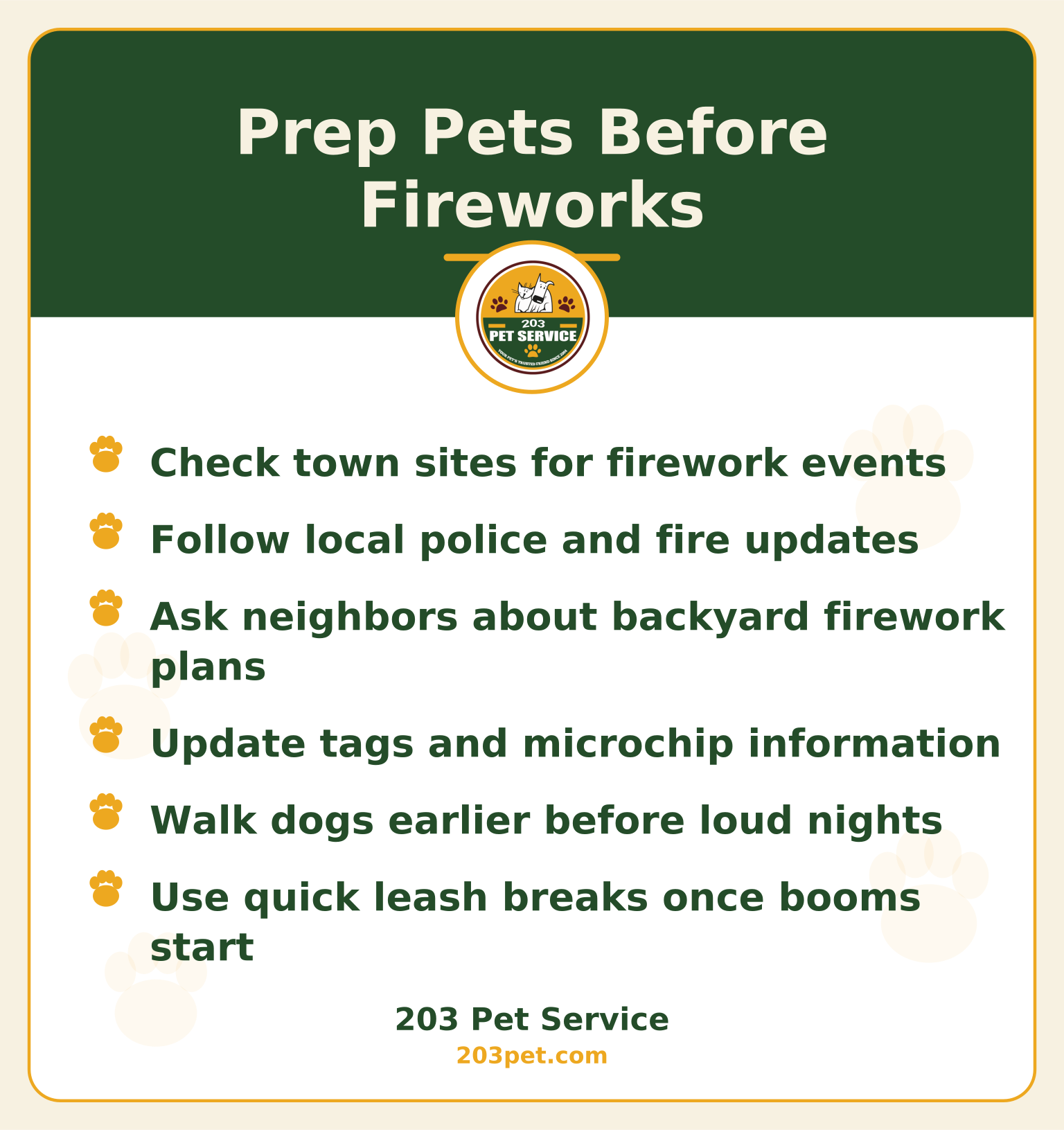
Before summer weekends, get in the habit of:
- Checking your town website for event schedules
- Following local police or fire social pages that announce larger shows
- Asking neighbors if they plan to set off fireworks in the cul-de-sac or shared yard
You will not catch everything, but even knowing the likely days and times helps you plan walks, meals, and bathroom breaks.
Update ID tags and microchips before the holiday rush
Every summer, we hear about dogs or cats who bolt out a door or slip a collar during fireworks. A simple tag on a well fitted collar or harness and a registered microchip can be the difference between a long, panicked search and a quick reunion.
The ASPCA notes that microchips give lost pets a permanent ID and greatly improve the odds of getting them home, as long as you keep your contact info updated in the chip registry ASPCA microchipping FAQ. A chip is not a GPS, but it is a backup when a collar comes off.
For summer firework season, make sure: Your dog wears a flat collar or harness with a legible ID tag
Many of our long term dog walking membership clients in Fairfield County ask us to double check tags and use fit right before July 4th. That five minute check is worth it.
Walk dogs earlier and smarter on noisy days
If fireworks are likely, shift your walks earlier in the evening. A good rule: get your longer walk done before sunset, then just quick leash breaks in the yard once the booms start.
Dogs still need exercise for both body and brain. The American Kennel Club explains that many breeds need a good amount of daily activity to stay balanced, and that can include walks, play, and training games AKC exercise guide. On loud nights in Westport or Southport, you may swap some outdoor time for indoor enrichment, but you do not skip movement entirely.
If you work late or commute, a steady walking plan with a local company like 203 Pet Service can help. Our W-2 salaried employees do ongoing, consistent dog walking visits, not one-off gig walks, so your dog already knows who is holding the leash when noises start.
How do you make a safe, quiet spot at home for fireworks?

You make a safe spot by choosing a room away from windows, softening the sounds, and filling that space with things your pet already loves. If you set this up before the holiday week, your dog or cat can learn that this is their “den” when things get loud.
Pick the right room for your home
In a Fairfield townhouse or Bridgeport apartment, you may not have a soundproof basement. You still have options. Look for:
- A room with fewer windows, like an interior bedroom or office
- A space where you can close blinds or curtains fully
- A room away from street noise or shared walls if possible
In some Easton and Wilton homes, the basement works best. In Black Rock or Devon apartments, the bathroom or an interior hallway may be quieter. The “best” room is the one your pet will actually use, not the one that looks ideal on paper.
Use sound and light to blunt the booms
You will not erase the sound of fireworks, but you can take the edge off. Simple tools help more than you may think:
- Box fan or tower fan for steady white noise
- TV or talk radio at a normal, steady volume
- Closed windows and curtains to block flashes and sharp sounds
Many families we work with in Fairfield County leave a fan and TV on during stormy days already. You can use the same setup for fireworks. For cats, avoid blasting sound. They usually prefer steady, low background noise over loud music.
Comfort tools that actually help pets relax
Think of this quiet spot like you would a safe room for a new puppy. The AKC suggests creating a small, cozy area with a bed, chew toys, and limited access when you bring a puppy home, so they feel secure and not overwhelmed AKC puppy prep guide. You can use the same idea for firework nights.
Helpful items include:
- A crate your dog already likes, covered on three sides
- A favorite bed or blanket that smells like you
- Long lasting chews if your vet says they are safe for your dog
- Lick mats or food puzzles for calm, focused licking
- For cats, a covered bed, box, or carrier with a soft towel
For many cats we care for through our pet sitting and cat sitting visits, simply having their own quiet room with a hiding spot, litter box, water, and a sitter who moves slowly makes a big difference. Cornell’s Feline Health Center notes that cats often cope better when they can hide and control their space, rather than being forced into open rooms when stressed Cornell feline behavior guide.
What calm routines work best on the night of the fireworks?

The best firework routine feels boring and predictable to your pet. You keep leashes secure, move slower than usual, talk softly, and follow the same simple plan each time a loud night comes around.
Leash rules that prevent escapes
Most firework escape stories start the same way. “He was in the yard like always, then something boomed and he was gone.” You prevent a lot of that by changing your leash rules on noisy nights.
In our Fairfield County visits, we treat any night with likely fireworks like a flight risk night. We:
- Clip the leash on before opening any door
- Use harnesses that fit snugly and are checked by hand
- Skip off leash time in yards, even fenced ones
- Use double leashes for known flight risks when owners prefer
If your dog spooks on walks in places like Black Rock or Bridgeport, consider keeping bathroom breaks as close to home as possible while the fireworks last. Short and safe beats long and scary.
How we move and speak with nervous pets
Nervous animals read your body language. Quick movements, loud voices, or grabbing at collars can ramp up fear fast.
Our W-2 employees are trained to:
- Walk in calmly, not burst into the room
- Use normal, relaxed voices, not high excitement or shouting
- Give the dog or cat a moment to approach rather than crowding them
- Pair loud booms with something positive, like a treat for dogs who can eat
For some dogs, soft talking and gentle petting help. For others, they would rather hide under the bed and just know you are nearby. You know your pet best. It is fine to comfort a scared dog if it helps them. You are not “rewarding fear.” You are giving them safety.
When to stay home and when to plan a sitter
If your dog panics with fireworks, the kindest choice is for someone calm and trusted to stay with them. That might be you, a family member, or a professional sitter who already knows your pet.
In houses across Fairfield, Westport, and nearby Weston, many clients book evening pet sitting visits during July 4th week or on big beach firework nights. Some ask for extra-long visits that cover the loudest hours so their dog or cat is not alone when the big show hits.
If you plan to be at the beach or with friends, set this up early. A sitter who has already walked your dog, sat on your couch, and practiced the quiet routine will be more effective than a stranger walking in for the first time on July 3rd.
Video: Relaxing music with gentle firework desensitizing sounds that some dogs find calming during loud nights.
Some dogs relax with background music like this. Others prefer simple fan noise. Try different options on quieter days so you know what your pet likes before the big night.
When should you call your vet about firework fear?

You call your vet when your pet’s fear is so strong that home routines are not enough, or when they risk hurting themselves. If your dog or cat panics, stops eating, or changes behavior for days around every loud event, it is time for professional help.
Red flag stress signs that need expert help
Reach out to your vet if you see things like:
- Trying to break out of crates, windows, or doors
- Chewing or licking themselves until they lose fur or break skin
- Refusing food or water for a full day around noise events
- Visible shaking that lasts long after the fireworks stop
- Sudden house soiling in an otherwise trained pet that only happens with loud sounds
In older dogs, chronic stress can also make joint pain, heart issues, and heat intolerance worse. PetMD’s guide for senior dogs points out that aging dogs often need adjusted routines and medical checks when their behavior changes under stress, because those changes can point to pain or other disease as well as anxiety PetMD senior dog care guide.
Talk with your vet about calming aids and medication
Your regular veterinarian in Fairfield County is your best partner for medication and supplement plans. They know your pet’s age, health, and history.
Common options they may discuss include:
- Short term prescription anti-anxiety medications
- Longer term behavior meds for severe noise phobia
- Over the counter calming chews or pheromone products, when appropriate
- Training plans to slowly change how your dog feels about noise
UC Davis notes that many behavior issues respond best to a mix of environment changes, training, and medical support when needed, rather than just one approach alone UC Davis behavior overview. Medication is not a “last resort” or a failure. It is one more tool to keep your pet safe and able to cope.
If your vet prescribes something for fireworks, do a “test dose” on a quiet day before July 4th. That way you and your vet can see how your pet reacts and adjust the plan if needed.
How trained sitters follow vet care plans on loud nights
Once your vet helps you build a plan, share it with whoever cares for your pets when you are out. At 203 Pet Service, our W-2 employees are trained to follow written vet instructions and medication schedules exactly, including on holidays and noisy weekends.
During noisy visits in Southport, Stratford, and neighborhoods of Wilton or Weston, we stick to your plan:
- Give meds at the time and dose you list
- Watch and note behavior changes for you and your vet
- Use the safe room and tools you set up, rather than guessing
- Follow your rules on leashes, harnesses, and outside time
In a true emergency, our protocol is simple. Your sitter or walker calls Robyn, our office manager, right away. Robyn reaches out to you, and your sitter stays with your pet until you and your vet decide the next step. For after hours emergencies, many of our clients work with MedVet Norwalk, and some use VCA Shoreline Animal Hospital on Bridgeport Avenue in Shelton, along with their primary vet.
We also train our employees in pet first aid and CPR, and I teach those skills professionally. The AKC’s first aid guidance lines up with how we work: stabilize the pet, avoid doing more harm, and get them to a veterinarian quickly when signs are serious AKC first aid guide.
Frequently Asked Questions

About This Topic
How can I prepare my dog for July 4th fireworks at home?
Start a few days early by choosing a quiet room away from windows and setting it up with your dog’s bed, water, and favorite chews. Close curtains, play white noise or a TV, and take a long walk before dark so they’re tired. Keep their routine simple and calm. If you’ll be out, 203 Pet Service can stay with noise‑sensitive dogs in Fairfield County.
What should I do if fireworks start suddenly and my pet panics?
First, bring your dog or cat inside and close windows and doors. Turn on a fan, TV, or white‑noise app to soften the blasts, and move them to their safe spot with treats or a lick mat. Speak calmly and avoid scolding or over‑comforting. If you’re not home, having a trusted sitter like 203 Pet Service scheduled in advance really helps.
Are there calming products that actually help dogs during fireworks or thunderstorms?
Some dogs do well with snug vests, pheromone diffusers, or vet‑approved calming chews, but they don’t work for every pet. It’s smart to test new products on a quiet day, not during the first big boom. For more severe fear, ask your vet about medication options. 203 Pet Service sitters can follow your vet’s plan and give prescribed meds as directed.
Is it safer to walk my dog before or after fireworks start?
Walk your dog before dusk, ideally for a longer, sniff heavy walk so they are relaxed and tired. Once fireworks start, keep potty breaks very quick and use a secure harness or collar plus ID tags, since scared dogs can bolt. Avoid crowded parks or waterfronts on event nights. In Fairfield County, 203 Pet Service can handle earlier evening walks on known noisy dates.
My indoor cat hides for hours during loud nights, should I be worried?
Hiding is a normal coping strategy, but you want to make it safe and predictable. Set up a quiet room with a covered bed, litter box, water, and a Feliway diffuser, and let your cat retreat there without being pulled out. If they’re not eating, using the box, or they pant or drool, call your vet. Pet sitters from 203 Pet Service can monitor cats closely during noisy holidays.
Can fireworks or summer parties make my dog try to run away?
Yes, big noises and crowds are common triggers for escape attempts, even in usually calm dogs. Double check your fences, use a well fitted collar or harness with ID tags, and keep microchip info current before holiday weekends. During parties, keep anxious pets in a closed, quiet room. If you’re traveling, 203 Pet Service can provide in‑home care so pets stay in familiar surroundings.
How do I know if my pet’s firework fear is bad enough for medication?
If your dog or cat pants, shakes, drools, can’t settle, or tries to hide in unsafe spots every time there’s thunder or fireworks, it’s worth a vet visit. Video their behavior during a noisy event to show your veterinarian. Many pets do best with a mix of training, environment changes, and meds. 203 Pet Service can help carry out your vet’s plan during visits.
What can a professional pet sitter do during fireworks that I can’t?
A seasoned sitter is focused only on your pet’s comfort, not hosting or traveling. At 203 Pet Service, we set up safe zones, keep noise buffers going, stick to calming routines, monitor for signs of distress, and follow your vet’s instructions for meds or anxiety plans. We also manage late‑night potty breaks safely when neighborhoods are loud. That steady presence can prevent full‑blown panic episodes.
About 203 Pet Service
What areas does 203 Pet Service cover in Fairfield County?
We provide professional dog walking, pet sitting, and training services across Eastern Fairfield County, Connecticut. We proudly serve families in Fairfield, Stratford, Westport, Easton, Southport, Black Rock, Bridgeport, Shelton, Devon, Trumbull, Weston, and Wilton. 203 Pet Service has cared for pets in Fairfield County since 2004, and every visit is handled by a trained, W-2 salaried employee who is background checked and fully insured.
Why does 203 Pet Service use salaried W-2 employees instead of independent contractors?
We believe salaried W-2 employees provide more reliable, accountable, and professional pet care. Unlike independent contractors, our salaried employees go through careful background checks, full training, and are fully insured. This employment structure means consistency, accountability, and peace of mind for Fairfield County pet families.
Does 203 Pet Service provide care for cats as well as dogs?
Yes. We offer full cat sitting services including feeding, litter box care, playtime, and medication. Whether you need daily visits while you are at work or full vacation care, our salaried employees are trained in feline behavior and health needs. We serve cat families throughout our 12 Fairfield County service towns.
How long has 203 Pet Service been in business?
We have served Fairfield County pet families since 2004, that is 22 years of reliable, professional pet care. Our longevity speaks to our care for safety, consistency, and real animal welfare. Many of our clients have been with us for over a decade, and their referrals remain our best source of new business.