
Fireworks & Loud Nights: Keeping Fairfield County Pets Calm
Quick Answer: Keep your dog or cat calmer during Fairfield County fireworks by planning ahead and giving them a safe, quiet spot inside with soothing sounds and familiar smells. Use tools like white noise, blackout curtains, puzzle toys, and vet-approved calming aids and try not to leave anxious pets home alone on peak firework nights. If you must be out, arrange a trusted sitter who understands noise fears.
Fireworks & Loud Nights: Keeping Fairfield County Pets Calm
Dogs and cats in Fairfield County can go from snoring on the couch to shaking under the bed in one firework burst. If you live near the water in Fairfield, close to Seaside Park in Bridgeport, or in a quiet corner of Easton, you've probably seen it. One second it's a calm June night. Then a surprise firework goes off from a backyard or beach, and your dog is suddenly pacing, panting, and glued to your leg.
In 29 years of summer visits across Eastern Fairfield County, I have seen this scene play out over and over. The good news is you can plan for it. You can set up your home, your routine, and your care plan so your pets stay as calm and safe as possible when the sky gets loud.
This guide walks you through what to do before, during, and after fireworks so your dog or cat has a smoother summer night.
Why do fireworks feel so scary to dogs and cats?

Fireworks scare pets because they are loud, sudden, and confusing. Dogs and cats don't know there's a show at the beach or the park. They just know the world suddenly booms, flashes, and smells like smoke, and they can't escape it.
Think of how you might jump if someone slams a door behind you without warning. Now multiply that by a few hundred, and add smells and bright flashes. that's what fireworks feel like to many pets.
How sound, smell, and light hit your pet all at once
Dogs hear much better than we do. They pick up higher pitches and softer sounds. Cats are even more sensitive. Sudden explosions feel intense to them, even if they seem far away to you.
- Sound: Fireworks do not just boom. They crack, whistle, and rumble. For a sound-sensitive dog, that feels like a storm that does not make sense.
- Smell: Many dogs react when they smell smoke or gunpowder. It signals danger in a very basic way.
- Light: Bright flashes that light up the yard or living room can set off alarm bells in a nervous pet’s brain.
When all three hit at once, the brain goes straight into “fight or flight” mode. Older pets and dogs with existing anxiety can be even more sensitive, as explained in guides to senior dog care from PetMD on senior dogs. Their bodies just don't adjust as quickly.
Common stress signs Fairfield County pet parents see on summer nights
On loud nights in Stratford or Southport, we see the same stress signals again and again. Some are clear. Some are easy to miss if you're not looking for them.
Watch for:
- Pacing, circling, or not being able to settle
- Shaking, trembling, or drooling
- Heavy panting, even when it's not hot
- Hiding in closets, bathrooms, or under beds
- Clingy behavior, glued to you or another pet
- Refusing food, water, or treats
- House soiling in otherwise trained pets
- Barking, howling, or whining that won't stop
Cats often go quiet. You may just notice your cat vanish when the first firework hits. Many will wedge themselves behind furniture or into closets and stay there.
If you see these signs every time fireworks start, plan as if your pet has a true noise fear. It is kinder to over prepare than to hope it will be “not that bad this time”.
How can I get ready before fireworks start in Fairfield County?
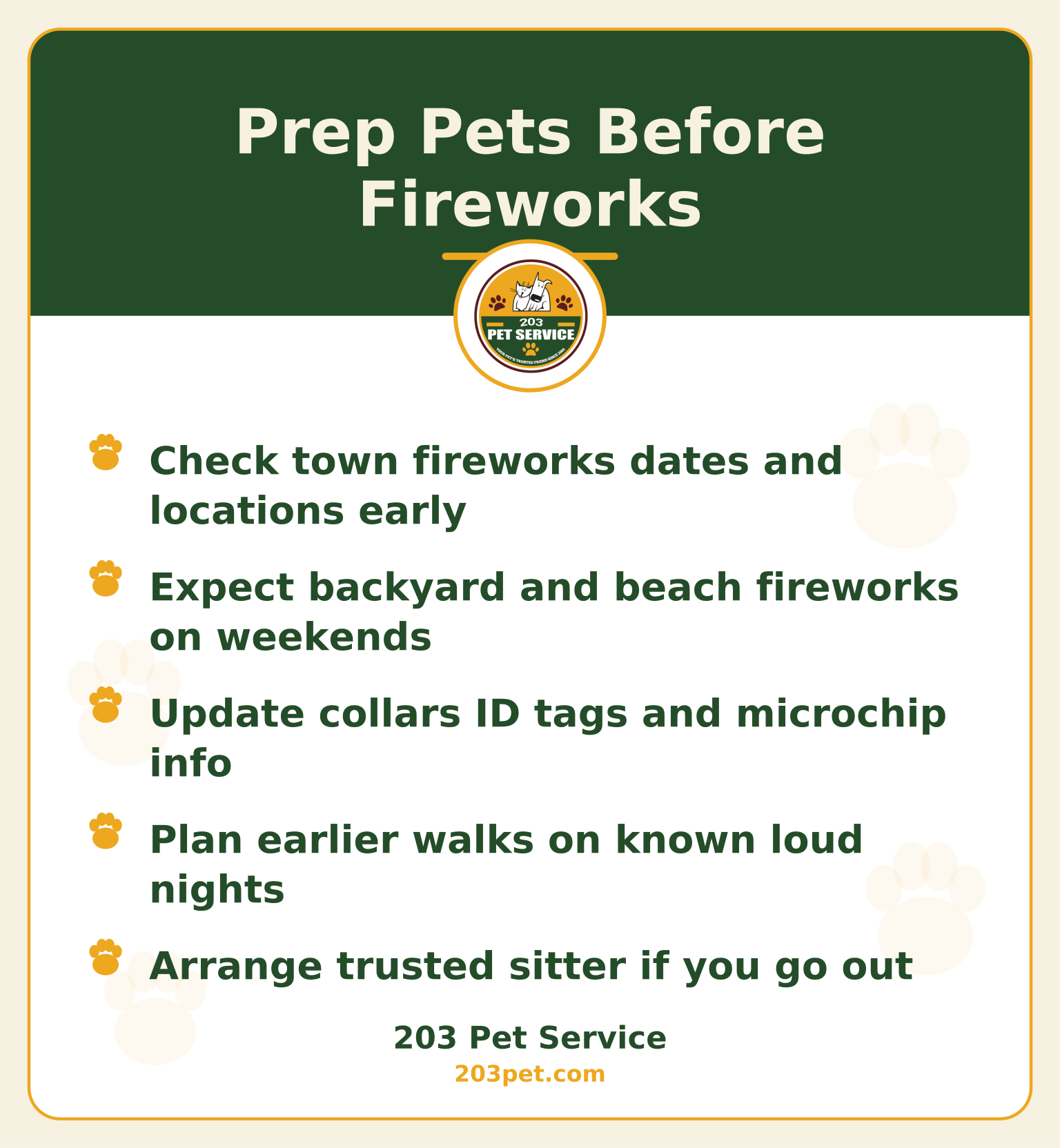
You keep your dog or cat calmer during fireworks by planning a week or two ahead. Check event schedules, update identification, and build the right routine before the first boom hits.
Check local fireworks schedules and “surprise” hot spots
In our years serving families in Fairfield, Bridgeport, Stratford, Westport, Easton, Southport, and Black Rock, we have learned a pattern. The big town shows rarely surprise anyone. it's the backyard and beach fireworks that catch pet parents off guard.
A quick checklist:
- Look up town fireworks on the Fairfield County town websites or local Facebook groups.
- Remember nearby venues. Seaside Park, Jennings Beach, Penfield Beach, Short Beach, and Sherwood Island often mean loud nights for nearby homes.
- Assume weekend nights around the Fourth of July will be noisy, even outside official shows.
If you live within walking distance of popular beaches in Fairfield or Black Rock, plan for noise every clear summer weekend, not just on the holiday itself.
Why ID tags and microchips matter when pets bolt
Fireworks are one of the top reasons dogs run out of yards, slip collars, or bolt from cars. A scared dog or cat just wants to escape. They don't think about getting back home.
That is where ID tags and microchips come in. A simple tag with your phone number helps a neighbor call you right away. A microchip is a tiny device under the skin that shelters and vets can scan if someone finds your pet. The ASPCA explains how microchips help pets get back home, as long as your contact info stays up to date.
Before fireworks season:
- Check that tags are on, readable, and have your current cell number.
- Call your vet or the microchip company to confirm your info is current.
- Make sure dogs wear a snug, well-fitting collar or use gear they can't back out of.
Why you should walk dogs earlier on loud nights
On known firework nights in Fairfield County, try to finish your dog’s longer walk well before sunset. In our ongoing dog walking membership, we shift walk times earlier for dogs who struggle with noise.
Earlier walks help because:
- Your dog can burn off energy before the booms start.
- You avoid the highest chance of sudden blasts in the neighborhood.
- they're more likely to poop and pee before they get too scared to go outside.
Follow basic heat safety while you do this. Summer evenings can still be hot and humid. Hydration and shade matter. Guides on summer dog safety from PetMD remind us to avoid the hottest pavement, carry water, and adjust exercise for age and breed.
If you know you'll be working late in Westport or driving back from Wilton or Trumbull, it might make sense to have a regular walker handle that pre fireworks exercise. That is where a consistent program like our walking membership around Fairfield County helps keep routines steady, even when your schedule is busy.
How do I set up a safe, quiet spot at home for fireworks?

You help your pet feel safer during fireworks by giving them one calm, predictable spot where the booms feel softer. Think “cozy storm bunker”, not punishment or isolation.
Pick the right room in your Fairfield County home
You don't need a fancy setup. You just need a place that's:
- Away from big windows and sliding doors
- On a lower floor if possible
- Easy to close off with a door or baby gate
In many Easton and Weston homes, that ends up being a finished basement or interior hallway. In Bridgeport and Devon apartments, it might be an interior bedroom or bathroom with a fan.
Look for the spot your pet already goes to during storms. that's usually your best starting point.
Use sound to soften the pops and booms
White noise helps a lot. So do fans and steady TV or music. you're not trying to drown fireworks out completely. You just want to take the edge off the suddenness.
- Run a box fan or tower fan in the room.
- Turn on a TV show or talk radio at a normal volume.
- Use a white noise app if you have one.
Soft, steady sound works better than blasting music. You want your dog or cat to relax, not feel overwhelmed by even more noise.
Comfort tools that really help nervous pets
Think about what your pet loves on a normal day. Then build that into their safe space.
- Beds and crates: Many dogs feel better in a covered crate with their usual bed. The American Kennel Club talks about creating safe spaces for young dogs in their puppy prep guides, which also helps adult dogs feel secure. You can see that in their advice on setting up a “puppy zone” in your home in this AKC article on preparing your home.
- Favorite blankets and toys: Familiar smells matter. Use the blanket they always nap on or the toy they carry to bed.
- Long lasting chews or food puzzles: For some dogs, focused chewing helps them cope with stress. Stuffed Kongs, lick mats, or safe chews can turn part of the night into a “project”, not just something to endure.
Cats often like vertical hiding spots. A covered cat bed, a cardboard box with a towel, or access under the bed can help. Just make sure they can reach a litter box and water without walking past a loud window or door.
If you know you'll be out during fireworks and need help keeping routines steady, a professional sitter who understands these setups can make a big difference. Our salaried employees follow your exact safe room plan during in home pet sitting visits and cat visits so your pets are not left to fend for themselves when the noise starts.
What calm routines work on the actual night of the fireworks?

On the night itself, your goal is simple. Keep things predictable. Move slowly. Remove chances for panic escapes. A calm routine helps your pet believe “we've done this before and it was okay”.
Leash habits that prevent panicked escapes
We treat firework nights a bit like storm nights on our visits. In Fairfield County that often means keeping dogs leashed any time a door opens, even if they're normally perfect off leash in the yard.
Good habits:
- Clip the leash on before you open the door, even for a quick potty break.
- Use gear that your dog cannot back out of if they hit the end of the leash.
- Check gates, fences, and latches before dark. Fireworks and open gates don't mix.
Noise sensitive dogs love to bolt between house and yard when they hear a boom. A simple leash prevents that one mistake turning into a lost dog alert.
How we move and talk around nervous pets
In 29 years of working with dogs and cats I have learned that your body language matters more than your words. On noisy nights in Southport or Shelton, we keep movements slow and voices soft.
Some simple guidelines we train our W-2 employees to follow during visits:
- Move like you've nowhere to rush to, even if the schedule is tight.
- Use a calm, low voice. Short phrases. “You are okay.” “I am here.”
- Avoid crowding a hiding pet. Let them come to you if they want touch.
- Offer treats gently. don't force them if the pet says no.
Many dogs take comfort from calm touch. Others do better if you simply sit nearby and breathe with them. You know your pet best. Follow their lead.
Should you stay home or book a sitter for fireworks?
If your pet has a mild reaction to fireworks, your presence might be enough. Sitting on the couch together with the TV on and windows closed might cover it.
If your dog shakes, pants, hides, or has hurt themself in the past trying to escape, they likely shouldn't be alone during fireworks. that's when a trusted sitter is worth planning for in advance.
When we provide overnight and evening pet sitting across Fairfield County, we match nervous pets with salaried employees who have experience with noise fear. Because our sitters are employees, not contractors, we can train them in one consistent, low stress routine. They stay on schedule, stick to your vet instructions, and handle things like medications and calming tools the way you would.
If you know you will be out at a town show in Bridgeport or heading down to Norwalk for an event, it's kinder to line up that support before the busy summer weeks fill up.
Video: Relaxing background music designed to help dogs stay calm during fireworks and other loud noises. Many pet parents use this alongside white noise and safe spaces.
When should I call my vet about my dog’s firework fear?

You should call your vet about firework fear when your dog or cat is too stressed to eat, drink, rest, or function normally. If your pet panics hard every time fireworks go off, that is a medical and behavioral issue, not just “a quirk”.
Red flag stress signs that need expert help
These signs tell you it's time to involve your veterinarian:
- Your dog hurts themself trying to escape crates, doors, or windows.
- They refuse food, water, or to go outside for hours every time fireworks start.
- Your cat hides and doesn't come out to use the litter box, even overnight.
- You see drooling, vomiting, or diarrhea during or right after fireworks.
- Your pet’s heart seems to pound out of their chest, or they cannot catch their breath.
Any sign of physical injury or trouble breathing calls for prompt veterinary advice. Guides to dog first aid from the AKC on dog first aid remind owners to get emergency care right away for serious distress, not wait to “see how it goes.”
Talk with your vet about calming aids and medications
Your primary vet knows your pet’s health history. They can help you decide if supplements, prescription medication, or a behavior plan make sense. UC Davis shares broad animal health information on anxiety and behavior concerns in their animal health topics library, but your own vet will tailor advice for your pet.
Ask your vet:
- If your pet is a candidate for anxiety medication on firework nights.
- How early before the noise you should give any prescribed medication.
- Whether any existing conditions or other meds affect those choices.
- What side effects to watch for, and when to call or head to an emergency hospital like MedVet Norwalk.
For cats, your vet can also help rule out medical problems that might look like anxiety. The Cornell Feline Health Center notes that pain and illness often show up as behavior changes. So if your normally steady cat suddenly panics at every noise, a checkup makes sense.
How trained pet sitters follow vet care plans on loud nights
Once your vet builds a plan, the next step is making sure everyone who cares for your pet follows it. This part is where our business model really matters.
203 Pet Service uses W-2 salaried employees, not gig workers or short term contractors. That means we can train every sitter and dog walker in how to read your pet’s body language, follow medication schedules, and stick to your vet’s instructions on tricky nights. During our meet and plan process, we gather all that information ahead of time.
We also teach our employees basic pet first aid and how to handle emergencies. I am a Certified Pet First Aid and CPR Instructor through national programs, so I train our people directly. Many of those skills line up with the same core ideas you see in dog first aid guides from the AKC’s first aid overview.
If something serious happens during a visit, our emergency protocol is clear. The sitter calls Robyn, our office manager, right away. Robyn calls you to explain what's going on and help decide next steps. The sitter stays with your pet until you or your vet tells them what to do next.
Frequently Asked Questions

About This Topic
How can I prepare my dog before Fairfield County fireworks start?
A few days before big fireworks nights, start extra exercise, stick to a predictable routine, and create a quiet “safe room” with their bed, water, and favorite toys. Close windows and curtains, and play TV, fans, or white noise. If you’ll be out, book a trusted sitter through 203 Pet Service so your dog isn’t panicking alone.
What should I do the moment my dog panics from fireworks?
First, bring your dog inside and get them into their quiet, set-up safe space. Turn on calming background sound, offer a long-lasting chew or food puzzle, and keep your own voice and body language relaxed. Don’t scold or force them outside. If you know nights will be loud, 203 Pet Service can stay with them so they’re not alone.
Is it better to stay home with my anxious pet on July 4th?
If your pet already hates fireworks, staying home usually helps them stay calmer and safer. Your presence, normal routine, and fast response if they bolt or hide make a big difference. If you can’t be home, consider an in-home sitter from 203 Pet Service who understands noise anxiety and can follow your pet’s calming routine.
Can I take my dog to local Fairfield County fireworks shows safely?
For most dogs, fireworks events at beaches or parks are overwhelming, not fun. The crowds, sudden booms, smoke, and flashing light can trigger panic and make it easier for them to slip a collar or bolt. It’s much safer to leave them at home in a calm environment or with a 203 Pet Service sitter than bring them to the show.
What calming tools actually help pets during fireworks and summer storms?
Try layering a few things: white noise or TV, closed curtains, a snug anxiety wrap, and food puzzles or lick mats to keep your pet busy. Ask your vet about pheromone diffusers or prescription meds if your pet really melts down. 203 Pet Service sitters can use your preferred calming tools and keep your dog or cat on their comfort routine.
My indoor cat hides for hours after fireworks, should I worry?
It’s normal for many cats to hide when the booms start, but they should eventually come out to eat, drink, and use the litter box. Make hiding spots cozy and safe, and keep doors and windows shut so they don’t bolt. If hiding lasts more than a day or they’re not eating, call your vet and mention any changes to your 203 Pet Service sitter.
How can 203 Pet Service help keep my pet safe on loud nights?
203 Pet Service can provide in-home visits or overnight care so your pet isn’t alone when fireworks or thunderstorms roll through. Sitters follow your calming routine, manage potty breaks during quieter moments, and double-check doors, gates, and ID tags. Because they know Fairfield County’s typical firework spots and times, they can plan walks and visits around the noise.
About 203 Pet Service
What areas does 203 Pet Service cover in Fairfield County?
We provide professional dog walking, pet sitting, and training services across Eastern Fairfield County, Connecticut. We proudly serve families in Fairfield, Stratford, Westport, Easton, Southport, Black Rock, Bridgeport, Shelton, Devon, Trumbull, Weston, and Wilton. 203 Pet Service has cared for pets in Fairfield County since 2004, and every visit is handled by a trained, W-2 salaried employee who is background checked and fully insured.
Why does 203 Pet Service use salaried W-2 employees instead of independent contractors?
We believe salaried W-2 employees provide more reliable, accountable, and professional pet care. Unlike independent contractors, our salaried employees go through careful background checks, full training, and are fully insured. This employment structure means consistency, accountability, and peace of mind for Fairfield County pet families.
What makes 203 Pet Service different from other pet sitters in Connecticut?
Our owner, Jason Hofmann, brings 29 years of professional pet care experience, including 5 years as a veterinary technician at Greenfield Animal Hospital in Fairfield. As an Animal Behavior College (ABC) certified dog trainer, Jason built 203 Pet Service on veterinary medical knowledge and professional training, not just hobby experience. Plus, we've served Fairfield County families since 2004 with the same care for safety and reliability.
What qualifications do 203 Pet Service employees have?
Every member of our salaried W-2 team goes through careful background checks, professional pet care training, and ongoing education in animal behavior and safety. Owner Jason Hofmann personally trains each employee, drawing on 29 years as a veterinary technician, pet store manager, and ABC-certified dog trainer. We don't hire hobby pet sitters. We employ career pet care professionals.