
Gentle Daily Walks for Older Dogs: Safe, Happy Exercise
in Fairfield County Quick answer: Older dogs do best with short, gentle walks most days, focused on easy movement, sniffing, and comfort instead of distance or speed. One to three walks of about 10 to 20 minutes, adjusted to your dog’s age, health, and energy, can help keep their joints, muscles, heart, and brain in better shape without pushing them into pain or exhaustion. Gentle daily walks for older dogs keep joints moving, muscles working, and minds sharp, as long as you adjust the pace and distance to their age and health. Short, steady walks most days help your senior dog stay mobile and happy, without pushing them into pain or exhaustion. In our years walking senior dogs in Fairfield, Stratford, Westport, Easton, Southport, Black Rock, and Bridgeport, we've seen one clear pattern. Older dogs who get calm, regular walks age more comfortably than dogs who mostly stay on the couch. This guide will show you how to walk your senior dog safely, what signs to watch for, and how a long-term walking plan can support your dog as they slow down. 🐾 🐾 🐾 🐾 🐾 🐾 🐾 🐾
Why do older dogs still need daily walks?

Older dogs need daily walks because their joints, heart, and brain all work better when they move regularly. Light, consistent exercise helps manage weight, keeps arthritis from stiffening their joints as fast, and gives them mental stimulation.
Senior dogs often slow down, but they usually do not benefit from doing nothing. According to PetMD's senior dog care guide, controlled, gentle activity is a key part of keeping aging dogs comfortable and maintaining their quality of life. Long naps are fine. Long naps with no movement day after day, not so fine.
Think of gentle daily walks as “joint oil” and “brain games” rolled into one. Your dog sniffs, moves, and interacts with the world. In Fairfield County, that might be a quiet loop around your block in Westport, or a slow stroll on a side street in Bridgeport rather than a busy park.
So the goal is not distance or speed. The goal is regular, easy movement and a happy dog who comes home tired but not sore.
How long and how often should you walk a senior dog?

Most healthy senior dogs do best with one to three short walks a day, often 10 to 20 minutes each, adjusted for their breed, health issues, and weather. Quality matters more than clock time, so you stop the walk based on how your dog feels, not on a number from an app.
Breed and size matter. Higher energy breeds, like many herding or sporting dogs, often still want more movement in their senior years, even if you cut back the intensity. The American Kennel Club's exercise guidelines by breed explain that active breeds usually need more mental and physical activity throughout life. For them, three very easy walks and extra sniff time may work better than one longer outing.
Here is a simple way to think about walk length for older dogs:
- Start with 10 minutes at a calm pace.
- Watch your dog during and after the walk for any limping, lagging, or heavy panting.
- If they seem bright and comfortable, add 3 to 5 minutes on the next walk.
- If they seem sore or wiped out later, shorten the next walk and slow down.
In our dog walking service, we build senior walks as part of a steady weekly schedule rather than random long outings. A Labrador we walk in Fairfield, for example, gets two gentle neighborhood walks every weekday. On weekends his family does one shorter stroll instead of the long hikes they did when he was young.
One more thing to remember. Dogs with arthritis, heart disease, or other conditions may need shorter but more frequent walks so they don't get stiff between outings. Always talk with your veterinarian about your dog’s specific limits.
How do you tell if your older dog is getting too much exercise?
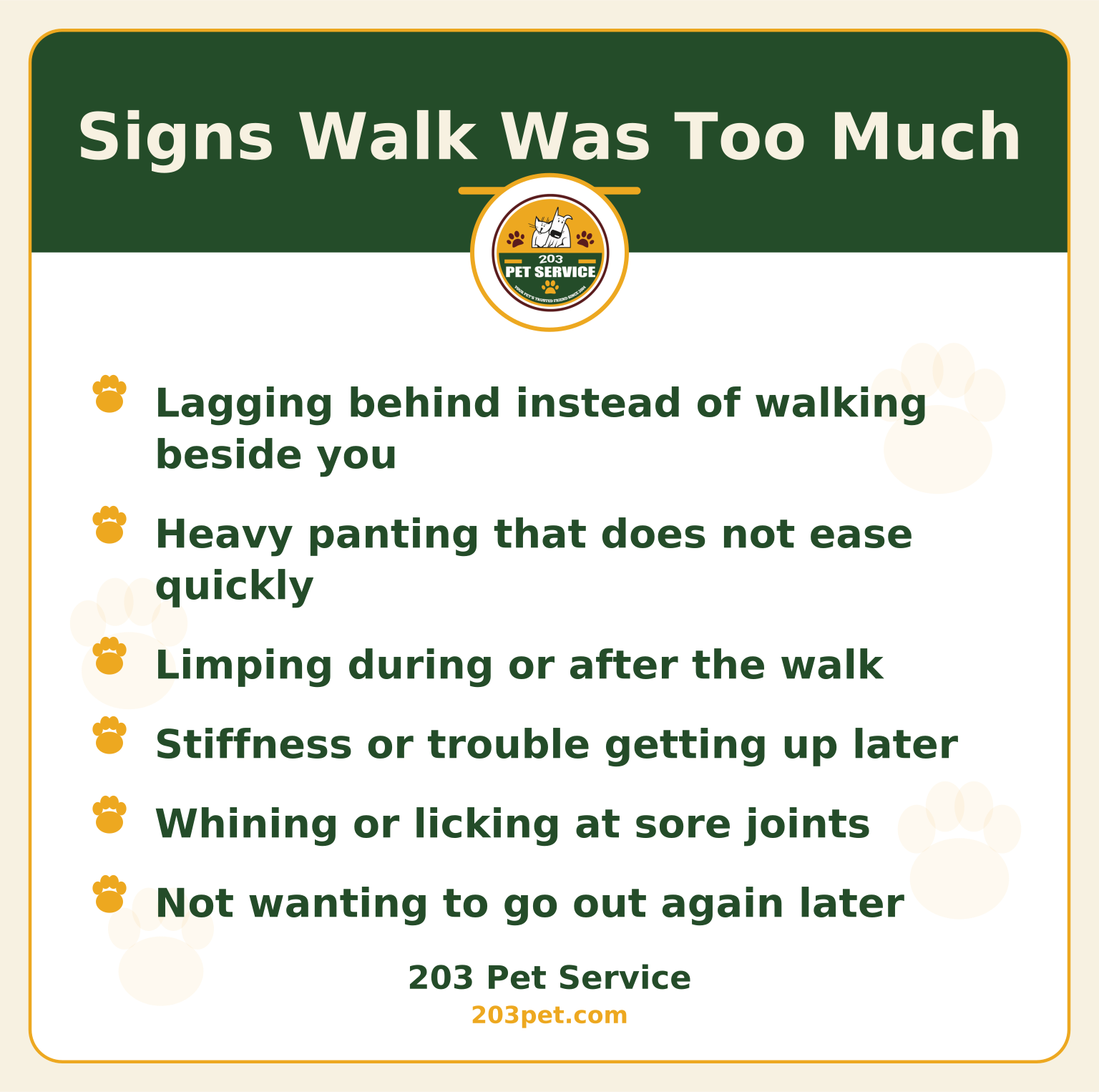
You know your older dog is getting too much exercise if they lag behind, pant hard, limp during or after the walk, or seem extra stiff, restless, or wiped out that evening or the next morning. Any of those are signs to shorten or soften their next walk.
Some dogs push themselves to keep up, especially in a favorite place. You might not see the problem until later. Watch for: Struggling with stairs after a walk,
Arthritis is very common in older dogs and can cause joint pain, stiffness, and reluctance to move. The AKC guide to dog arthritis lists limping, trouble rising, and decreased activity as classic signs. If you see these, talk with your vet. Gentle walks still help many arthritic dogs, but you need a plan that works with their treatment.
One simple rule we use with senior dogs in Stratford and Southport. Your dog should be walking comfortably beside you or slightly ahead, not dragging behind you on a tight leash. If they're behind you, head home.
And if you ever see wobbliness, collapse, pale gums, or odd breathing, stop the walk, get your dog to shade or a cool place, and call your veterinarian right away.
What makes a walk “gentle” for an older dog?
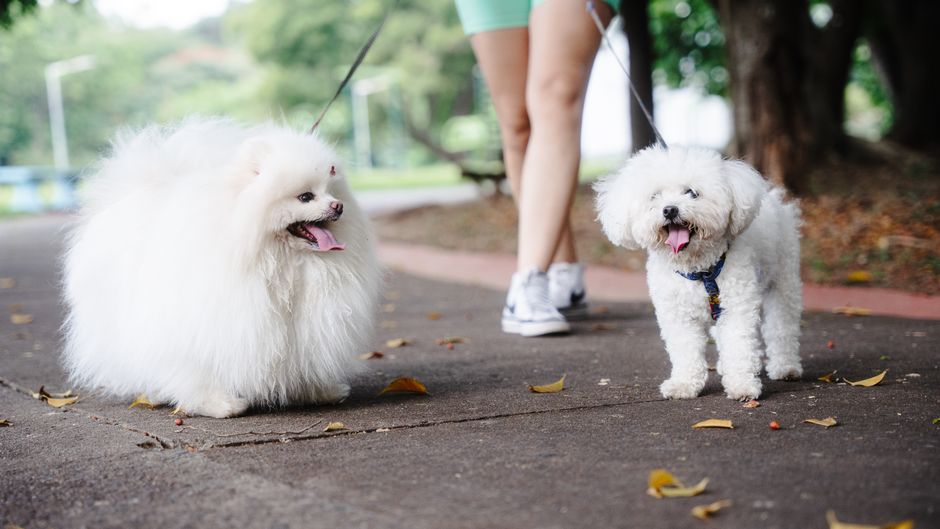
A gentle walk for an older dog means short distance, slow to moderate pace, flat or mild terrain, and lots of sniff breaks. You avoid hard pulling, sudden sprints, steep hills, and extreme weather.
Here are the main pieces that turn a normal walk into a senior-friendly walk:
1. Easy pace and shorter routes
Walk at your dog’s pace, not yours. Many of our Bridgeport seniors move in what we call “stroll mode”. Steady, no rush, but not standing still. We choose blocks with fewer hills and less foot traffic so we're not forced to speed up.
Start your route close to home and do a simple loop. That way, if your dog looks tired halfway through, you are already near your door.
2. Sniffing time is part of the exercise
For senior dogs, mental work can matter as much as physical work. Letting them sniff hydrants, mailboxes, and grassy patches gives them brain exercise. The PetMD guide to dog walking notes that walks give dogs both physical exercise and mental enrichment, including social scent information.
So do not feel bad if your older dog “walks” only a few houses and spends the rest of the time smelling the same shrub. That is still a useful outing.
3. Senior-safe gear
Use a well fitted harness to take pressure off the neck, especially for dogs with trachea or spine issues. The VCA dog walking safety tips recommend secure collars or harnesses, proper ID, and a sturdy leash to reduce the chance of escape or injury. For many older dogs in Fairfield and Easton, a front-clip harness paired with a standard 4 to 6 foot leash helps us keep a smooth, controlled pace without yanking or jerking. 4. Smart weather choices
Senior dogs often tolerate heat and cold less well than younger dogs. According to PetMD's senior wellness tips, older dogs may have reduced ability to regulate body temperature, so owners should protect them from temperature extremes.
On hot Connecticut summer days, we shift senior walks to early morning or later evening and stick to shade. In winter, we avoid long exposure for thin coated seniors and may use a coat and paw protection when sidewalks are icy or treated.
5. Gentle starts and stops
Give your dog a minute or two to warm up at the start. Slow walking, easy sniffing. Same on the way home. Avoid sudden sprints to the door or sharp turns that twist sore joints.
Little adjustments like that add up. We see fewer flares of stiffness in seniors whose walks always start and end in “low gear.”
What special risks do older dogs face on walks?

Older dogs face higher risk of joint pain, heat stress, slips and falls, and sudden health issues like heart or breathing problems during walks. They may also react more slowly to traffic or other dogs.
Some of the most common risks we plan around for our senior dog clients are:
- Arthritis pain. Stairs, curbs, or rough terrain can be hard for aging joints.
- Reduced vision or hearing. Senior dogs may not see bikes or hear cars as clearly.
- Heart or lung disease. These dogs can tire more quickly and may pant heavily with less effort.
- Slower balance and reflexes are common. Ice, wet leaves, and uneven sidewalks can be harder for them.
The Merck Veterinary Manual explains that aging affects a dog’s joints, senses, and organ systems, which changes how they handle daily activities. Walks need to respect those changes.
This is why our salaried employees walk older dogs in Fairfield County with a different mindset than a young, active dog. We plan routes in Bridgeport that avoid steep hills. We stay away from icy slopes in Black Rock. We pick calmer streets in Westport instead of crowded shopping areas.
We also keep emergency readiness in mind. Our walkers follow Jason’s first aid training, and if a dog ever shows signs of distress, they follow our emergency protocol. They call Robyn in the office, Robyn reaches out to the owner, and the walker stays with the dog until we know the next step. No one leaves a senior dog alone in a crisis.
How can you prepare your senior dog for safer walks?

You prepare your senior dog for safer walks by talking with your vet, picking the right gear, choosing good routes, and timing walks around meals and medications. A little planning before you step outside makes the outing smoother and safer.
1. Talk with your veterinarian first
Before you change your senior dog’s exercise routine, ask your vet what kind of walks are suitable. They know your dog’s heart, lungs, joints, and past issues. They may suggest limits on hills, distance, or weather exposure.
Many vets also encourage basic first aid knowledge. The AKC first aid guide for dogs goes over signs of heatstroke, breathing trouble, and wounds, along with when to seek urgent care. Knowing these signs helps you react quickly if something goes wrong on a walk.
2. Choose the right equipment
For most senior dogs we walk in Fairfield, Stratford, and Easton, our go-to setup is: A flat collar with ID tags and microchip backup. A well fitted use to spread pressure across the chest.
Retractable leashes often create sudden jerks and can tangle around older legs. A steady, fixed-length leash gives you more control if you need to gently slow or stop your dog.
3. Plan your route with your dog’s age in mind
Route planning matters more than you might think. A half mile loop that's mostly flat can feel very different than a half mile that includes a steep incline.
In Southport, we might choose a quiet neighborhood street instead of a walk that involves steep hills to the water. In Devon or Trumbull, you might pick a path without a lot of stairs or uneven ground. In Weston or Wilton, wooded trails with roots and rocks can be tricky for dogs with arthritis or vision changes, so a smoother path closer to home might be better.
4. Time walks around meals and medications
Walks right after a big meal can raise the risk of stomach discomfort, especially in large breed dogs. The PetMD senior wellness article suggests monitoring feeding and digestion closely as dogs age, which includes avoiding heavy activity immediately after eating.
Many older dogs are on medication schedules as well. A dog with arthritis might move more comfortably if you time the walk for an hour or so after their pain medication, when the effects are strongest. Ask your veterinarian what timing works best for your dog.
5. Keep contact information handy
Always make sure your phone is charged and your veterinarian’s number is saved, along with a local emergency hospital such as MedVet Norwalk. Jason also partners with VCA Shoreline Animal Hospital on Bridgeport Avenue in Shelton, which many Fairfield County vets trust for advanced care.
In our company, every salaried employee knows our emergency steps. They call Robyn, Robyn calls you, and no one guesses. You want that same level of clarity on your own walks with your senior dog.
How do gentle daily walks help dogs with arthritis or mobility issues?

Gentle daily walks help dogs with arthritis by keeping joints moving, maintaining some muscle strength, and preventing the severe stiffness that comes from total rest. The key is low impact, controlled exercise, never forced activity or long, hard hikes.
The AKC arthritis guide explains that treatment often includes weight management, medications, and controlled exercise to maintain mobility. Too little movement can actually make arthritis worse over time because the joints stiffen and muscles weaken.
In Fairfield and Westport, we care for many older dogs with arthritis who still walk every day. Their walks look different now. Shorter distance. More stopping to sniff. No racing kids on bikes. But those outings still give them a reason to get up, move, and use their legs.
Sometimes, dogs with joint disease also use therapies like laser, acupuncture, or physical therapy. To give you a sense of one of these options, here is a detailed video about cold laser therapy for dogs with arthritis and mobility issues.
Video: Veterinary professional demonstrates a full cold laser therapy protocol to help dogs with arthritis move more comfortably.
Not every dog needs that level of treatment, but many can benefit from a simple formula. Vet-guided pain control, gentle walks most days, and a consistent routine. That is what we aim for with our long-term walking memberships for seniors.
We log how far and how long each walk lasts. We note any changes in stiffness or behavior. If we see a pattern, like a dog in Black Rock who struggles the morning after longer walks, we cut the time or slow the pace and let you and your vet know what we noticed.
How can a professional dog walker help a senior dog?
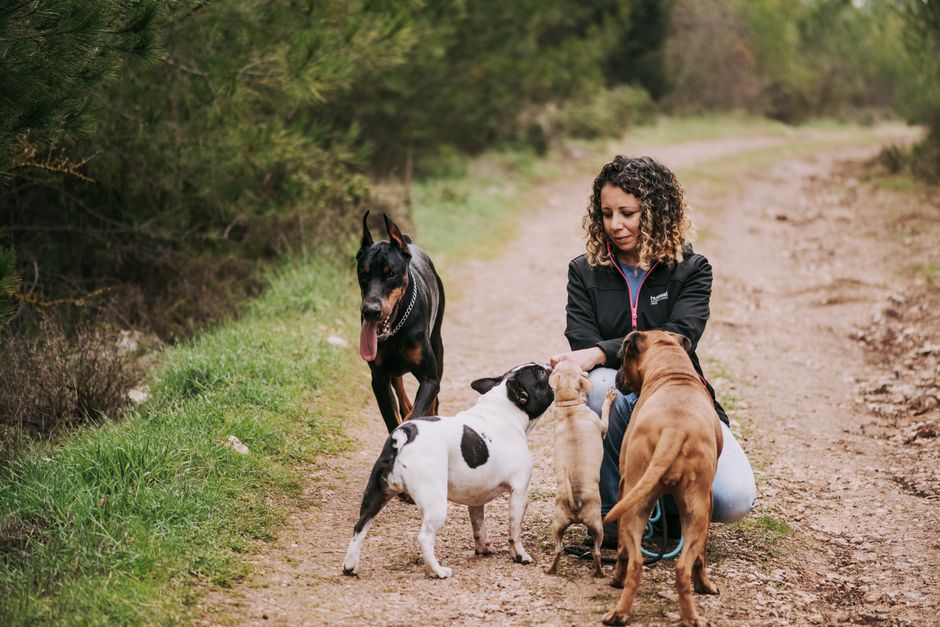
A professional dog walker can help a senior dog by keeping a consistent walking schedule, adjusting pace and route to the dog’s daily condition, and spotting early signs that something is off. For many older dogs, a steady routine with a trusted walker makes aging less stressful.
In Fairfield County, many clients book us not because they cannot walk their dog at all, but because they can't keep the same routine every weekday. Senior dogs tend to do best when walks happen at roughly the same times. Bodies like rhythm.
Here is what we focus on with older dogs through our ongoing dog walking memberships:
- Routine and consistency. Regular mid-day walks for dogs whose families work long hours.
- Observation. The same walker visiting most days notices subtle changes in gait or mood.
- Adjustments. Walk length and path get tweaked based on how the dog looks that day.
- Communication. We share what we see so you can decide when to talk with your vet.
Because our walkers are W-2 employees, not gig workers, we train them to handle aging dogs the way Jason did when he worked as a veterinary technician in Fairfield. They learn how to lift a dog safely if needed, how to help an unsteady dog on stairs, and how to follow our emergency protocol step by step.
Frequently Asked Questions

About This Topic
How long should I walk my senior dog each day, realistically?
Most older dogs do well with one to three short walks a day, around 10 to 20 minutes each, at a very easy pace. Let your dog sniff a lot and stop before they’re lagging behind or panting hard. If you’re in Fairfield County, a gentle block loop or quiet side street is usually enough, not a long park hike.
How do I know if I’m walking my older dog too much?
Watch how they move during and after the walk. If they start dragging behind, panting heavily in cool weather, limping, or seem extra stiff, restless, or sore later that day or the next morning, the walk was too long or too fast. Cut the time in half, slow the pace, and build up very gradually.
Is it okay to walk my arthritic senior dog, or should I stop?
Most arthritic dogs actually feel better with short, gentle walks than with no walks at all. Stick to flat surfaces, avoid stairs and rushing, and keep walks around 10 to 15 minutes unless your vet says otherwise. If you’re in Fairfield, Westport, or nearby, 203 Pet Service can follow your vet’s instructions and keep walks arthritis-friendly.
What’s the best way to warm up an older dog before a walk?
Give them 3 to 5 minutes to loosen up before heading out. Let them walk slowly around the yard or hallway, do a few easy circles, and avoid bouncing, tugging, or rushing out the door. In cooler Connecticut weather, a light dog sweater can also help stiff joints feel more comfortable right from the start.
My senior dog lies around all day, how do I start gentle walks?
Start very small: think 5 to 10 minutes once or twice a day, just to the end of the driveway or one or two houses and back. Keep it calm, let them sniff, and slowly add a minute every few days if they seem comfortable. If you’re busy, 203 Pet Service can maintain that slow, steady routine for you.
What should I watch for during walks that means my older dog needs a vet?
Stop and call your vet if you see sudden limping, stumbling, collapsing, bright-red or very pale gums, heavy panting that doesn’t ease with rest, or your dog refusing to walk at all. These aren’t just “slowing down” signs. If you use a walker like 203 Pet Service, ask them to update you on any changes they notice, too.
About 203 Pet Service
What areas does 203 Pet Service cover in Fairfield County?
We provide professional dog walking, pet sitting, and training services across Eastern Fairfield County, Connecticut. We proudly serve families in Fairfield, Stratford, Westport, Easton, Southport, Black Rock, Bridgeport, Shelton, Devon, Trumbull, Weston, and Wilton. 203 Pet Service has cared for pets in Fairfield County since 2004, and every visit is handled by a trained, W-2 salaried employee who is background checked and fully insured.
Why does 203 Pet Service use salaried W-2 employees instead of independent contractors?
We believe salaried W-2 employees provide more reliable, accountable, and professional pet care. Unlike independent contractors, our salaried employees go through careful background checks, full training, and are fully insured. This employment structure means consistency, accountability, and peace of mind for Fairfield County pet families.
What makes 203 Pet Service different from other pet sitters in Connecticut?
Our owner, Jason Hofmann, brings 29 years of professional pet care experience, including 5 years as a veterinary technician at Greenfield Animal Hospital in Fairfield. As an Animal Behavior College (ABC) certified dog trainer, Jason built 203 Pet Service on veterinary medical knowledge and professional training, not just hobby experience. Plus, we've served Fairfield County families since 2004 with the same care for safety and reliability.
Is 203 Pet Service insured?
Yes, we are fully insured, with liability and property coverage to protect both your pets and your home. As a real business that employs salaried W-2 people (not independent contractors), we carry all required insurance and workers' compensation coverage. Jason is certified in Pet CPR and First Aid and trains our team in emergency readiness skills. This level of protection is one reason Fairfield County families trust us with their family members.