

Holiday & Winter Pet Travel: Simple Care Plan in Eastern Fairfield
Quick Answer
To keep holiday and winter travel simple, book your pet care early, match visits to your pet’s normal routine, and use a local pro sitter who knows Eastern Fairfield County winters. Decide if your pet needs overnights or drop ins, block off clear dates and times, and set up your home and supplies so your sitter can walk in and keep everything calm while you are away.
Holiday & Winter Pet Travel: Simple Care Plan in Eastern Fairfield
You can have a calm, simple holiday pet care plan in Eastern Fairfield County if you start early, match care to your pet’s routine, and work with a professional sitter who knows winter in our towns. You do not need a complicated system or a dozen apps. You just need clear dates, a steady schedule, and a sitter you trust walking into your home while you travel.
In our years serving families in Fairfield, Stratford, Westport, Easton, Southport, Black Rock, and Bridgeport, one pattern shows up every winter. People book the trip first, then panic about pet care later. That is when calendars are already packed, storms are in the forecast, and every neighbor is out of town too.
This guide gives you a simple game plan. You will see when to book, how to choose between overnights and drop ins, and what to set up in your house before you leave. Along the way I will share how our salaried employees at 203 Pet Service handle snow, ice, and holiday weeks in Eastern Fairfield County.
Why should you start your holiday pet care plan early?
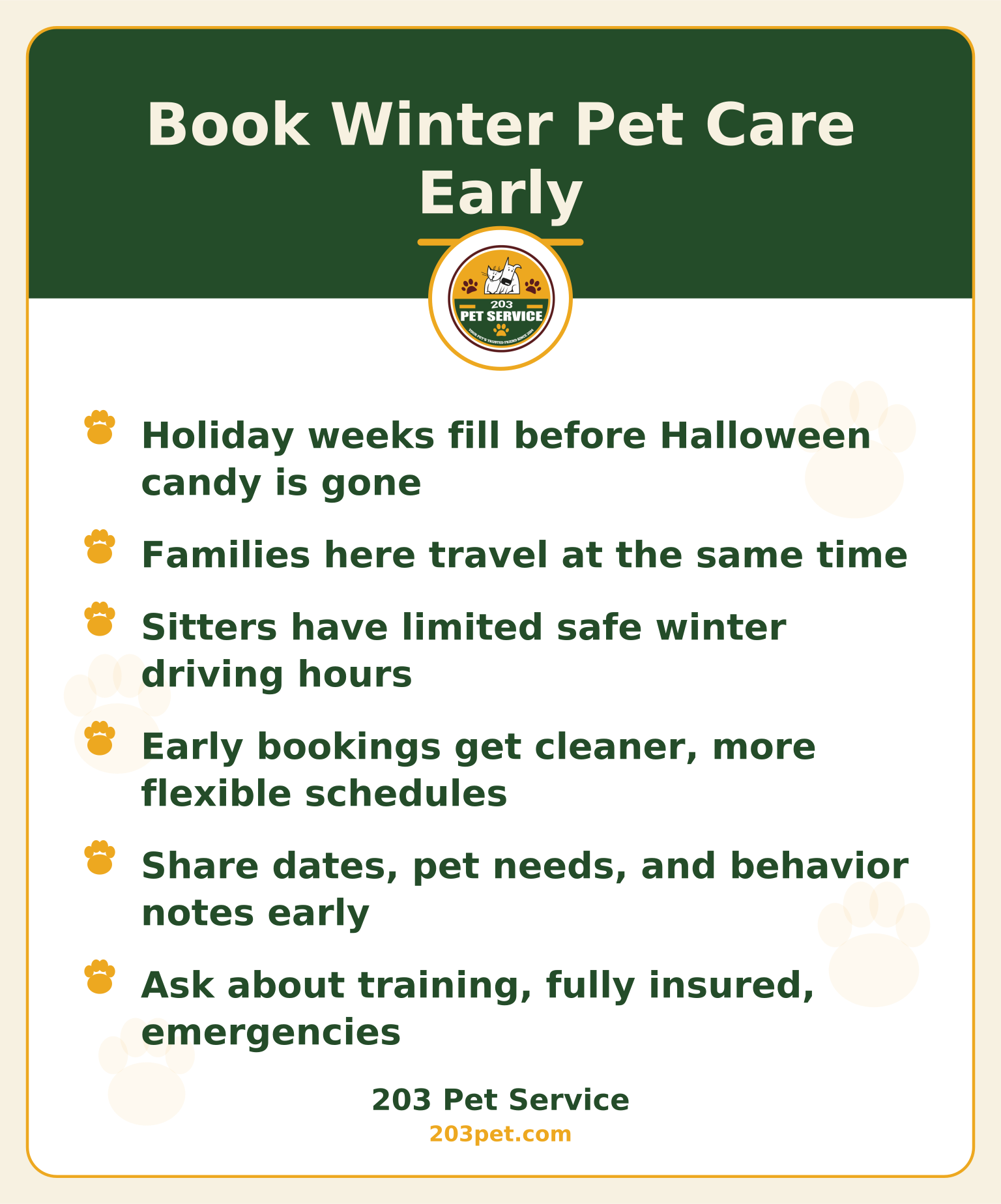
You should start your holiday pet care plan early because Christmas week, New Year travel, and school breaks book up first. In Eastern Fairfield County, those weeks fill with regular clients long before Halloween candy is gone.
Think about what happens in our area. Families in Fairfield, Stratford, and Bridgeport schools all go on break at the same time. College kids come home. People fly out of LaGuardia or Bradley on the same Fridays. That is a lot of dogs and cats needing care in the same small window.
Professional sitters only have so many winter driving hours in the dark. We will not pack our W-2 employees with unsafe back-to-back visits in snow or ice. So the people who reach out first get the cleanest schedules and the most flexible options.
How far ahead should you book holiday pet sitting?
For Christmas and New Year trips, try to reach out 6 to 8 weeks ahead. For February and March school breaks, 4 to 6 weeks usually works well. If you have a dog that needs medication a few times a day, or a young puppy, lean toward the earlier side.
Pet care is not like booking a big hotel. You are sharing a limited number of real humans and real cars. Veterinary sources point out that pets do better with consistent, low-stress care at home, especially older dogs and cats, so you want time to match a sitter to your pet instead of grabbing whoever is left at the last minute.PetMD
Most of our long-time clients in Southport and Black Rock send us their holiday dates as soon as they book flights. They may not know the exact departure time yet. That is fine. They just lock in the days and give us a rough idea of how many visits they think they will need.
Key details to share right away
When you first reach out to a sitter or a local company like 203 Pet Service, have these details ready. It keeps things smooth and fast.
- Exact dates you will be away, including morning you leave and night you return
- Your pets, species, ages, and any medical needs
- How many visits a day you think they need
- Whether you are considering overnight care
- Any behavior notes, like fear of strangers, reactivity, or separation stress
Pet care experts suggest you also ask about training, insurance, and how the sitter handles emergencies.PetMD We welcome those questions. In fact, we expect them.
With 203 Pet Service you are not hiring gig workers. You are working with W-2 employees who follow clear protocols, including our emergency process. If something goes wrong, your sitter calls Robyn, our office manager, right away. Robyn calls you, then your sitter stays with your pet until you say otherwise. Simple, human, and steady.
How do you choose between overnight pet sitting and drop in visits?

You choose between overnight care and drop in visits by looking at your pet’s age, health, and normal routine. Some pets do best with a person sleeping in the home. Others are totally fine with a mix of daytime visits and an early night check.
Think about what your dog or cat does on a normal day in Fairfield County. Then build travel care that looks as close to that as possible, just with a different human doing the work.
When does overnight care make sense in winter?
Overnight pet sitting often works best for:
- Senior dogs that pace at night or need late bathroom trips
- Dogs with arthritis that struggle on icy steps and might slip if rushed
- Puppies under a year that still wake up early or chew when bored
- Cats with medical needs like insulin or special diets
- Pets who panic when left alone for long stretches, especially in storms
Senior dogs in particular often need more bathroom breaks and softer schedules as they age. Veterinary guidance notes that older dogs usually need more frequent, shorter trips outside, and closer monitoring for discomfort.PetMD Winter cold in Stratford or Bridgeport can make those needs even sharper.
If your dog already sleeps in your bed, an overnight sitter in your home may keep their stress level low. They still hear a human breathing nearby. They still follow the same rough pattern of couch time, last walk, then lights out.
When do drop in visits work well?
Daytime drop ins, or a mix of morning, afternoon, and evening visits, work well when:
- Your dog does fine alone for several hours
- You have an adult cat or a closely paired duo that mostly nap and play
- Your pets stay calm with the normal daytime sounds of your street
- You are on a shorter trip, like a long weekend in January
In those cases, you might set up:
- Morning visit for breakfast and a walk
- Midday walk or play session
- Early evening visit for dinner, litter, and a last bathroom break
For many dogs we walk year-round on our dog walking membership routes, we already know their normal bathroom and play schedule. So on winter travel weeks we simply stretch that into a holiday version, with extra indoor play if sidewalks are bad.
How do you match visit timing to your pet’s routine?
Start by writing out a normal weekday and weekend for your pet. When they eat. When they walk. When you usually play or cuddle. That simple timeline becomes your holiday care map.
Veterinary references on routine care point out that dogs and cats do better when their feeding, exercise, and rest schedule stays predictable.Merck Veterinary Manual Travel shakes up your life. Try not to shake up theirs too.
So if your dog in Easton eats at 7 am and 6 pm, aim for visits right around those times. If your shy cat in Westport usually plays at night, ask for a later evening visit with wand toys instead of just a quick scoop and go.
If you are not sure what is realistic in winter, ask. Our salaried employees know what driving looks like between Fairfield and Black Rock when snow piles up on I-95 or the Post Road. We can help you set windows that are humane for both your pets and the humans caring for them.
How do you keep your pet’s winter routine steady while you travel?

You keep your pet’s winter routine steady by keeping walk times, feeding, meds, and bedtime as close to normal as you can, even when you are away. Small changes are fine. Big swings in timing and activity usually cause stress.
Think of it like this. Your dog or cat does not care that you are in Florida or at a ski house in Vermont. They care that breakfast shows up, the litter box gets scooped, and someone takes them out before bed.
Walk timing in cold and dark months
In Eastern Fairfield County, winter walks mean early sunsets and sometimes icy sidewalks. Good pet care in winter balances safe outdoor time and needed bathroom breaks.
Veterinary advice on cold weather safety suggests shorter walks in very low temperatures, especially for small or short-coated dogs, and watching for signs of cold like shivering or lifting paws.VCA Animal Hospitals So we do not drag a chihuahua through a blizzard just because the schedule says 30 minutes.
We adjust. Maybe your dog gets two shorter walks with more indoor play. Or we shift the longest walk to the warmest part of the day. With our ongoing dog walking memberships, we keep that logic in place all winter, not just during holiday travel.
Food, meds, and bedtime habits
Keep food and medication on the same clock your vet set, as much as travel allows. Dogs and cats with chronic conditions, or on insulin, really need that consistency. Medical guides on chronic pet care stress regular feeding and medication times for stable health.PetMD
Set out:
- Measuring cups for each food
- Written instructions with exact amounts and times
- Clear pill organizers or labeled bottles
- Any bedtime snacks or rituals, like a stuffed Kong after the last walk
Bedtime matters too. If your dog usually gets one last trip out at 9 pm, you do not want their final visit at 6 pm. That is how you get accidents on rugs or a dog pacing and whining all night.
Indoor play when sidewalks are icy
Some winter days in Bridgeport or Shelton, sidewalks are just not safe. Ice, thick slush, or salt everywhere. On those days, your sitter can focus more on indoor mental work.
Ideas that work well:
- Snuffle mats or scatter feeding on a rug
- Short training sessions with sits, downs, and simple tricks
- Gentle tug or fetch in a hallway
- Food puzzles or frozen Kongs prepared before you leave
For cats, interactive play with wand toys, laser pointers used carefully, or treat hunting in different rooms can burn energy. Cat care guides point out that indoor cats still need daily play and mental work to stay healthy and avoid stress behaviors.PetMD
The main goal is simple. Your pet should go to sleep tired and content, not bouncing off the walls from three days of nothing but food and the window.
Video: A lighthearted Baby Hazel Pet Care clip that reminds kids and adults about the basics of feeding, cleaning, and playing with a pet at home.
What holiday and winter travel pet care checklist should you use?

You should use a simple checklist that covers house prep, pet supplies, heat and light settings, and contact information. If you set those up before you leave, your sitter can focus on caring for your pets, not guessing where things are.
Think of it like leaving a well-packed diaper bag. When everything is labeled and easy to find, problems shrink fast.
House and pet supplies to set out
A few days before your trip, walk through your house with your sitter in mind. Set up:
- Food in one spot, with scoops for each pet clearly marked
- Leashes, harnesses, coats, and booties near the door you want us to use
- Litter, scoopers, trash bags, and a clear place to toss waste
- Cleaning supplies for accidents, towels by doors in case of wet paws
- Extra bedding or blankets where you are fine with pets sleeping
Winter throws curveballs. A dog that never has accidents in July might slip or refuse icy stairs in January. Having cleanup tools ready makes those moments small instead of stressful.
Heat, lights, and safety checks
Cold snaps in Eastern Fairfield County hit hard some years. You want your home comfortable for pets and safe for your pipes.
Veterinary cold weather guidance suggests keeping indoor temperatures warm enough that pets do not shiver, especially older or small pets, and avoiding letting them sleep in cold, drafty areas.VCA Animal Hospitals
Before you go:
- Set your heat at a steady temperature, usually no lower than mid 60s
- Show your sitter where the thermostat is and any space heaters they should not touch
- Set a few lights on timers to click on before dark
- Check windows and doors for drafts where pets like to sleep
- Confirm doors and gates latch firmly so wind cannot blow them open
In some homes in Trumbull or Wilton, basements run cold. If your cat’s litter box is down there, think about moving it to a warmer room so they actually use it. Cold paws on a concrete floor are not fun.
What information should you leave for your sitter?
Good communication can turn a small issue into a non-issue. Leave or text:
- Your full contact info and travel dates
- Your veterinarian’s name, address, and phone number
- Preferred emergency hospital, like MedVet Norwalk
- Neighbors or local friends who have a spare key
- Any security system instructions, with codes written clearly
Many pet care resources recommend that you also keep your pet’s microchip information current, so if they ever slip out in a storm, you have a better chance of getting them back fast.ASPCA
At 203 Pet Service, we ask new clients to share not only their primary vet, like Greenfield Animal Hospital in Fairfield, but also what they want us to do if we cannot reach them in a true emergency. Which hospital to use. How far they are comfortable with us going to stabilize care, such as VCA Shoreline Animal Hospital in Shelton or MedVet Norwalk.
How does 203 Pet Service handle winter visits in your neighborhood?

203 Pet Service handles winter visits in Eastern Fairfield County by using experienced W-2 employees, clear snow and storm policies, and a tight local service area so we are not driving across half the state in bad weather. We focus on Fairfield County towns we know well and routes we drive daily.
We have been doing this since 2004. We have seen the big storms, the sudden ice, and the power outages. Our winter routines grew out of that real experience.
Local towns we serve in Eastern Fairfield County
We provide full dog walking, pet sitting, and dog training services in:
- Fairfield
- Stratford
- Westport
- Easton
- Southport
- Black Rock (the 06605 section of Bridgeport)
- Bridgeport
We also reach a limited number of homes in parts of Shelton, Devon, Trumbull, Weston, and Wilton when our schedules allow, but our core winter coverage sits in those seven towns. That focus matters on snow days. We know which Fairfield beach streets flood, which Stratford hills ice over first, and where plows usually clear fast.
If you want to see how we work in your exact town, you can read more about us on the local pages for Fairfield, Stratford, Westport, Easton, Southport, Black Rock, or Bridgeport.
How we handle snow, ice, and storm changes
On winter days when snow or ice show up, we balance safety and care. We may adjust visit timing within reasonable windows to fit the safest travel hours and plowed roads, but we do not cancel needed pet care without talking with you.
Here is how it usually looks:
- We monitor forecasts and communicate about likely changes
- If things look bad, Robyn reaches out early so you know the plan
- We adjust routes to use main roads more than side streets when needed
- Walks may be shorter outside, with more indoor activity for safety
Cold weather guidelines from veterinary sources back this up. They note that frostbite and hypothermia can show up faster than many people expect, especially in wet, windy conditions.VCA Animal Hospitals That means on harsh days, staying closer to the home and focusing on play, enrichment, and bathroom breaks only is not just reasonable, it is smart.
Frequently Asked Questions

About This Topic
How far in advance should I book holiday pet sitting with you?
For Christmas, New Year’s, and school breaks, it’s smart to reserve pet care 6 to 8 weeks ahead, especially in Fairfield, Stratford, and Bridgeport. Those weeks fill first with regular clients. If you’re traveling at the last minute, still reach out, because 203 Pet Service can often suggest schedule tweaks or partial coverage that keeps your pet’s routine steady.
How do I decide between overnight pet sitting and drop-in visits?
Think about how your pet does alone at night and how often they normally go out or eat. If your dog’s used to company on the couch and sleeps better with someone home, overnights are usually best. If your cat or independent dog does fine between visits, 2 to 4 drop-ins per day can work. 203 Pet Service helps you map visits to your pet’s normal routine.
What should I set up in my house before I travel?
Lay out clear labeled food, leashes, meds, and a written daily schedule so your sitter can walk in and follow your routine. Double-check that doors, gates, and fences close securely in snow and ice. Leave vet info, an emergency contact, and any heating instructions. 203 Pet Service sitters are used to winter setups in Fairfield County and can suggest tweaks during your meet-and-greet.
How do your sitters handle snow, ice, and bad winter roads?
203 Pet Service uses local W-2 employees who already drive Eastern Fairfield County winters, so they know the routes, shortcuts, and problem hills. We build extra time into winter schedules and won’t overload a sitter with unsafe back-to-back drives. We’ll also adjust walk lengths in extreme cold and switch to backyard let-outs or indoor play when that’s safer for paws.
My dog hates changes, how do you keep their routine consistent?
We start by copying your normal schedule: same breakfast time, walk times, evening routine, and bedtime. You tell us your exact cues, words you use, where treats are, which routes you prefer, and we follow them. For anxious pets, 203 Pet Service often recommends overnights or an extra first-day visit so your dog has more calm, predictable contact while you’re away.
Can you cover both my dog and cat while I’m on vacation?
Yes, one sitter can usually handle both your dog and cat in the same visit, as long as we build in enough time for each pet’s routine. We’ll feed separately if needed, manage litter boxes, walks, and playtime, and keep everyone on their usual schedule. 203 Pet Service designs visit plans so multi-pet homes in Fairfield County stay calm and organized.
About 203 Pet Service
What areas does 203 Pet Service cover in Fairfield County?
We provide professional dog walking, pet sitting, and training services across Eastern Fairfield County, Connecticut. We proudly serve families in Fairfield, Stratford, Westport, Easton, Southport, Black Rock, Bridgeport, Shelton, Devon, Trumbull, Weston, and Wilton. 203 Pet Service has cared for pets in Fairfield County since 2004, and every visit is handled by a trained, W-2 salaried employee who is background checked and fully insured.
Why does 203 Pet Service use salaried W-2 employees instead of independent contractors?
We believe salaried W-2 employees provide more reliable, accountable, and professional pet care. Unlike independent contractors, our salaried employees go through careful background checks, full training, and are fully insured. This employment structure means consistency, accountability, and peace of mind for Fairfield County pet families.
Does 203 Pet Service provide care for cats as well as dogs?
Yes. We offer full cat sitting services including feeding, litter box care, playtime, and medication. Whether you need daily visits while you are at work or full vacation care, our salaried employees are trained in feline behavior and health needs. We serve cat families throughout our 12 Fairfield County service towns.