

House Training Your New Puppy on a Real-Life Schedule
Quick Answer: You can house train a puppy on a normal work and school schedule by using a simple written routine, a crate or pen, and planned help in the middle of the day. Take your puppy out first thing in the morning, after meals, after play, and before you leave, then have a trusted walker or sitter handle midday potty breaks until your puppy is old enough to hold it longer. House Training Your New Puppy on a Real-Life Schedule A real house training plan has to fit around work, school, and real life. You can house train your new puppy on a normal family schedule, you just need a simple routine, realistic expectations, and a little help during the long weekdays.
In Eastern Fairfield County, a lot of families bring home an 8 to 12 week old puppy, then realize their 9 to 5 in Bridgeport or Stamford does not match a baby dog’s bladder. That is where a clear schedule, smart use of crates and pens, and trusted weekday help come in.
I have been helping families in Connecticut with puppies since 2004, and working with animals for 29 years. So I want to walk you through what actually works in real homes in places like Fairfield, Stratford, and beyond.
Start with a simple daily potty schedule that fits your work hours

You should build your puppy’s house training schedule around your real weekday, not a fantasy day where you are home all the time. Write down when you leave, when you get home, and when someone can reasonably step in to help.
The American Kennel Club explains that puppies learn best with a consistent routine and frequent trips outside to the same potty spot, paired with rewards when they go there.American Kennel Club potty training guide A written schedule keeps everyone in your home doing the same thing.
A realistic weekday schedule for a Fairfield County family
Let us say you live in Bridgeport, work in town, and the kids have school. You are out of the house from about 8:00 a.m. to 5:30 p.m. Here is a sample schedule for a 10 week old puppy.
- 6:15 a.m. Out of crate and straight outside to potty. No playing first.
- 6:25 a.m. Breakfast, then back out again 10 to 15 minutes later.
- 7:15 a.m. Supervised play in the kitchen or pen. One more quick potty trip before you leave.
- 8:15 a.m. Into crate or safe pen with a chew toy. Head to work.
- Late morning / midday A trusted walker or sitter takes puppy out for a potty break and short walk.
- Mid afternoon Second visit for bathroom and movement if your puppy is very young.
- 5:45 p.m. You get home. Straight outside for potty.
- Evening Rotate between supervised play, rest in a pen, and regular outdoor trips every 60 to 90 minutes.
- Last call One final potty break right before bed.
In real homes in places like Westport and Southport, the schedule flexes a bit. Maybe you leave at 7:30 a.m. or get home at 6:30 p.m. That is fine. The structure stays the same.
- Out after waking.
- Out after eating.
- Out after playing.
- Out before and after long alone times.
You are teaching a simple pattern. Sleep, wake, outside. Eat, outside. Play, outside. Repeat.
Why writing the schedule down matters
Put the schedule on the fridge. In a shared calendar. Wherever your family will see it. If your teenager in Black Rock knows the puppy goes out every hour when they are on homework duty, you avoid a lot of “I thought you took him out” accidents.
Consistent routines speed up potty training. The AKC notes that puppies do best when they know what happens next and where they are supposed to go.AKC guide to preparing for a new puppy
How often do puppies really need to go out by age?
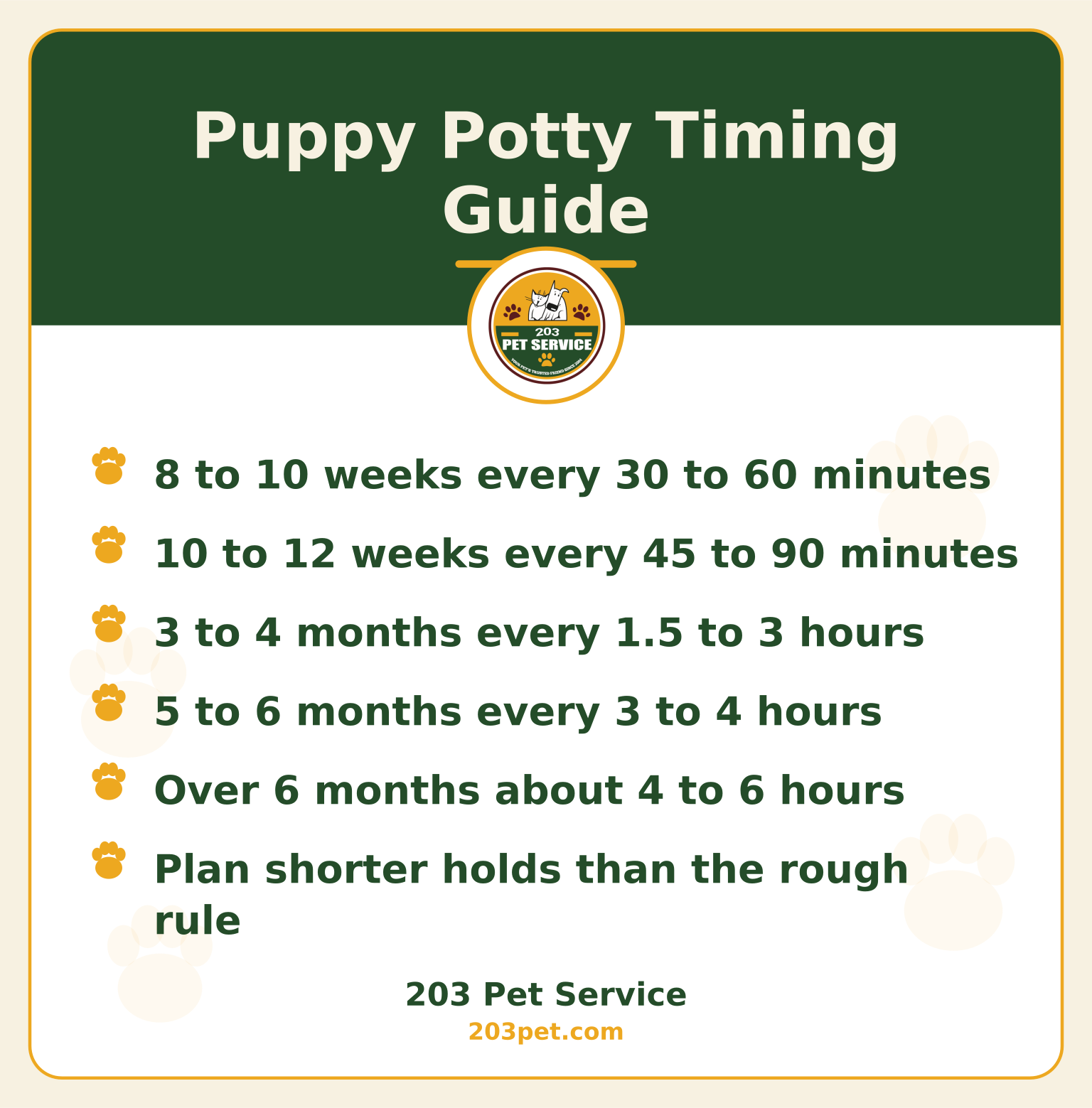
Puppies need more bathroom breaks than most new owners expect. A rough rule a lot of trainers use is “age in months plus one” for daytime hours they might hold it. So a 3 month old puppy might last 4 hours in perfect conditions. In real life, plan on less.
Every puppy is different. Breed, size, and health all matter. The Merck Veterinary Manual points out that smaller dogs have smaller bladders and faster metabolisms, so they usually need more trips outside.Merck Veterinary Manual on dog characteristics
General daytime potty needs by age
Use this as a guide, not a promise.
- 8 to 10 weeks: Every 30 to 60 minutes when awake. Very short holds.
- 10 to 12 weeks: Every 45 to 90 minutes when awake.
- 3 to 4 months: Every 1.5 to 3 hours when awake.
- 5 to 6 months: Every 3 to 4 hours when awake.
- Over 6 months: Many dogs can go 4 to 6 hours during the day if otherwise healthy.
A young puppy in Easton playing in the yard might need to stop twice in an hour to pee. A 7 month old in Wilton might last most of the afternoon. Short walks and normal play do not “empty the tank” forever, they just buy you some time.
Why water, food, and activity change the timing
Three things push your puppy to go faster.
- Meals and treats
- Big drinks of water
- Excitement and hard play
The AKC explains that many puppies need to pee within 15 to 30 minutes after eating or drinking.AKC potty training schedule advice So if you feed breakfast at 7:00 a.m. in your Fairfield kitchen, you should plan a real potty trip by 7:15 or 7:30.
Hard play counts too. That zoomies session in the living room gets their system going. After tug or chasing the kids down the hallway, take a short walk or quick trip to their potty spot instead of waiting for them to “ask.” Many young puppies never ask. They just squat.
Watch your puppy, not only the clock
Schedules help, but your puppy’s body language matters more. Common “I need to go” signs include: Sniffing the floor or circling one spot Sudden wandering away from play Heading toward a favorite corner or rug Whining or scratching near the door, especially in older puppies
Any time you are not sure, just walk them outside. A few extra “nothing happened” trips in those first weeks are better than lots of accidents on your rugs in Trumbull or Weston.
How do you handle nighttime puppy potty breaks without losing all your sleep?

Most young puppies cannot sleep 8 hours straight without a bathroom trip. You can still get decent sleep if you plan ahead and keep night trips boring and quick.
The AKC suggests that many puppies can sleep slightly longer at night than they can last during the day, because activity is lower and you control water intake before bed.AKC puppy training timeline
A simple nighttime routine that works
Use this pattern with most new puppies in Fairfield County.
- 2 to 3 hours before bed: No big meals. Just normal water access.
- 1 hour before bed: Pick up the water bowl, unless your vet says otherwise.
- Right before lights out: One last relaxed potty walk to your normal spot.
- Overnight: Set an alarm for a mid-sleep potty trip for young puppies.
So if you go to bed at 10:30 p.m. in your Stratford home with a 10 week old puppy, set an alarm for around 2:00 a.m. Quickly carry or leash them to their spot, quietly praise when they go, then put them back into the crate. No play. No long cuddles. Keep everything dim and quiet.
How long can most puppies sleep at night by age?
Again, every dog is different, but many families in places like Devon and Wilton see something like this.
- 8 to 10 weeks: One to two potty trips at night.
- 10 to 14 weeks: One planned trip around halfway through the night.
- 4 to 5 months: Many puppies can sleep 6 to 7 hours straight.
- 6 months and older: A lot of dogs sleep through the night like adults.
If your puppy is waking every 60 to 90 minutes to go out, talk with your vet. Sometimes there is a bladder infection or other medical issue. The puppy shot schedule visits are a good time to ask your vet about what is normal for your dog.AKC puppy vaccinations guide
Where should your puppy sleep?
Most families in this area do best when the puppy sleeps in a crate next to their bed or just outside the bedroom at first. That way you hear them if they wake and get restless. If your puppy is in the basement in Bridgeport and you are on the second floor, you will miss the early warning signs.
Once your puppy proves they stay dry and sleep well, you can slowly move the crate or pen farther away or give them more freedom. Just do that after you have a few dry weeks in a row.
How do crates, pens, and safe spaces prevent accidents?

Used the right way, crates and pens protect your floors and actually speed up house training. They give your puppy a clear “this is my sleeping and relaxing spot, not my toilet” area.
The American Kennel Club points out that dogs naturally avoid soiling their sleeping areas, which is why crates can work so well for potty training when you size them correctly and pair them with regular outdoor breaks.AKC crate training guide
Crates: your puppy’s bedroom, not a punishment
A crate should feel like a cozy den, not a jail. In our work with families in Fairfield and Weston, we teach them to make the crate comfortable and rewarding.
- Pick a size where your puppy can stand up, turn around, and lie down, but not walk to a far corner to pee.
- Add soft bedding, a safe chew, and sometimes a light blanket over part of the crate to make it feel calm.
- Feed some meals in the crate so your puppy builds a happy connection with the space.
If your puppy regularly pees or poops in the crate, the space is probably too big, the bedding is soaked and holding odor, or they are staying in there too long for their age. A quick chat with a trainer can usually sort this out.
Puppy pens and gated areas
Pens and gated kitchens are perfect for daytime when you are home but cannot stare at your puppy every second. Think of them like a toddler play yard. Safe, limited, easy to clean.
When we help families in Southport or Trumbull, we often set up a small pen with:
- A bed or crate
- Chew toys and a food puzzle
- Water bowl
We skip pee pads unless the family lives in a high rise or has a medical reason. Outdoor potty habits are usually clearer and faster for most homes in Fairfield County, where yards and outdoor spaces are easy to reach. The AKC notes that puppies who learn on pads may take longer to fully switch to outside-only bathroom habits.AKC comments on puppy pads
Supervision is still your best house training tool
Even with a crate and pen, puppies need eyes on them when they are loose in your Easton living room. If no one can watch, they go in the crate or pen. Simple as that.
Most of the “problem” house training cases I see happen when puppies have full run of the house at 12 or 14 weeks old. That is just too soon for most dogs. A slow, planned increase in freedom works much better.
Video: AKC trainers walk you through how to crate train your dog, from first introduction to using the crate for house training and quiet time.
What should you do about house training when you are at work all day?

If you work full days away from home, your puppy cannot “hold it” from 8:00 a.m. to 5:30 p.m. Expecting that is not fair to their body or to your carpets. You need real help during the day.
In many homes in Black Rock, Bridgeport, or Shelton, one of the first decisions that speeds up house training is lining up a reliable midday puppy visit. That might be a trusted friend for a short stretch. For long term success, many families choose a professional service that sends the same person on a steady schedule.
Why a professional walker or sitter helps house training
When a trained person shows up every weekday at the same time, your puppy’s bladder and brain fall into a rhythm. Wake, breakfast, potty. Crate. Midday walk and bathroom. Crate. Evening potty. Repeat.
At 203 Pet Service, our dog walking visits for puppies in Fairfield County work like an ongoing walking membership, not one-off random visits. The same W-2 salaried employees come on set days and times, so your puppy sees a familiar face and gets the same house training cues every time.
Our walkers in places like Fairfield, Stratford, and Westport:
- Take your puppy to the same potty spot each visit
- Use the same “go potty” cue you use at home
- Reward right after your puppy finishes, which speeds up learning
- Wipe paws and settle them back in a crate or pen so they can nap
That kind of consistency is exactly what national training guides recommend. The AKC explains that frequent, predictable opportunities to go outside, plus rewards for going in the right place, are the heart of successful house training.AKC on house training routine
Why W-2 salaried employees matter for your puppy
203 Pet Service uses W-2 salaried employees, not gig workers or short term contractors. That matters more than most people realize.
Because our walkers and pet sitters are employees, we can train them deeply on puppy body language, early bathroom signals, and safe handling. Jason’s background as an Animal Behavior College certified dog trainer and former veterinary technician shapes all of that training.
When something feels off with your puppy, our employees know to follow our emergency protocol. They call Robyn in the office, then Robyn contacts you while your walker stays with your puppy until you or your vet give more instructions. We also list MedVet Norwalk and VCA Shoreline in Shelton as trusted veterinary partners if a Fairfield County family needs emergency support.
If you want to see how we work and who you would be trusting with your dog, you can read more on our about page.
How often should a walker visit a young puppy?
For most puppies under 4 months old in working households, we suggest two weekday visits spaced through the middle of the day. For example:
- Late morning visit around 10:30 or 11:00 a.m.
- Mid afternoon visit around 1:30 or 2:00 p.m.
By 5 to 6 months, many dogs do well with one solid midday visit, as long as you do early morning and early evening potty trips yourself. A lot of our clients in Westport and Easton keep their weekday walking membership going even after house training, because the dogs look forward to that break and movement.
If you are curious what that would cost compared to your rugs, a quick look at our pricing page lays out the options.
What are the most common house training setbacks and how do you fix them?

Even if you follow a great plan, most families see some bumps. An accident here. A sudden step backwards there. The good news is, every one of these has a clear fix.
The ASPCA notes that many dog behavior issues come from confusion, mixed signals, or unrealistic expectations, not “stubborn” dogs.ASPCA on common dog behavior issues House training fits that pattern too.
Setback 1: Your puppy has started peeing inside again
If a puppy who had mostly clean days in your Bridgeport apartment suddenly has accidents again, ask:
Frequently Asked Questions

About This Topic
How often should I take my new puppy out to potty daily?
Most young puppies need to go out every 1, 2 hours when you’re home, plus first thing in the morning, after meals, after play, and right before bed. Use the rule of thumb: age in months + 1 = max daytime hours they can hold it. If you work full-time in Fairfield County, schedule a midday visit with a sitter like 203 Pet Service so your puppy doesn’t have to wait too long.
Can I realistically house train a puppy if I work full-time?
Yes, you can, as long as you plan around your real schedule. Write out your weekday hours and plug in specific potty times: morning, before you leave, midday help, right when you’re home, evening, and bedtime. A crate or pen plus a trusted midday walker, like 203 Pet Service in Eastern Fairfield County, makes it very doable.
What’s a good weekday potty schedule for a 10-week-old puppy?
Plan at least: first thing in the morning, right after breakfast, once more before you leave, a midday break, after work, after dinner, and right before bed. At 10 weeks, most puppies can’t comfortably go more than about 2, 3 hours. If you’re gone 9, 5, book a reliable midday visit through a local service like 203 Pet Service.
Should I use a crate or a playpen to house train my puppy?
Both can work, but a crate helps most puppies learn faster because dogs naturally avoid soiling their sleeping area. Use the crate for short stretches and overnight, and a pen for safe playtime when you’re home. If you hire help like 203 Pet Service, they can follow your crate and potty routine so your puppy gets consistent training.
How long can my puppy stay in a crate while I’m at work?
For young puppies under four months, try not to exceed 2, 3 hours during the day without a potty break. It’s fine for them to sleep longer at night, but daytime is different because they’re eating, drinking, and moving more. If your workday is 8, 9 hours, plan on a trusted mid-day walker or sitter, such as 203 Pet Service, to break it up.
What should I do if my puppy has accidents even with a schedule?
Go back to basics: more frequent trips outside, less freedom in the house, and big praise the second they go in the right spot. Clean every accident with an enzyme cleaner so they’re not drawn back by the smell. If you’re in Fairfield County and struggling during long workdays, adding a consistent midday visit from 203 Pet Service can really speed things up.
How do I keep my puppy on track when different family members help?
Write the potty schedule down and post it on the fridge so everyone sees the same plan. Include exact times, whether the puppy goes in the crate or pen, and what words you use, like “go potty.” If you bring in outside help, like 203 Pet Service, share that written routine so your puppy gets the same clear message from everyone.
Does 203 Pet Service offer puppy visits for midday potty breaks?
Yes, 203 Pet Service offers puppy-specific visits in Fairfield County that focus on quick potty breaks, a little play, and keeping your training routine consistent. They’ll follow your schedule, use your crate or pen setup, and reinforce the same cues you use at home. This kind of weekday support is ideal for 8, 16 week old puppies while you’re at work.
About 203 Pet Service
What areas does 203 Pet Service cover in Fairfield County?
We provide professional dog walking, pet sitting, and training services across Eastern Fairfield County, Connecticut. We proudly serve families in Fairfield, Stratford, Westport, Easton, Southport, Black Rock, Bridgeport, Shelton, Devon, Trumbull, Weston, and Wilton. 203 Pet Service has cared for pets in Fairfield County since 2004, and every visit is handled by a trained, W-2 salaried employee who is background checked and fully insured.
Why does 203 Pet Service use salaried W-2 employees instead of independent contractors?
We believe salaried W-2 employees provide more reliable, accountable, and professional pet care. Unlike independent contractors, our salaried employees go through careful background checks, full training, and are fully insured. This employment structure means consistency, accountability, and peace of mind for Fairfield County pet families.
What qualifications do 203 Pet Service employees have?
Every member of our salaried W-2 team goes through careful background checks, professional pet care training, and ongoing education in animal behavior and safety. Owner Jason Hofmann personally trains each employee, drawing on his 5 years as a veterinary technician, 2 years as a pet store manager, and 29 years working with animals as an ABC-certified dog trainer. We do not hire hobby pet sitters. We employ career pet care professionals.
Does 203 Pet Service provide care for cats as well as dogs?
Yes. We offer full cat sitting services including feeding, litter box care, playtime, and medication. Whether you need daily visits while you are at work or full vacation care, our salaried employees are trained in feline behavior and health needs. We serve cat families throughout our 12 Fairfield County service towns.

What Fairfield County Families Say About 203 Pet Service
Don't just take our word for it. Here's what real families in your community have shared about their experience with us:
"Jason and his team have been caring for our senior golden retriever for 5 years. When we lost him last month, they were incredibly supportive. These aren't just dog walkers - they become part of your family."
— Sarah M., Westport CT (Google Review)
"The consistency of having the same walker every day made such a difference for our anxious rescue. When she passed, they sent the kindest card. 22 years in business for a reason."
— Michael K., Fairfield CT (Google Review)
"W-2 employees, background checked, insured - they do things the right way. Our cats have been with them for 3 years and we wouldn't trust anyone else."
— Jennifer L., Stratford CT (Facebook Review)
Read more reviews: Google Reviews | Facebook Reviews | Yelp Reviews
About Jason Hofmann
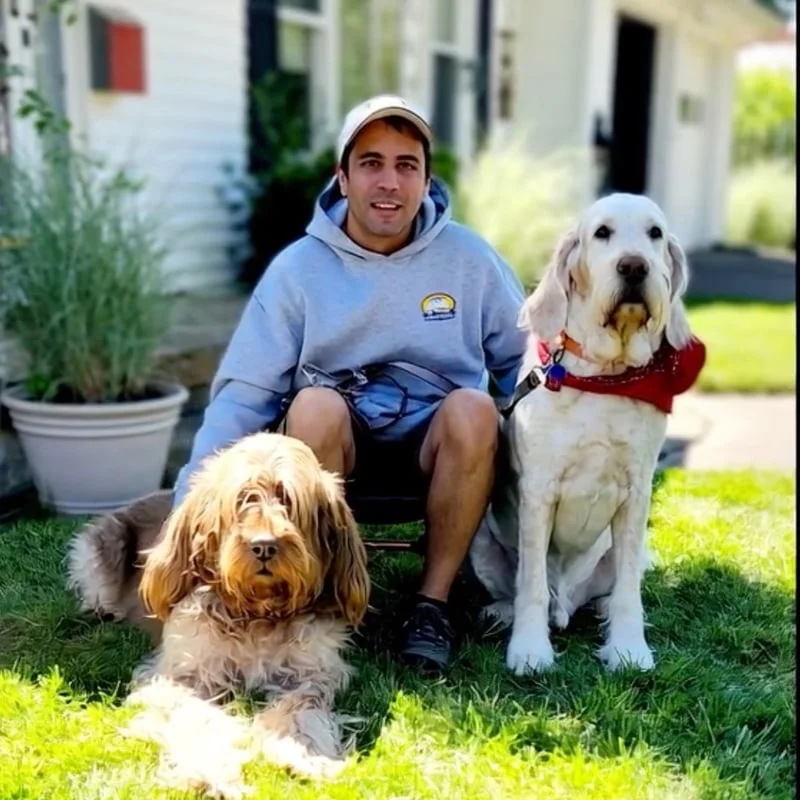
Jason Hofmann is the owner and Animal Behavior College (ABC) certified dog trainer at 203 Pet Service, with 29 years of professional pet care experience. He founded 203 Pet Service in 2004 and has led the company for 22 years, building a team of salaried W-2 employees dedicated to exceptional pet care. Prior to founding his company, Jason worked for 2 years as a pet store manager and then 5 years as a veterinary technician at Greenfield Animal Hospital in Fairfield. As an ABC certified trainer and passionate animal advocate with 29 years of hands-on experience, Jason brings unmatched expertise and genuine care to every pet interaction.
Jason is also a proud co-founder of The Honey On Duty Project, a 501(c)(3) nonprofit that brings healing and comfort to communities in need.
Learn More About Our TeamFeatured in the Media:
Why 29 Years of Professional Experience Matters
Growing up with pets or currently owning a dog doesn't make someone a pet care professional - just like using a toilet every day doesn't make you a qualified plumber.
Jason's 29 years of professional pet care experience means:
- •5 years working daily as a veterinary technician at a professional animal hospital
- •2 years managing a pet store and advising pet owners
- •22 years owning and operating a professional pet care business
- •Formal Animal Behavior College (ABC) certification in dog training
- •Thousands of hours of hands-on experience with diverse animal behaviors, medical situations, and emergency scenarios
This isn't hobby experience - it's a career built on professional training, veterinary medical knowledge, and decades of real-world problem-solving with animals.
Ready to Experience Professional Pet Care?
Schedule a meet and greet today and see the 203 Pet Service difference for yourself.