

House Training Your Puppy on a Real-Life Family Schedule
Quick Answer. You can house train a puppy on a busy family schedule by using a simple, repeatable routine that fits your real work and school hours, not a perfect one from a book. Control food and water times, limit your puppy’s unsupervised access to the floor, give lots of chances to go in the right spot, and use local help like a pet sitter or neighbor for the long stretches when you are gone. A new puppy in Eastern Fairfield County is a joy. The hard part is house training that puppy when work, school, traffic on I-95, and everything else already fill your day.
The good news is this. You can house train a puppy on a normal family schedule if you use a simple routine, the right tools, and realistic help for the hours you are gone.
In this guide, I will walk you through how families in places like Fairfield, Stratford, Westport, Easton, Southport, Black Rock, and Bridgeport can house train their puppies without quitting their jobs or sleeping on the kitchen floor.
I have been working with dogs professionally for 29 years, including five years as a veterinary technician at Greenfield Animal Hospital in Fairfield. I have seen hundreds of families house train puppies with school buses, Metro-North trains, and Zoom calls in the mix. You can do this too.
Start with a simple daily potty schedule that fits your work hours

The best house training schedule is the one you can actually follow. You start by building the potty plan around your real work hours, not around some perfect world routine from a book.
House training works because of three things. You control when your puppy eats and drinks. You control when your puppy has access to the floor. You give your puppy lots of chances to go in the right place, then reward them like crazy when they do. That is it.
A realistic weekday schedule for a working family
Let us say you live in Fairfield, you leave the house at 8:00 a.m., and you are home at 5:30 p.m. Here is what a basic weekday might look like with a 10 to 12 week old puppy.
- 6:00 a.m. Wake up, straight outside to the potty spot. No play first. Quietly clip the leash on and go.
- 6:10 a.m. Praise and treat the second your puppy finishes. Then a short playtime inside.
- 6:30 a.m. Breakfast and fresh water.
- 6:45-7:00 a.m. Back outside to potty again. Many puppies need to go shortly after eating.
- 7:15-7:45 a.m. Supervised play in a puppy-proof area. Take your puppy out once more before you leave.
- 8:30-9:30 a.m. Mid-morning potty break with you if you work from home, or with a dependable walker if you commute.
- 12:00-1:00 p.m. Midday potty break and short walk.
- 3:00-4:00 p.m. Afternoon potty break.
- 5:30-6:00 p.m. Back home, straight outside again.
- Evening Regular trips out after play, after dinner, and before bed.
The pattern here matters more than the exact times. Puppies go out when they wake up, after every meal, after active play, after naps, and before you leave and right when you get home. The American Kennel Club explains that frequent, predictable trips outside plus reward-based training are the core of successful house training.
Link your puppy’s potty breaks to clear “trigger moments”
Think in trigger moments, not in hours.
- Wake up
- After meals or snacks
- After hard play
- After a nap or time in the crate
- Before you leave the house
- Right when you come home
- Right before bed
If you pair each of those moments with a trip outside to the same spot, your puppy starts to learn the pattern quickly. Puppies are little pattern machines. They figure out what gets them praise and what gets them ignored.
One more small thing that helps a lot. Pick one short phrase for potty time, like “go pee” or “hurry up.” Use it softly while your puppy is in the act. Over time, many puppies start to connect the words with the action, which makes life much easier on rainy days in Westport in November.
Keep a simple written log for the first two weeks
For at least the first week, write down when your puppy eats, drinks, naps, and pees or poops. Just quick notes on your phone or a sticky note on the fridge.
Within a few days, you will see your dog’s natural rhythm. Once you see that, it gets easier to schedule potty breaks around work calls and school drop-offs. The AKC puppy house training guide suggests logging accidents too so you can spot patterns and tweak the schedule, which I have seen help many families in Fairfield County stay consistent in the early weeks.
How often do puppies really need to go out by age?
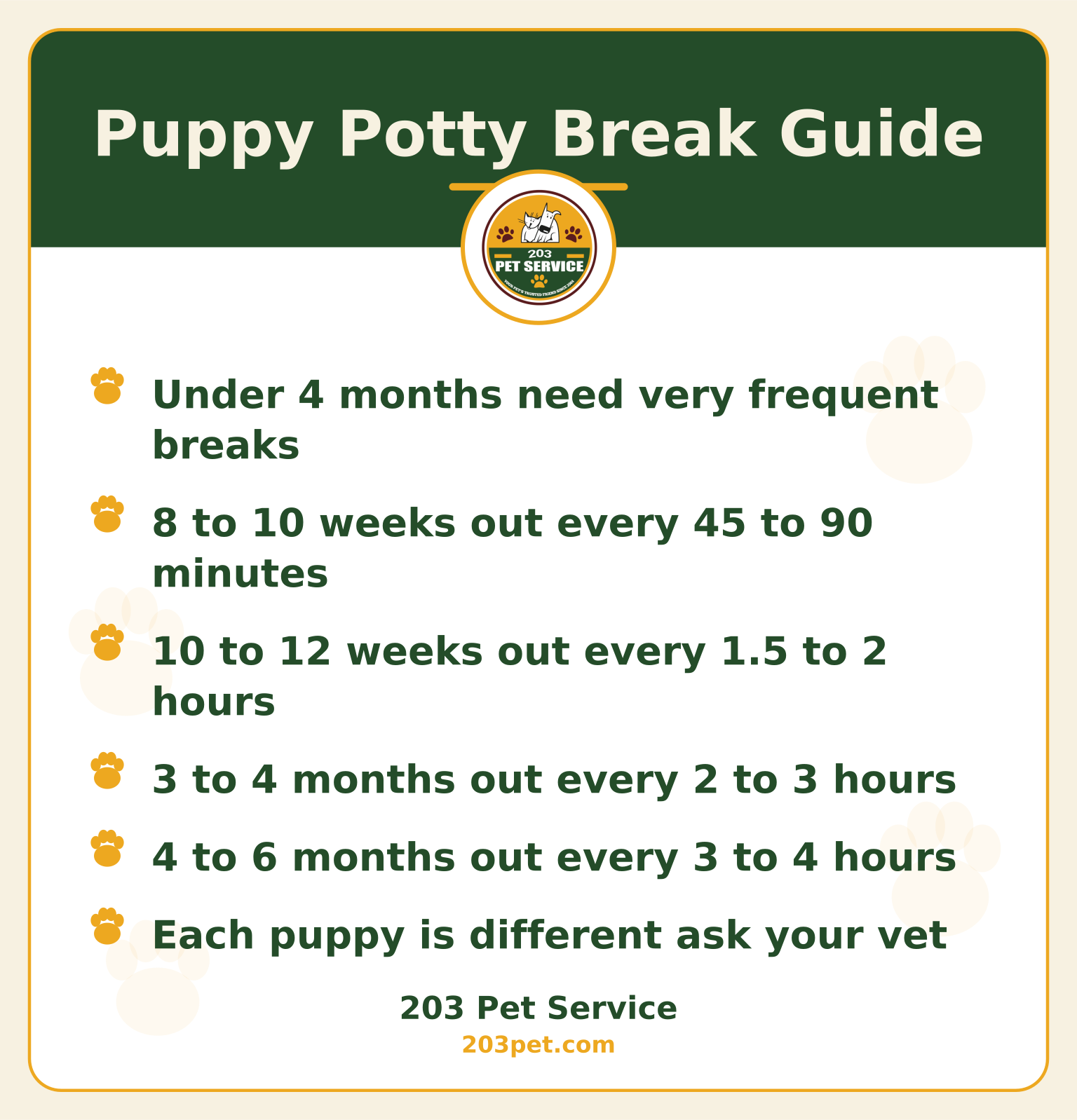
Most puppies under 4 months need a potty break at least every 2 to 3 hours during the day. Very young puppies need to go even more often. Age, size, and activity level all matter.
You may have heard the “one hour per month of age” rule. For example, a 3 month old puppy can hold it for about 3 hours. That is a rough guideline, not a promise. Small breeds and active, busy puppies often need more breaks. Health issues can change things too, so always talk with your veterinarian if something seems off. The Merck Veterinary Manual notes that breed size and body development affect how quickly puppies gain bladder control.
General potty break ranges by age
Every dog is different, but this chart gives you a realistic starting point.
- 8 to 10 weeks: Out every 45 to 90 minutes when awake. Many need to pee within 10 to 20 minutes after eating or playing.
- 10 to 12 weeks: Out every 1.5 to 2 hours when awake.
- 3 to 4 months: Many can manage 2 to 3 hours during the day.
- 4 to 6 months: Often 3 to 4 hours during the day, sometimes longer with good training.
- 6 months and up: A well trained, healthy dog can usually hold it 4 to 6 waking hours, though I never suggest pushing it that long on purpose on a regular basis.
Notice that none of those age ranges match a full 8 to 9 hour workday. That is why so many families in Southport and Black Rock build regular weekday help into their puppy plan right from the start.
Watch your puppy’s body language
Age gives you a starting point. Your puppy’s body language tells you the rest.
Common “I need to go” signs include:
- Sniffing the floor in small circles
- Suddenly wandering away from play
- Heading toward a rug, corner, or that one spot by the dining room
- Whining or pacing near the door
- Suddenly getting restless in the crate or pen
If you see those, calmly leash your puppy and go outside to the normal spot. Do not scold. You are just giving them a clear chance to be right.
Over a few weeks, you will start to see how long your specific puppy can go between those signs when you follow a steady feeding and potty routine. That is the number you build your weekday plan around.
Why water access timing matters
You always want your puppy to drink enough. Dehydration is dangerous, especially for young dogs. The AKC’s puppy preparation guide talks about having fresh water available and working with your veterinarian on any special needs for small breeds or medical issues.
What you can do is time when you refresh water before long stretches. For example, fill the water bowl after breakfast, offer a good drink before you leave, then pick it up when you put your puppy in the crate for the last 45 to 60 minutes before your walker arrives. In the evening, many families stop refilling water about two hours before bedtime, while still offering small sips after a big play session if needed.
Never limit water without talking with your veterinarian if your puppy has any health concerns. But smart timing helps you set your dog up for fewer accidents and better bladder control.
How do you handle nighttime potty breaks without losing all your sleep?

Most young puppies cannot sleep through the night right away. You can still protect your sleep by using a crate, planning one or two quick bathroom trips, and keeping those trips very boring.
Think of overnight house training as a short boot camp. For a few weeks, you make a plan that fits your bed time, your wake time, and your puppy’s age.
Where your puppy sleeps makes a big difference
I strongly suggest crate training for puppies during house training. Used properly, a crate becomes a safe bedroom, not a punishment. The AKC crate training guide shows how to introduce the crate in small, positive steps and warns against using it too long or using it only when you leave.
At night, put the crate in your bedroom or just outside the door where you can hear your puppy stir. Many families in apartment buildings in Bridgeport or older homes in Stratford like having the crate in the bedroom so they do not miss early warning whines.
Dogs usually avoid soiling where they sleep if the crate is the right size. Big enough to stand up, turn around, and lie down. Not big enough to pee in one corner and sleep in the other.
A sample nighttime plan
Here is a simple plan for a 10 to 12 week old puppy that goes to bed around 10:30 p.m.
- 8:30 p.m. Last meal finished. Limited water refills from here.
- 9:30 p.m. Calm play, then a trip outside.
- 10:30 p.m. Final bedtime potty trip to the usual spot. No roughhousing.
- 2:30 to 3:00 a.m. Set an alarm the first week or so. Quietly carry or leash your puppy straight outside. Praise, treat, then right back in the crate.
- 6:00 to 6:30 a.m. Wake up and go right outside.
After a week with few or no accidents, you can try moving the middle-of-the-night trip 30 minutes later, then later again. Over a few weeks, many puppies can sleep through the night, especially as they reach 4 to 5 months.
Try to keep night trips as calm and boring as possible. No bright lights, no long cuddles in the living room, no “let us scroll Instagram together on the couch.” Outside, potty, treat, back to bed. Simple as that.
What if your puppy cries in the crate at night?
This part is hard emotionally, especially with kids in the house. But it matters.
Here is a quick rule of thumb I use with new puppy families in Fairfield County. If it has been more than 2 to 3 hours, and the cry sounds high and urgent, assume your puppy needs to go out. Quietly take them outside, give them 5 minutes. If they go, praise and treat, then back to bed.
If they do not go within 5 minutes and just want to play, bring them back in and gently ignore the complaints. You are teaching that crying lets them relieve themselves, not get a party. The AKC puppy training timeline notes that consistent responses in the first months help puppies learn house rules much faster according to the American Kennel Club.
What crates, pens, and safe spaces actually prevent accidents?

The right setup prevents far more accidents than any amount of scolding. You want a crate, an exercise pen or baby gates, and one clearly defined outdoor potty spot.
Think of your puppy’s world as zones. The smaller the zone when you cannot watch, the easier house training gets.
Using a crate the right way for house training
A crate helps because dogs naturally like a small, den-like sleeping area. When you match that with regular trips outside, you guide them to hold their bladder until you reach the grass or gravel spot.
Some simple crate rules:
- Never use the crate as punishment.
- Give a safe chew or stuffed food toy when your puppy goes in.
- Keep crate time short for young puppies, usually 2 to 3 hours max during the day.
- Always take your puppy out for a potty break as soon as they come out of the crate.
The AKC crate training guide recommends slowly building up crate time so your puppy connects the crate with good things and calm sleep, not stress according to the American Kennel Club.
Exercise pens and gated areas for daytime
During the hours you are home but busy, an exercise pen or a gated kitchen can save your floors. In many older homes in Easton and Weston, families use a tiled mudroom or kitchen as the puppy zone.
Set up a small area with:
- Your puppy’s crate (door open when you are home)
- Water bowl
- Safe chews and toys
- A bed or mat away from the door
I rarely suggest pee pads for healthy puppies unless someone in the home has mobility limits or you live in a high-rise where outdoor access is very slow. Pee pads can blur the message about where we want the dog to go. When you do need them, use them in a very clear, single spot of the pen, and talk with your veterinarian about the long term plan. The ASPCA notes that consistency in the bathroom area matters for young animals learning where to eliminate, even when they write about other species like kittens.
Pick one outdoor potty spot and stick with it
Choose one area in your yard or right near your building entrance as your puppy’s bathroom. Use a leash, even if you have a fenced yard, at least for the first month or two.
You want your puppy to learn that first we potty in this spot, then we go sniff, play, or walk. That routine helps a lot on days when you need a quick trip before logging into work.
Many of our clients in larger apartment complexes in Bridgeport use a quiet corner of the property or a specific tree line. In busy parts of Fairfield or Devon, some families even use a small gravel box on a terrace as a consistent backup spot until the puppy is fully vaccinated. Your veterinarian can guide you on safe outdoor options while your puppy is still getting vaccinations, since many infectious diseases spread in areas where lots of dogs use the same ground.
Video: American Kennel Club trainers walk you through crate training step by step, which ties directly into safe and successful house training.
What should you do about house training when you are at work?

If no one can come home during the day, you will almost always need help for a young puppy. A 10 week old puppy simply cannot hold it through an 8 or 9 hour shift and the drive home.
Families who plan for weekday help from day one usually have fewer accidents, less crate stress, and faster house training.
Why midday potty breaks matter for house training
When a puppy is regularly forced to pee in their crate or pen because no one comes in time, they stop caring about keeping that area clean. Once that happens, house training slows down a lot. In plain terms, they stop trying to hold it.
The ASPCA’s overview of common dog behavior issues notes that dogs often develop problem behaviors when they face long periods of isolation or when they do not get enough chance to meet their physical needs during the day. Frequent, structured breaks are one of the simplest ways to prevent that.
Many of our puppy clients in Westport and Fairfield set up what I call a “weekday potty school” for the first 3 to 6 months. That might mean two visits during the workday. One late morning, one mid afternoon. Each visit is a focused potty break, then a short gentle walk or playtime, then back to a safe rest space.
Why who you hire for puppy visits matters even more
Not all walkers handle puppies the same way. House training is not just “let the dog out and leave.” It is timing, patience, and clear routines.
Frequently Asked Questions

About This Topic
How often should I take my new puppy out to potty?
Most young puppies need a potty break every 2, 3 hours during the day, plus right after waking, eating, drinking, and playing. Don’t wait for them to circle or sniff; just take them out on schedule to the same spot. In Fairfield County, many families use 203 Pet Service for a midday visit so their puppy isn’t holding it all day.
What should my weekday potty schedule look like if I work full time?
Build the schedule around when you actually leave and get home. For many Fairfield-area families, that means potty right when you wake up, again before you leave, a midday break from a pet sitter, as-soon-as-you-get-home, after dinner, and right before bed. The key is consistency. 203 Pet Service can cover that long midday stretch while you’re at work or commuting.
Is it okay to crate my puppy while I’m at work all day?
Crates are fine in moderation, but a young puppy can’t stay crated for 8, 9 hours without a break. Aim for no more than about 3, 4 hours at a time for a 10, 12 week old pup. If you’re gone longer, schedule a dog walker or drop-in visit. 203 Pet Service regularly does midday potty breaks for crated puppies in Fairfield County.
My puppy keeps having accidents in the house, what am I doing wrong?
Accidents usually mean your puppy had too much freedom or went too long between potty trips. Tighten things up: use a crate, tether, or small puppy-safe area, stick to a feeding schedule, and take them out more often to the same outdoor spot. If you’re away too long, having 203 Pet Service or a trusted neighbor do a quick potty visit can make a big difference.
How do I handle house training on days with late meetings or traffic?
Plan for your worst days, not your best ones. If you know I‑95 or Metro‑North delays might keep you late, arrange a backup potty break so your puppy isn’t forced to hold it. Many local owners book a flexible window with 203 Pet Service so a walker can pop in when delays or late Zoom calls happen.
Should my puppy have water available all the time during house training?
Puppies need plenty of water, but timing matters for house training. Keep fresh water down during the day, then pick it up about 2 hours before bedtime so their bladder can empty before night. Always offer water after play and meals. If you’re gone for long work stretches, a midday visit from 203 Pet Service can include a water check and potty break.
When should I ask for professional help with my puppy’s house training?
If you’re following a routine and your puppy’s still having frequent accidents at 4, 5 months, or you simply can’t cover the midday breaks, it’s time to get help. A professional sitter or dog walker can handle the hard hours while you stick to mornings and evenings. 203 Pet Service works with Fairfield County families to create realistic schedules that actually fit their jobs and school runs.
About 203 Pet Service
What areas does 203 Pet Service cover in Fairfield County?
We provide professional dog walking, pet sitting, and training services across Eastern Fairfield County, Connecticut. We proudly serve families in Fairfield, Stratford, Westport, Easton, Southport, Black Rock, Bridgeport, Shelton, Devon, Trumbull, Weston, and Wilton. 203 Pet Service has cared for pets in Fairfield County since 2004, and every visit is handled by a trained, W-2 salaried employee who is background checked and fully insured.
Why does 203 Pet Service use salaried W-2 employees instead of independent contractors?
We believe salaried W-2 employees provide more reliable, accountable, and professional pet care. Unlike independent contractors, our salaried employees go through careful background checks, full training, and are fully insured. This employment structure means consistency, accountability, and peace of mind for Fairfield County pet families.
What qualifications do 203 Pet Service employees have?
Every member of our salaried W-2 team goes through careful background checks, professional pet care training, and ongoing education in animal behavior and safety. Owner Jason Hofmann personally trains each employee, drawing on 29 years in professional pet care as a veterinary technician, pet store manager, and ABC-certified dog trainer. We do not hire hobby pet sitters. We employ career pet care professionals.
Does 203 Pet Service provide care for cats as well as dogs?
Yes. We offer full cat sitting services including feeding, litter box care, playtime, and medication. Whether you need daily visits while you are at work or full vacation care, our salaried employees are trained in feline behavior and health needs. We serve cat families throughout our 12 Fairfield County service towns.

What Fairfield County Families Say About 203 Pet Service
Don't just take our word for it. Here's what real families in your community have shared about their experience with us:
"Jason and his team have been caring for our senior golden retriever for 5 years. When we lost him last month, they were incredibly supportive. These aren't just dog walkers - they become part of your family."
— Sarah M., Westport CT (Google Review)
"The consistency of having the same walker every day made such a difference for our anxious rescue. When she passed, they sent the kindest card. 22 years in business for a reason."
— Michael K., Fairfield CT (Google Review)
"W-2 employees, background checked, insured - they do things the right way. Our cats have been with them for 3 years and we wouldn't trust anyone else."
— Jennifer L., Stratford CT (Facebook Review)
Read more reviews: Google Reviews | Facebook Reviews | Yelp Reviews
About Jason Hofmann
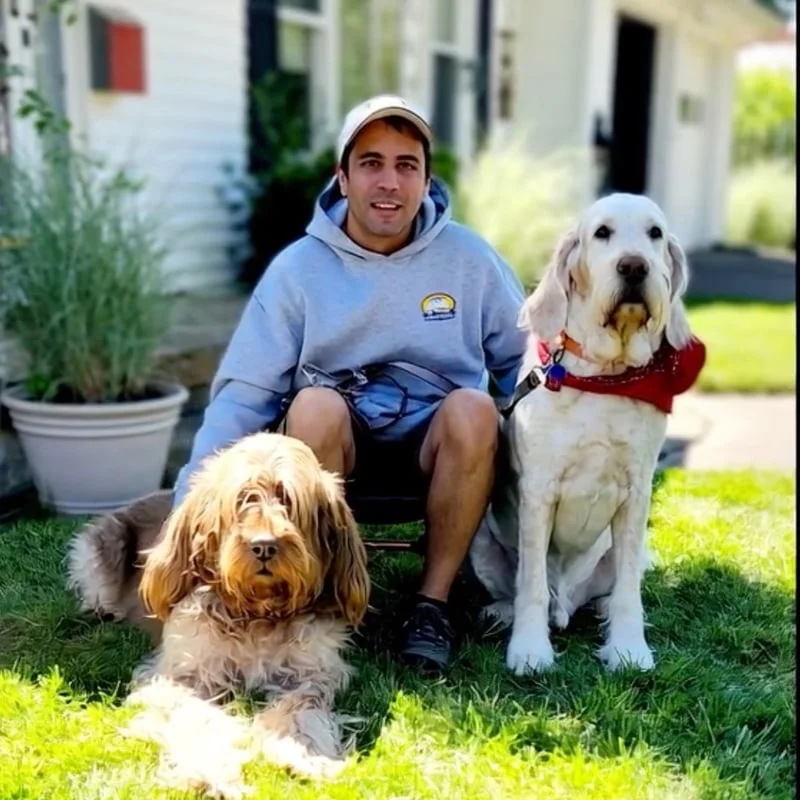
Jason Hofmann is the owner and Animal Behavior College (ABC) certified dog trainer at 203 Pet Service, with 29 years of professional pet care experience. He founded 203 Pet Service in 2004 and has led the company for 22 years, building a team of salaried W-2 employees dedicated to exceptional pet care. Prior to founding his company, Jason worked for 2 years as a pet store manager and then 5 years as a veterinary technician at Greenfield Animal Hospital in Fairfield. As an ABC certified trainer and passionate animal advocate with 29 years of hands-on experience, Jason brings unmatched expertise and genuine care to every pet interaction.
Jason is also a proud co-founder of The Honey On Duty Project, a 501(c)(3) nonprofit that brings healing and comfort to communities in need.
Learn More About Our TeamFeatured in the Media:
Why 29 Years of Professional Experience Matters
Growing up with pets or currently owning a dog doesn't make someone a pet care professional - just like using a toilet every day doesn't make you a qualified plumber.
Jason's 29 years of professional pet care experience means:
- •5 years working daily as a veterinary technician at a professional animal hospital
- •2 years managing a pet store and advising pet owners
- •22 years owning and operating a professional pet care business
- •Formal Animal Behavior College (ABC) certification in dog training
- •Thousands of hours of hands-on experience with diverse animal behaviors, medical situations, and emergency scenarios
This isn't hobby experience - it's a career built on professional training, veterinary medical knowledge, and decades of real-world problem-solving with animals.
Ready to Experience Professional Pet Care?
Schedule a meet and greet today and see the 203 Pet Service difference for yourself.