Welcome to 203 Pet Service. How can I help you and your pet today?
Pet Care
Fairfield County
Connecticut
Is This New Pet Behavior Normal? Simple Signs at Home
Jason Hofmann
October 19, 2026
15 min read
Share this article
Is This New Pet Behavior Normal? Simple Signs at Home
Quick Answer: New pet behavior is usually normal if it is mild, short lived, and fits a clear cause like a schedule change, new toy, or visitors. Take it more seriously if it comes on suddenly, is strong or scary, affects eating, drinking, potty habits, or energy, or keeps getting worse. When in doubt, call your vet and trust your gut.
Is This New Pet Behavior Normal? Simple Signs at Home
New pet behavior can be normal if it is brief, mild, and fits what is going on in your pet's life. It can be a red flag if it appears suddenly, is intense, or keeps getting worse. The hard part is telling the difference when you live with your dog or cat every day.
In our work with pets across Fairfield, Stratford, Westport, Easton, Southport, Black Rock, and Bridgeport, we see one pattern over and over. The owners who know their pet’s normal routine spot trouble early. The ones who do not have a clear “normal” often call only when things are already serious.
So let’s slow down and walk through what “normal” really means for your pet at home, and which changes should send you to your veterinarian, not Google.
What is a “normal” day for your pet?
A normal day is a day where your dog or cat acts like themselves. Same energy level. Same interest in food. Same general bathroom pattern. Once you know that baseline, any new pet behavior is easier to judge.
Think of it like this. Your vet does not guess in the exam room. They compare what you describe now to what your dog or cat did last month or last year. You can do that same thing at home, just on a smaller scale.
Why a steady daily routine matters
Pets do best with some kind of rhythm. It does not have to be perfect. It just needs to be predictable enough that changes stand out.
For most dogs we walk, that means:
Morning potty break at about the same time
Regular meals, usually twice a day
Walks or play periods spaced through the day
Wind-down time in the evening, then sleep at night
The American Kennel Club notes that puppies especially need predictable routines while they learn how the world works. That same structure helps you later when you try to decide if a change is normal growing up or something to worry about.
Cats pretend they run their own schedule, but they still fall into patterns too. You might notice they zoom around at night, nap in the same sunny spot during the day, or ask for food at very specific times. That is their baseline.
Simple things to track each day
You do not need an app or a chart on the fridge, but it helps to mentally keep track of these basics:
How much your pet eats at each meal
How often they drink and whether they seem extra thirsty
How many times they pee and poop in a day
Where they sleep and how long they rest
How much they want to play or go for a walk
For new puppies and kittens, you can be a bit more structured. A simple house training schedule, like the one the AKC uses for potty training, makes it much easier to see what is normal progress and what might be a medical problem hiding under a “behavior issue”.
Ideas for a calm morning and evening pattern
In many Fairfield County homes, mornings are chaos. Kids, coffee, work, traffic on I 95. Your dog or cat feels that too. If you can, build in a few steady anchors each day.
Morning:
Short, calm potty walk right after waking
Breakfast after the walk, not before
Five minutes of calm affection or quiet play before you rush out
Evening:
Walk or play to burn off energy
Dinner at roughly the same time each night
Quiet cuddle, brushing, or a chew toy before bed
When we provide ongoing dog walking memberships, we see how much these simple routines help. A dog in Stratford who walks every weekday at noon is much easier to read than a dog who sometimes waits ten hours to go out.
Which eating, drinking, and potty changes should you watch?
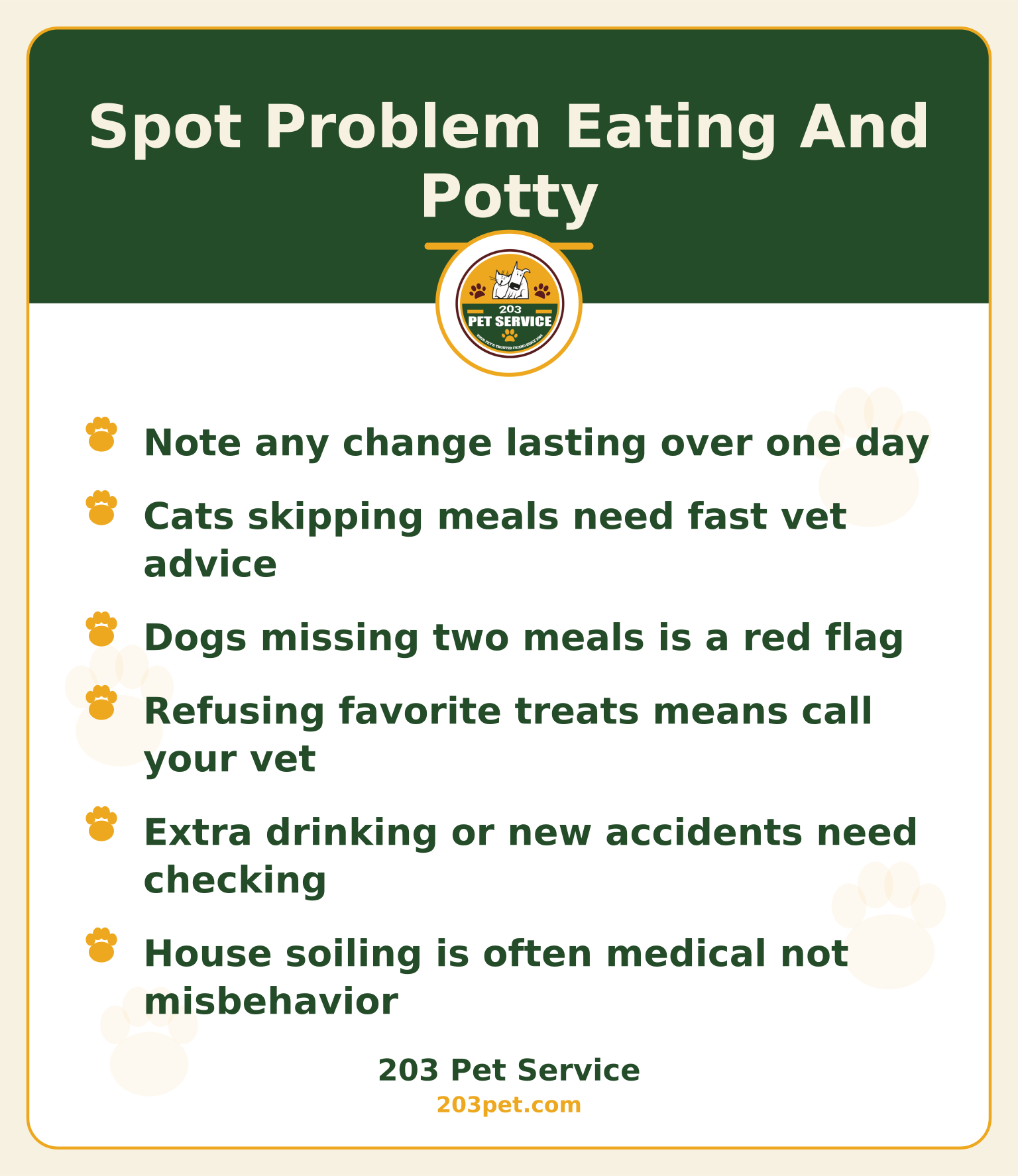
You should pay attention to any change in food, water, or bathroom habits that lasts more than a day, comes on fast, or feels extreme for your pet. A single skipped meal for a dog that just grabbed a street snack in downtown Bridgeport is very different from a cat that has not eaten in 24 hours.
Skipped meals: when it is probably fine
Most healthy adult dogs can miss one meal and be okay, especially if:
They still want treats or snacks
They act normal on their walk
They are bright, alert, and happy
Sometimes a hot day in Westport or a busy day of play at the beach in Southport just leaves a dog tired. They may nap instead of diving into dinner. If they eat the next meal without a problem and everything else looks normal, you can usually just make a note and move on.
Skipped meals: when it is a red flag
Cats are different. A cat that stops eating can get very sick, very fast. The ASPCA warns that changes in eating often sit right on the border between “behavior” and “medical” for cats. If your cat skips more than one meal, or eats much less than usual for a full day, call your vet.
For dogs, you should call your veterinarian if:
They skip two meals in a row
They refuse treats they normally love
They vomit more than once or seem weak
You see other changes like diarrhea or heavy drooling
Extra drinking or new accidents in the house
More drinking can be the first subtle sign of many health issues. Hormonal disease. Kidney trouble. Urinary infections. You might notice your dog in Easton suddenly emptying the water bowl twice as often, or your cat in Black Rock visiting the water dish again and again.
If you notice that shift, also check:
Are they asking to go out more?
Are there new pee spots in the house or in the litter box?
Is the urine darker, lighter, or bloody?
House soiling, especially for a previously trained dog, can look like a “behavior problem”. Often it is not. The ASPCA points out that many common dog behavior issues sit on top of medical issues. So your first call is your vet, not a trainer.
Puppies are a bit different. Their bladders are small and their control is still a work in progress. A potty schedule and good crate habits, like those in the AKC crate training guide, make it easier to see when accidents are normal learning and when they signal a problem like a urinary infection.
When to call your vet about potty or water changes Call your vet soon (same day if you can) if you see any of these: New accidents from a fully house trained dog Straining to pee, or crying in the litter box Blood in urine or stool Diarrhea that lasts more than a day Sudden big increase in drinking and peeing For small kittens and tiny puppies, do not wait as long. The ASPCA newborn kitten guide reminds us how quickly very young animals can get dehydrated. If a baby animal has diarrhea, is not eating, or seems weak, that is urgent.
Is my pet’s new mood or clingy behavior something to worry about?
New clingy behavior, or a pet that suddenly wants to be left alone, can be a normal response to stress. It can also be early pain, anxiety, or illness. If the change is big or lasts more than a few days, you should talk with your vet.
When a social pet pulls away
Think about your dog who always jumps on the couch next to you. If they suddenly start sleeping in the hallway, or under the table, that is worth paying attention to. Same for a cat that usually curls up on your lap, then begins hiding under the bed.
The VCA guide on cat behavior and fear explains that hiding is a common fear response. It might be triggered by a change in the home, a new pet, or pain that your cat can not tell you about in words.
Ask yourself:
Did anything change at home? Construction, new baby, new pet, visitors?
Does your pet seem sore when they jump or climb stairs?
Are they more sensitive when you touch certain spots?
Clingy behavior and separation issues
On the flip side, you might see a dog that suddenly glues themselves to you. They follow you from room to room. They panic when you pick up your keys. They bark or cry as soon as you walk toward the door.
That can be early separation anxiety. The VCA separation anxiety article lists common signs like pacing, accidents, and destruction when left alone. Many Fairfield County owners saw these behaviors jump when work schedules changed, then again when people returned to the office.
Sometimes the trigger is small. One of our Bridgeport clients had a dog who started clinging after a bad thunderstorm. Another in Westport saw it after a single long boarding stay. In both cases, the “new behavior” made sense once we looked at what had changed.
How long should you wait before calling the vet?
Use this simple rule. If mood changes come with any physical signs, call now. That includes:
Less eating or drinking
Changes in stool or urine
Limping or trouble jumping
Heavy panting at rest
If it is only a mood change, like a few quiet days after visitors leave, you can usually watch for two or three days. If your pet slides back to normal, you can just mention it at the next routine visit. If they do not, or the behavior gets stronger, schedule an appointment.
In the meantime, keep their routine steady. Puppies and young dogs often need extra structure and positive experiences to avoid fear based issues. The PetMD puppy socialization guide lays out that early window very clearly.
Why would my active dog slow down on walks or stop playing?
An active dog that slows down on walks or stops bringing toys to you is telling you something. Sometimes it is simple aging. Often it is pain, illness, or stress. A sudden or sharp change is never just “getting older” until your vet rules out other causes.
Walk changes you should not ignore
Our salaried employees walk dogs all over Fairfield County. We know their normal paces. When a dog in Southport who usually trots on the Mill River trail suddenly lags behind, we notice. When a Black Rock dog that always pulls toward St. Mary’s by the Sea suddenly wants to turn for home, that stands out.
On your own walks, watch for:
Slowing down or stopping more often
Refusing certain routes, stairs, or hills
Stiffness when starting out, that may warm up later
Limping or licking at paws or joints after the walk
These can all be early joint pain or injury. Or a sore paw pad from hot sidewalks in Stratford. Your dog can not say “my knee hurts”, but they can tell you with their feet.
When a playful pet stops playing
Play is often the first thing to vanish when a pet does not feel right. You might notice your dog in Fairfield no longer brings you the tennis ball. Or your cat in Easton stops chasing the feather toy they used to go wild for.
This drop in play can be physical or emotional. The ASPCA behavior guide notes that pain, stress, and punishment based training can all reduce a dog’s interest in normal fun activities. For cats, boredom, stress, and illness can all show up as more sleep and less play.
How regular walks and drop in visits reveal patterns
One advantage of steady dog walking and pet sitting is that you get another set of trained eyes on your pet. Because our walkers and sitters in Fairfield County are W‑2 employees, not gig workers, they see the same dogs and cats week after week. That consistency matters.
Our office manager, Robyn, tracks detailed visit notes. We log when a dog in Bridgeport starts taking longer to finish routes. We note when a cat in Westport hides more during visits. Over time, that pattern can help you and your vet spot early arthritis, brewing illness, or stress in the home.
If we ever see a sudden, serious change, our emergency protocol kicks in. The walker or sitter calls Robyn first. She calls you. Your pet never gets left alone while we “figure it out”. Your sitter stays with your pet until you or your vet give clear instructions.
Video: Victoria Stilwell shares three practical dog training tips that pair well with watching your dog’s daily behavior at home.
Body language that signals trouble includes new hiding, pacing, restlessness, shaking, panting when it is cool, or a stiff, guarded posture. You know your pet’s normal wiggles and stretches. When that suddenly changes, your pet is telling you something is off.
Hiding, pacing, and restlessness
Every pet has their quirks. One cat likes to nap in closets. Another dog likes to walk the hallway at night. What matters is change.
Worry more when you see:
A social pet that suddenly hides most of the day
Pacing that starts out of nowhere and will not stop
Restless lying down, getting up again and again, never settling
These can be anxiety, pain, or nausea. Sometimes they follow changes in the home. A new dog in the house. A move from Wilton or Weston into a busier street in Bridgeport. Sometimes they are the only early clue that your pet is not comfortable in their own body.
Shaking, panting, and stiff posture
Shaking and panting are not only about heat. Dogs pant when they are stressed or hurting too. A dog that is panting hard in your air conditioned living room in Stratford is not just “a little excited”.
Watch for:
Panting at rest when the room is cool
Tucked tail, pinned ears, or wide eyes
Refusing to lie on one side
Back legs tucked under, hunched back, or head held low
These can point to pain, heart trouble, breathing issues, or anxiety. You can not diagnose that at home. That is your vet’s job.
Why any sudden change deserves a vet call Sudden changes matter more than slow ones. A dog that slowly slows down over years may simply be aging. A dog that goes from running at Lake Mohegan one week to not wanting to stand up the next week needs medical help fast. Behavior and medical issues often overlap. The PetMD guide on introducing cats reminds owners that early growling and swatting can come from fear, not “meanness”. Pain can make that fear worse. The same holds for dogs that suddenly snap or growl when touched. If you are asking yourself “Is this normal?” for more than a day, call your veterinarian or an emergency clinic like MedVet Norwalk. You can always describe what you see and ask if it is safe to wait. That quick phone call can save you a lot of worry, and sometimes, save your pet from serious harm.
How can 203 Pet Service help you spot small changes early? Regular walks and pet sitting visits give you more information about your pet’s “normal”. When our W 2 employees see your dog or cat several times a week, they notice little shifts long before a stranger would. That is a big part of our job in Eastern Fairfield County. What we watch for on dog walks and pet sitting visits On every visit, we quietly check the same things you do at home.
Frequently Asked Questions
About This Topic
My dog’s acting different this week, how do I know what’s normal?
Start by thinking about your dog’s usual day, when they eat, potty, play, and sleep. If the new behavior is mild, short lived, and fits a clear change (new schedule, visitors, new toy), it’s often fine. Worry more if it’s sudden, intense, or affects eating, drinking, bathroom habits, or energy. When you’re unsure, call your vet or ask 203 Pet Service for a second set of eyes during a visit.
My cat suddenly hides and won’t eat, should I call the vet?
Yes, sudden hiding plus a drop in appetite is a red flag, especially in cats. If your cat skips more than one meal, seems low-energy, or stops using the litter box normally, call your vet the same day. Don’t wait a week to see if it passes. While your vet checks medical issues, 203 Pet Service can help you monitor behavior changes during drop-in visits.
How can I tell if my dog’s new clingy behavior is serious?
Clinginess after a change, like you working from home, a move, or new baby, can be normal as your dog adjusts. It’s more serious if they panic when you leave, won’t eat, whine constantly, or can’t settle even with exercise. Keep a short daily log of their eating, potty, and energy. If it’s getting worse over several days, contact your vet and consider structured walks or drop-in care from 203 Pet Service to support them.
My pet’s routine is all over the place, how do I create a healthy one?
Aim for consistent times each day for meals, potty breaks, and play, even if you can’t be exact to the minute. Most dogs do well with morning and evening meals, regular walks, and a clear wind-down time at night. Cats benefit from predictable feeding and short play sessions before meals. If your schedule’s tough, 203 Pet Service can fill in walks and visits so your pet’s rhythm stays steady.
When is a behavior change just stress, and when is it medical?
If a behavior change shows up right after something obvious, like guests staying over, construction noise, or a move, and fades within a day or two, it’s often stress. Medical issues are more likely if you see changes in appetite, thirst, weight, bathroom habits, or energy, or if the behavior keeps getting worse. Trust your gut: if you’re worried, call your vet first. Then loop in a professional service like 203 Pet Service to help track daily behavior at home.
I’m away a lot, how can I keep my pet healthy and relaxed?
Pets stay calmer when their day feels predictable, even if you’re busy. Try to keep feeding times steady and make sure they get regular bathroom breaks and play, not just quick rushes outside. Use puzzle feeders or lick mats to keep their brain busy when you’re gone. In Fairfield County, 203 Pet Service offers dog walking and drop-in visits that keep your pet’s routine consistent and give early warning if something seems off.
About 203 Pet Service
What areas does 203 Pet Service cover in Fairfield County?
We provide professional dog walking, pet sitting, and training services across Eastern Fairfield County, Connecticut. We proudly serve families in Fairfield, Stratford, Westport, Easton, Southport, Black Rock, Bridgeport, Shelton, Devon, Trumbull, Weston, and Wilton. 203 Pet Service has cared for pets in Fairfield County since 2004, and every visit is handled by a trained, W-2 salaried employee who is background checked and fully insured.
Why does 203 Pet Service use salaried W-2 employees instead of independent contractors?
We believe salaried W-2 employees provide more reliable, accountable, and professional pet care. Unlike independent contractors, our salaried employees go through careful background checks, full training, and are fully insured. This employment structure means consistency, accountability, and peace of mind for Fairfield County pet families.
What services does 203 Pet Service offer?
We provide daily dog walking, pet sitting (overnight and vacation), cat care, backyard play sessions, litter box scooping, and puppy training classes. All services are done by our salaried W-2 employees who bring professional training and genuine care to every visit. Whether you need regular midday walks or full vacation care, we cover all 12 Fairfield County service towns.
Share this article
What Fairfield County Families Say About 203 Pet Service
Don't just take our word for it. Here's what real families in your community have shared about their experience with us:
"Jason and his team have been caring for our senior golden retriever for 5 years. When we lost him last month, they were incredibly supportive. These aren't just dog walkers - they become part of your family."
"The consistency of having the same walker every day made such a difference for our anxious rescue. When she passed, they sent the kindest card. 22 years in business for a reason."
"W-2 employees, background checked, insured - they do things the right way. Our cats have been with them for 3 years and we wouldn't trust anyone else."
Jason Hofmann is the owner and Animal Behavior College (ABC) certified dog trainer at 203 Pet Service, with 29 years of professional pet care experience. He founded 203 Pet Service in 2004 and has led the company for 22 years, building a team of salaried W-2 employees dedicated to exceptional pet care. Prior to founding his company, Jason worked for 2 years as a pet store manager and then 5 years as a veterinary technician at Greenfield Animal Hospital in Fairfield. As an ABC certified trainer and passionate animal advocate with 29 years of hands-on experience, Jason brings unmatched expertise and genuine care to every pet interaction.
Jason is also a proud co-founder of The Honey On Duty Project, a 501(c)(3) nonprofit that brings healing and comfort to communities in need.
Growing up with pets or currently owning a dog doesn't make someone a pet care professional - just like using a toilet every day doesn't make you a qualified plumber.
Jason's 29 years of professional pet care experience means:
•5 years working daily as a veterinary technician at a professional animal hospital
•2 years managing a pet store and advising pet owners
•22 years owning and operating a professional pet care business
•Formal Animal Behavior College (ABC) certification in dog training
•Thousands of hours of hands-on experience with diverse animal behaviors, medical situations, and emergency scenarios
This isn't hobby experience - it's a career built on professional training, veterinary medical knowledge, and decades of real-world problem-solving with animals.
Ready to Experience Professional Pet Care?
Schedule a meet and greet today and see the 203 Pet Service difference for yourself.
Need Professional Pet Care?
We provide professional dog walking, pet sitting, and training services across Eastern Fairfield County. Let our experienced team care for your pets with the same dedication we bring to sharing this knowledge.