
Is This New Pet Behavior Normal? Simple Signs To Watch
Quick Answer: New behavior is usually normal if it is mild and passes quickly. It also helps if your pet still eats, drinks, uses the bathroom, and wants to interact like they normally do. It becomes a red flag if the change is sudden, very strong, or keeps going, especially with food, bathroom habits, energy, mood, or pain signs. That is when you should call your vet and start tracking details at home.
Is This New Pet Behavior Normal? Simple Signs To Watch:
New behavior in your dog or cat is normal sometimes and a red flag other times. The simple rule is this. If a change is sudden, strong, or keeps going, you should pay attention and talk with your vet.
In our years caring for pets across Eastern Fairfield County, we have seen almost every kind of mood swing, eating change, and odd little habit. Some pass in a day. Others were the first clue that something medical was going on. This guide will help you tell the difference and know when to call your veterinarian and when steady routines and good records from regular walks or pet sitting visits are enough.
What does a “normal” day for your pet look like?

A normal day is simply the pattern your pet follows most of the time. When you know that pattern, even small changes stand out early. That is how you catch trouble before it grows.
Think through a regular weekday for your dog or cat. When do they usually wake up, eat, nap, use the bathroom, and want to play or cuddle? Write it down if that helps. A simple routine makes changes much easier to see. For puppies, routine matters even more. The American Kennel Club puppy training timeline talks a lot about steady schedules, because they shape behavior and confidence.
Here is a quick checklist to map your pet’s “normal” day.
- Wake-up time and first potty break
- Meal times and how fast they eat
- Usual number of poops and pees
- Typical nap spots and sleep length
- Energy spikes during the day
- Walk times for dogs and usual route
- Evening cuddle or play habits
- Where they sleep at night and how long
In many homes in Fairfield and Stratford, we see a simple pattern. Morning potty and breakfast. Midday walk while you are at work. Playtime, dinner, short walk, then couch time and bed. When that pattern holds, we can quickly spot if a dog is suddenly slower on the walk, leaving food, or asking to go out more often.
For cats, it can be a little more subtle. They nap a lot and may eat small amounts through the day. Still, they usually have favorite spots, a typical amount of play, and a normal social level with you. If your social cat in Westport suddenly hides under the bed all evening, that stands out because you know what their normal looked like last week.
How a calm morning and evening help you notice changes
Calm bookends on the day make it much easier to notice small shifts. You do not need a complicated schedule. Just 2 predictable windows where you are present and not rushing.
In the morning, try this simple pattern:
- Quick potty break or litter box check as soon as you wake up
- Fresh water and breakfast at the same time each day
- 5 to 10 minutes of calm contact (petting, brushing, or quiet play)
At night in homes from Westport to Easton, we suggest something similar. Short walk or litter check. Dinner. A few minutes of play. Then a last bathroom break and lights down around the same time. When you touch base morning and night, you notice if your dog is stiff, your cat is skipping food, or someone is visiting the water bowl more than usual.
If you work long hours in Bridgeport or Black Rock, regular mid-day dog walking membership visits keep that routine steady while you are gone. Our salaried employees write what they see each visit. That extra set of eyes fills in the middle of the day so patterns are clear.
What eating, drinking, and potty changes should you worry about?
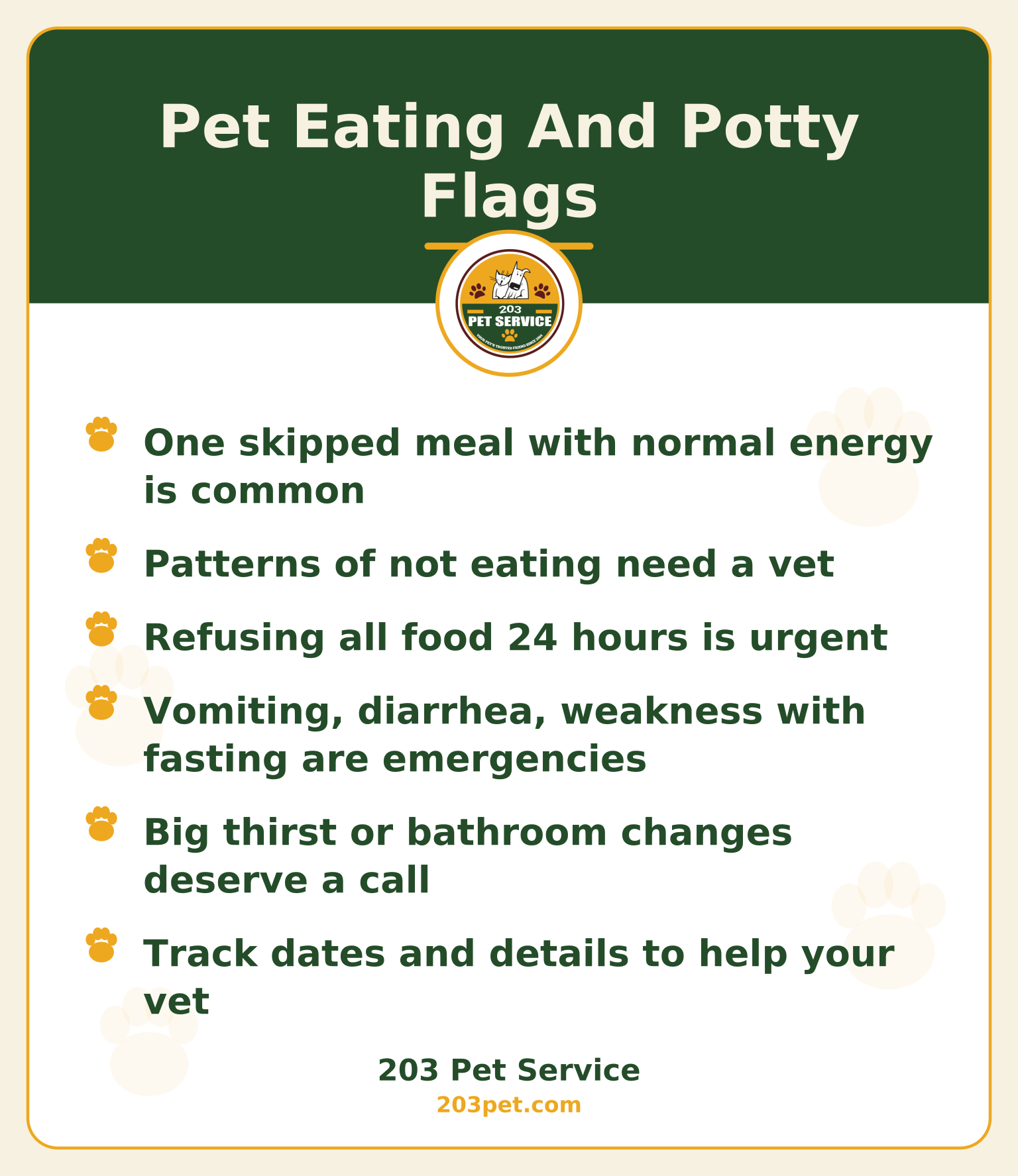
One skipped meal in an otherwise happy pet is usually not a big deal. A clear pattern of not eating, drinking much more, or peeing in the house when they never did before is a reason to call your vet.
Eating and bathroom habits are often the first easy sign that something has shifted inside the body. The AKC potty training guide reminds puppy owners to track bathroom timing closely. That same habit helps you years later when you are trying to spot change in an adult dog or older cat.
When a skipped meal is probably fine
Many healthy dogs or cats skip a meal now and then. A few common harmless reasons:
- They ate table scraps or extra treats earlier
- You switched to a new food and they need a day to adjust
- It is hot and they feel less hungry, but still act normal
- Mild stress from visitors, noise, or a schedule shift
If your pet skips one meal but:
- Still drinks water
- Still wants to play or go for a walk
- Does not vomit or have diarrhea
- Goes back to normal by the next meal
Then you can usually just watch at home. Make a note of the day and anything different in the household. If it becomes a pattern, those notes help your vet a lot.
When not eating or drinking is an emergency sign
Call your veterinarian right away if:
- Your dog or cat refuses all food for 24 hours, or a kitten or small puppy stops eating even one full feeding
- They also vomit, have diarrhea, or seem weak or wobbly
- You see bloated belly, pain when you touch them, or labored breathing
With young puppies and kittens, fasting is even riskier. The ASPCA newborn kitten care guide explains how quickly small bodies can crash if they miss meals or get chilled.
Changes in drinking matter too. Extra thirst can point to kidney disease, diabetes, or hormonal problems. A sudden drop in drinking can show nausea or pain. You do not need to measure every ounce, but if you notice you are filling the bowl twice as often in your Southport home, or barely at all, call your vet office and ask.
Potty accidents and litter box changes that matter
Even fully trained dogs and cats can have an accident. You might be late getting home. A thunderstorm over Fairfield County might scare them. Once in a while happens.
Call your vet sooner if you see:
- Sudden house accidents in a previously reliable adult
- Straining to pee or poop but not much comes out
- Blood in urine or stool
- Crying in the litter box or while squatting outside
- A cat that starts peeing outside the box for no clear reason
Many feline “behavior” issues turn out to be medical. The ASPCA guide to cat behavior problems notes that litter box changes often link to pain, stress, or urinary disease. Dogs are similar. A housebroken dog in Bridgeport who starts having indoor accidents on regular mid-day walks may be telling us their bladder or joints hurt.
For puppies in Fairfield backyards or condo dogs in Easton, consistent potty timing is also a training issue. The AKC crate training article shows how structure helps puppies learn to hold it and feel safe. Routine matters for both behavior and health.
Is my pet’s new mood, clinginess, or withdrawal normal?

A short mood change after a loud storm or a big family visit is common. A dog or cat that suddenly hides a lot, stops seeking you out, or becomes very clingy for days in a row needs a closer look.
Mood often shifts before clear physical signs show up. Behavior science backs that up. The VCA guide on cat socialization and fear explains how fear and stress change how cats move and interact long before you see a limp or weight loss. Dogs do the same thing.
When your social pet suddenly wants to be left alone
If your normally friendly dog in Southport stops greeting you at the door and goes straight to a corner, or your lap-cat in Black Rock hides under the bed all evening, treat that like a symptom.
Possible causes include:
- Pain from arthritis, injuries, or dental problems
- Nausea or stomach upset
- Stress from a change at home, like new people or a remodel
- Fear after a loud event, like fireworks or a bad storm
What you can do at home:
- Give them a quiet safe space with water and a comfy bed
- Skip any new training or big social events for a few days
- Watch appetite, bathroom habits, and movement closely
If withdrawal lasts more than 24 to 48 hours, or comes with not eating, limping, or vomiting, call your vet. It is always fine to say, “My dog is just not themselves and here is what changed.” Good veterinarians in Fairfield County listen to that.
Clingy behavior and separation anxiety
On the other side, some pets suddenly become little shadows. They follow you from room to room, cry when you close the bathroom door, or panic when you grab your keys.
Short term clinginess after a scare, move, or schedule change can be normal. Ongoing panic is not. The VCA article on separation anxiety describes common signs, like barking, howling, drooling, and destruction only when you are gone.
Pay attention if you see:
- Destruction near doors or windows when you leave
- Heavy panting, drooling, or pacing as you get ready to go
- Clinginess that started after a life change, like going back to the office
Mild cases respond well to routine, gradual alone-time training, and steady daily walks. Some dogs in Bridgeport, Fairfield, and Stratford settle a lot once they know a regular mid-day visit or walk is part of their day. Severe cases often need a behavior plan with your vet or a trainer. The ASPCA guide to dog behavior problems talks about using structure, exercise, and training together to help.
How long should you watch at home before calling your vet?
For mild mood changes with no other signs, a good rule is this:
- Watch 24 hours in adult dogs and cats that still eat, drink, and use the bathroom normally
- Call sooner if they are young, senior, or have other health issues
- Call right away if mood changes come with pain, vomiting, diarrhea, or breathing issues
Trust your gut. You live with your pet in Weston or Wilton or right here in Fairfield County. You know what “normal” feels like in your house. Your vet would much rather answer a “maybe” question than miss something serious because everyone waited.
Should I worry if my dog or cat is less playful or moving differently?

You should pay attention any time your active pet suddenly slows down, stops jumping on the couch, or loses interest in favorite games. A change in movement or play is often one of the clearest early signs of pain.
We see this a lot on our ongoing walking memberships throughout Fairfield County. A dog that used to charge up the steps in Trumbull suddenly walks them slowly. A Westport retriever stops chasing the ball after one throw when they used to go ten times. It might look like “getting older,” but pain is very often part of it.
Slowing down on walks or not wanting to jump
Think about your dog’s usual pace on your neighborhood loop in Devon or Easton. If they normally trot along and now lag behind or want to turn back early, that is information. Same for a dog who always jumped into the car and now hesitates at the bumper.
Common causes include:
- Arthritis in hips, knees, or back
- Soft tissue injury from a slip, rough play, or a bad landing
- Nail or paw pad injuries, especially in icy or hot weather
- Heart or lung issues that make exercise harder
With cats in Bridgeport and Southport homes, play changes show up differently:
- They stalk a toy but stop short of a full pounce
- They stop jumping to high perches they used to reach
- They avoid stairs or move stiffly after naps
Movement changes that last more than a day or two are always worth a call to your veterinarian.
When a playful pet stops bringing toys
That dog that used to slam a tennis ball into your lap in Fairfield every night just flops on the floor instead. Or the cat in Shelton that chased the feather wand like a maniac now just watches it.
Sometimes they are simply tired or bored with that game. Yet loss of interest in play that sticks around often points to pain, nausea, or even mood issues like anxiety. The AKC guide to preparing for a new puppy reminds owners to plan for mental and physical exercise because under-stimulated dogs can act “off.” That same idea applies later in life. A mentally tired but physically comfortable dog or cat acts different than a pet who has stopped playing because it hurts.
How daily walks and visits help you see subtle changes
Consistency makes change obvious. That is one of the quiet benefits of having the same salaried employees walk or sit for your pet on a set schedule. We walk dogs every weekday in neighborhoods across Southport, Stratford, and beyond. We know their normal.
On a regular walking membership or steady drop in visit plan, we track things like:
- How far your dog comfortably walks
- How fast they climb stairs in your condo or house
- How quickly they lie down after play in the yard
- Whether they still jump up happily when the leash appears
If we see those patterns shift over a few visits, we share that with you in our notes. You get a record you can show your veterinarian, not just a hunch. That helps with older dogs a lot, and with big breeds who tend to hide pain.
Video: Trainer Victoria Stilwell shares three simple dog training tips that build better communication, which makes it easier to spot when your dog’s behavior suddenly changes.
What body language says “I am not okay” in pets?

Body language is your pet’s first language. Sudden hiding, pacing, shaking, or stiff posture often means something is wrong, even if you do not see an obvious injury.
Good socialization early in life makes it easier to read these signs later. The PetMD puppy socialization article explains how early calm exposure to people, places, and sounds helps puppies handle stress. Well socialized pets still get scared and still hurt. The difference is that changes from their baseline stand out more.
Hiding, pacing, and restlessness
Cats commonly hide when they feel off. That might mean:
- Staying under the bed instead of on their usual window perch
- Moving to a closet or basement corner
- Avoiding family members they normally like
Dogs may not hide, but they pace. Around the coffee table in your Wilton living room. Back and forth down the hall in a Bridgeport apartment. Or they keep getting up and changing spots instead of settling.
Watch for:
- Restlessness paired with panting or drooling
- Repeated position changes with no clear reason
- Trying to hide in the bathroom, under tables, or behind you
Some of this can be pure anxiety. The ASPCA behavior guide lists pacing and restlessness as common anxiety signs. It can also show pain, nausea, or heart and breathing problems. So if it shows up out of the blue and sticks around, call your veterinarian.
Shaking, panting, or stiff posture when they are not hot
Shaking can mean cold, fear, pain, or low blood sugar. Panting can mean heat, stress, or medical trouble. Context matters. A dog panting and happy after a run at Lake Mohegan in Fairfield is one story. A dog panting hard at midnight in a cool room is another.
Warning combinations include:
Frequently Asked Questions

About This Topic
My dog suddenly stopped eating like normal, how worried should I be?
If your dog skips one meal but otherwise acts normal, it is often OK to watch and wait for 12 to 24 hours. Call your vet right away if they refuse multiple meals, seem tired, vomit, have diarrhea, or you see pain. Make note of when it started, what they ate last, and bathroom changes. A 203 Pet Service sitter can also help monitor appetite during visits.
My cat is hiding a lot more this week, is that normal?
A short phase of hiding after a loud event, visitors, or schedule changes can be normal, especially for shy cats. It’s a red flag if hiding is sudden, lasts more than a day or two, and comes with less eating, litter box changes, or signs of pain. Keep track of when you see them, what they’re eating, and call your vet if it continues. Regular 203 Pet Service drop‑ins can also help you spot these changes early.
How do I know if my dog’s new behavior means they’re in pain?
Watch for limping, stiffness, not wanting to jump or climb stairs, flinching when touched, or sudden growling when handled. Changes in bathroom habits, less interest in play, or trouble getting up are also clues. If you see more than one of these and it’s new or getting worse, call your vet. Keep a simple daily log so your vet and your 203 Pet Service walker see the same pattern.
My dog is suddenly way more clingy and whiny, should I worry?
A brief clingy phase can happen after big changes like moving, travel, or work schedule shifts. If the behavior is intense, comes with pacing, drooling, house accidents, or destruction when you leave, it may be early separation anxiety. Start by keeping routines steady, giving calm departures and returns, and adding extra exercise. Let your vet know, and consider consistent walks or pet sitting with 203 Pet Service to smooth the transitions.
What daily routine should I follow to keep my pet healthy?
Aim for consistent wake‑up times, meals, bathroom breaks, play, and bedtime. Most dogs do best with 2 or 3 meals and at least two walks, plus short play sessions. Cats need regular feeding times, clean litter boxes, and daily interactive play. If your schedule’s tight, 203 Pet Service can handle mid‑day walks or drop‑ins so your pet’s routine stays steady.
How long should I watch a new behavior before calling the vet?
If a new behavior is mild and does not affect eating, drinking, bathroom use, or energy, you can usually watch for 24 to 48 hours while taking notes. Call your vet right away for breathing trouble, collapse, severe pain, repeated vomiting, bloody stool, or if your gut says something’s really off. For ongoing mild changes, record daily details about food, water, poop, pee, and activity. Share that log with your vet and your 203 Pet Service caregiver.
My older dog is sleeping more and playing less, is that just age?
Senior pets do slow down, but a clear change in sleep, play, or bathroom habits can also mean pain or illness. If they’re stiff, panting at rest, losing weight, confused at night, or having accidents, call your vet for a checkup. Track when these changes happen and how long they last. A consistent walking and potty schedule with 203 Pet Service can make it easier to spot real problems early.
Can pet sitters really help catch health issues, or is that just me?
A good sitter or dog walker sees your pet often enough to notice small changes you might miss on busy days. At 203 Pet Service, we watch appetite, bathroom habits, energy, and mood on every visit and let you know if something seems off. That outside view makes patterns stand out faster. We don’t replace your vet, but we do help you catch issues sooner.
About 203 Pet Service
What areas does 203 Pet Service cover in Fairfield County?
We provide professional dog walking, pet sitting, and training services across Eastern Fairfield County, Connecticut. We proudly serve families in Fairfield, Stratford, Westport, Easton, Southport, Black Rock, Bridgeport, Shelton, Devon, Trumbull, Weston, and Wilton. 203 Pet Service has cared for pets in Fairfield County since 2004, and every visit is handled by a trained, W-2 salaried employee who is background checked and fully insured.
Why does 203 Pet Service use salaried W-2 employees instead of independent contractors?
We believe salaried W-2 employees provide more reliable, accountable, and professional pet care. Unlike independent contractors, our salaried employees go through careful background checks, full training, and are fully insured. This employment structure means consistency, accountability, and peace of mind for Fairfield County pet families.
Does 203 Pet Service provide care for cats as well as dogs?
Yes. We offer full cat sitting services including feeding, litter box care, playtime, and medication. Whether you need daily visits while you are at work or full vacation care, our salaried employees are trained in feline behavior and health needs. We serve cat families throughout our 12 Fairfield County service towns.