
Is This New Pet Behavior Normal? Simple Signs to Watch
Quick Answer: New behavior is more likely to be a problem if it is sudden, sticks around for more than a day or two, or affects your pet’s basic routine like eating, drinking, sleeping, bathroom habits, or mood. Quiet, steady changes over months can be normal aging, but fast shifts, pain signs, or “this is just not my pet” feelings are a reason to call your vet or ask a pro like 203 Pet Service for help.
Is This New Pet Behavior Normal? Simple Signs to Watch
Pets change over time, and that is completely normal. The hard part is knowing which changes are harmless quirks and which ones mean you should call your vet. In plain terms, any sudden, ongoing change in your pet’s basic routine, mood, or body language is worth paying attention to, especially if it lasts more than a day or two.
In our 22 years walking dogs and caring for pets in Fairfield, Stratford, Westport, Easton, Southport, Black Rock, and Bridgeport, we have seen the whole range. From completely normal “getting older” shifts, to tiny signs that turned out to be early warning for something bigger. The goal of this guide is to help you sort through that at home, so you are not worrying about every little thing, but you also do not miss something that matters.
What is a “normal” day for your pet, and why does it matter?

A “normal” day for your pet is simply their usual rhythm when they feel well. You notice changes faster when you know that baseline. If you can describe how your dog or cat eats, drinks, sleeps, plays, and uses the bathroom on a typical day, you are already halfway to catching problems early.
Think about your pet’s average weekday. Not the weird day when you had workers in the house, or you were gone from dawn to dusk. Just the kind of day you have most often in your Fairfield County home. That pattern is what you compare new behavior against.
Why a steady routine helps you spot changes
Pets usually feel calmer when they know what is coming next. A steady routine also makes the “little flags” easier to see. If your dog always eats right after you put the bowl down, you notice quickly when they sniff and walk away. If your cat always greets you at the door, it stands out when they hide under the bed instead.
A simple routine might look like this for a dog:
- Wake up, go out to potty, breakfast, short walk
- Rest while you work, maybe a midday walk if you use a regular dog walking membership
- Dinner around the same time each evening
- Short play time, last potty trip, then bed
Cats have their own flow. Many eat small meals, nap in favorite spots, and have “zoomie” times morning or evening. The key is not to force a strict schedule. Just pay attention so you know what is usual for your animal.
Simple ideas for calm mornings and evenings
You do not need anything fancy. A calm start and end to the day will already help a lot.
Morning:
- Let your dog or cat potty first, before phones or email.
- Offer breakfast at roughly the same time each day.
- Give a short, relaxed walk or play session, so they are not holding all their energy in.
Evening:
- Feed dinner within the same 30 to 60 minute window most nights.
- Plan one last potty and a quick body check. Run your hands gently over them. Notice any new lumps, sore spots, or flinching.
- Keep the last 30 minutes before bed quieter. That helps both you and your pet wind down.
If your life is hectic, this actually matters more. Many of our clients in busy parts of Bridgeport and along the Post Road in Westport use our ongoing dog walking memberships to give their dogs a predictable break each day. A steady walker also gives you a second set of eyes on your dog’s “normal”.
What eating, drinking, and potty changes should worry you?
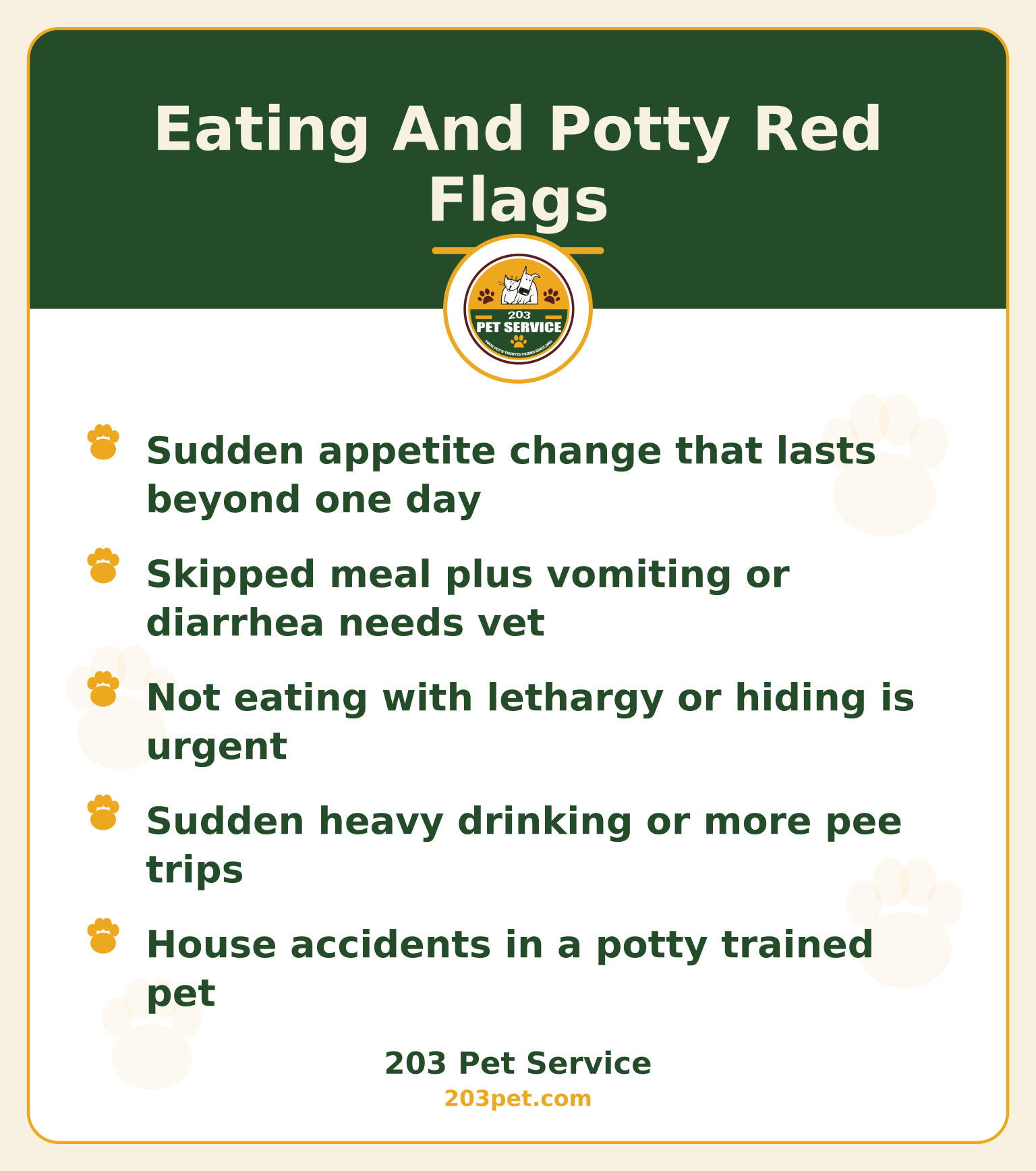
Any sudden change in how much your pet eats, drinks, or uses the bathroom can point to a health issue. One skipped meal in an otherwise bright, happy pet might be nothing. But if it lasts more than a day or comes with vomiting, diarrhea, or low energy, you should call your vet.
When is a skipped meal probably fine?
For many healthy adult dogs and cats, skipping one meal here and there is not a big deal. Maybe they had extra treats at the park in Stratford. Maybe they are a bit stressed from visitors. Puppies and kittens are a different story, since they need steady calories to keep blood sugar stable, so you talk to your vet sooner with them.
If your otherwise normal adult pet:
- Skips one meal
- Still drinks water
- Acts bright, wants to walk or play
- Has normal stool and urine
you can usually watch closely for 24 hours. If they are still off food after that, or if anything else seems “off”, it is time to call your vet for advice.
When not eating needs a vet call
Not eating is more serious when it comes with other changes. For example:
- Vomiting or diarrhea
- Bloating, crying, or obvious belly pain
- Drooling, pawing at the mouth, or trouble chewing
- Lethargy, hiding, or refusing to walk
Behavior issues like fear or stress can affect appetite too. The ASPCA explains that anxiety and environmental changes often show up as changes in eating and bathroom habits, not just barking or chewing.
Extra drinking or sudden accidents in the house
You live with your pet every day, so you know how often you normally refill the water bowl. When you suddenly need to fill it twice as often, pay attention. Increased thirst and urination can point to issues like kidney disease, diabetes, or hormonal problems.
Same idea with potty accidents. A dog in Fairfield that has not had an accident in years and suddenly pees in the house twice this week is not “being bad”. Their body is telling you something. It could be a urinary tract infection, pain that makes it hard to squat, or a big shift in stress at home.
With puppies, some back-and-forth during potty training is normal. They are still learning bladder control and timing. A regular schedule, as recommended by the American Kennel Club potty training guide, helps you tell the difference between training hiccups and something else going on.
When should you call your vet about bathroom changes?
Call your vet if you notice any of these:
- Straining to pee or poop
- Blood in urine or stool
- Going much more or much less often
- Repeated accidents in a previously reliable pet
- Urinating in tiny dribbles or crying in the litter box
For puppies, if they seem to suddenly “forget” training, you might have both a medical and a training piece. The AKC puppy behavior timeline points out that pups go through normal phases of testing limits and distraction. So you look at the full picture, not one accident in isolation.
Regular midday walks and drop in visits help here too. Our salaried employees leave clear notes on our pet sitting visits in homes from Southport to Devon, so you can see if your pet’s bathroom schedule starts to change while you are at work.
Is a sudden change in cuddling, clinginess, or hiding normal?

Short term changes in how social your pet feels can be normal. Just like people, some days they want space, other days they want extra contact. What matters is when the change is big, sudden, and sticks around.
When your social pet suddenly wants to be alone
If your usually friendly dog from Trumbull suddenly growls when you touch his hip, that is very different from a shy rescue dog that has always liked a bit more distance. Pain is a top reason a normally cuddly animal pulls away. Arthritis, dental pain, or belly discomfort often show up as “I do not want you to touch me” before you see a limp or obvious sign.
Cats are masters at this. A cat in Westport that always sleeps on your pillow but starts hiding in the closet is not “mad at you”. They might be scared, sore, or overwhelmed. The VCA guide on cat socialization and fear prevention explains that cats often show fear and discomfort by avoiding contact or changing sleeping spots, not by hissing.
Clingy behavior and separation issues
On the other side, a pet that suddenly becomes glued to you can also be trying to tell you something. Big life changes, like a move from Wilton to a new apartment in Bridgeport, or a family member leaving for college, can trigger this. Health issues can, too. Think of it like your dog saying, “I do not feel safe alone.”
In dogs, true separation anxiety is more than a dog that likes you a lot. The VCA article on separation anxiety describes common signs like destructive chewing near doors, barking the entire time you are gone, and even self injury. If you see a sudden spike in clingy behavior paired with this kind of panic when you leave, it is time to talk to your vet or a trainer.
For puppies, careful socialization makes a big difference here. The PetMD puppy socialization guide suggests short, positive separations and varied experiences, which helps puppies grow into adult dogs that can be alone without melting down.
How long should you “watch it at home”?
Use this rough rule of thumb:
- If the behavior change is mild and you can connect it to a clear stressor, you can often watch for 24 to 48 hours.
- If the change is big, comes with physical signs like not eating or limping, or your gut just feels off, call your vet sooner.
“Watch and wait” means you actively watch. Keep a simple log on your phone. Note when your cat hid, when your dog paced, how long it lasted. That kind of detail helps your vet figure out if this is a behavior issue, a medical issue, or both.
When our W-2 employees do in-home pet sitting for clients in Weston or Black Rock, we leave detailed behavior notes each visit. Little things like “did not want belly rubs today” or “followed me from room to room” can help connect the dots if something bigger pops up later.
What if your dog suddenly slows down on walks or stops playing?

If your dog or cat that usually loves to move suddenly slows down, refuses the stairs, or stops bringing toys, you should pay attention. That shift might be normal aging, but it might also signal pain, illness, or depression.
Slowing down or avoiding normal movement
Dogs that walk daily in Fairfield or along the water in Southport tell us a lot on leash. A dog that used to pull to sniff every mailbox and now trails behind and asks to go home early is communicating. They may be stiff, winded, or just feel “off”.
Some common early movement changes:
- Needing a boost to get in the car
- Hesitating before jumping on the couch or bed
- Taking the stairs slower or avoiding them
- Stumbling slightly on uneven ground
Cats hide pain even more. A cat that stops jumping to their favorite shelf in a Bridgeport apartment might be dealing with arthritis. Puppies and kittens can get hurt too. The ASPCA list of cat behavior issues notes that sudden changes in play or jumping can connect to pain, not just boredom or “attitude”.
Play changes that mean something more
Most pets have a “play personality”. Maybe your dog drops a ball at your feet the second you sit down. Maybe your cat does zoomies in the hallway every night at 9. When that pattern just stops, sometimes the reason is simple. Heat, a long hike the day before, or a loud storm last night. Other times, it is not that simple.
If your playful pet:
- Ignores favorite toys several days in a row
- Looks at you blankly when you ask to go for a walk
- Starts panting hard with normal play
- Seems confused or “not themselves” while playing
then a check in with your vet makes sense. Many behavior guides, like the ASPCA dog behavior article, remind owners that pain and illness often show up first as “does not want to do the things they used to enjoy”.
How daily walks and drop ins help you notice patterns
Patterns are the key. You learn much more from “he shortened his walk by a block every day this week” than from one slightly slower walk. That is one reason we run dog walking as an ongoing membership, not random one off visits. Consistent care helps us notice small changes and share them with you.
Our salaried employees walk dogs along the Fairfield beach, through neighborhoods in Shelton, and in busy spots in Bridgeport every weekday. We see how your dog handles hills, stairs, and different surfaces. We notice if your usually social dog suddenly avoids certain dogs or people, which can also signal pain or fear.
When you pair that with your own notes at home, you get a clear story to bring to your vet if something feels off.
Video: Victoria Stilwell shares three simple dog training tips that help you understand your dog’s behavior and build better daily habits.
What body language says “I am not okay” even before symptoms show?

Many health and behavior problems start with very subtle body language changes. A slight hunch. A new way of holding the tail. Faster breathing when they are not hot or active. Once you know your pet’s normal posture and expression, these little changes stand out.
Hiding, pacing, restlessness, and “cannot settle”
Hiding is a big red flag, especially for cats and small dogs. Newborn and young kittens, for example, need close monitoring for any change in activity or interest in their surroundings. The ASPCA newborn kitten care guide points out that changes in behavior like constant crying or unusual stillness often mean something is wrong medically, not just a personality quirk.
Pacing is another one. A dog that walks from room to room, cannot lie down, or keeps getting up again may be anxious or in pain. Same with a cat that jumps up, sits down, then moves again a minute later, over and over.
Some specific things to watch:
- New hiding spots or staying under furniture
- Walking in circles or along the same path repeatedly
- Climbing into your lap, then jumping off right away, repeatedly
- Standing and staring at a wall or into space
Shaking, panting, and stiff posture
Shaking is not always cold. Panting is not always heat. You know your pet’s normal. If your dog starts panting hard while resting in a cool living room in Easton, or your cat sits tense and still with eyes wide, that matters.
Common “I am not okay” signs:
- Shaking or trembling when they are not cold or wet
- Panting while resting, especially with a tight mouth or wide eyes
- Stiff body, tail tucked or held very high and rigid
- Ears pinned back for long periods
- Lip licking, yawning, or looking away repeatedly in a quiet, low stress setting
A lot of dog owners see lip licking or yawning and think their dog is just tired. In many cases, those are early stress signals. The ASPCA behavior article on dogs notes that subtle cues like these often show up before bigger behaviors like growling or snapping.
Frequently Asked Questions

About This Topic
How do I know if my pet’s new behavior is actually a problem?
Ask yourself three things: did it start suddenly, is it sticking around, and is it changing eating, drinking, sleeping, bathroom habits, or mood? If yes to any of those, call your vet. Quiet shifts over many months can be normal aging, but fast changes or a strong “this isn’t my pet” feeling deserve attention. 203 Pet Service can also flag concerns during walks or visits.
My dog stopped eating like normal yesterday, do I wait or call the vet?
If your dog skips one meal but seems bright and normal, you can usually watch closely for 12 to 24 hours. If they refuse food for more than a day, seem low-energy, vomit, or have diarrhea, call your vet. Sudden appetite changes are one of the clearest red flags. A pro dog walker like 203 Pet Service can help track patterns during the day.
My usually social cat is suddenly hiding, should I be worried about this?
Yes, a social cat who suddenly hides for more than a day is often uncomfortable, stressed, or sick. Watch for other changes like not eating, not using the litter box, or moving stiffly. If hiding continues beyond 24 hours or you see pain signs, call your vet. 203 Pet Service sitters can also monitor behavior while you’re at work or away.
How can I tell if my senior dog’s slowing down is age or pain?
Normal aging is slow and steady: a little more sleep, shorter play, but basically the same personality. Pain shows up as sudden reluctance to jump, stairs becoming a struggle, yelping, stiffness after rest, or a big drop in activity over days, not years. If you’re unsure, get a vet exam. Regular walks with 203 Pet Service help spot day‑to‑day changes early.
What daily routine should I watch to catch pet health problems early?
Focus on five basics: how your pet eats, drinks, sleeps, plays, and goes to the bathroom on a normal day. Any fast, lasting change in one of those is important. A simple log on your phone for a week can create a “normal” baseline. Dog walks or drop‑ins from 203 Pet Service provide extra eyes on that daily rhythm, especially on busy workdays.
My dog seems fine but is drinking a lot more water lately, is that normal?
A small change on a hot day or after extra exercise can be normal. A clear, ongoing jump in water intake for several days, especially if they’re peeing more, having accidents, or losing weight, can point to issues like kidney disease, diabetes, or infection. Measure the bowl for a week and call your vet with the numbers. 203 Pet Service can help track this during visits.
When is it just stress and when is it a real health issue for pets?
Stress behavior usually ties to a clear event: visitors, travel, construction noise, schedule changes. If the behavior improves once life settles, it was likely stress. If the change comes out of nowhere, keeps getting worse, or affects eating, drinking, or bathroom habits, treat it as a health concern and call your vet. A consistent routine and care from 203 Pet Service can also reduce stress‑related issues.
Can a dog walker or pet sitter really help catch health problems early?
Yes, someone who sees your pet regularly notices patterns you might miss on busy days. Walkers and sitters spot things like gradual limping, drinking more, accidents, or mood changes across multiple visits. At 203 Pet Service, we’ve often been the first to flag subtle changes to owners in Fairfield County, so they could get a vet check before things became serious.
About 203 Pet Service
What areas does 203 Pet Service cover in Fairfield County?
We provide professional dog walking, pet sitting, and training services across Eastern Fairfield County, Connecticut. We proudly serve families in Fairfield, Stratford, Westport, Easton, Southport, Black Rock, Bridgeport, Shelton, Devon, Trumbull, Weston, and Wilton. 203 Pet Service has cared for pets in Fairfield County since 2004, and every visit is handled by a trained, W-2 salaried employee who is background checked and fully insured.
Why does 203 Pet Service use salaried W-2 employees instead of independent contractors?
We believe salaried W-2 employees provide more reliable, accountable, and professional pet care. Unlike independent contractors, our salaried employees go through careful background checks, full training, and are fully insured. This employment structure means consistency, accountability, and peace of mind for Fairfield County pet families.
Does 203 Pet Service provide care for cats as well as dogs?
Yes. We offer full cat sitting services including feeding, litter box care, playtime, and medication. Whether you need daily visits while you are at work or full vacation care, our salaried employees are trained in feline behavior and health needs. We serve cat families throughout our 12 Fairfield County service towns.