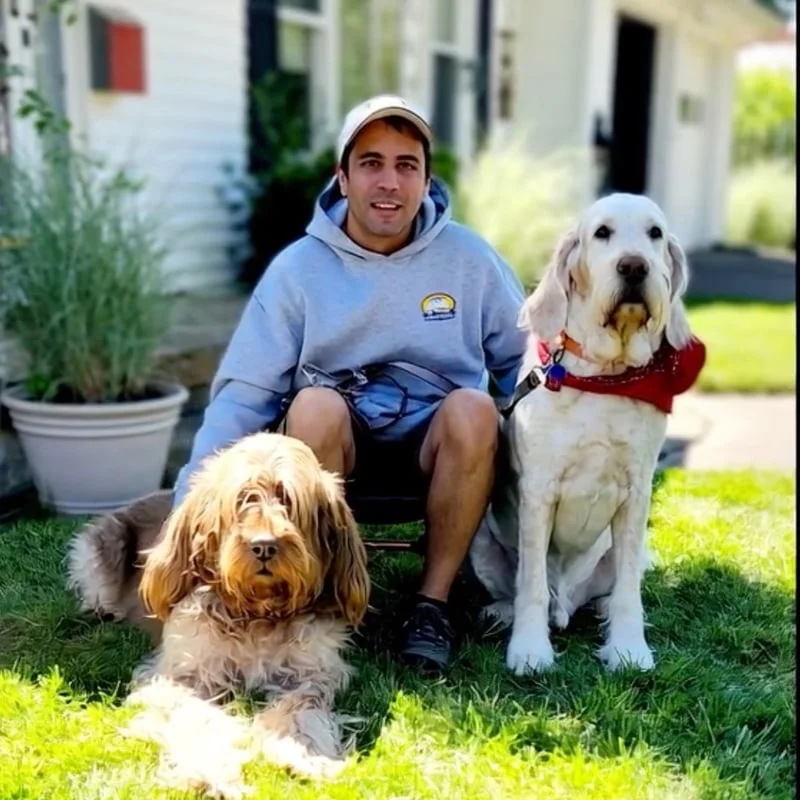

Little Changes, Big Difference: Daily Dog Wellness Tips
Quick Answer. Build a simple daily routine that starts with a quick nose to tail check each morning, calm walks, steady mealtimes, and a few short play or training breaks during the day. Add gentle body checks, mental games, and a quiet wind down at night. Those small habits help you spot problems early, keep your dog calmer, and support long term health without a big time drain.
Little Changes, Big Difference: Daily Dog Wellness Tips. Small daily habits do more for your dog’s wellness than any fancy gadget or one-time fix. A simple routine helps you catch problems early, keep your dog calmer, and make life smoother for both of you.
In Fairfield County, I see this every day. The dogs who age the best are not the ones with the latest gear. they're the dogs whose people pay quiet attention, morning to night, and make little adjustments early.
This guide walks you through a realistic daily wellness routine you can start right now. No drama. Just simple steps that fit real life in places like Fairfield, Stratford, and Bridgeport.
How should I start my dog’s morning wellness routine?

Start with a calm, two-minute check-in before the day gets busy. Look at your dog, touch your dog, and notice how they move and act. that's it.
You do not need a medical background for this. You just need to look at the same things every morning so you notice when something changes.
Quick morning “nose to tail” scan
When your dog first gets up, watch how they stand and walk. Do they pop right up, or do they struggle, hesitate, or hop on three legs for a few steps? That first move tells you a lot about joints, pain, and stiffness.
Then do a quick scan:
- Eyes: Clear, bright, no heavy discharge, no sudden redness or squinting.
- Ears: No strong odor, no head shaking, no redness or thick brown gunk.
- Nose: Moist but not pouring, no thick green or yellow discharge.
- Mouth: Normal panting or breathing, no drooling puddles out of nowhere.
- Skin and coat: No new bald spots, raw patches, or scratching like mad.
- Paws and nails: No cracked nails, torn pads, or licking one paw over and over.
Over time you will learn what's “normal rough” for your dog. A senior Lab in Stratford might always be a bit stiff in the morning, but you'll spot the day it gets worse.
Check your dog’s morning mood
Mood is part of wellness. A dog who usually greets you with a toy but suddenly stays in bed is telling you something.
Notice:
- Are they eager for breakfast or barely interested?
- Do they come over for petting like usual?
- Do they seem restless, pacing, or clingy when they're usually relaxed?
Mood shifts don't always mean a medical emergency. But a clear change that lasts more than a day or two is worth a call to your vet. As your dog ages, these little checks matter even more. Senior dogs often hide pain, so early signs are very subtle, like slower movement or changes in sleep and appetite, which is something PetMD’s guide to senior dog care talks about.
If you like structure, jot a few notes in your phone. “Monday, stiffer getting up. Tuesday, normal.” You are building your own mini health record.
How much daily movement does my dog really need?
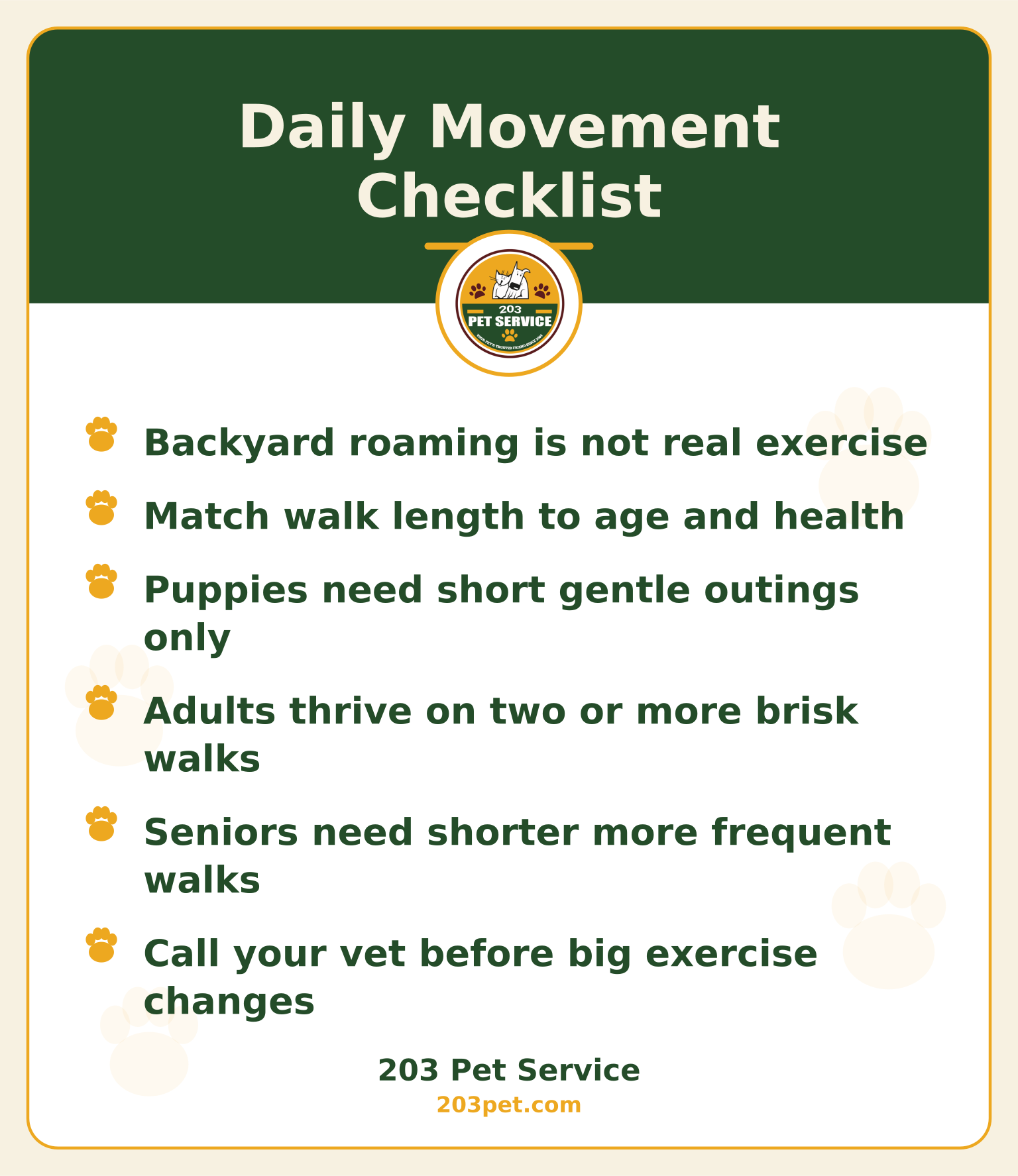
Most dogs need regular walks and real movement. A backyard is nice, but it usually is not enough by itself. Dogs wander, sniff, then lie down. that's not the same as a focused walk.
The right amount of exercise depends on your dog’s age, breed, and health. According to the American Kennel Club’s exercise guide by breed, active working and herding breeds often need significantly more activity than toy breeds or low energy dogs.
Walks that match your dog, not your neighbor’s
You might see someone in Westport jogging with their young Border Collie and think, “My dog should do that.” Maybe not.
Ask yourself:
- How old is my dog?
- What is their breed or mix?
- Do they've any known joint, heart, or breathing issues?
- What does my vet say about exercise for my specific dog?
Some general patterns:
- Puppies: Short, gentle outings, lots of rest, and no long forced runs while their bones grow. Too much intense exercise too early can strain joints.
- Adult dogs: Many healthy adults do well with two or more brisk walks most days, plus play and sniff time.
- Seniors: They still need movement, just shorter and more frequent. Slow, steady walks help joints and keep weight under control, which matters a lot for older dogs, as noted in senior care advice from PetMD.
What does a realistic daily movement routine look like?
You don't need to turn this into a marathon. A “movement routine” can be simple:
- 10 to 20 minute walk in the morning.
- Sniff-heavy walk or play break in the afternoon.
- 5 to 15 minute calm walk in the evening to wind down.
For many dogs in Bridgeport, we build this as a walking membership through our dog walking service. Same salaried employee most days. Same route patterns. That is how we spot early changes in stamina, gait, or interest.
When should you call your vet before changing exercise?
Check with your vet before you ramp things up if:
- Your dog has heart, breathing, or joint issues.
- Your dog limps or slows down on current walks.
- Your dog pants heavily with mild exercise or takes a long time to recover.
- Your dog is very overweight and you plan a big jump in activity.
Even healthy dogs can overdo it. If you notice sudden lameness, collapse, or breathing distress during exercise, stop right away and call your vet or, for serious breathing or collapse issues, an emergency hospital like MedVet Norwalk.
If you need help keeping walks steady during the workweek in places like Easton or Southport, a regular walker can be part of your dog’s wellness plan. That consistency is why many families use our ongoing dog walking membership instead of scattered, one-off visits.
What daily food, water, and bathroom habits should I watch?

Pay attention to how your dog eats, drinks, pees, and poops every day. These are the early warning lights on the dashboard.
You know your dog better than anyone. When you keep feeding and bathroom habits simple and steady, you notice any change faster.
Keep feeding simple and consistent
Most healthy adult dogs do well on a measured breakfast and dinner at the same times each day. Puppies and some medical cases are different, so follow your vet’s plan.
Pick a complete, balanced dog food that fits your dog’s age, size, and health. The ASPCA’s dog nutrition tips explain why you want a diet that meets AAFCO standards for your dog’s life stage, not random mix-and-match meals.
Things to notice with food:
- Sudden loss of appetite that lasts more than a day.
- New food guarding or reluctance to chew on one side.
- Vomiting that repeats or comes with low energy or diarrhea.
As for table food, many human foods are unsafe for dogs. The AKC’s guide on human foods dogs can eat lists safe options like plain carrots or blueberries, along with dangerous ones like grapes, onions, and xylitol.
Water: know your dog’s “normal”
Fresh water should always be available. What matters most is change. A healthy dog who suddenly drinks a lot more or a lot less than usual may have something going on.
Watch for:
- Draining the bowl and still searching for more.
- Multiple night-time trips out to pee when that's new.
- Hardly touching water all day, especially in warm weather.
Changes in thirst and urination can point to kidney disease, diabetes, bladder infections, and more, which is why UC Davis Veterinary Hospital includes them as red flags in many of their health topic summaries.
Why poop and pee changes matter
No one loves scooping poop, but it is one of the best windows into your dog’s health. You want to know what is normal for your dog so you can spot “off.”
Pay attention to:
- Consistency: very loose, watery, or hard dry pellets.
- Color: black and tarry, bright red blood, or gray, pale stool.
- Frequency: suddenly going many times or not going at all.
- Straining: long squatting with little or nothing coming out.
With urine, look for:
- Blood-tinged or very dark urine.
- Frequent small accidents inside when your dog is usually house trained.
- Straining or crying when they pee.
One odd stool, especially after a diet oops, is not always a crisis. But diarrhea that lasts more than a day, or any poop or pee change that comes with vomiting, low energy, or pain, is a “call your vet” situation.
If you travel or work long hours and use pet sitting or daily visits, ask your sitter to note any changes in appetite, water bowls, and bathroom habits. In homes across Southport, Easton, and Black Rock, our salaried employees write this down so you're not guessing what happened while you were gone.
How can I read my dog’s body language during the day?

You do not need to be a behaviorist to read your dog better. You just need to slow down and notice patterns. Their body language will tell you if they feel safe, stressed, or in pain.
Think of it like learning a close friend’s face. The more you watch, the more small changes jump out.
Signs your dog feels relaxed and safe
Every dog has their own version of “happy,” but these are common relaxed signs:
- Soft eyes, blinking normally, no fixed hard stare.
- Loose body, wiggly hips, relaxed tail, not tucked tight.
- Curled up or stretched out on their side, not tight like a spring.
- Normal interest in sniffing, greeting, and exploring.
If your dog spends most of the day in this zone, you're on the right track. That tells you your routine, home, and interactions feel safe to them.
Signs your dog feels worried, stressed, or in pain
Some stress signs are loud. Barking, lunging, snapping. Many are quiet, especially early on. Watch for:
- Lip licking or yawning a lot in situations that should not make them tired.
- Pinned ears, tucked tail, lowered body, or trying to hide.
- Sudden clinginess or, the opposite, avoiding contact.
- Staring at a doorway, pacing, or unable to settle.
- Growling when you touch a certain spot or try to move them.
Dogs often show pain as a behavior change. They may get snappy, refuse stairs, or stop jumping on the couch. that's why broad animal health resources from places like UC Davis Veterinary Hospital remind owners to pay attention to behavior, not just obvious injury.
Small changes you might notice on walks or visits
During midday walks in places like Black Rock or near Seaside Park, our walkers often spot subtle shifts. For example:
- A social dog who suddenly avoids other dogs.
- A confident dog who now startles at bikes or loud trucks.
- A dog who lags behind or pulls far more than usual.
None of these alone prove a big medical issue. But when we see a pattern for a few days in a row, that's when we reach out to the client and suggest they talk with their vet or a qualified trainer, like our dog training program, for behavior concerns.
When does a mood change need closer watching?
A one-day off mood can happen. Maybe your dog didn't sleep well. Maybe something outside spooked them.
Take it more seriously when:
- The change lasts more than 48 hours.
- It comes with physical signs like limping, vomiting, or bathroom issues.
- Your dog withdraws from favorite activities, people, or toys.
- Your dog shows any sign of aggression that is new for them.
Behavior and medical issues often blend. Pain can cause fear. Fear can cause physical stress. So your first call is usually your vet. For safety concerns or anxiety that needs behavior work, look for a certified trainer. I am an Animal Behavior College certified dog trainer, and we build our dog training around that mix of behavior and health awareness.
How do I set my dog up for better sleep at night?

Good sleep keeps your dog’s mood more stable and their body healthier. A simple night routine can cut down on restlessness, midnight pacing, and even some behavior issues.
You don't need a full “spa night” for your dog. Just repeat a few calm steps most evenings.
Use a quiet evening walk or play to settle the day
If your schedule allows, take a short, calm walk after dinner. In Southport, a slow loop around the block after the busy commuter rush can make a world of difference for anxious dogs.
Keep it mellow:
- Skip high-arousal fetch right before bed.
- Let your dog sniff and move at an easy pace.
- Offer one last chance to pee and poop, so they're more comfortable overnight.
Some dogs settle best with brain work instead of more running. Simple sniff games or food puzzles in the evening give mental exercise without overstimulating. You can find more ideas in PetMD’s guide to keeping dogs mentally stimulated.
Grooming and touch checks while you relax
Evening is a good time to pair light grooming with another body check. Nothing fancy. Just a few minutes while you watch TV.
Run your hands gently over:
- Back and sides for new lumps, hot spots, or sore spots.
- Ears for dirt, heat, or smell.
- Paws for burrs, cracks, or redness between toes.
- Under the tail for swelling, discharge, or matting.
Think of this as your slow version of the quick morning scan. you'll catch skin issues, ear infections, and small injuries much earlier this way. If you find something worrying, call your vet. For emergencies like deep cuts, choking, or heatstroke, basic first aid can help while you head in. The AKC’s dog first aid guide is a good reference for that.
Set up a calm sleep spot
Dogs sleep better with a regular, safe place to land. That might be a crate, a bed next to yours, or a quiet corner in the living room.
Try to:
- Keep the sleep area draft free and away from loud noises.
- Use a bed with enough padding, especially for seniors and big dogs.
- Stick to a set bedtime range as much as your schedule allows.
If you use a crate, it should feel like a den, not a punishment. The American Kennel Club’s crate training video below has a nice, clear walkthrough on how to make the crate a safe, calm place for your dog.
Video: The American Kennel Club explains how to crate train your dog so the crate becomes a safe, restful place, not a punishment.
How good sleep helps mood and health
Dogs who sleep well handle stress better. They start the next day more patient, more focused, and less reactive. Just like us.
For older dogs especially, broken sleep often signals pain, confusion, or anxiety. If your senior wanders at night, pants, or seems lost, talk with your vet. Senior care guides, like those from PetMD, note that sleep changes are common in aging dogs and should be part of regular wellness discussions.
How can a dog walker or pet sitter help spot wellness changes?

A steady walker or sitter is like an extra set of trained eyes on your dog. The more regularly someone walks your dog, the easier it is for them to notice changes you might miss in a busy week.
This matters even more if you commute into the city, travel often, or juggle kids and activities in towns like Wilton, Weston, Trumbull, or Devon.
Why consistency matters so much
At 203 Pet Service, we hire W-2 salaried employees, not contractors or gig workers. That means the same people walk your dog day after day in places like Black Rock, Fairfield, and Stratford.
Frequently Asked Questions

About This Topic
What does a simple daily wellness routine for my dog look like?
Think “nose to tail” in the morning, calm movement, and short check-ins. Start with a quick visual and hands-on scan, a relaxed walk, and consistent mealtimes. Add two or three five-minute play or training breaks plus a gentle body check at night. 203 Pet Service can help you build and stick to a routine that fits your Fairfield County schedule.
How can I quickly tell in the morning if my dog’s okay?
Watch how your dog gets up and takes those first steps. Stumbling, limping, or hesitation can signal pain. Then scan eyes, ears, nose, mouth, skin, and paws for anything new: redness, odor, discharge, or raw spots. This two‑minute routine daily helps you spot changes early. If you’re unsure what you’re seeing, 203 Pet Service can observe and flag concerns.
How much daily exercise does my dog really need for good health?
Most healthy adult dogs do best with at least 30 to 60 minutes of movement spread throughout the day, not just one big walk. Mix calm walks with brief fetch or training games so they’re physically and mentally tired, not overworked. Puppies and seniors often need shorter, gentler sessions. 203 Pet Service offers customized walks in Fairfield County based on age, breed, and health.
What small daily habits help my dog stay calm when I’m at work?
Keep mornings low-key: same wake time, calm walk, consistent breakfast, then a quiet goodbye. Leave a food puzzle or frozen lick mat, and keep TV or soft music on if it helps. Short training or sniffy walks before you leave burn nervous energy. If your dog struggles when alone, 203 Pet Service can provide midday visits and structured breaks.
How do I know if limping or stiffness means my dog needs a vet?
If your dog suddenly won’t put weight on a leg, cries when touched, or the limp lasts more than 24 hours, call your vet. Morning stiffness that improves after a few minutes can be early arthritis, especially in larger or older dogs. Track what you see daily so you can report patterns. 203 Pet Service walkers in Fairfield County can also note changes between visits.
What should I look for on my dog’s skin and coat every day?
Run your hands over your dog once a day, feeling for new bumps, scabs, hot spots, or tender areas. Check for bald patches, flakes, or constant scratching, especially around ears, belly, and paws. Catching irritation early can prevent big infections later. If you’d like another set of eyes, 203 Pet Service can include quick skin checks during walks or drop-ins.
How can I keep my dog mentally stimulated without exhausting them physically?
Use short, three to five minute training sessions throughout the day, like sit, down, touch, and simple tricks. Add sniff walks, food puzzles, or scatter feeding instead of always using a bowl. Mental work often tires dogs more than endless fetch and is easier on their joints. 203 Pet Service can work basic enrichment games into your dog’s visits so the routine continues even when you’re busy.
About 203 Pet Service
What areas does 203 Pet Service cover in Fairfield County?
We provide professional dog walking, pet sitting, and training services across Eastern Fairfield County, Connecticut. We proudly serve families in Fairfield, Stratford, Westport, Easton, Southport, Black Rock, Bridgeport, Shelton, Devon, Trumbull, Weston, and Wilton. 203 Pet Service has cared for pets in Fairfield County since 2004, and every visit is handled by a trained, W-2 salaried employee who is background checked and fully insured.
Why does 203 Pet Service use salaried W-2 employees instead of independent contractors?
We believe salaried W-2 employees provide more reliable, accountable, and professional pet care. Unlike independent contractors, our salaried employees go through careful background checks, full training, and are fully insured. This employment structure means consistency, accountability, and peace of mind for Fairfield County pet families.
How does 203 Pet Service handle pet emergencies?
In an emergency, our sitter or walker immediately calls Robyn, our office manager, so she can contact you while our salaried employee stays with your pet. This protocol means your pet gets constant care while we coordinate with you about next steps. Our team is trained to stay calm and put your pet's safety first in any situation.
What makes 203 Pet Service different from other pet sitters in Connecticut?
Our owner, Jason Hofmann, brings 29 years of professional pet care experience, including 5 years as a veterinary technician at Greenfield Animal Hospital in Fairfield. As an Animal Behavior College (ABC) certified dog trainer, Jason built 203 Pet Service on veterinary medical knowledge and professional training, not just hobby experience. Plus, we've served Fairfield County families since 2004 with the same care for safety and reliability.