

Overnight Pet Sitting vs Kennels: How to Choose
Quick Answer: Choose between overnight pet sitting and kennels by matching your pet’s personality, health, and routine to the kind of care they will really get. Most dogs and cats who like quiet, familiar spaces and need a steady routine are happier with an in-home sitter, while social, easygoing dogs that already enjoy group play often do well in a clean, well run kennel. For trips around Fairfield, Stratford, Westport, Southport, Easton, Black Rock, and Bridgeport, try to book 3 to 6 weeks ahead, especially for holidays and school breaks.
Overnight Pet Sitting vs Kennels: How to Choose
You choose between overnight pet sitting and kennels by looking at your pet’s personality, health, and routine, then matching that to the kind of care each option really gives. Most dogs and cats who like their home routine and get stressed by noise do better with an in-home sitter. More social, easygoing dogs who already enjoy group play often do fine in a well run kennel or boarding facility.
In Fairfield County, especially around Fairfield, Stratford, Westport, Easton, Southport, Black Rock, and Bridgeport, the hardest part is often timing. Holiday weeks and school breaks book up fast. So you want a plan long before you zip up the suitcase.
I will walk you through what overnight pet sitting actually looks like, what a kennel stay feels like from your pet’s point of view, and how to decide which fits your dog or cat. Then we'll finish with simple travel checklists you can use for your next trip.
When should you start your vacation pet care plan?
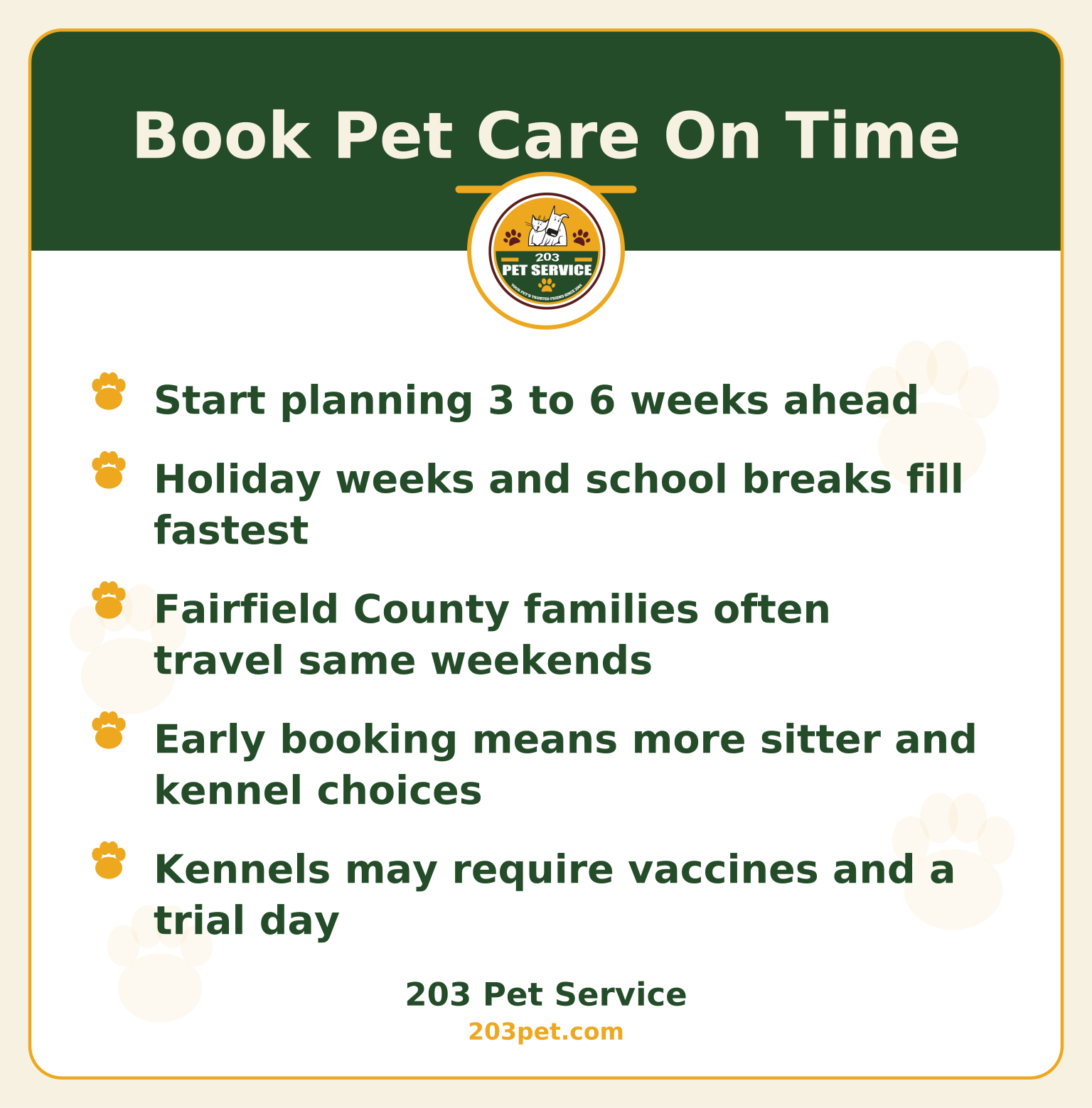
You should start your vacation pet care plan 3 to 6 weeks before school breaks, summer trips, and major holidays. In Eastern Fairfield County, that's the window when overnight pet sitting and kennel reservations start to disappear.
We see this every year. Spring break, Memorial Day, the July 4th week, and the stretch from Thanksgiving through New Year’s fill up fast in Fairfield and Stratford. By the time parents get school calendars in hand, many sitters and kennels are already booked.
Why earlier is better in Fairfield County
In towns like Westport, Southport, and Black Rock, a lot of families travel on the same weekends. Long weekends to Vermont. College visits. Beach weeks on the Cape. That means your neighbors are calling the same pet sitters and kennels you're, often for the exact same dates.
If you want in-home overnight care in a place like Fairfield or Bridgeport, planning 4 to 6 weeks out is smart. You have more choice, more time to meet the sitter, and less stress for you. For big holidays, even earlier helps.
Many kennels also need proof of current vaccines and sometimes a trial day. The American Kennel Club puppy vaccine guide explains how vaccine schedules run over weeks to months, so you don't want to find out two days before your trip that your dog needs an update.
Questions to ask yourself before you book
Before you chase down dates, ask yourself a few simple questions about your pet and your home:
- Does my dog or cat stay calm when I am gone, or do they panic?
- Does noise bother them, like barking or loud doors?
- How is their health? Senior, puppy, special needs?
- Are they social with other dogs, or more of a homebody?
- Is my home easy to secure and safe for someone staying overnight?
Senior dogs often need more bathroom breaks, softer beds, and a steady schedule. PetMD’s senior dog guide talks about how older dogs handle stress and change less easily, which is one reason many senior dogs do better with in-home overnight care.
Same idea for shy cats. The Cornell Feline Health Center points out how cats rely on familiar territory and scent to feel safe. Moving them to a kennel can be a big shock, especially for nervous or older cats.
Think through your answers. you'll start to see whether your pet leans more toward a quiet couch in Fairfield or a busier kennel day in another town.
What does overnight pet sitting at home really look like?
Overnight pet sitting at home looks like your dog or cat staying in their normal environment while a sitter comes to live-in for the night. The sitter follows your feeding, walking, and medication routine, sleeps in your home, and keeps your pet’s world as steady as possible.
In Fairfield County, this works well for pets who are used to a certain loop. Morning walk near Jennings Beach. Evening stroll in Black Rock. Couch time after dinner. We keep that rhythm, even while you're away.
A typical overnight routine with an in-home sitter
With our overnight pet sitting service, a usual day might look like this:
- Late afternoon or early evening arrival for dinner, yard time, and a walk.
- Evening play, snuggles, and normal household routines, like TV noise or lights.
- Final bedtime potty break or litter box check.
- Overnight stay on your couch or in your guest room.
- Morning feeding, walks, and any meds given on your normal schedule.
If your dog is already part of our ongoing dog walking membership in a town like Westport or Easton, we already know their pace, favorite routes, and quirks. Overnight care then becomes an easy extension of that routine.
Keeping your pet on their normal schedule
Most dogs and cats handle your absence better when their schedule changes as little as possible. That means same food, same times, same walk or play windows.
We build that right into our overnight plans. For example:
- If your dog gets a midday walk every weekday, we fold that visit into the overnight plan.
- If your cat gets medication at 7 a.m. and 7 p.m., we set alarms and stick to that.
- If you crate your dog at night, we follow the same crate training rules you use.
The AKC’s guide to preparing for a new puppy talks about how routines help puppies feel safe. That same idea applies to your adult dog when you travel. The more pieces we keep the same, the calmer your dog or cat usually feels.
Home safety checks, updates, and emergency protocol
Overnight pet sitting also gives you an extra set of eyes on your house. We bring in packages, rotate lights, check doors and windows, and watch for issues like leaks or alarms. It feels more like a trusted friend staying over.
While you travel, you also want clear updates. Our salaried W-2 employees send messages, photos, and quick notes so you can see how your pets are doing in real time. PetMD recommends asking about communication style and emergency plans when you choose a sitter, and we agree with that advice in their checklist for pet sitters.
If there's ever an emergency during a visit, our protocol is simple and strict. Your sitter calls Robyn in our office right away. Robyn calls you to explain what's going on and discuss next steps. Your sitter stays with your pet until you or a veterinarian gives further guidance. For serious issues, we often coordinate with your regular vet or a local emergency hospital such as MedVet Norwalk.
In the rare case of an injury or sudden illness, our sitters also use pet first aid skills. The AKC’s first aid guide highlights quick actions that can protect a dog before you reach a vet, like managing bleeding or heat stress. As a certified Pet First Aid and CPR instructor, I train our W-2 employees to act quickly, then hand off to veterinary care.
What does a kennel or boarding stay feel like for most pets?

A kennel or boarding stay usually means your dog leaves home to stay in a dedicated facility, sleeps in a run or suite, and follows that facility’s daily routine. Some facilities offer group play, others focus on one-on-one time.
Cats sometimes have separate cat condos or a quiet room, though not every kennel is set up for cats. This is one reason many cat owners in Fairfield, Bridgeport, and surrounding towns lean toward in-home cat care visits instead.
Daily rhythm in a kennel
Every kennel is different, but many follow a similar schedule:
- Early morning potty break.
- Breakfast and water checks.
- Rotating group playtimes or yard time.
- Quiet time or crate/run time mid-day.
- Afternoon play or walks.
- Dinner, then another potty break before lights out.
For some dogs, this feels like camp. New smells, new friends, lots of action. For others, especially anxious or noise-sensitive dogs, it feels like living next to a highway. Constant sound, movement, and change.
Facilities often require current vaccines for safety. The AKC vaccine schedule explains why that matters, since shared air and play yards make it easy for diseases like kennel cough to spread.
Noise, group play, and exposure to germs
Daily group play can be fun for social dogs, but it's not the right fit for every dog. Younger, high energy dogs often love it. A more anxious dog, or one who is not fully socialized, may find it a lot to handle.
On top of that, you've noise. Barking, gates closing, people moving around. Some dogs tune it out. Others stay on edge.
The UC Davis animal health topics pages talk about how stress can affect immune health in animals. Add in shared water bowls, yards, and indoor spaces, and there's more exposure to germs than your dog sees at home.
None of that means kennels are bad. It just means you want to match the setting to the dog. For some, it is a fun change. For others, it's too much.
Which pets usually do well in a kennel?
In my 29 years working with dogs, I tend to see the same pattern. Dogs who do well in kennels often:
- Already enjoy dog daycare or dog parks.
- Handle new places with a wagging tail instead of fear.
- Are crate trained and rest calmly when confined.
- Are in good health and up to date on vaccines.
The AKC guide to exercise notes that many working and sporting breeds need quite a bit of activity and mental work. For those dogs, a busy kennel with structured play may fit well, especially if you do not have an ongoing walker at home.
Dogs who often don't love kennels include seniors with arthritis, nervous dogs, very young puppies who have not finished their vaccines, and dogs with medical needs that are tricky to manage in a group setting. Many of these pets stay far calmer with an overnight sitter in your home in Fairfield, Stratford, or nearby towns.
How do you decide what is best for your dog or cat?

You decide what's best by looking at age, health, stress level, crate comfort, social needs, and your home setup, then weighing those against the pros and cons of in-home overnights versus kennels. There is no one answer that fits every pet.
Think of this like matching a kid to a summer plan. Some kids thrive at sleepaway camp. Others only relax at home with a familiar sitter. Your dog or cat is the same way.
Age, health, and stress level
Puppies, seniors, and pets with medical issues usually need more individual attention. Senior dogs often need bathroom breaks at odd hours, for example. The PetMD senior dog guide points out that older dogs can struggle more with arthritis, hearing loss, and anxiety, which all make a loud, busy kennel tougher to handle according to their senior care article.
Cats with chronic conditions, like kidney disease, also do better when someone can watch litter box habits and appetite closely in their own home. The Cornell Feline Health Center notes that changes in drinking and urinating can flag problems in cats, so having a sitter who knows your normal routine helps spot issues early in their feline health information.
For healthy, easygoing adult dogs who like people and new places, a kennel can be a solid option if the facility is clean, well run, and uses humane handling.
Crate comfort, house training, and social needs
Ask yourself:
- Is my dog crate trained and relaxed in the crate?
- Is my dog fully house trained, or do they still have accidents?
- Does my dog enjoy polite play with other dogs?
Crate training also helps with overnight pet sitting. If your dog is used to a crate, they can sleep in it at home or in a kennel peacefully. If not, that's something you may want to work on. The AKC has a helpful video on crate training that shows kind, step by step methods that do not rely on forcing or yelling.
Video: AKC trainers explain how to crate train your dog using positive methods, which helps both kennel stays and overnights at home go more smoothly.
House training matters for any setting. In your home in Fairfield or Westport, we can usually manage a dog who needs a bit more structure, especially if they already have an ongoing walking routine with us. In a kennel, accidents can stress some dogs out more, so you want them fairly solid before you board them.
For social needs, some dogs really do thrive with dog friends. For those dogs, a kennel with controlled playgroups may be a nice break from home. Other dogs are more like introverts, happy with human company and maybe one familiar dog. For those dogs, a sitter staying overnight in your home paired with your regular dog walking plan is often a better match.
Special needs pets, shy pets, and multi pet homes
Special needs and shy pets are where overnight pet sitting usually shines. Think of:
- A diabetic cat who needs insulin at exact times.
- A dog with mobility issues who needs help on stairs.
- A shy rescue dog who still startles at new people and loud noises.
- A multi dog and cat household in a Bridgeport triple decker.
In those cases, keeping everyone home and bringing a trained person to them keeps stress low. That is especially true in busy neighborhoods in Bridgeport or dense parts of Black Rock, where there's already enough outside noise.
Homes with several cats often prefer in-home care too. If you ever add a new cat, the PetMD guide to introducing cats explains how slowly you should mix cats. That same idea applies when you think about putting your cat into a shared kennel room with unknown cats. Many simply won't enjoy that.
For dogs with behavior issues or fear, some families also layer in training before a big trip. Our dog training services in Fairfield County can help your dog build confidence, crate comfort, and calm alone time. That makes any type of vacation care easier, whether it's home based or in a kennel.
What should you prepare for overnight pet sitting at home?

For overnight pet sitting at home, you should prepare clear instructions, enough food and meds, safe spaces, contact details for your vet, and simple house rules. Think of it as packing your pet’s suitcase, only everything stays in Fairfield or your nearby town instead of going in the car.
A little prep on your end makes your sitter’s job smoother and your pet’s stay much calmer.
Summer and school break checklist for in-home care
Use this checklist for trips during summer and school breaks:
- Enough food and treats for your full trip plus 3 extra days.
- Measured feeding instructions and where bowls are kept.
- All medications labeled with doses and times.
- Leashes, usees, and any jackets or booties if needed.
- Favorite toys and comfort items like beds or blankets.
- Updated ID tags and microchip info.
If your pet is not microchipped, it's worth asking your vet about it before you travel. The ASPCA microchip FAQ explains how chips help reunite lost pets with their families and why you still need an ID tag as backup. We always double check collars and tags before we walk a new dog in a place like Easton or Southport, where wildlife and open spaces can tempt some dogs to chase.
Frequently Asked Questions

About This Topic
How do I know if my dog will hate staying in a kennel?
Think about how your dog handles noise, change, and other dogs. If they’re nervous in new places, startle easily, or guard toys and food, a busy kennel may be stressful. Dogs who prefer quiet, familiar routines usually do better with in‑home overnight care. 203 Pet Service can do a meet‑and‑greet to help you decide.
My dog loves people but not dogs, is a sitter better?
Yes, if your dog enjoys human company but gets tense or snappy with other dogs, in‑home overnight care is usually safer and less stressful than group boarding. A sitter keeps their routine and attention focused on your pet. 203 Pet Service offers overnight stays in your home across Fairfield, Stratford, Westport, and nearby towns.
How far in advance should I book vacation pet care in Fairfield County?
For school breaks and holidays, aim to book 3 to 6 weeks ahead in Fairfield County. Spring break, Memorial Day, July 4th, and Thanksgiving through New Year’s fill very fast. For random weekends, 1 to 3 weeks is often enough, but sooner is always better. 203 Pet Service opens holiday bookings early and can waitlist you if needed.
What does overnight pet sitting in my home actually look like day to day?
An overnight sitter typically arrives in the evening, does dinner, walks, and playtime, sleeps at your home, then handles morning feeding and another walk before leaving. Many also bring in mail, adjust lights, and keep your pet’s normal routine. 203 Pet Service customizes overnights around your dog’s or cat’s usual schedule in your own home.
My dog has medication and a strict routine, is boarding still okay?
It can be, but dogs with medical needs usually do best with consistent, one‑on‑one care. In‑home sitters can give meds on your exact schedule, monitor eating, bathroom habits, and energy, and text updates if anything looks off. 203 Pet Service sitters are used to pill pockets, insulin, eye drops, and other daily meds.
What should I have ready at home before the overnight pet sitter comes?
Set out extra food, treats, meds with written instructions, leashes, litter, and cleaning supplies, plus vet and emergency contact info. Leave your Wi‑Fi, thermostat notes, and any house rules on a simple checklist. 203 Pet Service sends a prep list before your trip so everything’s ready and you can actually enjoy your vacation.
About 203 Pet Service
What areas does 203 Pet Service cover in Fairfield County?
We provide professional dog walking, pet sitting, and training services across Eastern Fairfield County, Connecticut. We proudly serve families in Fairfield, Stratford, Westport, Easton, Southport, Black Rock, Bridgeport, Shelton, Devon, Trumbull, Weston, and Wilton. 203 Pet Service has cared for pets in Fairfield County since 2004, and every visit is handled by a trained, W-2 salaried employee who is background checked and fully insured.
Why does 203 Pet Service use salaried W-2 employees instead of independent contractors?
We believe salaried W-2 employees provide more reliable, accountable, and professional pet care. Unlike independent contractors, our salaried employees go through careful background checks, full training, and are fully insured. This employment structure means consistency, accountability, and peace of mind for Fairfield County pet families.
Does 203 Pet Service provide care for cats as well as dogs?
Yes. We offer full cat sitting services including feeding, litter box care, playtime, and medication. Whether you need daily visits while you are at work or full vacation care, our salaried employees are trained in feline behavior and health needs. We serve cat families throughout our 12 Fairfield County service towns.