
Pet Sitting Emergencies in Fairfield County CT
Quick Answer
Handle a pet sitting emergency in Fairfield County by staying calm, calling your sitter and vet right away, and following the plan you set up before you left. Make sure your sitter has your vet info, local emergency hospitals, written consent for treatment, your pet’s meds and history, and clear steps for escapes, storms, power outages, or sudden behavior changes.
Pet Sitting Emergencies in Fairfield County CT
Pet sitting emergencies in Fairfield County, CT are any sudden problems that put your dog or cat at risk while you're away and a sitter is in charge. That can mean a medical crisis, an accident, an escape, or a scary behavior change. If it makes your stomach drop when you hear about it, it counts as an emergency.
In towns like Fairfield, Stratford, and Westport, we see how fast things shift. A quiet afternoon can turn into a thunderstorm on the Sound, a power outage, or an icy sidewalk slip. Around the holidays in Bridgeport, Trumbull, Shelton, Devon, Weston, Wilton, and the rest of Fairfield County, pets spend more time with sitters, which means you need a clear plan long before anything goes wrong.
You, your sitter, and your veterinarian all share the job. When everyone knows what to watch for and what to do, emergencies get handled faster and with less panic. At 203 Pet Service, we build that planning into every visit across all 12 towns we serve.
In this guide, we'll walk through what counts as an emergency, how to prepare before you travel, basic first aid, what to do in the first 10 minutes, how microchips and local knowledge help with escapes, and how to choose a sitter who is actually ready to handle a crisis.
If you want a deeper look at our background, training, and how we work, you can read more on our about 203 Pet Service page.
What counts as a pet sitting emergency in Fairfield County?

A pet sitting emergency is anything that suddenly threatens your pet's health or safety while you're away. If your sitter in Fairfield, Stratford, or Bridgeport has to choose between "wait and see" and "act right now", you're already in emergency territory.
Some emergencies are medical. Some are environmental. Others are behavior or safety problems that can spiral if nobody steps in quickly.
Common medical emergencies sitters see
Most sitters in Fairfield County will eventually see a dog with sudden vomiting or diarrhea, a swollen face from a bee sting, or a cat that starts hiding and refuses to eat. Those may not all be life threatening situations, but they can become serious fast.
The American Kennel Club first aid guidelines list red flag signs like trouble breathing, pale or blue gums, repeated vomiting, a hard swollen belly, collapse, seizures, or uncontrolled bleeding as clear emergencies that need a veterinarian right away. PetMD's dog first aid advice backs that up and adds signs of bloat, sudden weakness, and suspected poisoning to the list.
For cats, Cornell's experts note that hiding, breathing with the mouth open, not using the litter box, or suddenly straining to pee can signal an emergency like urinary blockage or severe pain, even if the cat is quiet about it.Cornell Feline Health Center and UC Davis Veterinary Hospital resources both stress that cats often hide serious illness.
So how do you sort "urgent" from "life threatening" for a sitter in Trumbull or Shelton?
- If the pet is struggling to breathe, can't stand, is having a seizure, is bleeding heavily, or you suspect bloat or poisoning, that's life threatening. Go to the emergency vet first, then call you.
- If the pet is vomiting once, has mild diarrhea, or seems off but is still alert and breathing normally, that's urgent. The sitter should call your regular vet for guidance.
Environmental and household emergencies specific to CT homes
Our Fairfield County weather and homes create their own sets of risks. In winter, Fairfield, Black Rock, and Stratford get slick decks, icy driveways, and salty sidewalks. A dog can slip on steps, pull a muscle, or lick ice melt off their paws. Some ice melt products irritate the skin and gut, and veterinarians at UC Davis warn that certain formulations can cause stomach upset and more serious problems if a dog eats a lot.
Summer in Westport, Southport, and Devon brings heat risk. A long walk on hot pavement or a quick stop in a closed car can turn dangerous quickly. The AKC notes that overheating, heavy panting, drooling, bright red or very pale gums, and collapse are classic heatstroke signs that need emergency care.AKC first aid guidance explains how quickly heatstroke can progress.
Inside homes in Trumbull, Shelton, and Devon, sitters have to watch for open access to toxic foods. Chocolate, xylitol sweetener in sugar free gum, grapes and raisins, and some nuts can all cause poisoning in dogs. The AKC keeps a clear list of safe and unsafe human foods for dogs and notes that even small amounts of certain foods can cause serious problems.AKC nutrition guidance on human foods is a good reference.
Cleaning sprays left open on the counter, human medications on the nightstand, and unsecured trash cans are another big source of trouble. Both PetMD and UC Davis include poisoning and ingestion of household products among the most common emergencies dogs face.PetMD dog emergency care and UC Davis emergency topics explain how fast these cases need treatment.
Behavioral and safety emergencies
Not every emergency comes from an injury or a toxin. Sometimes it's behavior that crosses a line.
In bigger Bridgeport apartments or tight Black Rock condos, one dog suddenly turning on another can create a dangerous situation in seconds. Same with cat to cat aggression. PetMD's guide to introducing cats points out that hissing, stalking, blocking access to food or litter, and sudden fights are signs of serious conflict. Cornell notes that ongoing stress and aggression in cats can also lead to medical problems like cystitis.Cornell feline behavior and stress topics
High anxiety also counts. A dog in Southport that tries to claw through a door during a thunderstorm, or a Westport dog that howls nonstop, chews the crate, and tries to break windows, is not just "a little nervous". That dog can injure itself or escape.
Structured, monitored exercise can lower the risk of this kind of anxiety. Regular, appropriate walks, like those we provide through our Fairfield County dog walking service, help burn mental and physical energy and reduce stress for many dogs.
How should pet parents prepare for emergencies before the sit starts?
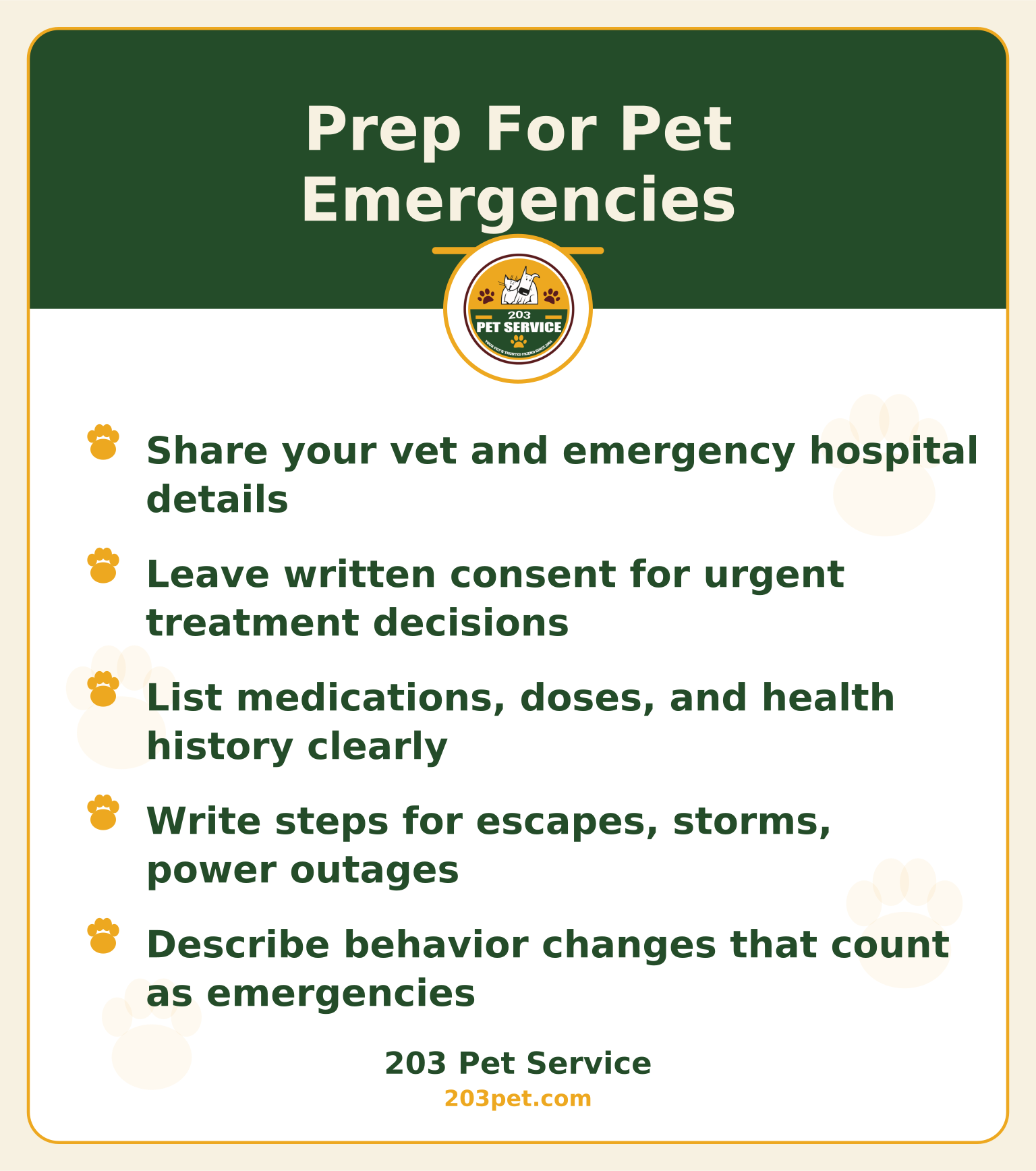
You prepare for pet sitting emergencies by creating a clear written plan, sharing medical details, and setting up safe access to your home. If you do this before you leave Fairfield, Trumbull, or Wilton, your sitter can act quickly instead of wasting time tracking down information.
Creating a written emergency plan for your sitter
Every pet sitter in Fairfield County should have a printed and digital emergency sheet before you leave. PetMD recommends that owners choose sitters who ask detailed questions about veterinary contacts, consent, and emergency preferences.PetMD's guide to what to look for in a pet sitter highlights this as a sign of a pro.
Your plan should include:
- Primary vet contact: name, address, and phone of your regular clinic in Fairfield, Westport, or Bridgeport.
- Backup vet: another clinic nearby in case your main vet is closed.
- 24/7 emergency hospital: for many of our clients At 203 Pet Service, At 203 Pet Service, we recommend MedVet Norwalk, plus options like VCA Shoreline Animal Hospital on Bridgeport Avenue in Shelton.
- Your cell number and email, plus at least one local backup contact in a town like Weston or Wilton.
- Written consent that your sitter may approve treatment up to a set dollar amount if they can't reach you.
Put that sheet in an easy spot in the kitchen and send a digital copy too. At 203 Pet Service, we collect this information during onboarding and keep it on file for all in home pet sitting visits.
Sharing critical health, age, and medication information
Senior dogs in Fairfield or Trumbull, diabetic cats in Stratford, and dogs with allergies in Easton all need more than "he is pretty healthy" on the notes.
PetMD explains that older dogs often need closer monitoring, adjusted exercise, and careful attention to small changes in appetite, drinking, and mobility. PetMD's senior dog care guide lays out how small shifts can signal bigger problems. Cornell and UC Davis both stress similar points for cats with chronic kidney disease, diabetes, or heart issues. Cornell feline health topics and UC Davis disease specific topics
Make a quick checklist for your sitter:
- Exact medication schedule, doses, and how you give them.
- Any recent lab work that matters, like kidney numbers or heart testing.
- Known triggers, such as foods that cause reactions, stressful situations, or activity limits.
- Baseline behavior: how your dog or cat normally acts so the sitter can spot real changes.
When your sitter has this in hand, they can give a much cleaner history to the vet and cut down on guesswork if something happens.
Access, safety, and neighborhood specific instructions
Emergency planning is not only about medical care. It also covers how your sitter safely gets in and out of your home and moves around your neighborhood.
Leave clear notes on:
- Keys, alarm codes, gate codes, and what to do if a garage keypad or lock fails.
- Which doors stick, which latches are loose, and where pets might slip out.
- Busy streets and tricky spots, like downtown Bridgeport crossings, compared to quiet roads in Easton or parts of Weston.
- Any off leash dog hot spots in Wilton, Weston, or local trails your dog uses.
- A trusted neighbor or building contact in condos in Southport or Black Rock who can help if the sitter is locked out or feels unsafe.
PetMD notes that professional sitters should ask about home access, security systems, and neighbors so they can respond quickly in an emergency. What to look for in a pet sitter
We tailor this planning to each neighborhood we serve, from Fairfield and Westport out to Wilton and Shelton, which you can see described on our Fairfield County service area page.
How can you and your sitter reduce the risk of emergencies?
📺 Winter Pet Safety Tips - 203 Pet Service
You reduce the risk of pet sitting emergencies by pet proofing your home, managing exercise wisely, and staying ahead of stress in multi pet homes. you'll never stop every problem, but you can cut down the odds in Fairfield, Stratford, or Westport.
Pet proofing your Fairfield County home before you leave
Think of pet proofing the way you would for a new puppy, then apply it to every age and size dog or cat. The AKC suggests blocking off unsafe areas, securing wires, and clearing floors when you bring home a puppy, and the same ideas help older pets too. AKC guide to preparing your home for a puppy
Walk room by room in your Fairfield or Trumbull home and:
- Secure trash cans with lids or inside cabinets.
- Clear counters of food, especially chocolate, grapes, xylitol gum, and fatty leftovers.
- Move meds and supplements to closed cabinets, not bathroom counters.
- Tuck away cords and chargers where bored pets can't chew them.
- Block access to open stairways for wobbly seniors or curious puppies.
For older dogs in Shelton, Easton, or Devon, PetMD recommends non slip rugs, clear walkways, and easy access to food and water to prevent falls and strain. Senior dog care advice
When we set up overnight care and puppy visits through our overnight and vacation pet sitting service, we walk through these details with you so we know where risks are.
Managing exercise and outdoor time safely
Exercise can keep emergencies away, but it can also cause them if you push too hard or ignore the weather.
The AKC explains that different breeds and ages need very different amounts of movement. High energy herding breeds and young sporting dogs often need more activity, while brachycephalic (short nosed) breeds, seniors, and dogs with joint issues need shorter, easier sessions. AKC guide to exercise needs by breed
In Trumbull, Stratford, Shelton, and Devon, we match our dog walking plans to the dog and the season. For example:
- In summer, we avoid midday heat in Westport and stick to shaded routes, using shorter walks for seniors.
- In winter, we watch for ice and salt in Fairfield and Bridgeport and rinse paws after walks if needed.
- For young large breed dogs, we avoid long runs on pavement to protect growing joints.
The AKC and PetMD both connect overexertion, heatstroke, and sudden intense activity with emergencies like heat injury and orthopedic strain. AKC first aid guidance and PetMD dog first aid
One benefit of our professional dog walking in Fairfield County is that our W-2 salaried employees know how to adjust routes and pace on the fly based on weather, age, and breed.
Preventing fights and stress in multi pet homes
Multi dog and multi cat homes in Black Rock, Bridgeport, or smaller Westport cottages need extra thought before a sitter steps in.
PetMD's cat introduction guide recommends slow, controlled meetings, separate resources, and watching for early signs of tension like staring, blocking, or guarding. How to introduce cats Cornell adds that stress in cats can show up as hiding, decreased appetite, or litter box issues before anyone hisses or fights. Cornell feline behavior topics
Good rules for sitter visits in these homes:
- Feed pets separately, especially if there's a history of food guarding.
- Keep dogs on leash for the first few minutes of each visit until you see how they interact.
- Give cats multiple litter boxes and hiding spots so they can avoid each other.
- Ask the sitter to separate pets at the first sign of tension instead of waiting for a full fight.
We use these steps by default in our multi pet in home sitting, especially in smaller apartments where there's less room to escape.
What first aid should a pet sitter know before an emergency?

Every pet sitter in Fairfield County should know basic first aid so they can stabilize your pet and get to a veterinarian safely. First aid doesn't replace vet care. It buys time and prevents things from getting worse while you head to the clinic.
Core first aid skills for dogs in their care
The AKC recommends that dog owners and caretakers learn how to check breathing, heart rate, and gum color, how to clean simple wounds, and how to respond to choking and heatstroke. AKC first aid for dogs PetMD lays out similar skills, plus how to safely move an injured dog. PetMD emergency care for dogs
In plain terms, a prepared sitter in Fairfield, Shelton, or Wilton should be able to:
- Check if your dog is breathing and if the gums are pink, pale, or blue.
- Control mild bleeding with clean pressure and a temporary bandage.
- Rinse a small wound and keep it protected until a vet looks at it.
- Recognize signs of choking and know basic steps while driving to the vet.
- Cool a dog that's overheating with wet towels and fans while heading to emergency care.
These are exactly the kinds of skills we cover with our W 2 employees and why Jason's background as a Certified Pet First Aid and CPR Instructor matters. You can read more about that on our about page.
Special considerations for cats
Cats in Westport, Wilton, or Weston often hide how sick they're. Cornell notes that cats may just stop eating, hide in a closet, or suddenly avoid the litter box when something is seriously wrong. Cornell feline emergency signs
A sitter needs to know that:
- Any cat that hasn't eaten for 24 hours needs a vet, especially overweight cats who risk fatty liver disease.
- Straining in the litter box, especially in a male cat, can mean a urinary blockage that's a true emergency.
- Open mouth breathing or loud breathing in a cat is not normal and needs immediate care.
Handling injured or panicked cats also takes skill. Towels, quiet voices, and secure carriers matter more than speed here.
When first aid is not enough
Some signs mean you skip home care and go straight to the nearest emergency clinic in Fairfield County.
The AKC and PetMD both list trouble breathing, seizures, collapse, repeated vomiting, suspected poisoning, bloat signs (hard swollen belly, unproductive retching), and severe trauma like a car strike as clear reasons to get emergency vet help right away. AKC first aid guidance and PetMD dog emergency care
Frequently Asked Questions

About This Topic
What should I set up with my pet sitter before an emergency?
Before you leave, give your sitter your vet’s name, number, and address, plus at least one 24/7 emergency hospital in Fairfield County. Write out consent for treatment, spending limits, and who they should call first. Include your pet’s meds, allergies, history, and any behavior quirks. At 203 Pet Service, we collect all this in writing before the first visit.
My dog is home with a sitter and gets suddenly sick, now what?
Your sitter should call you and your vet immediately, explain the symptoms, and follow the treatment plan you’ve pre-approved. If your vet is closed, they should head to the nearest emergency animal hospital you listed. Ask them to send photos or video and keep a written timeline of what happened. 203 Pet Service sitters follow this exact protocol for sudden illness.
What if my cat escapes while I’m away and the sitter’s in charge?
Your sitter should stay calm, secure any other pets inside, then start a quick but focused search of the house, yard, and immediate neighbors. They should contact you, alert local shelters, and call the microchip company if your cat’s chipped. Clear photos and an up to date ID tag help a ton. 203 Pet Service uses local knowledge of each Fairfield County town to guide search steps.
How do I know if something is a true emergency or just a concern?
If your sitter has to choose between “wait and see” and “act now,” treat it as an emergency. Trouble breathing, collapse, seizures, nonstop vomiting or diarrhea, or sudden extreme behavior changes are all red flags. You can tell your sitter, “When in doubt, call the vet first and me second.” 203 Pet Service trains sitters to err on the side of urgent care.
What emergency info should I leave for a sitter in Fairfield County?
Leave vet contacts, local emergency hospitals in your town, your preferred taxi or rideshare if they don’t drive, and a neighbor who has a spare key. Add your pet’s dosing schedule, where you keep carriers, leashes, and muzzles, and any bite or escape history. 203 Pet Service provides a standardized emergency form to make sure nothing gets missed.
How do your sitters handle storms, power outages, or bad weather events?
During storms or outages, your sitter should secure doors and windows, keep pets on leash for any outdoor breaks, and use flashlights instead of candles. They’ll monitor indoor temperature and move pets to the safest, quietest room away from windows. We coach 203 Pet Service sitters on local weather patterns along the Sound and inland, so they’re ready for sudden changes.
Can a pet sitter take my pet to the emergency vet without me?
Yes, but only if you’ve clearly given them permission and directions in advance. Write a simple treatment authorization with your contact info, spending limit, and who can make decisions if you’re unreachable. Many Fairfield County clinics will ask to see this. At 203 Pet Service, we keep a copy on file and in the sitter’s phone for fast access.
What should I look for in a sitter who can handle emergencies?
Ask if they’re trained in basic pet first aid, how they decide when to call a vet, and what their exact first ten minutes in an emergency look like. Make sure they know local vets and 24/7 hospitals in your specific town. A professional, like 203 Pet Service, will walk you through their written emergency protocol before you ever hand over the keys.
About 203 Pet Service
What areas does 203 Pet Service cover in Fairfield County?
We provide professional dog walking, pet sitting, and training services across Eastern Fairfield County, Connecticut. We proudly serve families in Fairfield, Stratford, Westport, Easton, Southport, Black Rock, Bridgeport, Shelton, Devon, Trumbull, Weston, and Wilton. 203 Pet Service has cared for pets in Fairfield County since 2004, and every visit is handled by a trained, W-2 salaried employee who is background checked and fully insured.
Why does 203 Pet Service use salaried W-2 employees instead of independent contractors?
We believe salaried W-2 employees provide more reliable, accountable, and professional pet care. Unlike independent contractors, our salaried employees go through careful background checks, full training, and are fully insured. This employment structure means consistency, accountability, and peace of mind for Fairfield County pet families.
Is 203 Pet Service insured?
Yes, we're fully insured, with liability and property coverage to protect both your pets and your home. As a real business that employs salaried W-2 people (not independent contractors), we carry all required insurance and workers' compensation coverage. Jason, owner of 203 Pet Service, is a certified Pet CPR and First Aid instructor. He provides safety and emergency basics training to our fully insured W-2 employees, with Pet CPR and First Aid certification training being incorporated as employees progress with the company. This level of protection is one reason Fairfield County families trust us with their family members.