

Senior Dogs at Home: Gentle Routines for Comfort
Quick Answer: To keep a senior dog comfortable at home, build a slow, steady routine with gentle walks, frequent potty breaks, soft bedding, and clear, safe paths around the house. Watch for small changes in their movement, vision, or mood, and adjust their schedule and setup as needed. If you are busy or gone all day, a trusted pet care professional can help keep their routine calm and consistent. Senior Dogs at Home: Gentle Routines for Comfort If you live in Eastern Fairfield County and you share your home with an older dog, your biggest hope is usually pretty simple. You want your senior dog to feel safe, steady, and loved every single day. You want them comfortable at home, not stressed or hurting.
Gentle, predictable routines are one of the best gifts you can give an aging dog. They help with pain, anxiety, and even bathroom habits. They also help you catch small changes early, before they turn into big problems.
In this guide, I will walk through how senior dogs change, what to watch for, and how to build calm daily rhythms. We will talk about walks, potty breaks, home setup, and how a regular visitor can support your older dog when you are at work in places like Fairfield, Stratford, and the rest of Eastern Fairfield County.
How do senior dogs change, and what should you watch for at home?
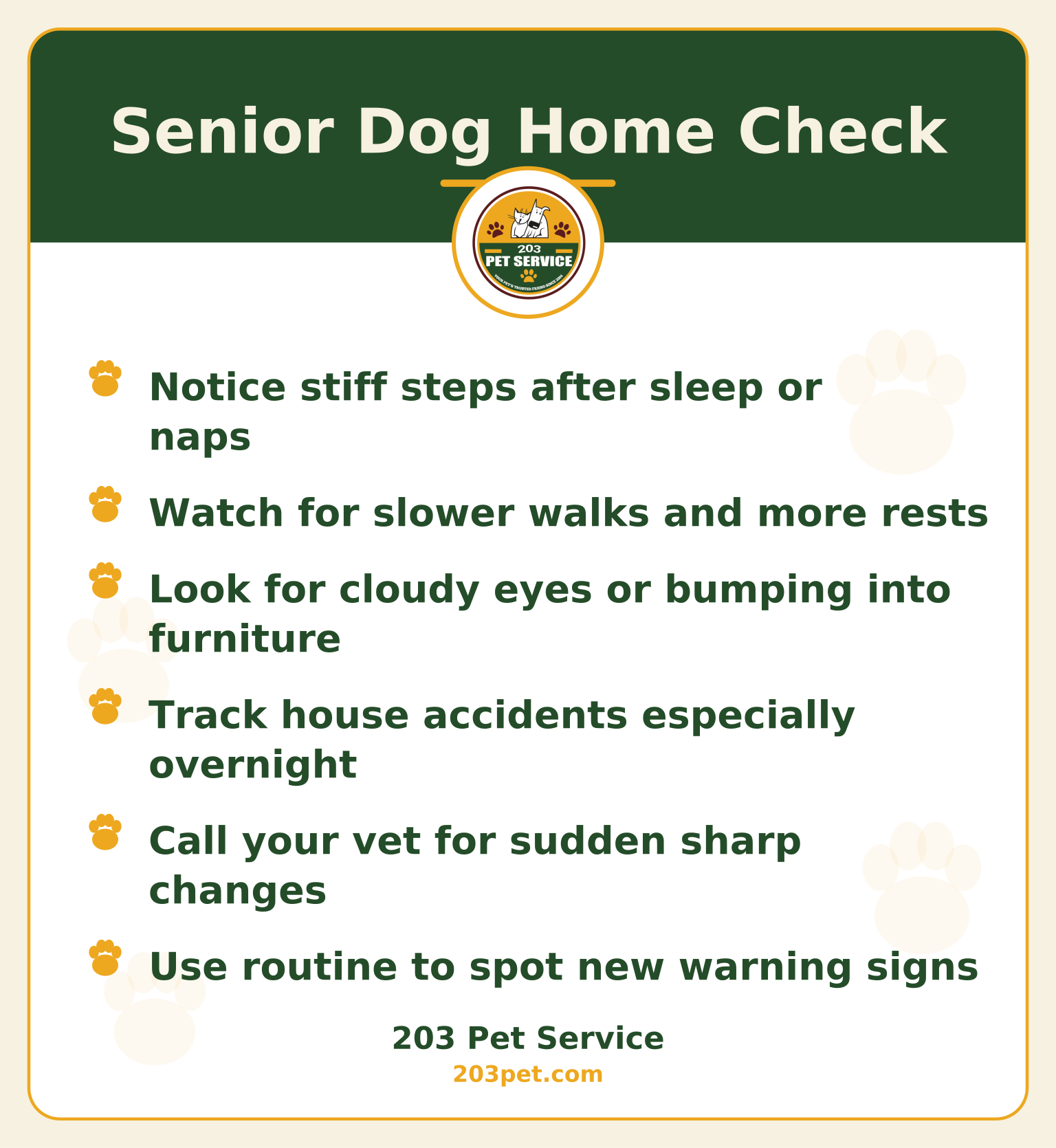
Senior dogs usually slow down in small, quiet ways first. You might notice stiff steps in the morning, more naps, or a little hesitation before jumping on the couch. None of that automatically means an emergency, but it does mean their routine needs to soften.
Most dogs enter their senior years around age 7 to 10, depending on size and breed. Larger dogs often age faster than smaller ones, which is something Merck Veterinary Manual points out when it talks about how different body types change over time.
Common signs of aging you might see at home
Some changes are easy to spot if you know what to look for. For many of our long-time clients in Westport and Easton, the first clues showed up around stairs and on cold mornings.
Watch for things like:
- Stiffness when your dog gets up, especially after sleep or long naps
- Slower walks, lagging behind, or stopping to rest more often
- Reluctance to jump on furniture or into the car
- Cloudy eyes or bumping into furniture in low light
- Hesitation on stairs, slick floors, or getting in and out of the house
- More accidents in the house, especially overnight
- Changes in appetite or thirst
- More barking, pacing, or seeming “lost” in familiar rooms
Many of these signs link to arthritis and joint pain. The American Kennel Club guide on dog arthritis explains how joint damage leads to stiffness, difficulty rising, and changes in gait, especially on hard surfaces.
When does a small change mean a vet visit?
Any sudden or sharp shift in your senior dog’s behavior deserves a call to your vet. A little slowing over months is one thing. Struggling to stand up over a day or two is something else entirely.
Call your vet if you see:
- Rapid changes in drinking or urination
- New or worsening limping
- Heavy panting at rest or trouble breathing
- Confusion, head tilting, or sudden staggering
- Refusal to eat for more than a day in an older dog
- Crying out when they move or when you touch certain areas
PetMD’s guide to senior dog care stresses regular checkups, blood work, and close monitoring of appetite, activity, and bathroom habits as dogs age, because many age-related conditions can be managed better if you catch them early according to PetMD’s senior dog care tips.
Why does routine matter so much for older dogs?
Routine gives senior dogs a sense of safety. When your dog knows what happens next, they relax. That alone can lower anxiety and stress.
Consistent daily habits also help you spot the early signs of trouble. When meals, walks, and bathroom trips happen at fairly predictable times, changes stand out. If your dog skips breakfast, struggles with the midday walk, or has an accident when they never do, you notice it right away.
At 203 Pet Service, our W-2 salaried employees keep simple notes on senior dogs during pet sitting visits and ongoing dog walking memberships. Small details like “took longer to get up from bed” or “slower on back stairs” tell a story over time. That is how we help many families in Southport catch subtle mobility changes before they turn into falls.
How can you build a calm daily routine for your older dog?
📺 The Science Behind Daily Dog Walking - 203 Pet Service
A calm routine for a senior dog balances movement, rest, bathroom breaks, and mental comfort. You do not need a complicated schedule. You just need a predictable rhythm that fits your dog’s health and your real life.
Think in chunks: morning, midday, evening, and bedtime. Then, inside each chunk, pick simple habits you can repeat most days, whether you are home in Southport or commuting through I-95 traffic.
Morning: gentle start, not a rush
Older dogs often need more time to “warm up” their joints. If your dog sleeps in your bedroom, give them a minute or two to stretch before asking them to head downstairs.
A sample morning for a senior dog might look like this:
- Slow, calm wake-up and a quick pet to let them know you are there
- Careful walk to the yard or short street walk for the first potty break
- Breakfast after they potty, with any morning medication as directed by your vet
- Fresh water, then a rest in a comfy, non-drafty spot
Many senior dogs do better with two or three smaller meals rather than one big one. PetMD notes that spreading meals and adjusting calories can support older dogs’ digestion and weight control as metabolism changes in their senior dog care guide.
Midday: movement, relief, and a check-in
By midday, most older dogs need another bathroom break and a chance to move stiff joints. They do not usually need long hikes. They just need a few short walks or yard trips spread across the day.
If you work in New York and your senior dog spends weekdays at home in Black Rock or downtown Bridgeport, a regular midday visit helps. A gentle walk, a drink, a snack if allowed, and a quick check of their comfort can make their whole day smoother.
The American Kennel Club explains that exercise needs shift with age and health, and older dogs often benefit from several short, low-impact walks rather than one long, intense outing according to their exercise guidelines.
Evening and bedtime: winding down and bathroom timing
Many senior dogs have a harder time overnight. Arthritis flares when they stay in one position too long. Bladders do not hold as well as they used to. So your evening routine matters.
An easy evening pattern might include:
- Dinner at the same general time each night
- Short, slow walk or yard time after dinner
- Quiet family time in the same room so they are not left alone
- Final potty break as close to bedtime as you can manage
- Settling them on a supportive bed where they have traction to stand up at night
If you notice accidents late at night, talk to your vet about timing of water and medications. UC Davis Veterinary Medicine notes that bathroom habit changes can point to kidney, endocrine, or urinary issues in older pets, and early workups help you manage them better in their animal health topics.
Keeping life predictable even when your schedule is not
Life in Fairfield County is busy. Trains run late. Meetings run long. Kids have practice and games. Your senior dog just knows that someone is late and their bladder is full.
If you know your days run long in places like Devon or Shelton, build in help before problems start. A steady walking membership with a local company that uses trained, W-2 employees gives your dog that midday relief even when your commute goes sideways. It also keeps their day predictable. Same basic routine. Same friendly faces.
At 203 Pet Service, we set ongoing schedules for senior-friendly dog walking and home visits so older dogs in Fairfield County get what they need on workdays, not just when things happen to line up.
How can you make walks and potty breaks easier on old joints?

Senior dogs still need to move. Short, kind movement keeps joints from locking up and helps their brains stay sharp. The trick is to adjust the way you walk, where you walk, and how often.
Think of your senior dog’s walks as joint therapy, not workouts. The goal is comfort and circulation, not steps on a watch.
Short, gentle outings and softer surfaces
For many older dogs in Fairfield, Stratford, and Westport, we shift from one long loop to several short potty walks during the week. Ten or fifteen minutes at an easy pace often feels better than 40 minutes of pushing through discomfort.
When you can, choose:
- Grass, dirt paths, or packed trails instead of long stretches of concrete
- Flat routes over steep hills or repeated big inclines
- Side streets over crowded sidewalks, so your dog can go at their own pace
The AKC notes that low-impact exercise like gentle walks helps maintain muscle tone and joint function in dogs with arthritis, as long as you stay under their pain threshold and avoid overdoing it in their arthritis guide.
Handling stairs, curbs, and slippery driveways
Stairs and slick surfaces are where many senior dogs get hurt. We see it all the time on icy winter days in Easton and older driveways in Black Rock.
To make these safer:
- Add non-slip runners on wood or tile stairs your dog uses often Use a harness with a handle for dogs who need a little lift Guide them slowly off curbs and over uneven sidewalks
- Keep nails trimmed so they can grip better on any surface
- In winter, clear ice and use pet-safe products near regular potty spots
If your dog suddenly struggles on stairs they used last week, that is a sign to call your vet. Sudden mobility changes can point to pain spikes, injuries, or neurological issues, which need professional eyes, not just a slower walk.
How a local dog walker can adjust pace and route for comfort
A good dog walker will not drag a senior dog around the block. They will read your dog on that day and adjust. Some days that might mean a shorter route. Other days it might mean a little extra sniffing time on the same street.
Our salaried employees at 203 Pet Service walk a lot of older dogs in neighborhoods around Fairfield Beach, Paradise Green, and downtown Bridgeport. On hot days, we stick to shady streets and trim the walk. On cold mornings, we keep moving but avoid salty sidewalks that sting tender paws.
We treat walking memberships for seniors as maintenance, not mileage. The focus is rhythm, comfort, and safe bathroom breaks, which you can see broken out on our pricing page.
What simple home comforts really help senior dogs relax?

You do not have to remodel your whole house to help your senior dog feel better. A few smart tweaks with beds, rugs, light, sound, and temperature go a long way.
Think less jumping, less slipping, less cold, and less confusion. Your older dog’s body has done a lot of miles for you. Now your house can do some work for them.
Bedding and floors that support stiff hips and backs
Senior dogs need supportive, non-slip resting spots. That means:
- Thick, orthopedic-style beds that keep elbows and hips off hard floors
- Beds with bolsters for dogs who like to lean or need neck support
- Non-slip rugs or runners in hallways and big open areas
- Secured mats under food and water bowls so they do not slide
The AKC notes that soft bedding can reduce pressure on joints and help dogs with arthritis rest more comfortably in their arthritis article. In homes with lots of hardwood or tile, we often suggest a “runway” of rugs so senior dogs can move from room to room without skating.
Light, sound, and temperature tweaks
Older dogs often lose some hearing and vision. That makes sudden sounds and dark hallways feel scary. You can ease this by adjusting the environment.
Simple ideas that help:
- Use night lights in hallways and near stairs so they are not walking into darkness
- Keep furniture layouts consistent so they are not bumping into surprises
- Lower TV volume a bit or pick calmer background sounds in the evening
- Give them a bed away from vents or drafts, but not isolated from the family
Changes in temperature tolerance are common as dogs age. PetMD notes that senior dogs can have trouble regulating body temperature, so comfortable, steady room temps and access to warm bedding matter more than they did when your dog was three years old in their senior care guide.
Keeping favorite comforts close by
Your senior dog should not have to climb stairs every time they want water or seek you out in a far room. Place their essentials where they actually live their day.
Good setups often include:
- Water bowls on each floor they use regularly
- At least one bed in the main family room and another in your bedroom if they sleep nearby
- Favorite toys and chew items in easy reach, not in deep baskets they have to dig through
- A short ramp or sturdy step if they are still allowed on the couch but cannot jump well
When we do in-home pet sitting for senior dogs, we always ask where the “day bed” and “night bed” are and keep everything in those zones. Less wandering, less risk of slipping, more time resting close to the people they love.
When do senior dogs need midday help while you are out?

Many families in Fairfield County start senior dog support when they feel guilty walking in the door at 7 p.m. to a dog who has been crossing their legs since noon. If you are wondering if it is time for midday help, you are already part way there.
There are a few clear signs that extra visits or walks are no longer a luxury, they are needed support.
Signs that extra visits or walks make sense
Ask yourself a few questions:
- Is your dog regularly alone more than 6 to 7 hours without a break?
- Have they started having accidents on long days when they never used to?
- Do they seem extra stiff when you get home at night?
- Do you feel rushed in the morning and late evening because you are trying to fit in everything at once?
If you are nodding your head, a regular midday visit can be a huge relief, both for you and for your dog. PetMD points out that senior dogs often need more frequent bathroom breaks and may develop urinary issues that make long holds uncomfortable or even painful in their aging dog tips.
How a regular visitor reduces stress and accidents
Senior dogs thrive on familiar faces. When the same person shows up at about the same time each weekday, many older dogs visibly relax by week two or three. They know relief is coming.
A steady walking membership or midday pet sitting visit helps your dog by:
- Shortening the time they have to hold their bladder or bowels
- Breaking up long stretches of lying in one position
- Providing a quick social check-in and mental stimulation
- Giving someone a chance to notice if they are not themselves that day
For you, it means fewer rushed lunches home from the office, fewer accidents to clean, and less worrying on Metro-North about whether your 13-year-old Lab in Wilton is crossing his paws.
What a careful, fully insured pet sitter should notice and report
Senior dogs need more than “food in, walk out, door locked.” They need eyes on their health. That is why it matters who walks your older dog. A trained, fully insured sitter or walker should watch for:
- New changes in appetite, thirst, or weight.
- New stiffness, limping, or trouble with stairs.
- New accidents in the house or changes in bathroom habits.
- Confusion, pacing, or restlessness, especially at night.
- Coughing, heavy panting, or low energy on walks.
- New lumps, sores, or signs of pain when touched.
Frequently Asked Questions

About This Topic
How often should my senior dog go out for potty breaks now?
Most senior dogs do better with more frequent, shorter potty breaks, every 3, 4 hours during the day instead of just morning and night. Their bladder control and mobility usually aren’t what they used to be. If you’re gone long hours, 203 Pet Service can stop by midday in Fairfield County to keep them comfortable and prevent accidents.
What’s a good daily routine for keeping my older dog comfortable?
Aim for the same wake-up, meals, walks, and bedtime every day. Keep walks slow and short, add an extra potty break, and give them a quiet, padded spot to nap away from drafts and stairs. If your schedule’s unpredictable, 203 Pet Service can provide consistent visits so your dog’s routine doesn’t get disrupted.
How can I make my home easier and safer for my senior dog?
Clear clutter so your dog has wide, steady walking paths and use non slip rugs on slick floors. Add a supportive bed in an easy-to-reach, quiet spot and consider ramps or stairs for couches or beds. A regular walker from 203 Pet Service can also flag new mobility issues they see around your home.
My senior dog is slowing down on walks, how much exercise is okay?
For most older dogs, several short, gentle walks are better than one long, intense outing. Let your dog set the pace, avoid big hills or stairs, and watch for heavy panting, limping, or lagging behind. 203 Pet Service offers slow, senior‑friendly walks in Eastern Fairfield County that match your dog’s comfort level.
What small changes in my senior dog should make me call the vet?
Call your vet if you spot new stumbling, difficulty with stairs, sudden accidents in the house, confusion, or big shifts in appetite, thirst, or sleep. These can be early signs of pain or illness. If 203 Pet Service visits your dog regularly, we’ll also let you know quickly when we notice new or concerning changes.
I’m at work all day, how can I keep my senior dog calm?
Set up a quiet room with soft bedding, water, and easy access to a potty area, then leave the TV or soft music on for company. Try to keep mornings and evenings predictable so your dog knows what to expect. In Eastern Fairfield County, 203 Pet Service can provide midday visits and gentle walks to break up long days alone.
About 203 Pet Service
What areas does 203 Pet Service cover in Fairfield County?
We provide professional dog walking, pet sitting, and training services across Eastern Fairfield County, Connecticut. We proudly serve families in Fairfield, Stratford, Westport, Easton, Southport, Black Rock, Bridgeport, Shelton, Devon, Trumbull, Weston, and Wilton. 203 Pet Service has cared for pets in Fairfield County since 2004, and every visit is handled by a trained, W-2 salaried employee who is background checked and fully insured.
Why does 203 Pet Service use salaried W-2 employees instead of independent contractors?
We believe salaried W-2 employees provide more reliable, accountable, and professional pet care. Unlike independent contractors, our salaried employees go through careful background checks, full training, and are fully insured. This employment structure means consistency, accountability, and peace of mind for Fairfield County pet families.
What services does 203 Pet Service offer?
We provide daily dog walking, pet sitting (overnight and vacation), cat care, backyard play sessions, litter box scooping, and puppy training classes. All services are done by our salaried W-2 employees who bring professional training and genuine care to every visit. Whether you need regular midday walks or full vacation care, we cover all 12 Fairfield County service towns.
Is 203 Pet Service insured?
Yes, we are fully insured, with liability and property coverage to protect both your pets and your home. As a real business that employs salaried W-2 people (not independent contractors), we carry all required insurance and workers' compensation coverage. Most of our team is certified in Pet CPR and First Aid, with the rest working toward it. This level of protection is one reason Fairfield County families trust us with their family members.

What Fairfield County Families Say About 203 Pet Service
Don't just take our word for it. Here's what real families in your community have shared about their experience with us:
"Jason and his team have been caring for our senior golden retriever for 5 years. When we lost him last month, they were incredibly supportive. These aren't just dog walkers - they become part of your family."
— Sarah M., Westport CT (Google Review)
"The consistency of having the same walker every day made such a difference for our anxious rescue. When she passed, they sent the kindest card. 22 years in business for a reason."
— Michael K., Fairfield CT (Google Review)
"W-2 employees, background checked, insured - they do things the right way. Our cats have been with them for 3 years and we wouldn't trust anyone else."
— Jennifer L., Stratford CT (Facebook Review)
Read more reviews: Google Reviews | Facebook Reviews | Yelp Reviews
About Jason Hofmann
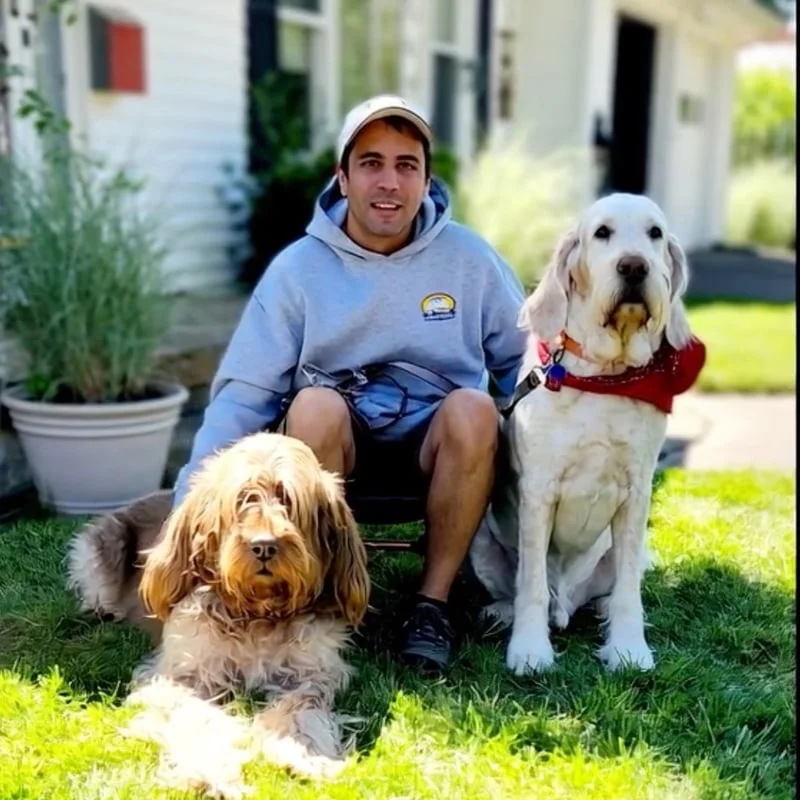
Jason Hofmann is the owner and Animal Behavior College (ABC) certified dog trainer at 203 Pet Service, with 29 years of professional pet care experience. He founded 203 Pet Service in 2004 and has led the company for 22 years, building a team of salaried W-2 employees dedicated to exceptional pet care. Prior to founding his company, Jason worked for 2 years as a pet store manager and then 5 years as a veterinary technician at Greenfield Animal Hospital in Fairfield. As an ABC certified trainer and passionate animal advocate with 29 years of hands-on experience, Jason brings unmatched expertise and genuine care to every pet interaction.
Jason is also a proud co-founder of The Honey On Duty Project, a 501(c)(3) nonprofit that brings healing and comfort to communities in need.
Learn More About Our TeamFeatured in the Media:
Why 29 Years of Professional Experience Matters
Growing up with pets or currently owning a dog doesn't make someone a pet care professional - just like using a toilet every day doesn't make you a qualified plumber.
Jason's 29 years of professional pet care experience means:
- •5 years working daily as a veterinary technician at a professional animal hospital
- •2 years managing a pet store and advising pet owners
- •22 years owning and operating a professional pet care business
- •Formal Animal Behavior College (ABC) certification in dog training
- •Thousands of hours of hands-on experience with diverse animal behaviors, medical situations, and emergency scenarios
This isn't hobby experience - it's a career built on professional training, veterinary medical knowledge, and decades of real-world problem-solving with animals.
Ready to Experience Professional Pet Care?
Schedule a meet and greet today and see the 203 Pet Service difference for yourself.