
Separation Anxiety When the House Empties for School
Quick answer: When the house suddenly goes quiet for the school year, many dogs feel real separation anxiety, not just boredom. It can show up as barking, chewing, pacing, or accidents. You can make things easier by easing into the new routine, giving calm goodbyes, and using steady daytime help like a trusted dog walker so your dog is not alone for long stretches.
Separation anxiety when the house empties for school shows up as panic, not simple boredom. Your dog is not just annoyed that you left. An anxious dog feels real fear when you and the kids walk out the door, and a steady routine with a midday walk can take that fear down several notches.
In our years walking dogs in Fairfield, Stratford, Westport, Easton, Southport, Black Rock, and Bridgeport, we see the same pattern every September. Summer is loud and busy. Then school starts. The house goes quiet. Many dogs struggle with that sudden change, especially if they were already a little clingy.
This guide breaks separation anxiety into plain language. You will see how to tell true anxiety from boredom, what back-to-school changes trigger it, and how daily structure and a calm, reliable dog walking membership help your dog stay steady while everyone is gone.
What is separation anxiety in dogs, really?

Separation anxiety is panic when a dog is left alone, not mild worry. A dog with true separation anxiety feels terrified when their person leaves, and that fear drives the barking, chewing, and accidents.
The veterinary behavior guide from VCA Animal Hospitals describes separation anxiety as distress tied to being away from attachment figures. In simple terms, your dog has attached their sense of safety to you. When you are gone, they feel unsafe.
Boredom looks very different. A bored dog might dig in the yard or chew a shoe, but they settle if you give them a bone or a puzzle toy. An anxious dog often will not eat when alone. They might drool, pant, pace, or try to break out of a crate or door.
The key differences between boredom and true anxiety
Think about what happens right before you leave and right after you get home.
- Bored dog: Calm when you leave, maybe watches you go. During the day they nap, bark a bit at noises, chew some things. When you get home they are happy, but not wild. If you increase walks and enrichment, the trouble fades.
- Anxious dog: Starts to panic when you pick up keys or put on shoes. Might block the door, whine, or shake. While you are gone they may howl nonstop, have accidents even if house trained, or scratch doors until paws bleed. When you get home they act like they just survived a disaster.
The ASPCA notes in their common behavior guide that dogs with separation anxiety show distress tied to departures and not just general misbehavior or poor training, and that they often shadow their person at home too.
So if your dog trashes the trash once a week, that might be boredom. If your dog shakes when you grab your bag and claws the crate door until their gums bleed, that is something else.
Why this difference matters for your plan
Activity helps every dog. But a bored dog mostly needs more to do, while an anxious dog needs a full routine that makes alone time feel predictable and safe.
That routine often includes:
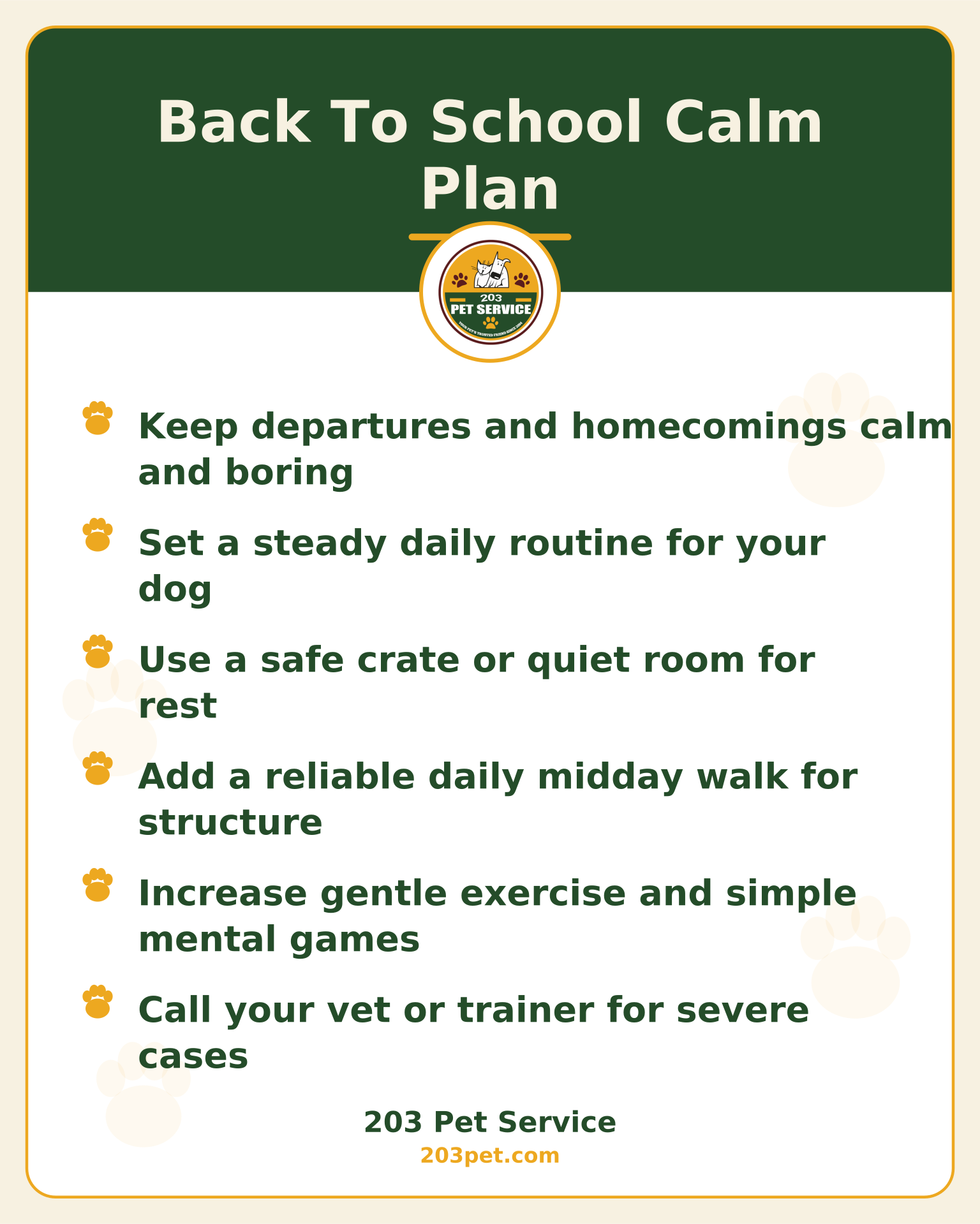
- Calm, boring departures and arrivals
- A solid exercise plan, like a reliable daily dog walking membership
- Structured rest, often with a crate or safe room
- Slow, step-by-step training around alone time
- Help from a vet or trainer for more severe cases
In other words, you are not just entertaining your dog. You are teaching their nervous system that, yes, the house goes quiet, but it always follows the same safe pattern.
Why does September suddenly trigger my dog's separation anxiety?
📺 The Science Behind Daily Dog Walking - 203 Pet Service
September triggers separation anxiety because your dog's whole world changes in a single week. Their routine, their noise level, even daylight timing around walks all shift at once.
In Fairfield County homes, summer often means kids home, door openings every hour, backyard play, and constant company. Then school starts. Suddenly your dog goes from full-time family to several long, quiet stretches alone. To a social, attached dog, that is a big shock.
From full house to empty house overnight
Think about a typical day in Fairfield or Westport in July. The kids bounce in and out. Someone tosses a ball in the yard. You might work from home a couple of days. Your dog rarely spends six hours in a row alone, even if you do not notice that pattern.
Then the first day of school hits. Everyone leaves by 7:30 a.m. The house stays silent until late afternoon. You might grab a late train from Southport or Black Rock. Suddenly you walk in at 6:30 p.m., and your dog has been alone for ten hours with one quick backyard potty break.
That is a hard flip for any dog, even one who did fine last spring.
Routine changes that quietly add stress
It is usually not just school starting. A few other shifts often pile on:
- Walk timing moves: Summer walks might be spread out. In September, morning gets rushed and evenings get darker earlier.
- Less exercise: Kids are tired from school and activities, so there is less fetch and fewer park trips.
- More rushed energy: Mornings feel frantic. Dogs pick up that tension and start each day on edge.
- New sounds: School buses, different neighbors' schedules, leaf blowers starting up again.
According to the PetMD guide to dog walking, regular walks do more than burn energy. They also give dogs mental stimulation and a predictable pattern. When that pattern disappears, many dogs get more keyed up and less able to rest.
Back-to-school in different towns, same dog feelings
We see the same story in a Fairfield beach neighborhood that we do near Paradise Green in Stratford or around downtown Bridgeport. Summer is noisy and social, then school starts and your dog suddenly hears every delivery truck and hallway footstep.
Some families in Shelton, Devon, Trumbull, Weston, or Wilton see the same thing. The details change, but your dog does not know what "school year" means. They only know "my people vanished for a long time, and I feel scared."
Once you see how big that change is from your dog's point of view, it makes more sense why a steady dog walking membership and a calm routine are not a luxury. They are part of keeping your dog emotionally steady while your calendar spins around them.
What signs of separation anxiety should I watch for?

You should watch for patterns that happen only when your dog is alone or knows you are about to leave. These signs show up again and again around departures and long alone times.
The VCA behavior overview lists common signs like howling, destructive chewing, house soiling, attempts to escape, and heavy salivation when alone in their guidance from VCA Animal Hospitals. In real life around Fairfield County, it looks like this:
Clingy behavior before you leave
- Shadowing you from room to room, especially on school mornings
- Whining or blocking the door when you pick up keys or backpacks
- Shaking, panting, or yawning a lot as you get ready to go
- Refusing food if they think you might leave soon
Dogs learn your routine faster than you think. If your dog starts reacting the second you grab the car keys or put on work shoes, they are not just being "dramatic". They are predicting that long lonely stretch.
Behavior while you are gone
Sometimes you see clear signs when you walk back in the door. Other times a neighbor in Easton or Southport is the one who tips you off that something is wrong.
- Nonstop or frequent barking, howling, or whining for long chunks of the day
- Chewed door frames, scratched doors, or damaged crates that look like "escape attempts"
- Accidents near doors, even in a fully house trained dog
- Soaked bedding from drooling or wet fur from panting
- Broken nails, scraped paws, or chipped teeth from trying to get out
Neighbors in apartment buildings in Bridgeport or higher density parts of Black Rock usually notice the barking first. In single family homes in Westport or Fairfield, you often see the door damage or puddles by the front door.
Over the top greetings when you get home
Happy greetings are normal. Panic greetings are different. Watch for:
- Jumping, clawing, or mouthing hard as you walk in
- Inability to settle for a long time after you return
- Urinating with excitement or fear when you step inside
- Refusing to let you out of their sight all evening
Some of this can also show up if your dog is in pain. A health issue like an ear infection can raise baseline stress and make separation harder. If your dog suddenly starts acting off, a vet check is smart. PetMD points out that ear infections often show up as head shaking, ear scratching, and sensitivity around the head and neck in their guide on ear infections. Pain and anxiety often blend.
When to loop in a veterinarian or trainer
If your dog hurts themself trying to escape, has frequent diarrhea from stress, or cannot eat when left, you should talk with your veterinarian. The UC Davis veterinary hospital notes in their behavior topics that behavior problems often sit on top of medical issues, and that vets and behavior pros usually work together on these cases.
We handle the day-to-day routine and walking. Your vet handles the medical side. In severe cases, your vet might recommend medication along with training and a structured walking schedule.
What practical steps really help a dog with separation anxiety?
The steps that help most are calm goodbyes, a tired body, a busy brain, and a broken up day. You want your dog to start the alone stretch in a settled state, not already revved up.
Behavior experts recommend a mix of management and training for separation issues, not just one thing, as noted in ASPCA guidance on behavior problems. In plain terms, you adjust the environment and the schedule while you slowly teach your dog that alone time is safe.
Keep departures calm and boring
Big emotional goodbyes often make things worse. Your dog reads your concern as proof that something scary is about to happen.
Try this instead on school mornings in Fairfield or Bridgeport:
- Ten minutes before you leave, stop tossing the ball and petting. Let the energy come down.
- Put your dog in their crate or safe room with a long lasting chew right before you walk out.
- Leave without fanfare. No high voice speeches about "mommy will miss you so much".
- When you get home, greet them kindly but stay low key for the first minute or two.
If your dog uses a crate, make sure it feels like a den, not a punishment. The AKC suggests slow, positive crate training, starting with short happy sessions and building up length over time in their crate training guide. That same approach helps anxious adult dogs too.
Start the day with real exercise
A dog who has stretched their legs, sniffed, and moved their body will settle much more easily once the house goes quiet.
How much does your dog need? It depends on age and breed. The American Kennel Club notes that many active breeds need at least an hour or more of exercise a day, while some toy or giant breeds need less intense but still regular activity, according to the AKC's exercise guide.
Most families in Westport or Easton do not have time for a long walk in the morning and another solid walk in the afternoon on school days. That is where a consistent midday dog walking membership fits the puzzle. You give your dog a shorter, calm morning outing, then our salaried W-2 employees handle the middle of the day.
Use food puzzles and safe chews wisely
Food puzzles, frozen Kongs, and snuffle mats help many anxious dogs. They give your dog something positive to focus on as you leave, and licking and sniffing naturally help dogs relax.
Stick to dog safe foods only. The AKC lists many human foods that are safe in small amounts, like plain cooked pumpkin or carrots, and others that can seriously harm dogs, like grapes, onions, and xylitol sweeteners, in their guide on human foods for dogs. If you are stuffing a Kong before rushing kids to school in Southport, you do not want to guess.
Break long alone stretches into shorter pieces
Most dogs handle 3 to 4 hours alone better than 7 to 9 hours. That is simple. A long work and school day in Fairfield County easily turns into a 9 or 10 hour stretch.
This is where a weekday walking membership really matters. A steady walker comes in around midday, gives your dog a real break, and resets their brain and body for the second half of the day. We will talk more about how that specifically lowers anxiety in the next section.
Plan for training, not quick fixes
Some dogs bounce back after you tighten up the schedule. Others need a careful training plan where you slowly expose them to being alone. That might mean:
- Teaching a "go to bed" cue to relax on a mat
- Practicing mini departures for a minute, then five minutes, then ten
- Using a camera so you can watch how they handle different lengths
For moderate to severe cases, working with a professional trainer helps a lot. A trainer can write a step-by-step plan built around your real school and work routine, not a fantasy schedule that no one can follow.
Any plan that reduces worry and gives your dog some company in the middle of the day will help. The structure itself is calming.
How does a midday walk actually lower my dog's stress?

A steady midday walk breaks a long lonely day into two shorter, easier pieces. Your dog gets a bathroom break, movement, and human contact, which all help reset their stress level.
Think about your own workday. That mid-shift coffee or quick walk around the block changes how the whole afternoon feels. Dogs are the same. According to PetMD, regular walks provide mental stimulation, social contact, and physical exercise that all support behavior and emotional balance, as outlined in their dog walking guide.
Shorter alone windows feel safer
Many anxious dogs can hold it together for a few hours. The breakdown happens after the halfway mark, when they are tired, need a bathroom break, and feel like you might never come back.
If your dog is alone from 8 a.m. to 6 p.m., that is ten hours. If a walker comes around noon for a real walk, the day becomes two blocks of about 4 hours each.
In our experience with dogs in Fairfield and Bridgeport, that shift alone can completely change behavior. The dog does not reach the same spike of panic, because relief arrives earlier each time.
A walk is more than a quick potty break
A real walk, not just a fast yard break, gives your dog:
- Physical movement that burns off nervous energy
- Sniffing time, which helps lower arousal and gives mental enrichment
- Safe exposure to the outside world, like buses, kids, and neighbors
- One-on-one attention from a human they know and trust
VCA points out that safe walking gear and awareness of outdoor risks matter for dog safety on walks, especially around traffic and hot or icy surfaces, in their dog walking safety tips. Our W-2 employees are trained to watch for those details in local neighborhoods, whether they are walking near busy streets in Stratford or quieter roads in Easton.
Why a membership model matters more than "as needed"
An anxious dog needs predictability. If a walker comes one random Tuesday, then not again for two weeks, your dog cannot build a pattern.
A weekday walking membership sets a clear rhythm for your dog in Fairfield, Westport, Southport, and beyond. Monday through Friday, sometime late morning or early afternoon, their walker appears. Same door, same leash, same routine. Day after day.
That steady pattern is what actually tells your dog's body, "I am not abandoned. People always come back."
Frequently Asked Questions
About This Topic
My dog freaks out when the kids leave for school, now what?
Start by shrinking the big change into smaller steps. A week before school, practice short “leave and return” sessions at the same time each morning, keeping goodbyes calm and low-key. Add a predictable mid-day break so your dog isn’t alone for long. In Fairfield County, 203 Pet Service can provide a consistent daily dog walker to break up that long quiet stretch.
How do I tell if it’s real separation anxiety or just boredom?
Watch what happens right before you leave and right after you get home. True separation anxiety often looks like pacing, drooling, whining, or trying to escape, and your dog may not even touch treats when you’re gone. Bored dogs calm down with chew toys or puzzles. If you’re unsure, 203 Pet Service can help observe patterns during dog walks and visits.
How can I prepare my dog for the back-to-school routine change?
About two weeks before school, start shifting your schedule to match school-day wakeups, walks, and departures. Give your dog a morning walk, a calm goodbye, and a food puzzle right as you leave. Try to keep departure times consistent. If you’re in Fairfield, Westport, or nearby, 203 Pet Service can add a standing mid-day walk to keep that routine steady.
How long is too long to leave my dog alone on school days?
Many dogs start to struggle after about four to six hours alone, especially when routines suddenly change. Puppies, seniors, and anxious dogs usually need a potty break and some company sooner than that. If your work and school schedules mean 7, 9 hours away, consider a reliable midday dog walker. 203 Pet Service offers recurring walks across Fairfield County to break up those long days.
What can I do in the morning so my dog stays calmer all day?
Aim for a good mix of exercise and mental work before you leave. A solid walk, a few minutes of training, and a stuffed Kong or lick mat at the door can help your dog settle once the house is quiet. Keep departures boring, no big hugs or high-pitched goodbyes. If you need extra help, 203 Pet Service can handle that structured morning or midday walk.
Can a regular dog walker really help with my dog’s separation anxiety?
A consistent dog walker can make a big difference, especially during back-to-school transitions. Knowing that someone always shows up around the same time each day breaks up the loneliness and adds predictable structure. Over time, that routine can lower your dog’s overall stress. 203 Pet Service offers scheduled walking memberships in Fairfield, Stratford, Westport, and nearby towns to give anxious dogs that steady daytime support.
About 203 Pet Service
What areas does 203 Pet Service cover in Fairfield County?
We provide professional dog walking, pet sitting, and training services across Eastern Fairfield County, Connecticut. We proudly serve families in Fairfield, Stratford, Westport, Easton, Southport, Black Rock, Bridgeport, Shelton, Devon, Trumbull, Weston, and Wilton. 203 Pet Service has cared for pets in Fairfield County since 2004, and every visit is handled by a trained, W-2 salaried employee who is background checked and fully insured.
Why does 203 Pet Service use salaried W-2 employees instead of independent contractors?
We believe salaried W-2 employees provide more reliable, accountable, and professional pet care. Unlike independent contractors, our salaried employees go through careful background checks, full training, and are fully insured. This employment structure means consistency, accountability, and peace of mind for Fairfield County pet families.
Is 203 Pet Service insured?
Yes, we are fully insured, with liability and property coverage to protect both your pets and your home. As a real business that employs salaried W-2 people (not independent contractors), we carry all required insurance and workers' compensation coverage. Most of our team is certified in Pet CPR and First Aid, with the rest working toward it. This level of protection is one reason Fairfield County families trust us with their family members.
What qualifications do 203 Pet Service employees have?
Every member of our salaried W-2 team goes through careful background checks, professional pet care training, and ongoing education in animal behavior and safety. Owner Jason Hofmann personally trains each employee, drawing on 29 years as a veterinary technician, pet store manager, and ABC-certified dog trainer. We do not hire hobby pet sitters. We employ career pet care professionals.