


Spring Tick, Flea & Allergy Safety for Fairfield County Pets
Quick answer: To keep Fairfield County dogs and cats safe in spring, use vet recommended flea and tick prevention, wipe or wash them after walks, and check their skin daily for bugs or hot spots. Watch for signs of allergies like itchy skin, red ears, licking paws, or goopy eyes, and call your vet or 203 Pet Service if you notice changes that do not clear up fast.
Spring Tick, Flea & Allergy Safety for Fairfield County Pets
Spring in Eastern Fairfield County is beautiful, but it is rough on pet skin and coats. If you live in Fairfield, Stratford, Westport, Easton, Southport, Black Rock, or Bridgeport, you see it every year. Muddy trails, longer walks, and suddenly your dog is scratching or your cat is licking one spot over and over.
Spring tick, flea, and allergy safety for pets is really about habits. If you use the right prevention, keep a simple cleaning routine, and watch your dog or cat closely, you can enjoy the nice weather without constant vet visits.
We have walked and cared for pets in this area since 2004. So we see the same patterns every March and April. Let’s walk through what happens locally, what to watch for, and how 203 Pet Service can help you stay ahead of it.
Why is spring in Eastern Fairfield County so tough on pet skin and coats?

Spring is hard on dogs and cats here because the weather swings fast, and that wakes up parasites and pollen at the same time. One week your dog is walking on frozen ground. The next week the yard in Fairfield is soft, damp, and full of new growth and bugs.
Ticks and fleas love that mix of moisture and warmth. The ASPCA explains that ticks and fleas become active as temperatures rise, and they often show up before you feel like it is really “spring.” So by the time you notice more scratching, they have already been busy.
In Eastern Fairfield County, we also have plenty of wooded edges and low brush. Think about the borders of yards in Black Rock, the trails off the Merritt in Easton, or the tucked away paths near the water in Southport. Those edges are where ticks wait for passing pets and people.
On top of that, trees, grasses, and weeds start to release pollen as soon as temperatures bump up. Many dogs and cats are sensitive to tree and grass pollen, which can trigger itchy skin, red eyes, and ear problems. UC Davis notes that environmental allergens like pollen and mold are common triggers for skin disease in dogs and cats, especially in warm, damp seasons like spring in New England.
So what does that mean for you and your pet in Fairfield County? You see:
- More scratching and licking, especially paws and belly
- Red or flaky skin that seemed fine in winter
- More ticks found after simple walks around the block
- Fleas showing up on indoor cats that never “go outside” much
We see this with our regular dog walking membership clients in Fairfield and Stratford every year. The dogs that do best are the ones whose owners treat spring like a real season with its own plan, not just “nicer weather.”
Where do ticks hide on local Fairfield County walks and yards?
📺 Winter Pet Safety Tips - 203 Pet Service
Ticks usually wait in low grass, leaf litter, and brush, not in the middle of a clean sidewalk. In plain terms, they hang out exactly where your dog likes to sniff.
In Fairfield, that might be the shady edge of Lake Mohegan trails or the leaf piles near your fence line. In Stratford, it is the brushy areas near Roosevelt Forest and even the strip of tall grass next to a parking lot. In Westport and Southport, we see ticks picked up along stone walls, hedges, and marsh edges. In Bridgeport and Black Rock, many dogs get ticks right in their own backyards if there is a brushy border or overgrown corner.
VCA Animal Hospitals reminds owners to keep dogs on a leash and under control on walks, both for safety around roads and to prevent wandering into heavy brush where parasites are common. That one simple habit, keeping a steady, guided walk, cuts down on how many ticks jump on your dog in the first place.
Simple tick safety habits for every walk
You do not need a full hazmat suit to walk your dog in spring. You just need a basic routine.
- Use your vet’s preferred tick prevention. A good flea and tick product is your first line. The ASPCA covers different types like topical treatments, oral meds, and collars, and reminds owners to always follow label directions and vet guidance.
- Stay in the open when you can. Choose the clearer side of a path. Skip the “shortcut” through the brush.
- Keep fur trimmed around paws and belly. You do not need a shave, but less matting makes it easier to see and feel ticks.
- Do a quick tick check after walks. Focus on ears, neck, collar area, under the front legs, between toes, and along the tail.
- Wash your hands after removing any tick. Do not crush ticks with bare fingers.
How our walkers handle tick checks on visits
Our salaried W-2 dog walkers in Fairfield, Stratford, Westport, Easton, Southport, Black Rock, and Bridgeport build a simple tick scan into the end of each visit. It is not a full medical exam, but it catches a lot.
After a membership walk, we take a few extra seconds while we towel off muddy paws. We feel along the ears and collar line, look at the paws and between toes, and scan any favorite “tick spots” your dog has had in the past. If we see or feel something odd, we let you know right away, and we follow your instructions on what to do if we find an attached tick.
Because the same salaried employees walk your dog week after week, they know what “normal” looks like for your pet. When something changes in spring, we spot it fast.
How do fleas get into my Fairfield County home in spring?

Fleas get into your home by hitching a ride on a warm body, usually your dog, your cat, or sometimes you. They do not care if you live in a condo in Bridgeport or a house with a big yard in Easton. If a flea can grab onto fur or clothing, it will.
The ASPCA notes that adult fleas live on animals, while eggs, larvae, and pupae live in the environment, like your carpet, bedding, and yard soil ASPCA on flea life cycle. That is why you can feel like you “got rid of them,” and then see more a week later. You did not, they were just waiting to hatch.
In Fairfield County, we often see the first spring flea issues in homes with:
- Outdoor cats that nap under decks or in leaf piles
- Dogs who visit dog parks and then share couches and beds
- Multiple pets, where one untreated pet re-infects the others
Signs your dog or cat may have fleas
Some pets react strongly to even a couple of flea bites. Others seem fine while a whole colony grows. Common signs include:
- Scratching or chewing at the base of the tail, belly, or inner thighs
- Small black specks (flea dirt) on the skin or bedding
- Red bumps or scabs, especially on the back half of the body
- Restless sleep and frequent jumping or twitching
Cats can be trickier. Cornell Feline Health Center points out that cats often groom away adult fleas before you ever see them, and you only notice hair loss, scabs, or skin infection later.
Why routine walking and pet sitting helps catch fleas early
When you have regular visits set up, problems rarely sneak up on you. Our walkers and sitters see your dog or cat on a normal day, not just when something is “wrong.” So when spring fleas start to show, we notice changes like:
- More scratching on walks than usual
- New scabs or thinning fur on the back or tail
- Little specks on a light colored blanket after a nap
During in-home pet sitting, we handle litter boxes, bedding, and favorite sleep spots. That gives us a clear picture of shedding, dander, and any flea dirt showing up. If we see anything that points to fleas, we send you notes and photos, and we follow your directions about vet visits or treatment.
Regular walks and sits also keep your pet on their prevention schedule. With a steady monthly plan, it is easier to stick to medications and check-ups instead of scrambling when you see a problem.
What spring allergy symptoms should I watch for in my dog or cat?
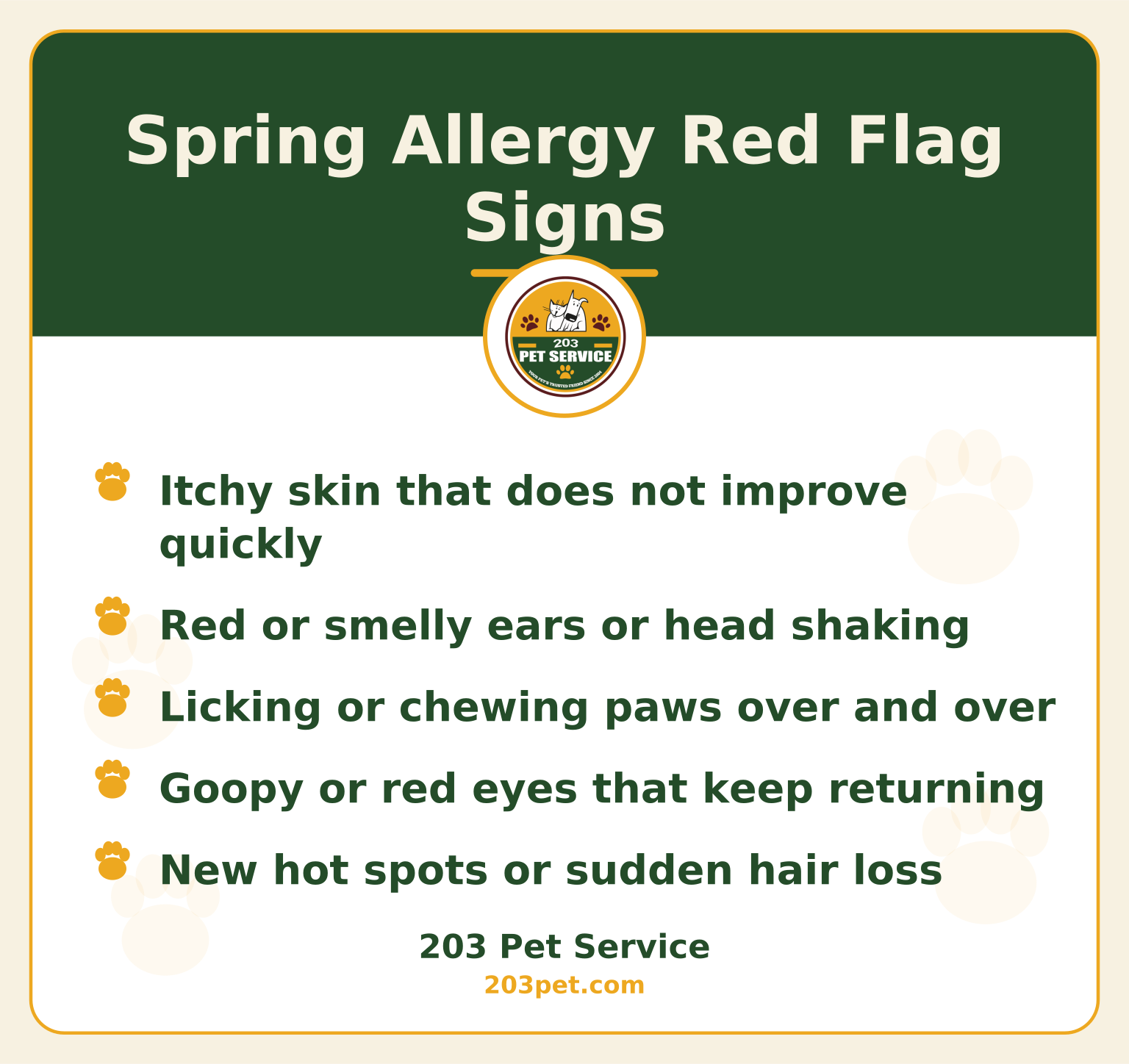
Common spring allergy signs in pets include itchy paws, licking, ear scratching, red skin, and watery eyes. Some dogs and cats also get recurring ear infections or hot spots that flare up right as tree pollen rises.
UC Davis notes that dogs with environmental allergies often show itchiness on paws, face, ears, and belly, and that symptoms can be seasonal, especially in spring and summer when tree and grass pollen is high UC Davis on atopy. Cats can show more subtle signs, like over grooming one spot until it is bald or scabby.
How pollen in Fairfield County affects daily walks
Think about a typical dog walk in Fairfield in April. The dog sniffs every patch of grass, pushes through some low bushes, then comes home and lies on your couch. All that pollen clings to fur and paws, and then it spreads to soft surfaces inside.
Same thing in Stratford by the river, or in Westport near grassy playing fields. The walk itself is healthy and needed. The problem starts when pollen sits on the skin for hours.
Over time, that can lead to:
- Red, stained paws from licking and chewing
- Greasy, smelly skin in certain areas
- Frequent head shaking and ear scratching
- Mild coughing or sneezing after outdoor time
Our walkers in Bridgeport and Black Rock often wipe paws and bellies for allergy prone dogs right at the door. That small step after every walk keeps pollen exposure down and makes your vet’s allergy plan work better.
When should you call your vet about spring allergies?
Call your vet if you see any of these:
- Constant licking or scratching that keeps your pet up at night
- Open sores, raw hot spots, or a bad skin smell
- Red, swollen ears or discharge from the ears
- Any trouble breathing, wheezing, or severe swelling
Severe reactions need quick care. The AKC first aid guide for dogs stresses that symptoms like trouble breathing, collapse, or sudden swelling around the face are emergencies that require immediate veterinary help.
In true emergencies while a pet is in our care, our salaried employee on site first calls Robyn, our office manager. Robyn then calls you, and your walker or sitter stays with your pet until you and your vet give further instructions. For serious situations we favor MedVet Norwalk for emergency care, and we also know local practices like VCA Shoreline Animal Hospital in Shelton and Greenfield Animal Hospital in Fairfield very well.
For milder allergy signs, your vet might suggest allergy testing, medicated shampoos, prescription diets, or medications to calm the itch. Our job during pet sitting and walks is to follow those plans exactly, log what we see, and let you know if anything gets worse.
What cleaning routines really help with ticks, fleas, and pollen inside?

The best indoor routine is simple and consistent. Wipe your pet when they come inside, wash the things they sleep on, and vacuum the floors they use the most. You do not need fancy sprays if your daily habits are solid.
Easy wipe down steps after walks or yard time
For allergy prone dogs and outdoor cats, set up a small “landing zone” near your main door in Fairfield, Stratford, or any town you live in. Keep this ready:
- A stack of clean, soft towels
- Pet safe wipes, or a bowl of water with a bit of mild pet shampoo if your vet allows
- A small container for used cloths
Each time your pet comes in from the yard or a walk, quickly:
- Wipe each paw, including between toes
- Lightly wipe the belly, chest, and around the muzzle
- Do a quick scan for any attached ticks
Regular skin and coat care also matters. The Merck Veterinary Manual notes that routine grooming helps owners spot early signs of skin disease and parasites. That is one reason our team pays close attention when we handle leashes, collars, and coats during visits.
Simple laundry and vacuum habits that actually work
Spring can feel like an endless cycle of mud and hair. Aim for these habits:
- Wash pet bedding weekly. Use hot water if the fabric allows, and a mild, scent free detergent.
- Vacuum high traffic areas 2 to 3 times a week. Focus on rugs, upholstery, and under furniture where pets nap.
- Empty the vacuum canister or bag promptly. You do not want flea eggs hatching in a warm vacuum.
- Wash throw blankets often. Especially couch blankets your dog or cat uses daily.
When you travel and we provide in-home pet sitting or cat care, we can keep those routines going. We already handle litter boxes, food and water, and light cleanup. Adding a mid week bedding wash or quick vacuuming of pet zones can be part of your care plan, so your home does not “fall behind” right when pollen and flea season hits.
How our sitters respect your allergy and cleaning plan
Some homes in Fairfield, Westport, or Bridgeport have very specific cleaning rules because of family allergies. Maybe you have a child with asthma, or you have a dog with a list of triggers from your vet at Greenfield Animal Hospital.
Because our pet sitters are W-2 employees, not contractors, we can train them deeply on your specific instructions. We log your cleaning and allergy plan in our system, and we follow it the same way every visit. That might mean wiping paws a certain way, using only your approved shampoo, or keeping pets out of certain bedrooms.
It might seem like a small thing, but those details are how you keep both people and pets breathing easier in spring.
How does 203 Pet Service watch for skin and coat changes during visits?

We help by putting trained eyes and hands on your pet regularly. Our walkers and sitters look for early signs of ticks, fleas, and allergies, then tell you what they see so you can act before it becomes a bigger problem.
What our walkers notice on spring dog walks
On a daily dog walking membership in Fairfield, Stratford, or Bridgeport, your walker sees your dog move, scratch, and interact with the outside world. Over time, they notice patterns.
They pick up on changes like:
- A dog who used to trot happily, now stopping to scratch every few minutes
- New head shaking after rolling in the grass
- Redness in the armpits or between toes while drying off
- Flinching when a certain spot is touched
VCA dog walking safety tips also stress the value of proper equipment and control on walks. Our walkers use well fitting collars or harnesses you provide, and they pay attention to rubbing or chafing that can make itchy spring skin worse.
Notes, photos, and patterns you can share with your vet
Every visit leaves a record. After each walk or pet sitting visit, we send clear notes and often photos. If your dog in Southport has a new red patch on their belly, you will see it. If your cat in Black Rock has started over grooming a spot on their leg, we document that too.
This does two things for you:
- It gives you peace of mind when you are not home.
- It gives your vet a timeline if you need to book an appointment.
PetMD’s guide on what to look for in a sitter points out that good communication, observation skills, and the ability to notice changes in behavior or appearance are key qualities of a reliable pet sitter PetMD on pet sitters. Because we hire and train W-2 employees, we can build those skills in, not just hope a random gig worker has them.
Frequently Asked Questions

About This Topic
How early in spring should I start flea and tick prevention?
In Fairfield County, you’ll want to start flea and tick prevention as soon as temps stay above freezing, often late February or early March. Parasites here wake up before it “feels” like spring. Ask your vet which prescription product fits your pet. If 203 Pet Service walks your dog, let us know what you’re using so we can help monitor their skin.
My dog’s scratching like crazy this spring, is it allergies or fleas?
It could be either, and sometimes it’s both. Check for tiny black specks (flea dirt), live bugs, or scabs along the back and tail; allergies usually show up as red skin, licking paws, goopy eyes, or ear redness. Call your vet if it doesn’t improve in a few days. 203 Pet Service can flag new skin issues we notice on walks or visits.
What should I do after muddy spring walks to keep my dog safe?
After spring walks in Fairfield County, do a quick wipe-down with a damp cloth or pet wipes, focusing on paws, belly, and legs. This helps remove mud, pollen, and any ticks crawling but not attached yet. Check between toes and under the collar. If you use 203 Pet Service, we can towel off and do a quick tick check after visits.
How do I check my dog or cat for ticks at home?
Run your fingers slowly through their coat, feeling for tiny bumps, especially around ears, neck, armpits, groin, and along the tail. Part the fur to look at the skin, since some ticks are very small in spring. Do this daily if you walk near woods or tall grass. If you’re unsure what you’re seeing, snap a photo and ask your vet.
Can indoor cats in Fairfield County still get fleas or spring allergies?
Yes, indoor cats can still get both. Fleas often hitch a ride in on people, dogs, or shoes, and pollen comes in through open windows and on clothing. Watch for extra licking, scratching, or red, watery eyes. Ask your vet about safe preventives for indoor cats, and 203 Pet Service can monitor behavior changes during drop-in visits.
What signs mean my pet’s spring itching needs a vet visit soon?
Call your vet if your dog or cat is chewing one spot raw, has red or smelly ears, bald patches, open sores, or sticky discharge from eyes or skin. These can turn into infections quickly in damp spring weather. Also go in if antihistamines or bathing don’t help within a few days. 203 Pet Service can update you if we see things getting worse.
How can 203 Pet Service help keep my pet safe this spring?
We can stick to your vet’s flea and tick schedule, keep your dog on safer paths, and wipe them down after muddy or wooded walks. Our walkers and sitters are trained to spot early signs of itching, hot spots, or ear problems. We’ll send you photos and notes if we notice anything off. That way, you can loop in your vet before it’s serious.
About 203 Pet Service
What areas does 203 Pet Service cover in Fairfield County?
We provide professional dog walking, pet sitting, and training services across Eastern Fairfield County, Connecticut. We proudly serve families in Fairfield, Stratford, Westport, Easton, Southport, Black Rock, Bridgeport, Shelton, Devon, Trumbull, Weston, and Wilton. 203 Pet Service has cared for pets in Fairfield County since 2004, and every visit is handled by a trained, W-2 salaried employee who is background checked and fully insured.
Why does 203 Pet Service use salaried W-2 employees instead of independent contractors?
We believe salaried W-2 employees provide more reliable, accountable, and professional pet care. Unlike independent contractors, our salaried employees go through careful background checks, full training, and are fully insured. This employment structure means consistency, accountability, and peace of mind for Fairfield County pet families.
How long has 203 Pet Service been in business?
We have served Fairfield County pet families since 2004. That is 22 years of reliable, professional pet care. Our longevity speaks to our care for safety, consistency, and real animal welfare. Many of our clients have been with us for over a decade, and their referrals remain our best source of new business.
How does 203 Pet Service handle pet emergencies?
In an emergency, our sitter or walker immediately calls Robyn, our office manager, so she can contact you while our salaried employee stays with your pet. This protocol means your pet gets constant care while we coordinate with you about next steps. Our team is trained to stay calm and put your pet's safety first in any situation.