

Spring Tick, Flea & Allergy Safety for Fairfield County Pets
Quick Answer
To keep Fairfield County dogs and cats safe in spring, use vet-recommended flea and tick prevention, wipe or rinse them after walks, and check their skin, ears, and paws often. Keep grass trimmed, wash bedding on hot, and watch for early signs of allergies like licking, head shaking, or red skin, so you can call your vet and adjust care fast.
Spring Tick, Flea & Allergy Safety for Fairfield County Pets
Spring in Eastern Fairfield County is perfect dog walking weather, but it also brings a sharp rise in ticks, fleas, and allergy problems for dogs and cats. If you live with a pet in Fairfield, Stratford, Westport, Easton, Southport, Black Rock, or Bridgeport, you can still enjoy the longer days, you just need a clear tick, flea, and allergy plan.
This guide walks you through practical steps for trails, backyards, and busy homes, plus how 203 Pet Service keeps an eye on your pet’s skin and comfort during walks and visits.
Why is spring in Eastern Fairfield County so tough on pet skin and coats?

Spring is hard on pet skin because cold, dry winter air suddenly flips to damp, muddy, and then warm and humid. That quick swing wakes up parasites like ticks and fleas and kicks tree and grass pollen into high gear.
In plain terms, your dog or cat goes from clean, dry winter walks to rolling in wet leaves, tall grass, and puddles in just a few weeks. More moisture plus more plant growth means more places for parasites to hide and more pollen to stick to fur.
Fast weather shifts mean more itchiness
One day you're walking your dog on a chilly morning in Fairfield center. Two weeks later you're dodging puddles at Silver Sands or on a local trail. That mix of leftover road salt, mud, and new plant growth can irritate paws and skin.
When the skin barrier gets a bit damaged from dryness or licking, it's easier for allergens and parasites to cause problems. Veterinary sources note that regular coat care and parasite control are key parts of routine dog care as seasons shift, not just grooming extras Merck Veterinary Manual.
Why ticks, fleas, and pollen wake up so fast
Ticks and fleas don't fully disappear in Connecticut winters. They just slow down. As soon as temperatures stay above freezing for stretches, they get active again. The ASPCA points out that both fleas and ticks thrive in warm, moist environments, and they often start causing trouble earlier in the year than people expect.
Here in Eastern Fairfield County, we see that play out every March and April. We start finding ticks on dogs in Fairfield and Stratford long before the school year ends. Pollen kicks up too, especially from local trees and early grasses, which sticks to fur and gets tracked inside.
Local hot spots where problems start
Every town has its tricky spots. In our years walking dogs and caring for cats across Fairfield, Stratford, Westport, Easton, Southport, Black Rock, and Bridgeport, we see patterns repeat.
- Wooded edges of yards in Fairfield and Easton where grass meets the trees.
- Brushy corners of parks in Stratford and Bridgeport, including trails that don't dry quickly.
- Shady, fenced yards in Southport and Black Rock where squirrels and other wildlife pass through.
- Heavily worldd properties in Westport where mulch beds and ornamental grasses hold ticks and pollen.
Even if you live a bit farther out in towns like Trumbull or Wilton, the same rule applies. Anywhere wildlife moves through and grass or brush stays a little overgrown, you can count on ticks and fleas waking up early in spring.
How can I keep my dog safe from ticks on local Fairfield County trails and walks?
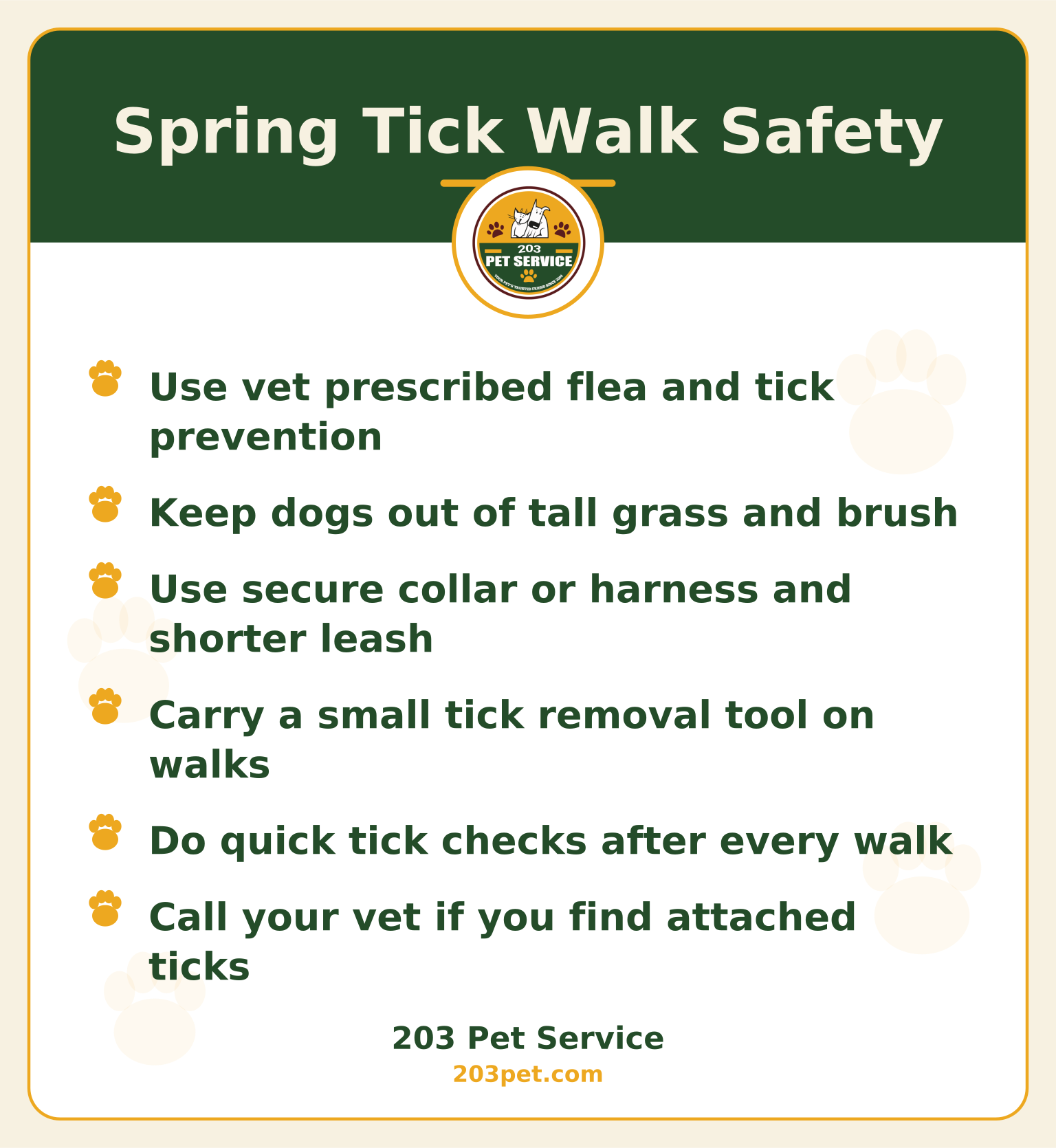
You keep your dog safer from ticks by combining vet-recommended prevention, smart gear, and simple habits before and after every walk. The goal is to reduce contact with ticks and catch any that do latch on as soon as possible.
Ticks like edges and shade. That means tall grass, leaf piles, and low bushes along sidewalks, trails, and even small neighborhood green spaces.
Where ticks hide on neighborhood walks and in parks
In Fairfield, we often see ticks show up after dogs walk along the wooded parts of Mill River trails or the brushy sides of local school fields. In Stratford, it might be the edges of Roosevelt Forest or damp areas along the Housatonic. In Westport and Southport, worldd paths with stone walls and groundcover plants can be a problem.
Ticks usually wait on the tips of grass or low plants and grab onto a passing animal. They don't jump or fly. They just reach. So when your dog sticks their nose into that brushy spot, that's the high risk zone.
Simple gear that lowers tick risk
Good gear won't stop every tick, but it makes a real difference. Safety advice from VCA Animal Hospitals includes using secure collars or usees, ID tags, and being ready for unexpected situations on walks, which fits well with having a tick plan too.
For spring in Fairfield County, we suggest: A flat collar or properly fitted use that leaves less loose fur to brush against plants.
Our dog walking service walks dogs in Fairfield, Stratford, Westport, Easton, Southport, Black Rock, and Bridgeport with these habits built in. We treat it as basic safety, not an extra.
How our walkers handle post walk tick checks
We train our W-2 employees to do a quick tick check after walks, especially in spring and fall. That means running hands over common tick spots, not a full medical exam, but a careful once over.
We focus on:
- Ears and under the collar.
- Chest, armpits, and groin area.
- Between toes and along the tail.
If we find a tick and you've given us clear permission and tools, we follow your written instructions. If there's any concern, or a tick is near the eyes or deep inside the ear, we contact Robyn, our office manager, at once. Robyn then calls you so we can follow your wishes.
Dog walking safety guides remind owners to be ready for unexpected issues and know how to respond or seek care fast VCA Animal Hospitals. that's exactly why our walkers do not guess. They call Robyn, then we loop you in.
How do I prevent fleas in a busy Fairfield County household?
📺 Winter Pet Safety Tips - 203 Pet Service
You stay ahead of fleas in spring by keeping all pets on a vet-approved preventive, watching for early signs of itching, and keeping your home cleaning routine steady. Once fleas settle into carpets and bedding, they're much harder to clear.
Fleas spread fast, especially in homes with kids, visitors, and more than one pet. They don't just live on dogs. They can bother cats and bite people too.
How fleas hitch a ride inside
Fleas usually reach your home on an animal, but that animal might be a neighborhood cat, a squirrel, or another dog that cut through your yard. Once adult fleas hop on your dog or cat, they feed and start laying eggs. Those eggs fall off into beds, rugs, and couch cushions.
The ASPCA explains that flea eggs and larvae hide in carpet, upholstery, and cracks in the floor, which is why cleaning matters along with medication. A single untreated pet can seed an entire home with flea eggs in a short time.
Early signs your dog or cat may have fleas
Classic signs of fleas include:
- Frequent scratching or biting at the skin, especially near the tail.
- Small black specks on the skin or bedding that look like pepper, which may be flea dirt.
- Red, irritated skin or thinning fur along the back and tail base.
Cats can be trickier. Many just groom more. Some cats show over grooming on the belly or the insides of the legs. The feline health experts at Cornell note that changes in grooming and skin condition are reason to investigate further for parasites or allergiesCornell Feline Health Center.
Why routine walks and pet sitting help catch fleas early
When the same person sees your pet every weekday, they notice when something looks off. With our ongoing walking memberships through 203 Pet Service dog walking, the same salaried employees see your dog in Fairfield, Stratford, or Bridgeport again and again. They notice when scratching suddenly ramps up.
During in home pet sitting, we see your pet’s sleeping spots, food area, and favorite couch. We notice if there are new specks on white bedding or if a usually calm cat starts over grooming. that's the kind of pattern you might miss if you're rushing out the door in the morning.
Guides on what to look for in a pet sitter stress the value of experience, attention to detail, and clear communication with ownersPetMD. That is built into how we hire and train. We use W-2 employees, not contractors, and we expect them to notice and report changes, not just tick a box and leave.
What spring allergy signs should I watch for in my dog or cat?

Common spring allergy signs in pets include itchy paws, licking, red or smelly ears, sneezing, and red patches of skin. You might see these pop up in March and April, right as you start opening windows and walking longer routes.
Allergies can show differently in dogs and cats, and they don't always look like human hay fever.
Typical allergy signs in Fairfield County pets
In dogs, we often see:
- Paw licking or chewing, especially after walks.
- Red, inflamed skin on the belly or inside the thighs.
- Ear scratching or head shaking.
- Rubbing their face along the carpet or furniture.
Cats might show:
- Scratching around the head and neck.
- Over grooming on the belly or legs.
- Small scabs or bumps on the skin.
Veterinary allergists often group these as signs of atopic disease or environmental allergies, which can be triggered by pollens, molds, or dustUC Davis Veterinary Hospital. Those triggers rise fast in spring in a coastal county like ours.
How local pollen affects daily walks
In Fairfield and Westport, you might walk under long stretches of street trees that drop pollen on sidewalks and lawns. In Easton and parts of Stratford, wooded roads and yards mean heavy tree pollen that sticks to fur even on short walks. Grass fields in Bridgeport and Southport get mowed and stirred up as sports seasons start, which means more grass pollen in the air.
Pollen lands on your dog’s fur and paws, and on your cat if they sit in open windows or screened porches. When they lick their paws or groom, they pull some of that pollen onto their skin or into their body, which can set off an itch cycle if they're sensitive.
When you should call your veterinarian
Reach out to your vet if you notice:
- Persistent itching or licking that does not settle with simple rinsing.
- Open sores, hot spots, or hair loss.
- Ear odor, discharge, or your pet crying when you touch the ears.
- Coughing, wheezing, or trouble breathing.
Your vet might suggest antihistamines, prescription allergy meds, special diets, or allergy testing and immunotherapy, depending on how bad things are. Evidence based resources for pet allergies stress that long term control usually mixes environmental changes with medical support, not one single fixUC Davis Veterinary Hospital.
If your pet ever has sudden swelling, severe hives, or trouble breathing, treat it as urgent. Guides on dog first aid from the American Kennel Club explain that breathing issues and collapse need immediate veterinary care. In true emergencies we follow our protocol: your sitter or walker calls Robyn, she calls you, and your sitter stays with your pet until you or your vet give clear instructions.
What simple cleaning routines protect indoor comfort in spring?

You protect your home in spring by wiping your pet when they come in, washing their bedding often, and vacuuming on a set schedule. Small habits done every day matter more than big deep cleans once in a while.
This helps with both parasites and allergies. you're basically trying to remove pollen, dirt, and any stray flea eggs before they spread.
Quick wipe downs after walks and yard time
When our walkers finish a visit in Fairfield, Stratford, or Bridgeport, we often do a quick towel rub if the dog is damp or muddy. You can do the same at home and add a little allergy protection on top.
Good steps include:
- Use a damp cloth or pet wipe to go over paws, legs, and belly.
- Pay extra attention between the toes where pollen and irritants collect.
- Gently wipe under the tail and around the rear if your dog tends to get itchy there.
Dog care references from major veterinary manuals stress that routine grooming and skin cleaning can reduce minor irritations and support overall health, especially in changing weatherMerck Veterinary Manual.
Simple laundry and vacuum habits
You do not need to scrub your house top to bottom. You just have to focus on where your pet spends the most time.
- Wash pet bedding weekly in hot water if the fabric allows it.
- Vacuum carpets, rugs, and upholstered furniture at least once or twice a week.
- Use a lint roller on favorite couch spots and car seats.
- Empty the vacuum canister or bag outside so any collected flea eggs do not end up back in the house.
If your cat has allergies, clean their favorite sleeping ledges or window perches more often. Feline health experts point out that environmental control matters a lot for cats with chronic issues, since stress and irritants can stack upCornell Feline Health Center.
How our sitters help keep your routines going
When you travel, your cleaning routine often falls apart right when pollen and parasites peak. During pet sitting visits, our W-2 employees can keep basic wipe downs, light sweeping, and bedding changes on track if you add that to your care notes.
we're not a cleaning company, but we are happy to rinse paws, shake out bedding, and do the simple steps that keep your pet comfortable between their own baths. If your dog or cat has a medical skin care plan from your veterinarian, we follow it as closely as you instruct while you're away.
How does 203 Pet Service watch for skin and coat changes during walks and visits?

203 Pet Service helps catch skin and coat issues early by pairing experienced W-2 employees with consistent routes, detailed visit notes, and strict emergency protocols. We walk and care for your pets, and we pay attention while we do it.
Because we're not a gig app, we know who is in your home and who is holding your leash in Fairfield, Stratford, Westport, Easton, Southport, Black Rock, and Bridgeport.
Trained eyes on your dog or cat every week
Jason, our owner, has 29 years of professional experience with animals, including 5 years as a veterinary technician at Greenfield Animal Hospital in Fairfield. He trains our walkers and sitters to spot red flags, not just clock in and out.
We look for:
- New hot spots or open sores.
- Changes in scratching or licking patterns.
- New redness in ears, between toes, or on the belly.
- Coat changes, like dull fur or new hair loss patches.
Dog walking and pet care resources stress that regular, consistent exercise and observation can help catch medical issues earlier, since small changes stand out to someone who sees the pet often PetMD. That is one reason our walking memberships focus on steady schedules, not one off visits.
Clear notes, photos, and patterns over time
After each visit, our walkers and sitters leave notes and, when needed, photos. If your dog in Bridgeport suddenly starts chewing their paws more over a week, you will see it in those updates. If your cat in Westport has a new red patch near their ear, we document it and flag it to you.
Frequently Asked Questions

About This Topic
How can I protect my dog from ticks on Fairfield County trails?
Use a vet-recommended flea and tick preventive every month and avoid letting your dog wander through tall grass or leaf piles. After every walk at places like Silver Sands or local woods, run your hands over their whole body and check ears, armpits, groin, and between toes. Wipe or rinse legs and belly to remove mud, salt, and pollen. 203 Pet Service walkers can do post-walk checks and text you if they spot anything.
What should I do when my dog comes inside during muddy spring walks?
Keep a small “mud station” by the door with a shallow basin, pet-safe wipes, and a towel. Rinse or wipe paws, legs, and belly, especially if you’ve been near wet leaves or treated lawns. Dry thoroughly between the toes to avoid irritation. 203 Pet Service can follow your exact after-walk cleaning routine during visits.
How do I tell if my pet’s scratching is allergies or fleas?
Flea issues usually come with tiny black specks (flea dirt) on the skin, especially near the tail, plus sudden intense scratching. Seasonal allergies often show up as red paws, face rubbing, ear shaking, or licking the same spots. If you’re unsure, call your vet quickly so it doesn’t snowball into infections. 203 Pet Service staff are trained to flag early skin or ear changes for you.
Do indoor cats in Fairfield County really need flea and tick prevention?
Indoor cats are safer, but they’re not totally protected. Parasites can hitch a ride in on shoes, other pets, or open windows. Vets in our area still recommend year-round flea prevention and, in many cases, tick control for cats. Talk to your vet about the safest option for your cat’s lifestyle. If 203 Pet Service visits your home, we’ll carefully watch for scratching, hair loss, or ear problems.
How often should I be checking my dog for ticks in the spring?
In Eastern Fairfield County, it’s smart to do a quick tick check after every walk and a more thorough one at least once a day. Pay close attention to ears, neck, collar line, armpits, groin, and between the toes. Use your fingers like a comb and feel for tiny bumps. 203 Pet Service walkers can build these checks into regular walks and visits.
What can I do at home to cut down on fleas and pollen?
Keep grass trimmed short, clear leaf piles, and wash pet bedding weekly on hot with a strong spin cycle. Vacuum carpets, baseboards, and upholstery often, especially near favorite pet spots. Wipe or rinse your pet after outdoor time to remove pollen and dirt from fur. During drop-in visits, 203 Pet Service can refresh water bowls and note any itching or hot spots they see.
When should I call the vet about my dog’s spring itching or redness?
Reach out to your vet if your dog’s licking or scratching lasts more than a few days, if you see red or raw skin, or if there’s head shaking, a bad smell, or hair loss. Those can be early signs of infection or a stronger allergy flare. Getting help early usually means easier treatment. 203 Pet Service can send you clear notes and photos if we notice changes between appointments.
How does 203 Pet Service help keep pets safe during spring walks?
Our walkers avoid heavy brush and tall grass when possible and watch for puddles, mud, and leftover road salt that can irritate paws. We do quick skin, ear, and paw checks as we towel off or wipe pets after walks, and we follow your vet’s instructions for parasite prevention timing. If we notice redness, limping, or possible ticks, we’ll alert you right away with photos and details.
About 203 Pet Service
What areas does 203 Pet Service cover in Fairfield County?
We provide professional dog walking, pet sitting, and training services across Eastern Fairfield County, Connecticut. We proudly serve families in Fairfield, Stratford, Westport, Easton, Southport, Black Rock, Bridgeport, Shelton, Devon, Trumbull, Weston, and Wilton. 203 Pet Service has cared for pets in Fairfield County since 2004, and every visit is handled by a trained, W-2 salaried employee who is background checked and fully insured.
Why does 203 Pet Service use salaried W-2 employees instead of independent contractors?
We believe salaried W-2 employees provide more reliable, accountable, and professional pet care. Unlike independent contractors, our salaried employees go through careful background checks, full training, and are fully insured. This employment structure means consistency, accountability, and peace of mind for Fairfield County pet families.
How long has 203 Pet Service been in business?
We have served Fairfield County pet families since 2004. that's 22 years of reliable, professional pet care. Our longevity speaks to our care for safety, consistency, and real animal welfare. Many of our clients have been with us for over a decade, and their referrals remain our best source of new business.