
The Cone of Shame & Alternatives for Dog Surgery Recovery
Quick Answer: Your dog does need some kind of protection after surgery, but it doesn't have to be the hard plastic cone if that's too stressful. Depending on where the incision is and how your dog acts, you can use a traditional cone, a softer fabric cone, an inflatable donut, or a recovery suit, as long as it fully blocks licking and chewing and your vet agrees.
The Cone of Shame & Alternatives for Dog Surgery Recovery
If your dog is heading in for surgery, the cone of shame probably sits on your mind right next to the actual procedure. The simple answer is this: your dog needs some kind of recovery gear after surgery, whether it's a cone, a suit, or a donut collar, because it keeps them from licking and chewing the incision so healing stays on track.
In this guide, I will walk you through the main options, what works best for which kind of surgery, and how to make recovery less stressful for both of you. We see a lot of post-surgery dogs in Fairfield, Stratford, Westport, Easton, Southport, Black Rock, and Bridgeport, and with the right setup, those first two weeks go a lot smoother.
Why does recovery gear matter so much after dog surgery?

Recovery gear matters because most dogs will try to lick or chew at their stitches. They don't do it to be naughty. They do it because the incision itches, feels sore, or just smells different, and licking is how dogs clean and comfort themselves.
If you give a dog full access to a fresh incision, many will worry at it until they pull out stitches or open the wound. Once that happens, you're looking at pain, infection risk, and usually another vet visit. Sometimes another surgery.
After spay or neuter surgery, for example, your vet will probably tell you to restrict activity and prevent licking for 10 to 14 days. ASPCA explains that dogs usually bounce back pretty fast after sterilization, but they still need time for the incision to close and for internal healing to finish without interference from licking or rough play. ASPCA: Spay and neuter your pets
So recovery gear does three big jobs:
- It blocks your dog from reaching the stitches or staples.
- It buys time for skin and tissue to heal correctly.
- It helps you avoid infections, wounds opening, and extra costs.
One more thing. Most dogs feel a bit disoriented after anesthesia. They may not make the best choices for a day or two. A cone or suit gives you a safety net during that fuzzy window, when they're more likely to bump, scratch, or lick without thinking.
Is the classic cone (Elizabethan collar) still the best choice?
📺 The Science Behind Daily Dog Walking - 203 Pet Service
For reach and protection, the old plastic cone is still the gold standard for most dogs. If you want the option that blocks the most licking, the classic Elizabethan collar is usually it.
The cone works because it changes your dog’s reach. They cannot bend their neck far enough to get their mouth on the incision. it's simple physics. you'll see these cones used after spays and neuters, mass removals, orthopedic surgeries, and even some eye surgeries.
Veterinary hospitals use them so often because they work on all kinds of dogs with all kinds of body shapes. UC Davis Veterinary Hospital notes that post-surgery care often focuses on wound protection and preventing self-trauma. that's exactly what a cone handles well.UC Davis: Postoperative instructions for dogs
Upsides of the classic cone
- Reliable protection. It covers a wide area, so even flexible dogs have trouble getting around it.
- Fits many surgeries. Works for belly, chest, back, leg, and tail incisions in most cases.
- Easy to clean. You can wipe it down or rinse it if it gets dirty.
- Usually inexpensive. Most clinics include a basic cone in the surgery fee or charge a low extra cost.
Real downsides you should know
On the flip side, the hard plastic cone is not fun to wear. It can:
- Bang into walls, doors, and furniture.
- Make it harder to eat and drink from regular bowls.
- Block side vision, which can spook some dogs.
- Make sleeping and resting awkward.
In our work providing in-home pet sitting and post-surgery help, we see plenty of dogs in Fairfield County who shut down when the hard cone goes on. They freeze, refuse to walk, or just stand and stare. Some of that is normal adjustment. Some dogs, especially anxious ones, really struggle with the bulk and sound of the cone scraping on things.
If your vet sends your dog home in a standard cone, give it a fair try first, unless they told you to use something else right away. Many dogs get used to it in a day or two. If your dog panics, can't eat, or keeps getting stuck, that's when you look at softer or different options and talk to your vet.
Are soft and padded cones better for dog comfort?

Soft and padded cones can be a great middle ground. They protect almost as well as a hard cone in many cases, and they're usually a lot more comfortable to wear for days at a time.
These cones are often made from flexible plastic with a fabric cover, or foam panels with a soft outer layer. They still flare out around your dog’s head, but when they bump into your leg or the coffee table, it's a soft thud instead of a loud whack.
Why many families like soft cones
- More comfortable to sleep in. Dogs can rest their heads without the edge digging in.
- Quieter in the house. Less crashing into walls, which helps nervous dogs relax.
- Often better vision. Some soft cones have clear panels or shorter profiles that bother dogs less.
- Less “embarrassing” looking. For many owners, the softer style just feels kinder.
Where soft cones sometimes fall short
The tradeoff is structure. Because soft cones bend and flex, a very determined or flexible dog may still reach low incisions, especially on the belly or back legs. We have seen clever dogs in Westport and Southport fold a soft cone back just enough to get to a spay incision when they curl tight.
For dogs who are pretty easygoing and not intense chewers or lickers, a soft cone is often enough. For dogs who chew their feet raw during allergy season or shred toys in minutes, I would not trust a soft cone alone for a belly or knee surgery without your vet’s blessing.
Some families layer tools. For example, they use a soft cone plus a light T-shirt over the incision during the day when they can watch, then switch to a hard cone only at night. That can work, but only if your vet signs off and you stay honest about how closely you can supervise.
Are inflatable donut collars safe for dog surgery recovery?

Inflatable donut collars are safe for some surgeries, but not for every dog or every incision. They work best when the surgery site is on the upper body, like the neck or upper back, and your dog is not very flexible.
The donut sits around your dog’s neck like a travel pillow. Your dog can see, eat, drink, and move around almost normally, which many dogs and owners love. We see a lot of donut collars in Black Rock and Bridgeport, especially for smaller dogs or for minor procedures.
Benefits of inflatable collars
- Very comfortable. Many dogs barely seem bothered once they get used to it.
- Good visibility. No lampshade effect over the eyes.
- Easier walking and eating. Less knocking into doorways and furniture.
- Less stress for some nervous dogs. It feels more like a soft neck pillow than a barrier.
Limitations you should think through
The big limitation is reach. A donut mostly limits how much your dog can bend their neck. It does not create a shield out in front of their face. Flexible dogs, long-nosed dogs, and smaller dogs who can curl into a tight ball may still reach:
- Spay and neuter incisions.
- Knee or hip surgery sites.
- Tail or lower back wounds.
- Lower belly or groin areas.
Some donuts also lose air slowly or deflate faster if your dog scratches or chews at them. You have to check them often. If the collar gets squishy, your dog suddenly has more reach.
A good rule of thumb. If your dog has an incision anywhere from mid-belly back toward the tail or on a back leg, don't assume a donut is enough unless your vet clearly says so. For many spay and orthopedic surgeries, vets still prefer a standard cone or a recovery suit.
What is a surgical recovery suit, and is it better than a cone?

A surgical recovery suit is a soft, fitted bodysuit that covers your dog’s body instead of blocking their head. For many dogs, especially after spay or neuter surgery, a suit is much less stressful than a cone and protects the incision very well.
Think of a snug onesie with leg holes and sometimes snaps or zippers along the back. The fabric covers the belly, chest, and sometimes the rear, so your dog cannot reach the stitches easily, even if they turn and bend.
When recovery suits work especially well
- Spay and neuter surgeries. Suits are often a great match for these common procedures.
- Skin issues or hot spots. They prevent licking and scratching specific patches of skin.
- Dogs who panic in a cone. Many anxious dogs relax once the cone comes off and the suit goes on.
- Home environments with tight spaces. No more cone getting stuck in doorways and furniture.
ASPCA notes that after sterilization, pets should avoid licking at their incision and should have their activity restricted while they heal.ASPCA: General spay/neuter aftercare A properly fitted suit checks those boxes for many dogs. In our work in Fairfield County, we see more vets recommending suits now than they did ten years ago, especially for small and medium dogs.
Things to watch with recovery suits
Suits are not a set it and forget it tool. You still need to:
- Keep the fabric clean and dry.
- Check the incision at least once or twice a day.
- Make sure the suit is snug enough that your dog can't wiggle under it.
- Follow your vet’s directions on how long your dog should wear it.
Wet or dirty fabric over an incision can slow healing or irritate the skin. You may need a second suit so you can wash one while your dog wears the other. For bathroom breaks, some designs unclip at the rear, which makes life easier.
One more tip from seeing a lot of dogs in these suits in homes in Fairfield and Westport. Make sure the suit doesn't pull or twist when your dog walks. If it rides up, rubs armpits, or looks skewed after a short walk, adjust it. Little friction spots can turn into sores over ten days.
How do you choose the right cone or recovery gear for your dog?
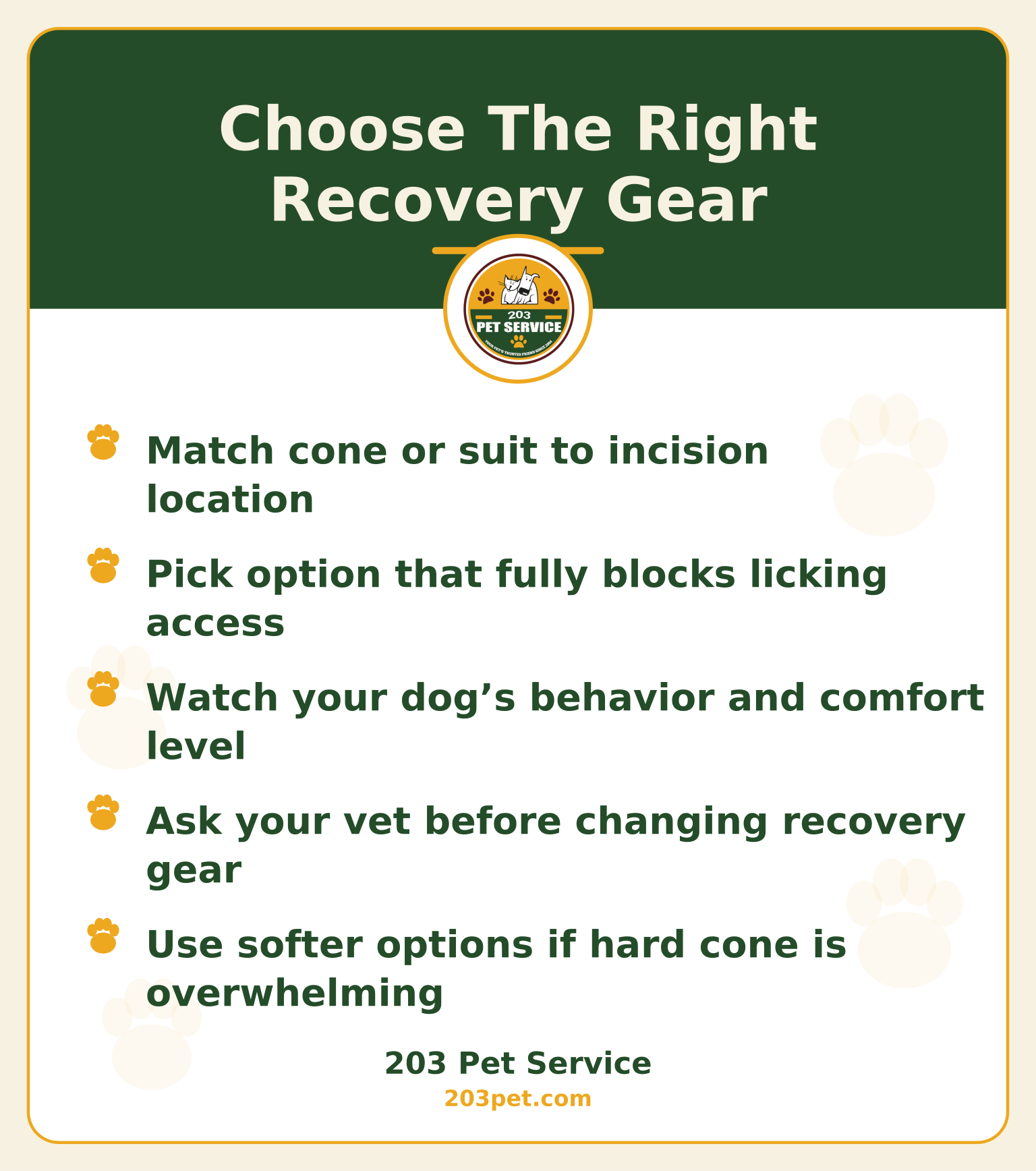
To choose the right recovery gear, you match three things. Where the incision is, how flexible and determined your dog is, and what your vet recommends for that specific surgery.
Think through each piece clearly. That will narrow your options fast.
1. Incision location
Where your dog had surgery often matters more than brand or style. Some examples:
- Spay or abdominal surgery: Often do best with a properly fitted hard or soft cone, or a well-made recovery suit.
- Neuter for a male dog: Suit or cone can work, depending on how your dog moves and curls up.
- Knee or hip surgery (like TPLO): Usually needs a cone because dogs can reach those areas from the side or rear.
- Neck, shoulder, or upper back: Sometimes a donut collar is enough if your vet agrees.
- Tail-tip or rear end: Often needs a full cone since dogs will twist and bend to reach those spots.
Ask your vet to show you how far your dog could reach without any cone. Many will happily walk you through why they suggest a particular style. UC Davis and other teaching hospitals often share diagrams and sample instructions so owners know exactly what to watch for during recovery.UC Davis: Surgical discharge care
2. Your dog’s personality and body
Some dogs give up quickly if something is in their way. Others treat the cone as a puzzle to solve.
Think about your dog in normal life:
- If your dog chews leashes, tears toys apart in minutes, or licks paws until they're red, plan for stronger protection.
- If your dog is easygoing and mostly ignores mild discomfort, a soft cone or suit may be plenty.
- If your dog is very long-backed or flexible, like some herding or hound breeds, they might twist around a donut or short cone.
Breed and build matter too. American Kennel Club points out that breeds vary a lot in physical structure and movement patterns, which affects how they handle different types of equipment, from walking gear to recovery tools.AKC: First aid for dogs A tall, narrow-chested dog will move very differently in a cone than a stocky bulldog.
3. Your vet’s specific advice
Always weigh your choice against what your vet says for that surgery. They know what kind of tension is on those stitches, how deep they went, and how easily the site could reopen.
If your dog had a routine spay or neuter at a local clinic, the discharge sheet will likely spell out whether a cone, suit, or other option is acceptable. ASPCA reminds owners that your vet should give you written aftercare instructions, including how to keep your pet from licking the incision and when to call if you see swelling, redness, or discharge.ASPCA: Spay/neuter FAQs
If you want to change gear from what the clinic sent home, call first. Take a quick photo of your dog in the new cone or suit and send it to them if they offer text or portal messaging. That way they can confirm the fit protects the area properly.
4. Backup plans matter
I always suggest you've at least a simple backup. If your dog pops a donut, shreds a suit, or somehow gets around a soft cone at 10 p.m., you want a way to protect the incision until you can reach your vet in the morning.
For many families we help in Easton and Fairfield, that backup is a basic plastic cone from the vet, tucked in a closet. You might never need it. The one night you do, you'll be glad it's there.
How can you make dog surgery recovery easier at home?

You make recovery easier by planning for rest, by limiting activity, and by giving your dog safe ways to relax without breaking their vet’s rules. The cone or suit is only one piece. The home setup matters just as much.
Think about the first 10 to 14 days as a quiet reset for your dog’s body and brain. Short term boredom is better than long term injury.
Set up a calm recovery space
Pick one main area where your dog will rest. In many Fairfield County homes, that is a corner of the living room or a bedroom where the family hangs out in the evening. You want:
- A comfy bed with enough room for the cone.
- Non-slip flooring or rugs to prevent sliding.
- Water within easy reach.
- A baby gate or closed door so kids and other pets can't pester.
Preparing a safe space like this is similar to what AKC suggests for bringing home a new puppy. You puppy-proof and set up a quiet area to control their environment.AKC: Preparing your home for a new puppy Surgery recovery works on the same idea. Fewer temptations, fewer accidents.
Limit exercise more than you think
Most post-surgery instructions call for short, leashed potty trips only for at least a week. That means:
Frequently Asked Questions

About This Topic
Does my dog really need to wear a cone after surgery?
Yes, your dog needs some kind of protection after surgery, but it doesn’t have to be the hard plastic cone. The goal is to block licking and chewing so stitches can heal. You can use a traditional cone, soft cone, inflatable collar, or recovery suit if your vet approves. At 203 Pet Service, we’re happy to help you fit and adjust whatever option you choose.
What’s the difference between a hard cone, soft cone, and inflatable collar?
A hard Elizabethan collar is stiff plastic and usually blocks the most licking, but it’s also the clunkiest. Soft cones are fabric versions that are more comfortable and quieter around the house. Inflatable collars are like donuts that work best for surgeries on the body, not paws or tails. If you’re unsure, 203 Pet Service can help you test what your dog can still reach.
How do I know if a surgical recovery suit is better than a cone?
Recovery suits work great for body incisions, like spay or abdominal surgery, because they cover the entire area. They’re less helpful for paws, tails, or faces, where a cone usually works better. Your dog should be able to move, pee, and poop comfortably with the suit on. If you’re local in Fairfield County, 203 Pet Service can help you try it on and check the fit.
My dog keeps crashing into furniture in a cone, what can I do?
You can switch to a soft cone or a shorter cone style, as long as your dog still can’t reach the incision when they twist or bend. Try blocking off tight spaces and moving furniture a bit so walking paths are clearer. Many dogs settle once they’re less startled by the cone. Our 203 Pet Service walkers are used to guiding post-surgery dogs carefully around the house and yard.
Will an inflatable collar really stop my dog from licking stitches?
Sometimes it will, but it depends on where the incision is and how bendy your dog is. Inflatable collars usually work best for neck and upper-body areas, and they often fail for paws, tails, or groin incisions. Always do a test: watch your dog carefully and see if they can still reach the wound. If you need a second pair of eyes, 203 Pet Service can help assess during a visit.
How long does my dog need to wear post surgery recovery gear?
Most dogs need a cone, collar, or suit for about 10 to 14 days, or until your vet confirms the incision is fully closed and dry. Don’t stop early just because it looks “better” after a few days, internal healing takes longer. Take the gear off only for very short, supervised breaks if your vet says it’s okay. Our 203 Pet Service team can help monitor and keep gear on during walks and potty breaks.
About 203 Pet Service
What areas does 203 Pet Service cover in Fairfield County?
We provide professional dog walking, pet sitting, and training services across Eastern Fairfield County, Connecticut. We proudly serve families in Fairfield, Stratford, Westport, Easton, Southport, Black Rock, Bridgeport, Shelton, Devon, Trumbull, Weston, and Wilton. 203 Pet Service has cared for pets in Fairfield County since 2004, and every visit is handled by a trained, W-2 salaried employee who is background checked and fully insured.
Why does 203 Pet Service use salaried W-2 employees instead of independent contractors?
We believe salaried W-2 employees provide more reliable, accountable, and professional pet care. Unlike independent contractors, our salaried employees go through careful background checks, full training, and are fully insured. This employment structure means consistency, accountability, and peace of mind for Fairfield County pet families.
What makes 203 Pet Service different from other pet sitters in Connecticut?
Our owner, Jason Hofmann, brings 29 years of professional pet care experience, including 5 years as a veterinary technician at Greenfield Animal Hospital in Fairfield. As an Animal Behavior College (ABC) certified dog trainer, Jason built 203 Pet Service on veterinary medical knowledge and professional training, not just hobby experience. Plus, we've served Fairfield County families since 2004 with the same care for safety and reliability.
How does 203 Pet Service handle pet emergencies?
In an emergency, our sitter or walker immediately calls Robyn, our office manager, so she can contact you while our salaried employee stays with your pet. This protocol means your pet gets constant care while we coordinate with you about next steps. Our team is trained to stay calm and put your pet's safety first in any situation.