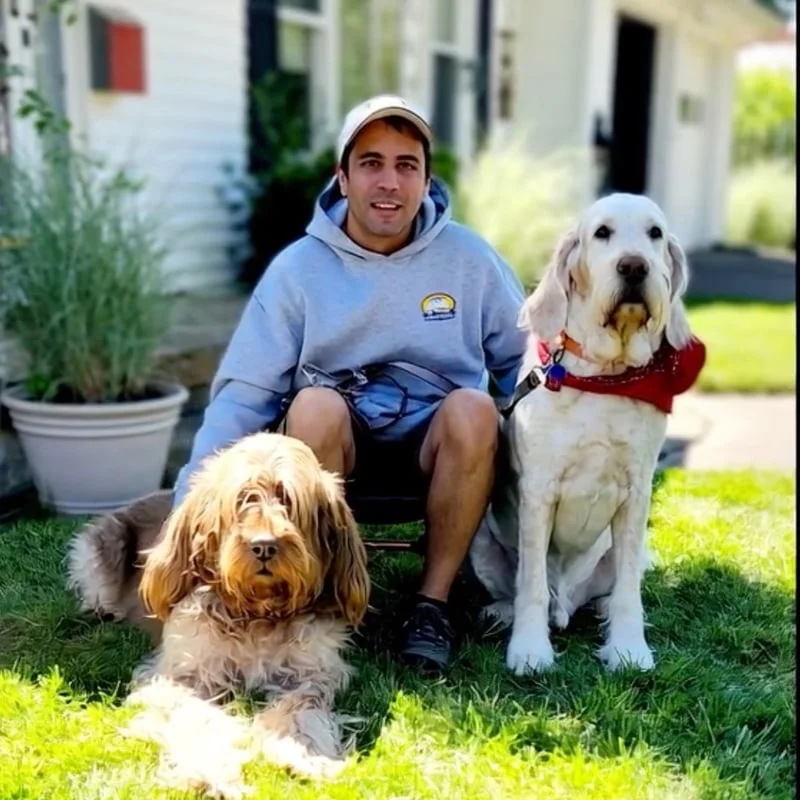
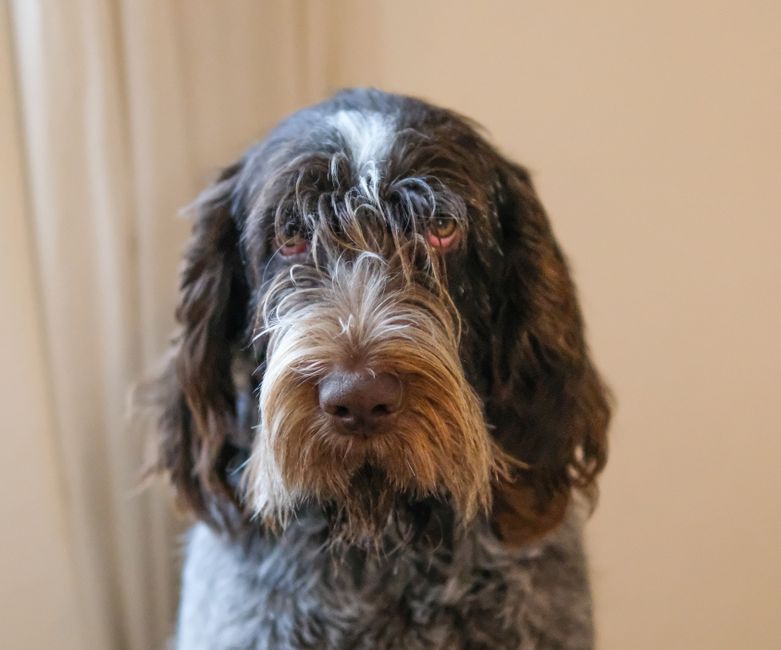
The Word Nobody Wants to Hear
Part 2 of 5: Max's Cancer Journey
July 14. We were back at Greenfield.
This was not a routine visit. Max had stopped eating. He had not pooped in two days. He was going outside every few hours, straining hard, getting almost nothing out. The urine culture came back negative. It was not a UTI.
Dr. Megan J. Morgan is an internal medicine specialist. Greenfield brought her in to do an abdominal ultrasound. She could find things on that ultrasound that a standard X-ray cannot show.
She found something.
What the Ultrasound Showed

There is a mass near Max's prostate. It is located at the back of the prostate or just behind it, in the urethra. The urethra is the tube that carries urine from the bladder to the outside. When a mass grows in that area, it pushes up on the colon at the same time. That is why Max could not pee easily and could not poop. The mass was blocking both.
Bill was in the room with me. Dr. Morgan was describing the straining and the difficulty passing urine. Bill leaned over and whispered that he knew exactly what that felt like. He has an enlarged prostate. I looked at her and said Max was doing the same thing. She did not skip a beat. That is the kind of moment you laugh at a little because you need to.
The most common type of mass in that location is called urothelial carcinoma. Some people know it as TCC, transitional cell carcinoma. It is a cancer of the cells that line the urethra or the prostate. Not curable. The goal is not to eliminate it. The goal is to manage it and keep him comfortable.
Dr. Morgan was honest with us from the start. She thought this was cancer. She could see the mass clearly. She could not prove it from an ultrasound alone.
The BRAF Test
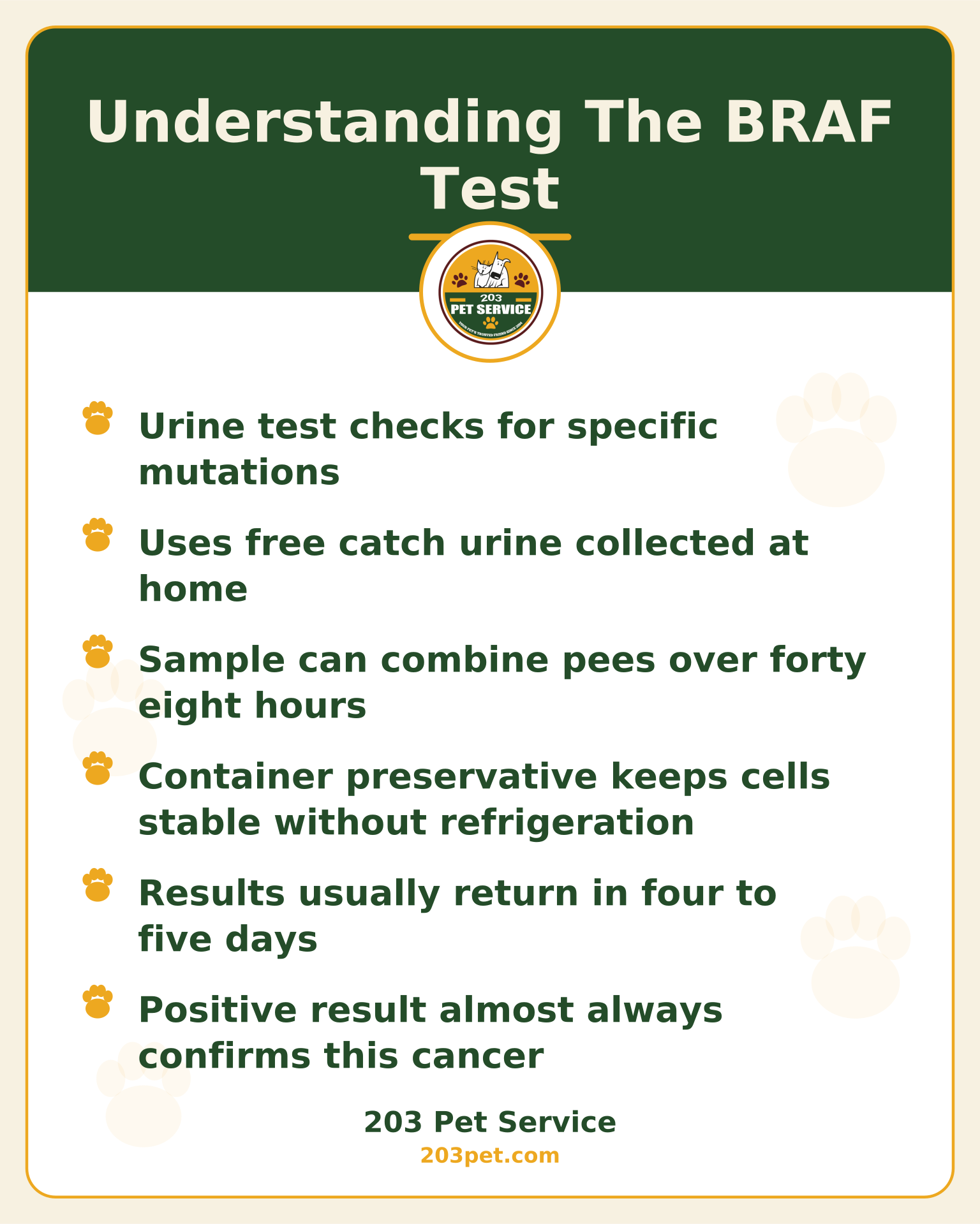
There is a urine test called a BRAF test. It looks for specific mutations in the cells of the urinary tract. Those mutations are a marker for urothelial carcinoma.
It is a free catch test. You collect the urine yourself at home, in a special container the clinic provides. You can collect it over up to 48 hours, from multiple pees, and combine them. It does not need to go in the refrigerator. The container has a preservative that keeps the cells stable.
Bill happened to have a urine catch cup from his own urologist. He saw it at the appointment one day and asked if he could have it. He figured it would work for Max. It did. The vet said he was well-prepared.
The results take about four to five days.
Dr. Morgan told us the test is very good. Not perfect. She had one case where it came back negative and the dog truly did have TCC. But false positives are rare. If it comes back positive, it almost certainly means what it says.

Months, Not Years
I asked the question I needed to ask.
I told her I had made a promise to Max and to Leo. They would always have their dignity. Not being able to pee, not being able to poop, not being able to walk without help. That is not dignity. I needed to know if whatever we were about to do would give him quality of life, or just time.
She did not hesitate.
We are not talking about years, she said. We are talking about months.
I sat with that for a second.
She had already told me this was not curable. I had heard those words. I had started to absorb them. But there is a difference between hearing something and having a doctor say it plainly to your face. Part of me was still hoping she would land somewhere different. She did not.
I turned and looked at Bill. He looked at me. We did not have to say a word.
She kept going. She told me surgery was not an option. The mass is sitting in the outflow tract from his bladder. There is no way to reroute everything and still have him be able to urinate on his own. The outcomes in cases where they tried have not been acceptable.
She said everything from here on out needed to be about his quality of life. That was the right framework. That was what I needed to hear.
She also told me there was one more thing she was watching. Urothelial carcinoma can spread to the spine. Specifically to the L4-S1 region, which is exactly where Max has been showing neurological signs. She could not prove that was happening. She wanted us to know it was a concern.
His Team
Before we left, I asked her something that felt important to me.
I told her that as his owners, Bill and I are his advocates. But we are also human. We are emotional. We are going to want more time even when more time is not the right answer. I gave her permission to be on Max's team, not ours. If she believed it was time and we were dragging our heels, I wanted her to say so.
She said of course.
She prescribed Prazosin to help relax his urethra and make urination easier. She told us to keep him on the Rimadyl and Gabapentin. She sent us home with a urine collection container and instructions for the BRAF test.
We collected the sample. We submitted it. And then we waited.
The Phone Call

It was Monday, July 20. Around 5:30 in the evening.
I was finishing up a dog training session with a client. They have an eight-month-old Spinone Italiano. A puppy, full of everything Max used to be. They had told me before that their previous Spinone had died of cancer at a young age.
I had told them earlier that day I was waiting on results for Max. When my phone rang, I stepped away to take the call.
It was Dr. Morgan.
BRAF positive.
The mutations are present. The cancer is confirmed. Urothelial carcinoma.
She said it gently. Carefully. The way someone says something when they have said it many times and they understand exactly how much it weighs. She gave me a moment before she kept going.
I thanked her. I took a second. Then I went back in.
My client looked at me and asked what happened. I told them Max had been diagnosed with cancer.
They did not hesitate. They told me about their oncologist. The one who had treated their last Spinone. They said she was exceptional. They gave me her name, her number, and her practice.
Dr. Christine Merrick. Newtown Veterinary Specialists. 203-270-8387. newtownvets.com.
I cannot tell you how much that moment meant. I had just gotten the worst phone call of the month and walked back into a room and was handed exactly what I needed next. That is the thing about the pet community. People who have been through it understand. They do not wait to be asked.
I went home and told Bill.
Now we had to figure out what we were going to do.
Part 3 is about the conversation that changed my mind about chemotherapy, and the doctor who made me see it differently.
New episodes post every Saturday on the 203 Pet Service blog. Come back next Saturday for Part 3.
If you are going through something similar with your dog, I hope this series helps.
Part 1: The Day He Went Down | Part 3: I Never Thought I'd Say Yes to Chemo | Part 4: July 23rd. His First Treatment. | Part 5: What I Do Every Day for Max