
What a Real Midday Dog Walk Looks Like with 203 Pet Service
Quick Answer: A real midday dog walk with 203 Pet Service is a calm, reliable weekday visit. A pro walker comes to your home, greets your dog, gives them a potty break, a walk, fresh water, and a little love, then settles them back in. It is the same basic routine each time, set in a steady time window, so your dog can relax and you can stop worrying while you are at work.
What a Real Midday Dog Walk Looks Like with 203 Pet Service
Your dog should not have to hold it for 8 or 10 hours while you work. A steady weekday midday dog walk gives your dog a bathroom break, movement, and human contact right when they need it most. It also gives you peace of mind while you are stuck in meetings or traffic on I-95.
In homes across Eastern Fairfield County, you see the same picture. Quiet houses. Closed blinds. A dog who heard the door shut at 8:00 a.m. and is still waiting when the mail truck goes by at noon. When that same dog has a reliable walker who shows up every weekday around lunch, the whole rhythm of their day changes. They relax. They nap. They know help is coming.
That steady rhythm is what a real midday walk with 203 Pet Service looks like. Not a random one-off visit, but a simple, predictable walking plan that fits your life and your dog.
Why does a standing midday walk matter for a home alone dog?
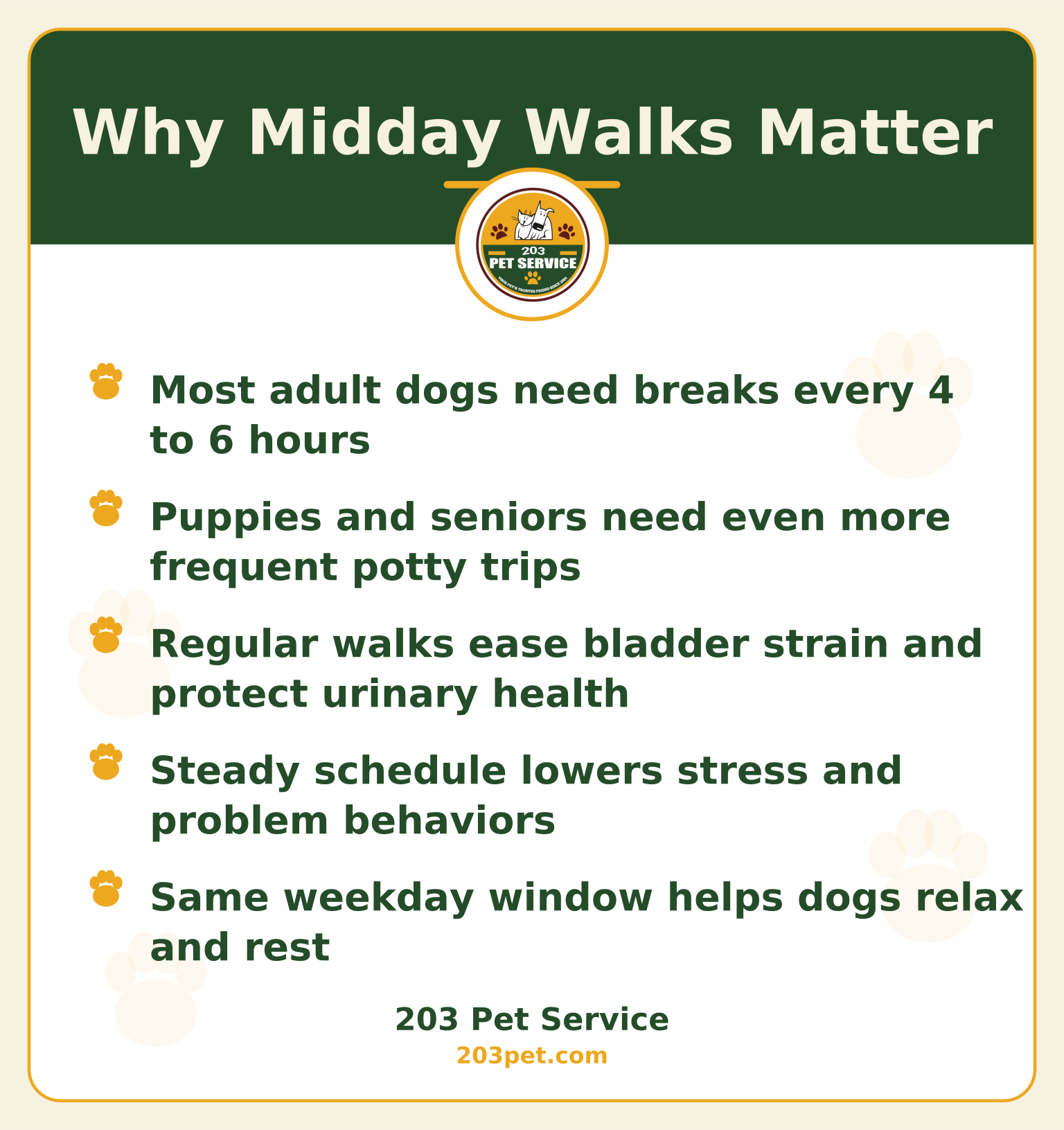
A standing midday walk matters because dogs need regular bathroom breaks, movement, and social contact during the day. When you give them the same weekday time window again and again, their body and brain relax into that pattern. They learn that they do not have to hold everything or worry about when someone will show up.
Most healthy adult dogs need to go out every 4 to 6 hours. Puppies and seniors need even more chances. The American Kennel Club notes that regular exercise and potty breaks are a big part of keeping dogs physically and mentally balanced, and that is hard to do if your dog spends all day waiting for you to get home.
In towns like Fairfield, Stratford, and along the coast in Westport and Southport, workdays run long. Trains are delayed. Route 8 backs up. Your dog still has the same bladder and the same need to sniff and stretch.
Quiet weekday houses and what your dog feels
A quiet house sounds peaceful. For a dog who is used to company, it can be stressful. They listen to every noise in the hallway or outside. They patrol the window. Some sleep from boredom, but many pace or whine.
Without a midday break, your dog may:
- Hold their bladder too long, which can strain the urinary system
- Chew furniture or shoes from stress or boredom
- Bark at every sound in the hallway or outside
- Have accidents that make them anxious and you frustrated
Routine helps. Dogs are creatures of habit. The PetMD guide to dog walking points out that consistent walk times help dogs settle and build better behavior patterns. When your dog knows that someone from 203 Pet Service always shows up around the same time, they spend less energy worrying and more time resting.
Why a set weekday schedule beats last minute visits
Some families start with “as needed” visits. They call only on heavy meeting days or when they know they will work late. Dogs do not understand those exceptions. They just know that some days are very long and uncomfortable.
A standing schedule, like Monday through Friday between 11 a.m. and 2 p.m., gives your dog:
- A predictable bathroom window
- Regular exercise that matches their energy level
- A bond with the same walker, not a rotating list of faces
- Time in the middle of the day to break up the boredom
We build our weekday dog walking plans around this idea. You pick steady days and a time window. Our W-2 salaried employees handle the rest.
What are the signs your dog is asking for a lunchtime break?

Your dog often tells you they need a midday walk long before you call a dog walker. You see it in small changes at home, on walks, and in their energy when you grab your keys in the morning.
Many families in Easton, Black Rock, and Bridgeport reach out after they notice a pattern. Their dog used to snooze all morning. Now they bark, have accidents, or glue themselves to the door when they leave.
Behavior changes that should get your attention
These are common signs that your dog needs a weekday midday break:
- New indoor accidents even though they are house trained
- Chewed pillows, shoes, or door frames while you are gone
- Excessive barking that annoys neighbors in your building or cul-de-sac
- Refusing breakfast because they are already stressed about you leaving
- Bolting to the door and spinning when you come home
Sometimes you also see clingy behavior. Your dog may shadow you from room to room before work or cry when you pick up your bag. That anxiety often eases when they know someone comes at lunchtime every weekday.
How age and health change what your dog needs midday
A young, healthy adult dog has different needs than a puppy or a senior. The Merck Veterinary Manual explains that size, age, and breed all play a role in how a dog handles exercise and daily activity.
Here is how that plays out around Fairfield County:
- Puppies often need a potty break every 2 to 3 hours. The AKC puppy guide also reminds owners that young dogs are still building immunity and routines, so calm, short midday visits help them learn house rules.
- Adult dogs usually do well with a solid 20 to 30 minute midday walk to burn energy and handle bathroom needs.
- Senior dogs may need slower, shorter walks but more bathroom breaks. PetMD notes that older dogs often benefit from gentle, regular exercise rather than long, intense sessions, which helps joints and weight control without overdoing it.
We see this all the time in homes with more than one dog. The one-year-old doodle in Weston may want a long, brisk walk. The 11-year-old beagle in the same house might just need a slow block or two and a clean potty break. A good walking plan respects both.
When medical needs make midday walks non-negotiable
Some dogs simply cannot wait all day. Dogs with urinary issues, diabetes, or on certain medications may drink more water and need more bathroom trips. A dog on crate rest after surgery might need a very controlled, gentle potty outing.
Jason’s background as a veterinary technician at Greenfield Animal Hospital in Fairfield, plus his work as a Certified Pet First Aid and CPR Instructor, shapes how we think about these cases. We build the walk length and pace around your veterinarian’s instructions. In true emergencies, our salaried employees follow our clear protocol and stay with your dog while Robyn, our office manager, reaches you and your vet.
What really happens during a 203 Pet Service midday dog walk visit?

A real midday visit is quiet, predictable, and calm. Your dog learns that the door opens, their walker steps in, and the same short routine happens every time. No chaos. No rush.
We treat midday walks as part of an ongoing weekday walking membership, not a random drop in. That mindset matters. It shapes how we greet your dog, how we lock your door, and how we leave your home each day.
Arrival, keys, and greeting your dog
Your walker arrives within the agreed time window. For most weekday clients, that falls somewhere between late morning and mid afternoon so it hits your dog’s longest stretch alone.
We use your keys, lockbox, or alarm code exactly the way you showed us in your first meeting. Keys and codes are logged and controlled in the office. We avoid hiding keys outdoors because that is not safe for you or your dog.
Once inside, we greet your dog by name. Always the same words and energy. Many dogs in apartment buildings in Bridgeport or condos in Devon learn the pattern fast. They wait by the door with their leash in their mouth.
If you have more than one pet, like a dog and a shy cat, we also keep an eye on the dynamic. The PetMD guide to choosing a pet sitter stresses the value of sitters who can read animal body language and handle more than one pet politely. That is part of Jason’s training approach with our W-2 employees.
Leash on, quick check, and out the door
Before we head out, we do a fast visual check. Is your dog moving normally? Any limping? Any vomit or loose stool near the door? Anything that looks off.
We clip the leash to a secure harness or flat collar, not a prong or choke collar. We confirm ID tags are on. VCA’s dog walking safety tips recommend proper identification and secure equipment on every walk, and we follow that advice closely.
Then we lock the door behind us and start the walk.
How long is the walk and what do you do on it?
Most midday visits are 20 or 30 minutes door-to-door, depending on your walking plan. We count the time from when we enter until we leave, so you know what your dog gets every weekday.
During that time we focus on three things:
- Bathroom breaks in your yard or on your regular route
- Steady, safe walking at your dog’s pace
- Mental engagement through sniffing, simple cues, or quiet praise
The AKC points out that the type and amount of exercise should match your dog’s breed and energy level, not just the clock. A young lab mix in Shelton might use the full 30 minutes for a brisk neighborhood loop. A senior pug in Wilton might spend more time sniffing a small area and taking several short bathroom breaks.
We do not rush a nervous dog. We do not drag a tired senior. Walks are tailored movement, not a race to hit your step goal.
Back home: water, food, wipes, and a quick home check
When we return, we bring your dog inside, remove harness and leash, and give them a moment to settle. Then we run through a simple closing routine:
- Refresh the water bowl
- Offer a snack or lunch if you have requested it and portioned it out
- Wipe paws with your towels or wipes if the yard or sidewalks were wet or salty
- Check that doors are secure, lights are set the way you like, and nothing looks out of place
This quick home check catches things like a back door that did not close fully or a light left on that should be off. If we see anything odd, we note it in your visit report.
We also keep an eye out for minor health concerns. The AKC’s first aid guide encourages early detection of limping, cuts, or heat stress during walks so owners can follow up with their vet before things get worse. We do not diagnose, but we do tell you what we see in plain language.
What if there is an emergency during a walk?
If something serious happens during a visit, your walker does not improvise. They follow our emergency protocol.
- The walker calls Robyn, our office manager, right away.
- Robyn contacts you to explain what is going on and discuss next steps.
- Your walker stays with your dog until you or your vet give clear instructions, whether that means waiting for you at home or going straight to a clinic like VCA Shoreline Animal Hospital in Shelton or MedVet Norwalk.
Jason’s veterinary background and his work as a Certified Pet First Aid and CPR Instructor shape this protocol. We train our W-2 employees to stay calm, communicate clearly, and put your pet’s safety first.
How do you build a steady weekday dog walking routine that works?

You build a steady routine by picking simple, repeatable days and times that match your schedule and your dog’s bladder, then sticking with it. Small adjustments happen as seasons and your dog change, but the core pattern holds.
We do not push complicated schedules. A dog in a condo near downtown Fairfield may do great with Monday to Friday, 12 p.m. to 2 p.m. window. Another dog in a house near the beach in Westport might need only three days a week. The key is that whatever you pick is consistent.
Choosing the right days and time window
When you reach out through our contact page, we ask a few simple questions:
- How long is your dog alone most weekdays? What time do you usually leave and come home? How old is your dog and do they have any medical issues? Have you seen any accidents or destructive behavior recently?
We then suggest a walking schedule that cuts your dog’s longest stretch alone roughly in half. If you leave at 7:30 a.m. and get home around 5:30 p.m., a late morning or early afternoon visit often hits the sweet spot.
Most families stick with the same plan for months or years. Dogs like patterns. The more steady you keep it, the happier and calmer your dog will be while you are at work.
Helping your dog learn to expect their walker
Once we set your plan, your dog sees the same face on their walking days. 203 Pet Service uses W-2 salaried employees, not gig workers or contractors, so your walker is a regular part of your dog’s week.
Over time your dog learns:
- What sound the key makes in the lock
- How their walker greets them
- Which path they usually take
- That they can relax between visits because someone always comes
Dogs crave that predictability. PetMD notes that consistent routines, including scheduled walks, help reduce anxiety and problem behaviors because dogs know what to expect and when.
Adjusting routes for weather, seasons, and age
Life changes. So does your dog. A good walking membership flexes with that without turning into chaos.
In summer, we may:
- Walk earlier in your time window to avoid peak heat
- Stick to shade instead of hot sidewalks in Bridgeport or Trumbull
- Shorten the active part of the walk and add more cooldown time and water
In winter, especially in windier areas near the water like Southport and Black Rock, we may use more indoor time for towel drying, slow sniff breaks in your yard, and checking paws for ice melt. VCA reminds owners to watch for temperature extremes on walks and adjust time outside to keep pets safe.
As your dog ages, we might slowly shift from a long, fast loop to a shorter route with more sniffing and bathroom focus. PetMD’s senior dog guide supports this kind of gentle adjustment, where you keep movement in their life but scale intensity down as their body changes.
Whatever we change, we keep you in the loop through your visit notes and quick check-ins.
Video: See what it feels like when a 203 Pet Service walker comes through your door and greets your pet like an old friend.
How do 203 Pet Service walk visits stay safe, trustworthy, and well communicated?

Walks stay safe when you combine good training, clear systems, and people who take pet care as their career, not as a side hustle. Trust grows when you see that same care in your visit notes, your locked doors, and your dog’s behavior.
This is where 203 Pet Service looks very different from app-based walkers.
Why W-2 salaried employees matter for your dog
203 Pet Service uses W-2 salaried employees, not contractors. That alone changes the whole relationship. We hire, train, and supervise the people who walk your dog. We are not just matching you with random names on a screen.
Jason brings his 29 years of professional experience, plus his Animal Behavior College dog training certification, into that hiring and training process. That means your dog’s walker is:
Frequently Asked Questions

About This Topic
How does a typical midday dog walk with 203 Pet Service work?
Your walker comes to your home during your chosen midday window, leashes your dog, and takes them out for a relaxed potty break and walk in your neighborhood. They refresh water, give a little play or cuddle time, then settle your dog back in safely. You get a quick update so you know how the visit went and can relax at work.
How often should my dog get a midday walk during the workweek?
Most healthy adult dogs do best with at least one consistent midday walk, so they aren’t holding it for 8, 10 hours. Puppies and seniors often need more frequent visits. With 203 Pet Service, many clients schedule Monday to Friday walks in the same time window, which helps their dog’s body clock adjust and keeps accidents and anxiety to a minimum.
Can 203 Pet Service help if I have an irregular work schedule?
Yes, but the goal is to give your dog a predictable rhythm. If your schedule shifts, 203 Pet Service can usually adjust your midday visit within a set window so your dog still gets a consistent break. They’ll help you choose a standing plan that covers your longest days, then add extra visits on especially long or late shifts when needed.
What if my dog is shy, anxious, or not used to walkers?
Shy or anxious dogs usually do better with a steady routine and a familiar face. 203 Pet Service starts with a meet‑and‑greet at your home so your dog can sniff, say hello, and get comfortable before regular midday visits begin. The same trusted walker or small team visits on a schedule, which helps nervous dogs relax and settle into the pattern.
Do you still walk dogs in bad weather or on really hot days?
Yes, but the visit is always adjusted for safety and comfort. In heavy rain, snow, or extreme heat, 203 Pet Service shortens outdoor time and focuses on a quick potty break plus indoor play, enrichment, or cuddle time. Walkers use common‑sense precautions, like avoiding hot pavement, using towels, or checking paws, so your dog still gets a break without being put at risk.
How do I know my dog is actually getting walked midday while I’m gone?
With 203 Pet Service, your walker checks in and out for every visit and leaves a brief note or update about what they did, how far they walked, if your dog peed or pooped, and anything unusual they noticed. Many clients also use a lockbox or smart lock, so entry and exit are trackable. That way you’re not just hoping the walk happened; you can see it did.
About 203 Pet Service
What areas does 203 Pet Service cover in Fairfield County?
We provide professional dog walking, pet sitting, and training services across Eastern Fairfield County, Connecticut. We proudly serve families in Fairfield, Stratford, Westport, Easton, Southport, Black Rock, Bridgeport, Shelton, Devon, Trumbull, Weston, and Wilton. 203 Pet Service has cared for pets in Fairfield County since 2004, and every visit is handled by a trained, W-2 salaried employee who is background checked and fully insured.
Why does 203 Pet Service use salaried W-2 employees instead of independent contractors?
We believe salaried W-2 employees provide more reliable, accountable, and professional pet care. Unlike independent contractors, our salaried employees go through careful background checks, full training, and are fully insured. This employment structure means consistency, accountability, and peace of mind for Fairfield County pet families.
How do I schedule a meet and greet with 203 Pet Service?
Just call us at (203) 682-6443 or fill out our contact form. We will schedule a meet and greet where you can meet your potential sitter or walker, talk through your pet's needs, and see firsthand why Fairfield County families have trusted us since 2004. There is no obligation, just a chance to see our professional approach to pet care.
What services does 203 Pet Service offer?
We provide daily dog walking, pet sitting (overnight and vacation), cat care, backyard play sessions, litter box scooping, and puppy training classes. All services are done by our salaried W-2 employees who bring professional training and genuine care to every visit. Whether you need regular midday walks or full vacation care, we cover all 12 Fairfield County service towns.