
What a Real Midday Dog Walk Visit Is Like with 203 Pet
Quick Answer A real midday dog walk with 203 Pet Service is a calm, on time visit where your dog gets a potty break, a real walk, and one on one attention in the middle of the day. Your walker quietly comes in, leashes your dog, walks in your neighborhood, refreshes water, and settles them back in so you can work without watching the clock or worrying.
What a Real Midday Dog Walk Visit Is Like with 203 Pet
On a normal weekday in Fairfield County, your house is quiet by 9 a.m. The kids are at school. You are on 95 or the Merritt. Your dog is home, waiting.
By lunchtime, that wait feels long. Bladder full. Bored. Listening to every car door outside and every squirrel in the yard.
A steady weekday midday dog walk changes that story. Your dog gets a real break, a bathroom trip, some movement, and a friendly face who shows up on schedule. You get to work your day without watching the clock or worrying if you will hit traffic before your dog hits their limit.
That is what a real midday dog walk visit looks like with 203 Pet Service. Predictable. Calm. Professional. Built for dogs who spend long days home alone in Eastern Fairfield County.
Why does a standing midday walk matter for home alone dogs?

A standing midday dog walk matters because dogs are not built to hold it and sit still for 8 to 10 hours a day after day. They need bathroom breaks, movement, and contact. When you give them a predictable lunchtime visit, you protect their body, their mind, and your home.
Most of our weekday walking clients live in the quieter neighborhoods of Fairfield, Stratford, Westport, Easton, Southport, Black Rock, and Bridgeport. Once the morning rush is over, those streets get still. Your dog hears very little from 10 a.m. to 3 p.m. That quiet can sound peaceful to us. For many dogs, it gets stressful and boring.
From a physical point of view, long days without a potty break are hard on the bladder and urinary tract. Regular bathroom trips help lower the risk of accidents and some urinary issues, especially in females and seniors. The Merck Veterinary Manual notes that a dog's size, age, and build all play into how much they can comfortably hold and how active they need to stay.
Mentally, dogs need something to do. When they sit all day with no outlet, many start to pace, bark at every sound, shred toys, or raid the trash. A predictable walk gives them a job. Sniff, walk, potty, come back tired. That routine can lower stress and nuisance behaviors. A guide from the PetMD dog walking guide explains that regular walks support both physical health and mental balance for dogs.
There is also the schedule piece. Dogs love patterns. A one-off, last minute visit helps in a pinch, but it will not calm the dog long term. A standing weekday walk at roughly the same time each day teaches your dog, "Someone comes for me then, so I can relax until that happens."
Think of it like your own coffee break or lunch break. You handle the morning better when you know that pause is coming. Your dog is the same way.
What are the signs your dog is asking for a lunchtime break?
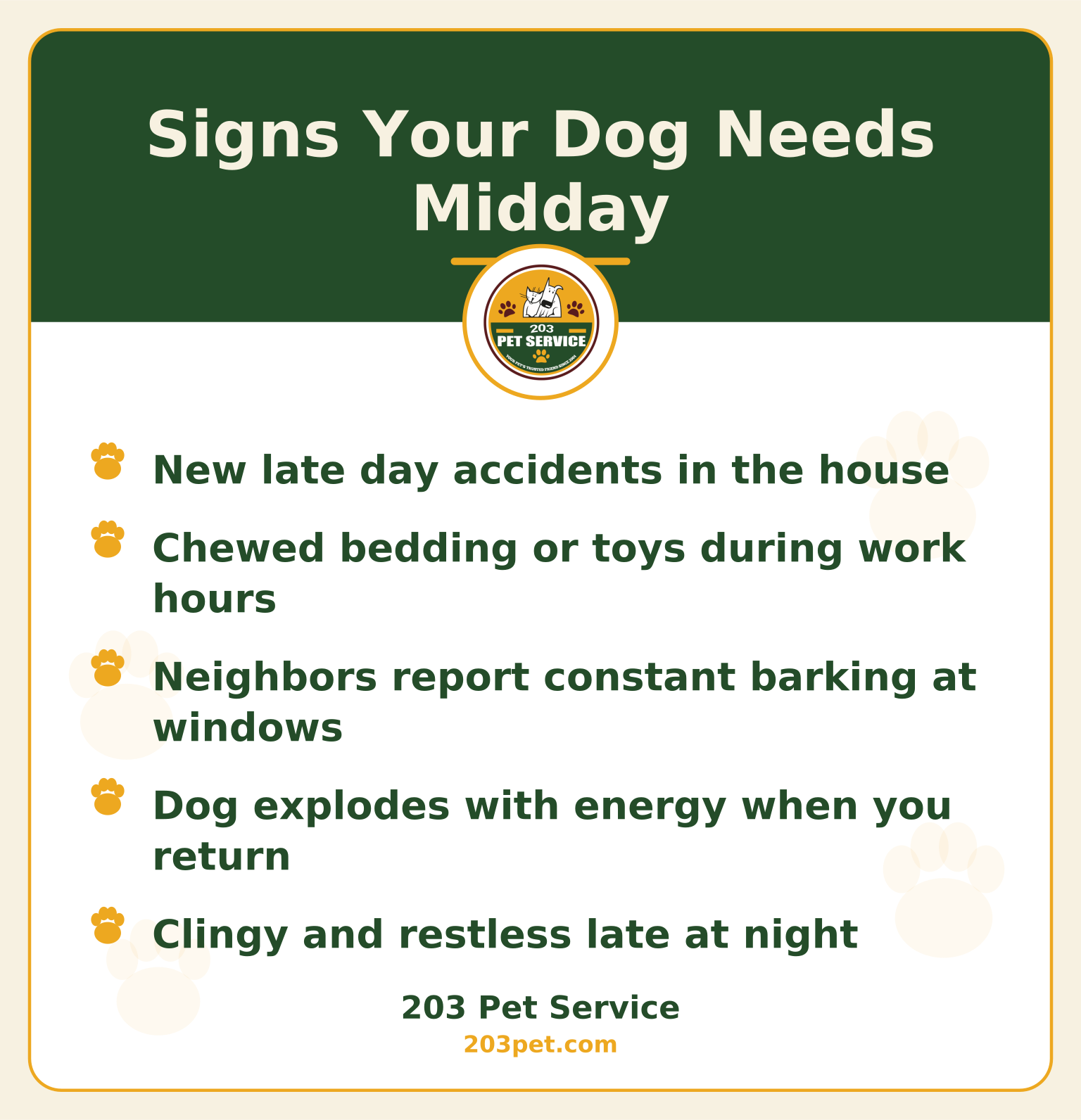
Your dog cannot text you from the crate, but they usually give clear signs that a lunchtime walk would help. You might see those signs in their behavior before and after work, or in your house itself.
Many new dog walking clients call us after they notice a pattern. Some common signs:
- New accidents in the late afternoon, even though the dog is "house trained"
- Chewed bedding, shredded toys, or raided trash cans during work hours
- Excessive barking outside the window or door, reported by neighbors
- A dog that is almost frantic with energy when you walk in the door
- Clingy, restless behavior at night because they slept all day and are wired at 9 p.m.
Age and health play a big part. A young, healthy adult might physically hold it, but that does not mean they should. The American Kennel Club's exercise guide explains that many breeds, especially working and sporting dogs, need real daily movement and mental work, not just a quick yard break.
Puppies and lunchtime walks
Puppies almost always need a midday visit. Their bladders are small and their bathroom schedule ties closely to meals, water, and excitement. On top of that, they are usually in the middle of their vaccine series. The AKC puppy vaccine schedule reminds owners that young puppies are still building immunity in those first weeks and months, so safe, controlled potty breaks at home really matter.
A steady weekday walk visit for a puppy is more like a potty and play visit. Out to pee, maybe a short walk depending on age and vaccines, then back in for some basic training or quiet yard sniff time. That structure supports house training and social skills without overwhelming them.
Adult dogs and lunchtime walks
Healthy adults, especially in their middle years, are the group most people push to "just hold it." They might manage for a while. Over time you see the trade offs. Destruction, anxiety, weight gain, or a dog who simply seems flat and bored.
For these dogs, a midday walk is often the difference between a dog who paces all afternoon and a dog who naps calmly until you get home. In our experience walking dogs in Fairfield County since 2004, a simple 20 to 30 minute weekday walk cuts down barking and stress in a very direct way.
Senior dogs and lunchtime walks
Seniors almost always benefit from more frequent outdoor breaks and gentle movement. Joints stiffen. Bladders weaken. Vision and hearing may fade. The PetMD guide to senior dog care recommends adjusting exercise and routine as dogs age, including shorter but more regular walks and close monitoring for changes in bathroom habits.
For older dogs, we often slow the pace, keep the route shorter, and focus the visit around bathroom needs, light movement, and simple comfort. Many senior dogs in our weekday walking membership in Southport and Black Rock have been with us for years. We have simply dialed back distance and added extra time for stairs and sniff breaks.
If you see new accidents, hesitation on stairs, or a dog that seems restless or uncomfortable by mid-afternoon, that is your sign to look at a midday visit.
What really happens during a 203 Pet midday dog walk visit?

A real midday walk with 203 Pet Service is quiet, predictable, and methodical. We are not rushing in and out. We follow a clear pattern from arrival to lockup every time.
We also walk dogs as an ongoing walking membership, not as random one-off visits. That means your dog sees the same familiar salaried employee most days, and that person really gets to know your dog and your house setup.
Arrival and entry
Your walker arrives within the agreed visit window and lets themselves in with your key, lockbox, or smart lock. We set this up together during your initial sign up. Keys, locks, and alarm codes are handled carefully and labeled in a way that protects your privacy.
203 Pet Service uses W-2 employees, not contractors. That matters here. Our walkers are hired, trained, and supervised by us long term, not picked off an app for the day. PetMD's checklist for choosing a pet sitter stresses the need for real training, insurance, and a clear emergency plan. That is built into how we hire and schedule.
When your walker comes in, they call your dog by name and greet them the way you prefer. Some dogs do best with calm, low-key entry. Others bounce and wiggle and want to say hello first. We match the greeting to your dog.
Leash on and quick check in
Before we walk out the door, we do a very short health and safety check in. It takes less than a minute, but it matters. We look at:
- Energy level: is your dog bright and normal or oddly quiet
- Gait: any limp when they first stand up
- Overall look: anything unusual about eyes, nose, breathing, or coat
We clip on your leash or use one of ours, check collar or harness fit, and make sure tags are secure. Many vets, including VCA Animal Hospitals' walking safety tips, recommend secure identification and proper equipment before every walk. We agree.
The walk itself: pace, route, and potty routine
Most weekday walks fall in the 20 to 30 minute range, with a focus on potty needs first, then exercise and sniffing second. We adjust pace based on weather, age, and health.
For a fit young dog in Westport, that might mean a brisk loop with some training refreshers at quiet corners. For a senior in Bridgeport, it might be a slow stroll on the nearest block with more time spent just standing and sniffing a patch of grass.
What does not change is our focus on bathroom needs. Your walker watches for both urine and stool and notes anything unusual in your visit report. The PetMD walking guide points out that walks are one of the easiest times to spot early changes in a dog's health, simply by watching their posture, bathroom habits, and recovery after light exercise. We see your dog on their "normal" days, so we are often the first ones to catch a subtle shift.
Water, snacks, and wipe downs
When we come back inside, your walker brings your dog in, removes the leash, and heads to the water bowl. We refresh water every visit unless you request otherwise. After exercise, access to clean water matters. It helps your dog cool down and stay hydrated. The Merck Veterinary Manual notes that normal canine function depends heavily on regular hydration, especially during exercise or in warmer weather.
If you have left a small snack or specific treat instructions, we follow those too. Many owners leave a few kibble pieces or a dental chew for after the walk. We avoid any foods that are not clearly approved in writing, so we keep treats consistent with your vet's plan.
We also handle simple wipe downs. That might mean drying off wet paws after a slushy Fairfield snow, wiping mud after a rainy day in Stratford, or towel drying a dog who stepped in a puddle on a humid Bridgeport afternoon.
Basic home check before we leave
Before we lock up, we do a quick pass through the areas we used. We confirm:
- Doors we used are locked as requested
- Alarm is reset the way we found it or the way you asked
- Lights or fans we turned on are set back if needed
- Nothing looks off in the main living area where your dog stays
We are not a home security company. That said, after 22 years of weekday visits, we know when something looks wrong or out of place. If we ever find a door wide open that should not be, or water on the floor from a leak, we contact Robyn in the office right away so she can reach you.
How do we build a steady weekday walking routine for your dog?

We build a steady weekday walking routine by matching the visit time, length, and walker to your dog's real needs and to your work schedule, then keeping that pattern as consistent as possible.
Most clients find us when they search for dog walking in Eastern Fairfield County or when their vet or neighbor refers them. Once you reach out, we schedule a phone conversation to learn about your dog, your home situation, and your normal weekday hours.
Picking the right time window
For dogs who eat breakfast before 8 a.m., a visit between 11 a.m. and 2 p.m. usually works best. That gives enough time for food and water to move through their system, but does not push the bladder or bowels too late in the day.
We talk through your commute, meeting schedule, and any days you know you are home. Together we decide which weekdays make sense and what time window fits. Many clients in Fairfield and Westport choose a steady Monday to Friday plan. Others in Easton or Southport pick three steady days a week, like Monday, Wednesday, and Friday.
Helping your dog learn the pattern
Dogs adjust fast when the visits repeat. You will usually see your dog move to the window or crate door around the same time each day once the walks have been going for a couple of weeks. They know their walker is coming.
That predictability helps with house training for puppies, reduces stress for anxious dogs, and can ease separation anxiety for dogs who struggle when you leave. Regular, low-key coming and going also supports good social habits. The AKC guide to preparing for a puppy talks about building a regular daily rhythm. Midday walks fit right into that.
Adjusting for seasons and for your dog
We live here too, so we know what January in Bridgeport feels like and what August in Black Rock feels like. Routes and pacing change with the weather. In hot weather we shorten sun exposure, stick to shade, and watch closely for any signs of heat stress. In winter we watch for salt on sidewalks and icy patches.
If your dog has a medical change, we adjust quickly. Maybe your senior lab in Stratford starts arthritis medication and your vet suggests shorter walks. Maybe your adolescent herding dog in Fairfield suddenly has more energy and your trainer wants more structured walking. Because our walkers see your dog so often, those adjustments are smooth.
If you ever add travel on top of your work schedule, we can layer in pet sitting visits or vacation care using the same salaried employees who walk your dog during the week. That way your dog keeps seeing the same trusted person or small group of people.
Video: See what it looks like when a 203 Pet Service walker arrives at your home for a visit.
How do we handle safety, trust, and emergencies on your dog’s walk?

We handle safety and trust by using trained W-2 employees, clear emergency steps, and steady communication. You are not handing your house keys and your dog to a random person from an app. You are working with a local company that has walked dogs in Fairfield County since 2004.
Trained W-2 walkers, not gig workers
Every person who walks your dog is a salaried W-2 employee of 203 Pet Service. That means we hire, background check, train, and supervise them directly. They are covered under our insurance and they live locally in Eastern Fairfield County.
Jason, our owner, brings 5 years as a veterinary technician at Greenfield Animal Hospital in Fairfield, 2 years as a pet store manager, and 22 years running 203 Pet Service. He is an Animal Behavior College certified dog trainer and a certified Pet First Aid and CPR instructor. Those credentials shape how we train our walkers and how we write our safety protocols. The AKC first aid guide outlines how early response and calm handling affect outcomes in emergencies. We build that thinking into daily visits, even when things are normal.
Leashes, IDs, and walking safety
We walk dogs on leash and use collars or harnesses that are secure and fitted. We encourage owners to keep tags current and to microchip their pets. The ASPCA microchipping FAQ explains how microchips help reunite you with your pet if a collar fails or a door opens unexpectedly.
We match routes to each dog. A reactive dog in Bridgeport might walk on quieter side streets and avoid crowded corners. A social butterfly in Southport might enjoy a little more variety. We follow safety advice similar to what VCA's dog walking safety tips describe, like watching weather, checking gear, and keeping an eye on footpads, breathing, and body language during the walk.
Our emergency protocol on walks
If something ever seems off during a visit, our walkers do not guess or wait. They follow a clear three step emergency protocol.
Frequently Asked Questions

About This Topic
What actually happens during a typical midday dog walk with 203 Pet Service?
Your walker quietly comes in, leashes your dog, and does a real walk in your own neighborhood, not just a quick yard let-out. They give a potty break, light exercise, fresh water, and a quick check that everything looks normal at home. Then they settle your dog back in so you can keep working without clock‑watching.
How do I know if my dog really needs a regular midday walk?
If you are gone 6 to 10 hours most weekdays, your dog almost certainly needs a midday break. Signs include accidents, pacing, barking at every sound, or exploding with energy the second you walk in. A standing midday visit from 203 Pet Service gives them a predictable bathroom break, movement, and company so they’re calmer when you get home.
How long are your midday dog walks and what time do you come?
Most clients book a 20, 30 minute visit scheduled in a late‑morning or lunchtime window, typically between 10 a.m. and 3 p.m. We’ll set a consistent time frame that fits your workday and your dog’s bladder. Your walker aims for the same time each day so your dog’s routine stays steady.
Can you handle puppies or senior dogs who need extra bathroom breaks?
Yes, we regularly walk both puppies and seniors who can’t comfortably hold it all day. For puppies, we can do shorter, more frequent visits to support house‑training. For seniors, we move at their pace, watch for mobility or urinary issues, and keep the route simple and safe right in your Fairfield County neighborhood.
Is my dog actually walked, or is it just a quick yard potty break?
With 203 Pet Service, a midday visit includes a real walk, not just opening the door and hoping for the best. We leash your dog and walk your local streets or usual route, then give them time to sniff, potty, and move their body. If weather or health limits walking, we adjust but still focus on a meaningful break.
What if my dog is shy, nervous, or barks at new people coming in?
We take it slow with nervous or vocal dogs. First, we do a meet‑and‑greet so your dog can get to know their walker while you’re home. Then we keep greetings calm and predictable, follow your handling instructions, and stick to the same walker whenever possible so your dog builds trust and feels safer with midday visits.
Do you walk dogs in my area of Fairfield County at lunchtime?
We offer weekday midday dog walks in many quieter neighborhoods of Eastern Fairfield County. That includes parts of Fairfield, Stratford, Westport, Easton, Southport, Black Rock, and Bridgeport. If you’re unsure, just share your cross streets or ZIP code and we’ll confirm whether your home is in our regular walking routes.
How do I get started with a standing weekday midday walk schedule?
You’ll first reach out with your location, your dog’s age, and how long they’re alone during the day. From there, 203 Pet Service helps you choose visit length and frequency, then sets up a meet‑and‑greet at your home. Once you’re set up in our system, we lock in your standing midday schedule and you’re done.
About 203 Pet Service
What areas does 203 Pet Service cover in Fairfield County?
We provide professional dog walking, pet sitting, and training services across Eastern Fairfield County, Connecticut. We proudly serve families in Fairfield, Stratford, Westport, Easton, Southport, Black Rock, Bridgeport, Shelton, Devon, Trumbull, Weston, and Wilton. 203 Pet Service has cared for pets in Fairfield County since 2004, and every visit is handled by a trained, W-2 salaried employee who is background checked and fully insured.
Why does 203 Pet Service use salaried W-2 employees instead of independent contractors?
We believe salaried W-2 employees provide more reliable, accountable, and professional pet care. Unlike independent contractors, our salaried employees go through careful background checks, full training, and are fully insured. This employment structure means consistency, accountability, and peace of mind for Fairfield County pet families.
How long has 203 Pet Service been in business?
We have served Fairfield County pet families since 2004. That is 22 years of reliable, professional pet care. Our longevity speaks to our care for safety, consistency, and real animal welfare. Many of our clients have been with us for over a decade, and their referrals remain our best source of new business.
What qualifications do 203 Pet Service employees have?
Every member of our salaried W-2 team goes through careful background checks, professional pet care training, and ongoing education in animal behavior and safety. Owner Jason Hofmann personally trains each employee, drawing on 29 years in professional pet care as a veterinary technician, pet store manager, and ABC certified dog trainer. We do not hire hobby pet sitters. We employ career pet care professionals.