
What Really Happens in a Drop-In Pet Visit Near You
Quick answer: During a drop-in pet visit in Eastern Fairfield County, a trained 203 Pet Service employee comes to your home to walk your dog or check on your cat, refresh food and water, clean up, and give plenty of attention. They follow your routine, note any concerns, lock up carefully, and then send you a detailed visit report with photos so you know exactly what happened.
What really happens in a drop-in pet visit near you If you have never booked a drop-in pet visit, it can feel a little scary to hand your keys to someone and hope it all goes smoothly. One of our clients in Fairfield told me she sat in the commuter lot off I-95 the first day we visited, refreshing her phone every 30 seconds. Once she saw the update, the photos, and a clear breakdown of what we did with her dog, she relaxed. She told me, "If I had known it was this structured, I would have started years ago."
That is the goal of this post. To walk you through exactly what happens during a drop-in pet visit in Eastern Fairfield County, from the first meet and greet to the update you get after every single visit. No guesswork. No mystery.
203 Pet Service uses W-2 salaried employees, not contractors. So the people who come into your home in Fairfield, Stratford, Westport, Easton, Southport, Black Rock, and Bridgeport are trained, supported, and supervised by a local company that has been doing this since 2004.
What is a drop-in pet visit and when does it help most? Photo by Elisa Kennemer on Unsplash
A drop-in pet visit is a scheduled stop at your home where we check on your pet, let dogs out or walk them, refresh food and water, clean up, and give some attention. Your pet stays in their own home, on their normal routine, while we come to them.
Drop-in visits help most on busy days when you cannot get home, but you do not need overnight care. Think long work days, day trips to New York, full-day kids sports tournaments in Trumbull, or a late night event in Westport.
Because your dog or cat stays at home, a drop-in visit keeps stress low. Many cats and a lot of senior dogs do better in their own space, instead of going to a kennel. PetMD explains that keeping a pet in a familiar environment with a consistent sitter reduces stress and behavior issues, which matches what we see every day.
For dogs, we often pair drop-in visits with an ongoing walking plan. Our dog walking service in Fairfield, Stratford, and Bridgeport runs like a steady membership, not a one-off favor. Your dog gets used to regular midday visits, then on extra busy days, we add an evening drop-in on top of that.
Common times people use drop-ins:
- Long work shifts where you are gone 9 to 12 hours
- Kids travel sports days that run from early morning into the evening
- Day trips to Boston or New York City
- Late holiday parties where you will not be home until after midnight
- Short getaways where you do not need overnight house sitting
We also see a lot of new puppy owners start with drop-in visits. While your puppy is still on a vaccine schedule, you often want to limit exposure to other dogs. The American Kennel Club lays out a full vaccine plan that runs over several months, so in that window, home visits can be a safer option than group care.
Why do we always start with a meet and greet first?
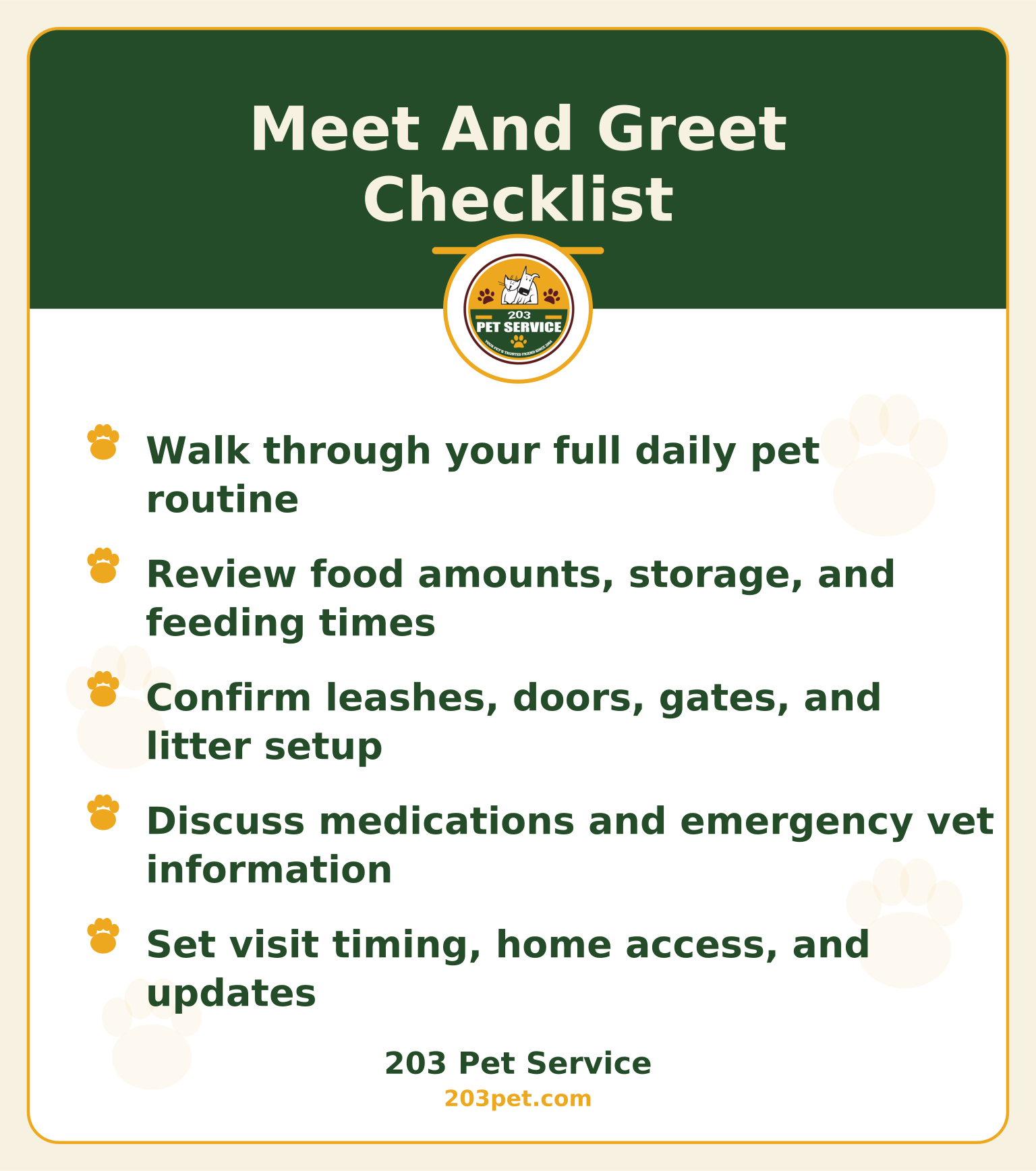
We always start with a meet and greet so your pet can meet us at home, you can ask questions, and we can walk through the whole routine together. It is a working visit, not a quick hello at the door.
During that first visit, we slow things down and really look at how your day with your pet works. In many homes in Fairfield and Stratford, we stand in the kitchen and talk through each step.
- Where the food is stored and how much to feed
- Where the leash and harness hang
- Which doors and gates we should use
- Where litter boxes sit and how you like them scooped
- Where you keep cleaning supplies for accidents
- Any medications and how you give them
If your dog needs daily exercise beyond simple yard time, we will also talk about a regular walking plan. Some dogs in Westport, Southport, and Black Rock do best with a steady weekly schedule of walks plus occasional extra drop-ins when life gets busy.
We also use the meet and greet to set clear expectations:
- Exact visit timing windows
- How we access your home (keys, lockbox, smart lock, building access)
- Where you want us to put leashes, towels, and used food dishes
- What kind of updates you want after every visit
Good communication early on matters. PetMD recommends that pet sitters collect detailed instructions, health information, and emergency contacts during the first meeting, and that is exactly what we do. We also confirm your veterinarian, including whether you use places like VCA Shoreline Animal Hospital in Shelton or MedVet Norwalk for emergencies.
Last piece here. We also use the meet and greet to see how your dog or cat reacts to a new person. Some animals warm up right away. Some need slower intros and a quieter approach. That first visit tells us how to plan.
What do we actually do during a typical dog drop-in visit?
📺 The Science Behind Daily Dog Walking - 203 Pet Service
During a dog drop-in visit, we check your home, greet your dog calmly, take them out for a potty break or walk, refresh water and food, give some play and attention, and leave your house locked up the way you requested.
Think of it as a focused, structured visit with a checklist, not just "letting the dog out."
Arrival and quick safety check
When we arrive, we confirm entry looks normal. No open doors or windows. No damage or obvious issues outside. We follow your exact instructions for alarms, lights, and locks.
As we walk in, we listen and scan. Is your dog barking in a different way than normal? Do we smell anything odd like gas or strong chemicals? If something looks off, we pause and assess before we move on.
Calm, consistent greeting
Once we see your dog, we greet them the same way every time. Consistency matters. A lot of dogs in apartments in Bridgeport and Black Rock get over excited by sudden movement or loud voices. So we stick to a calm voice, steady body language, and the same routine you use.
If you have a puppy, we may ask to keep greetings low key to avoid reinforcing jumping. The AKC notes that early, consistent routines help puppies feel secure and learn good manners faster, which matches what we have seen with many Fairfield County pups.
Potty break or walk
Next, we leash up and head outside. For some dogs, that is a quick potty break in a fenced yard. For others, especially in Fairfield, Stratford, and Westport, it might be a neighborhood walk.
How long we walk depends on your pet's age, health, and what you booked. We also watch the weather. On very hot days, walks are short and slow so we protect paws and heart health. The AKC explains that exercise needs vary by breed and age, so a young Lab in Easton will get a different pace than a senior Shih Tzu in Southport.
During the walk, we pay attention to: Gait and limping Breathing and heat tolerance Stool consistency and any signs of stomach upset Reactivity to other dogs or people.
If your dog is part of our ongoing walking membership through our dog walking service, these regular drop-ins give us a clear picture over time. We catch small changes early, like a little stiffness in the back legs or slower movement on stairs, so you can talk with your vet. PetMD notes that subtle shifts in mobility and energy are often the first signs of aging or joint pain in senior dogs.
Water, food, and meds
After we come back inside, we change the water and follow your feeding plan. We measure food, we do not just "eyeball it." If your dog gets lunch, a snack, or a puzzle toy, we get that set up too.
For medications, we use your written instructions from the meet and greet. We double check name, dose, and timing. If something seems off, we reach out instead of guessing. If your dog eats very fast or has a history of bloat or stomach issues, we slow down feeding and note any burping, drooling, or restlessness afterward. UC Davis lists these as early signs of gastric problems that need quick attention in large breed dogs, and you can read more in their Animal Health Topics library.
Play, attention, and quick health check
Once the basics are covered, we give your dog some one-on-one time. That might be fetch in the yard, a tug game in the living room, or just a quiet cuddle on the floor for a shy or older dog.
While we hang out, we look for:
- Unusual licking or chewing at paws or skin
- Redness around ears or eyes
- Coughing, sneezing, or labored breathing
- Changes in body odor that can signal ear or skin infections
If we notice anything that seems new or worrying, you hear about it in the visit report. If it seems urgent, we call you and follow our emergency steps, which I will explain later.
Clean up and secure the house
Before we leave, we clean up any accidents, wipe paws if needed, straighten anything pet-related we used, and reset the home the way you asked.
Then we lock up, secure gates, handle alarm systems, and do a last check that your dog is settled safely. Many clients in Bridgeport and Black Rock also ask us to adjust blinds or lights, which we are happy to do.
If all this sounds pretty structured, it is. It needs to be. A good drop-in visit gives your dog both care and a sense of routine.
What happens during a cat or small pet drop-in visit?

During a cat or small pet visit, we keep things quiet and predictable. We feed, refresh water, scoop litter or clean cages, give play or brushing if your pet likes it, and check for any signs they are not feeling well.
Cats and small pets often hide changes until they feel pretty sick. So a big part of our job is to notice small things, not just refill bowls.
Gentle greeting and finding your cat
When we enter a home in Fairfield or Westport with cats, we move slowly. Quiet voices. No stomping around. For shy cats, we often sit in the room and talk softly so they can sniff us out on their terms.
Sometimes they pop right out as soon as they hear the food can. Other times, we need to check usual hiding spots to confirm we saw them. Cornell's feline experts point out that hiding more than normal, changes in social behavior, or sudden aggression can all be early signs of pain or illness, not "a bad mood." You can see their list of common warning signs in the Cornell Feline Health Center resources.
Food, water, and litter
Next, we feed according to your schedule. Many cats in Southport and Easton are on specific diets for kidney or urinary health, so we follow those plans closely. We clean and refill water bowls and fountains, not just top them off.
For litter boxes, we scoop, bag, and take trash to the spot you prefer. We also check for:
- Changes in clump size or frequency
- Diarrhea or very hard stool
- Strong new odors that are not normal for your cat
- Urine outside the box, which can signal pain or stress
Those details matter. A cat that suddenly strains in the box or stops using it can be dealing with a urinary blockage, which is an emergency. Cornell lists that as one of the most serious problems male cats face, and early action can save their life in that situation.
Play, brushing, and watching body language
If your cat enjoys interaction, we pull out toys you set aside and give them a play session. For older cats, that may be gentle wand play. For younger ones, it can look more like a workout.
While we play or sit with them, we notice:
- How they jump on and off furniture
- Whether they groom normally or seem unkempt
- Eye and nose discharge
- Any new bald spots or scabs
We do the same for small pets like rabbits and guinea pigs. Fresh hay, pellets, greens if they are part of the diet, water changes, and spot cleaning cages. UC Davis covers many small pet health topics, from gut stasis in rabbits to dental problems in guinea pigs, in their Animal Health Topics library. Those issues often start with tiny shifts in eating, droppings, or behavior, which is why we look closely instead of just refilling the bowl.
If you want more structured daily care while you are away, our pet sitting service can include multiple cat drop-ins per day. Many families in Fairfield and Bridgeport like a morning and evening visit so cats stay on a true home routine.
We also provide dedicated cat care and can help you plan a schedule for solo cats, multi-cat homes, and households with both cats and dogs. You can read more on our pet sitting page or reach out through our contact page if you are not sure how many daily visits your cats need.
How do we keep your pet safe and your home secure every visit?

We keep your pet safe by using trained W-2 salaried employees, clear protocols, and a consistent routine for every visit. We protect your home by following strict lock-up habits and treating your keys and access just like we would want ours handled.
Most people do not realize how much structure sits behind a "simple visit." That structure is what lets you relax in Wilton or Weston or even out of state while we handle things at home in Fairfield County.
Trained, local W-2 employees
203 Pet Service does not use gig workers or random contractors. Our dog walkers and pet sitters are W-2 salaried employees. They are background checked, trained, and supported by owner Jason Hofmann, who brings 29 years of professional animal experience, including 5 years as a veterinary technician at Greenfield Animal Hospital in Fairfield.
That matters when something unexpected happens. The AKC notes that knowing basic first aid and when to seek emergency care can save a dog's life. As a Certified Pet First Aid and CPR Instructor, Jason trains our employees to handle those first minutes calmly while we get your vet involved.
Home security habits
Every visit has a clear entry and exit routine. Same doors. Same alarm steps. Same key handling. We do not take shortcuts.
In condos and apartments in Bridgeport and Black Rock, we also follow building rules for entry, parking, and common areas. That protects your relationships with neighbors and your management company.
Weather, minor issues, and changes in your pet
Bad weather does not stop us, but it does change how we work. On hot days, we shorten walks and shift play inside. On icy days, we take safer routes and move more slowly on stairs and sidewalks. On heavy rain days, we bring towels if you want us to dry your dog before they go back into the house.
If we see a minor issue, like a small cut on a paw or mild diarrhea, we record what we see, clean what we can, and let you know in detail. If it looks like more than a minor issue, we move into emergency mode.
Our emergency protocol is simple:
- The sitter or walker calls Robyn, our office manager, right away.
- Robyn contacts you to explain what is happening and discuss next steps.
- The sitter or walker stays with your pet until you or your vet gives us new instructions.
If we cannot reach you and it looks urgent, we use the vet information you gave us and get help. For severe issues, we often head to places like MedVet Norwalk, where the emergency team can stabilize and treat quickly.
Frequently Asked Questions
About This Topic
What exactly happens during a typical drop-in pet visit at my home?
During a drop-in, a 203 Pet Service employee comes to your home, follows your normal routine, and focuses on the basics first, potty break or walk, food and water refresh, and litter or yard clean‑up. Then they spend the remaining time on attention, play, or quiet company, depending on your pet. Before leaving, they lock up carefully and send you a detailed report with photos.
How is a drop-in visit different from hiring a regular dog walker?
A standard dog walk is usually just that, a walk and quick water check. A 203 Pet Service drop‑in visit is broader: we can walk your dog, check on cats, refresh food and water, clean up accidents or litter, and do a quick home check. It’s designed for busy days when you’re gone longer, not just a mid-day stroll.
Can you really keep my dog or cat on their normal routine?
Yes, that’s the whole point of drop‑in visits. During your meet and greet, you show us exactly how you feed, walk, and interact with your pet, and we document it in your profile. Our W‑2 employees follow that routine each visit, from preferred walking routes to feeding amounts, which keeps stress low, especially for cats and senior dogs.
I’m nervous about giving someone my keys, how does 203 handle security?
203 Pet Service only uses trained, supervised W‑2 employees, no random gig workers, so you’re not handing keys to a stranger off an app. Keys and access codes are labeled securely, not with your name or address, and stored according to our internal safety procedures. We lock up carefully after each visit and confirm entry and exit in your visit report.
How often should I book drop-in visits for my dog or cat?
For most dogs, we recommend at least one mid‑day drop‑in on long workdays, and two to three visits daily if you’re gone all day into the evening. Many cats do well with one or two visits per day, depending on age and medical needs. 203 Pet Service can help you build a schedule based on your pet’s age, energy level, and bathroom routine.
What if my pet has meds or special instructions during the visit?
When you set up services with 203 Pet Service, you’ll add all medication details and special instructions to your profile, doses, timing, hiding spots for pills, and any red‑flag symptoms. Your sitter follows that written plan at every drop‑in and notes what was given in your visit report. If something looks off, they’ll contact you right away before making changes.
Do you serve my town in Eastern Fairfield County for drop-in visits?
203 Pet Service provides drop‑in visits across Eastern Fairfield County, including Fairfield, Stratford, Westport, Easton, Southport, Black Rock, and Bridgeport. If you are in one of these towns, reach out and we will confirm your address, talk through your schedule, and let you know exactly what services we can offer at your home.
About 203 Pet Service
What areas does 203 Pet Service cover in Fairfield County?
We provide professional dog walking, pet sitting, and training services across Eastern Fairfield County, Connecticut. We proudly serve families in Fairfield, Stratford, Westport, Easton, Southport, Black Rock, Bridgeport, Shelton, Devon, Trumbull, Weston, and Wilton. 203 Pet Service has cared for pets in Fairfield County since 2004, and every visit is handled by a trained, W-2 salaried employee who is background checked and fully insured.
Why does 203 Pet Service use salaried W-2 employees instead of independent contractors?
We believe salaried W-2 employees provide more reliable, accountable, and professional pet care. Unlike independent contractors, our salaried employees go through careful background checks, full training, and are fully insured. This employment structure means consistency, accountability, and peace of mind for Fairfield County pet families.
What services does 203 Pet Service offer?
We provide daily dog walking, pet sitting (overnight and vacation), cat care, backyard play sessions, litter box scooping, and puppy training classes. All services are done by our salaried W-2 employees who bring professional training and genuine care to every visit. Whether you need regular midday walks or full vacation care, we cover all 12 Fairfield County service towns.