
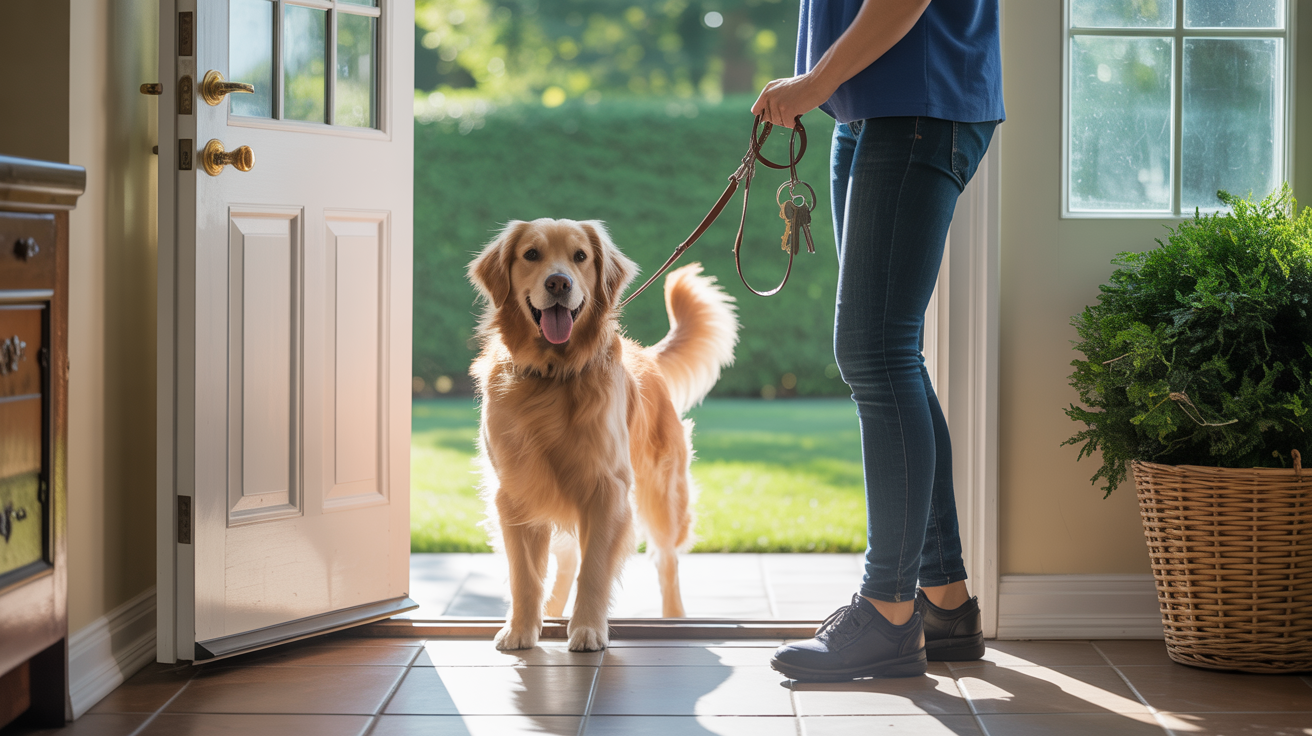
Dogs thrive on routine - and this isn't just folk wisdom from experienced dog owners. A growing body of scientific research confirms that consistent schedules profoundly impact your dog's physical and psychological wellbeing. From reduced anxiety to improved digestion, from better sleep to stronger bonds with their caregivers, predictable routines create happier, healthier dogs. This guide explores the science behind why consistency matters and how to build it into your dog's life.
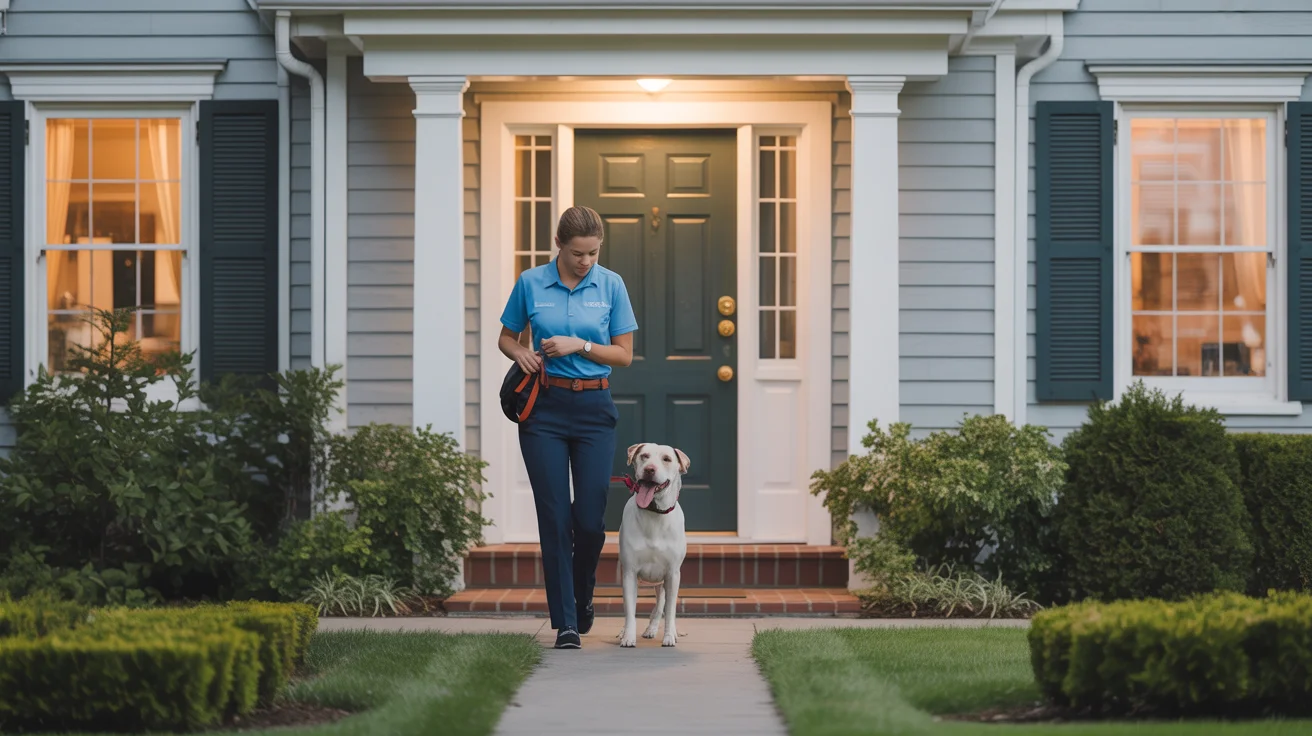
Consistency starts with reliable arrival times - something dogs learn to anticipate and depend on
Whether you're trying to reduce behavioral problems, help an anxious dog, or simply optimize your dog's daily routine, understanding the science of consistency will transform how you approach your dog's care.

The Science: Dogs and Circadian Rhythms
Like humans, dogs have internal biological clocks - circadian rhythms that regulate nearly every aspect of their physiology. According to research published in the Journal of Veterinary Behavior, these rhythms control:
- Digestive function: The release of stomach acid, digestive enzymes, and gut motility follows predictable patterns tied to feeding schedules
- Hormone production: Cortisol (stress hormone), melatonin (sleep hormone), and other key hormones fluctuate in predictable daily cycles
- Sleep quality: Dogs need 12-14 hours of sleep daily, and consistent routines improve sleep depth and duration
- Alertness and energy: Activity levels naturally ebb and flow throughout the day based on internal timing
- Immune function: The immune system's effectiveness varies throughout the day, with certain processes peaking at specific times
When routines are disrupted, these internal clocks become desynchronized - a state researchers call "social jet lag." Just as humans experience jet lag when traveling across time zones, dogs experience physiological stress when their expected routines are unpredictable. A 2017 study in Applied Animal Behaviour Science found that dogs with inconsistent schedules showed elevated cortisol levels even during periods of rest - a sign of chronic stress.
🔬 What the Research Says
A study from the University of Helsinki (2020) analyzing over 6,000 dogs found that dogs with regular daily routines showed significantly lower rates of fearfulness, noise sensitivity, and separation anxiety compared to dogs with irregular schedules. The researchers concluded that "predictability in daily life appears to have a protective effect against anxiety-related behaviors."
Behavioral Benefits of Consistent Walking Schedules
The psychological impact of routine on dogs cannot be overstated. According to the American Kennel Club, consistent schedules provide several key behavioral benefits:
1. Reduced Anxiety Through Predictability
Dogs can't read clocks or calendars, but they develop remarkably accurate internal timing. When walks happen at predictable times, dogs can anticipate them - and this anticipation itself reduces anxiety. The VCA Hospitals behavioral team explains that predictability gives dogs a sense of control over their environment, which is fundamental to psychological wellbeing.
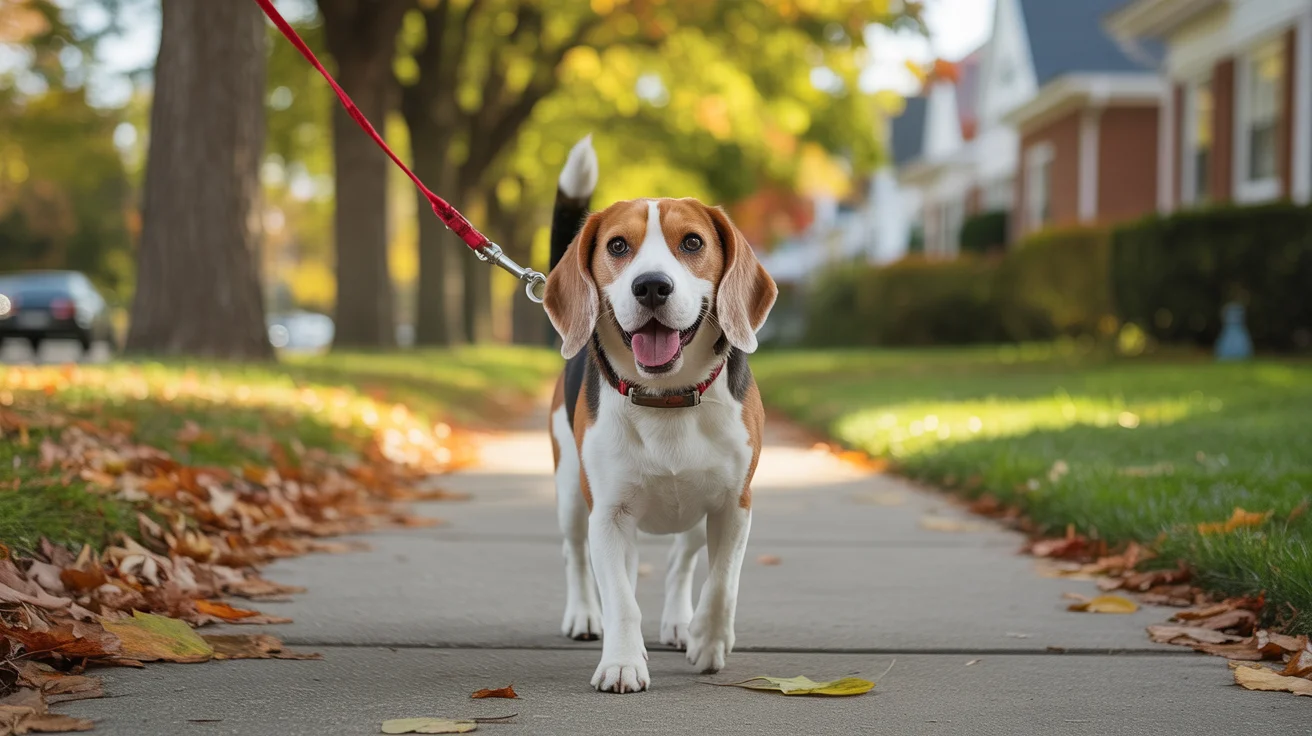
Familiar routes become comforting - dogs find security in knowing what to expect
Think about it from your dog's perspective: they don't know you'll be home from work at 6 PM. They don't know their walk will happen. Without predictable patterns, every day is filled with uncertainty. Will I get to go out? When? For how long? This uncertainty creates chronic low-grade stress that manifests as hypervigilance, restlessness, and anxious behaviors.
2. Fewer Behavioral Problems From Unmet Needs
Many common behavioral problems - destructive chewing, excessive barking, hyperactivity, attention-seeking behaviors - stem from unmet physical and mental needs. According to the ASPCA, dogs who receive consistent exercise are significantly less likely to develop these problematic behaviors.
When dogs know their exercise needs will be met reliably, they can relax during downtime. When exercise is sporadic, dogs often remain in a state of pent-up energy and frustration that explodes into unwanted behaviors.
3. Better Housetraining Success
Consistent walking schedules are foundational to successful housetraining. The Humane Society of the United States emphasizes that dogs learn to "hold it" when they can predict when they'll have an opportunity to eliminate. Irregular schedules force dogs to either have accidents or experience discomfort from holding too long.
Regular bathroom breaks at predictable times allow dogs to develop the physical conditioning and confidence to hold elimination until appropriate opportunities. This is especially critical for puppies, senior dogs, and dogs with smaller bladders.
4. Improved Bonding and Trust
Consistency builds trust. When you (or your dog's regular walker) reliably meet your dog's needs at expected times, your dog learns they can depend on you. According to research on human-canine attachment from the journal PLOS ONE, dogs form stronger attachment bonds with caregivers who provide predictable care.
This trust extends beyond the walk itself. Dogs who trust their caregivers show better responses to training, are more resilient during stressful situations, and display fewer anxiety-related behaviors overall.
Physical Health Benefits of Regular Walking
Beyond behavioral benefits, consistent walking schedules optimize physical health in ways many pet owners don't realize:
Digestive Regularity
Exercise stimulates gut motility - the muscle contractions that move food through the digestive tract. According to PetMD, dogs walked at regular times develop predictable elimination schedules because their digestive systems synchronize to their activity patterns.
This matters for more than convenience. Regular elimination reduces the risk of constipation, anal gland problems, and urinary tract infections - all conditions that can develop when dogs hold elimination for irregular periods.
Joint Health and Mobility
Consistent moderate exercise is far better for joint health than sporadic intense activity. The American Veterinary Medical Association (AVMA) recommends daily walks over "weekend warrior" exercise patterns because:
- Regular movement keeps joints lubricated and cartilage healthy
- Consistent exercise maintains muscle tone that supports joint stability
- Gradual conditioning reduces injury risk compared to sporadic intense exercise
- Daily movement prevents the stiffness that develops from inactivity
Weight Management
According to the Banfield Pet Hospital State of Pet Health Report, over 50% of dogs in the United States are overweight or obese. Regular walking is the foundation of healthy weight maintenance. Sporadic exercise makes it difficult to maintain a healthy weight because caloric expenditure becomes unpredictable.
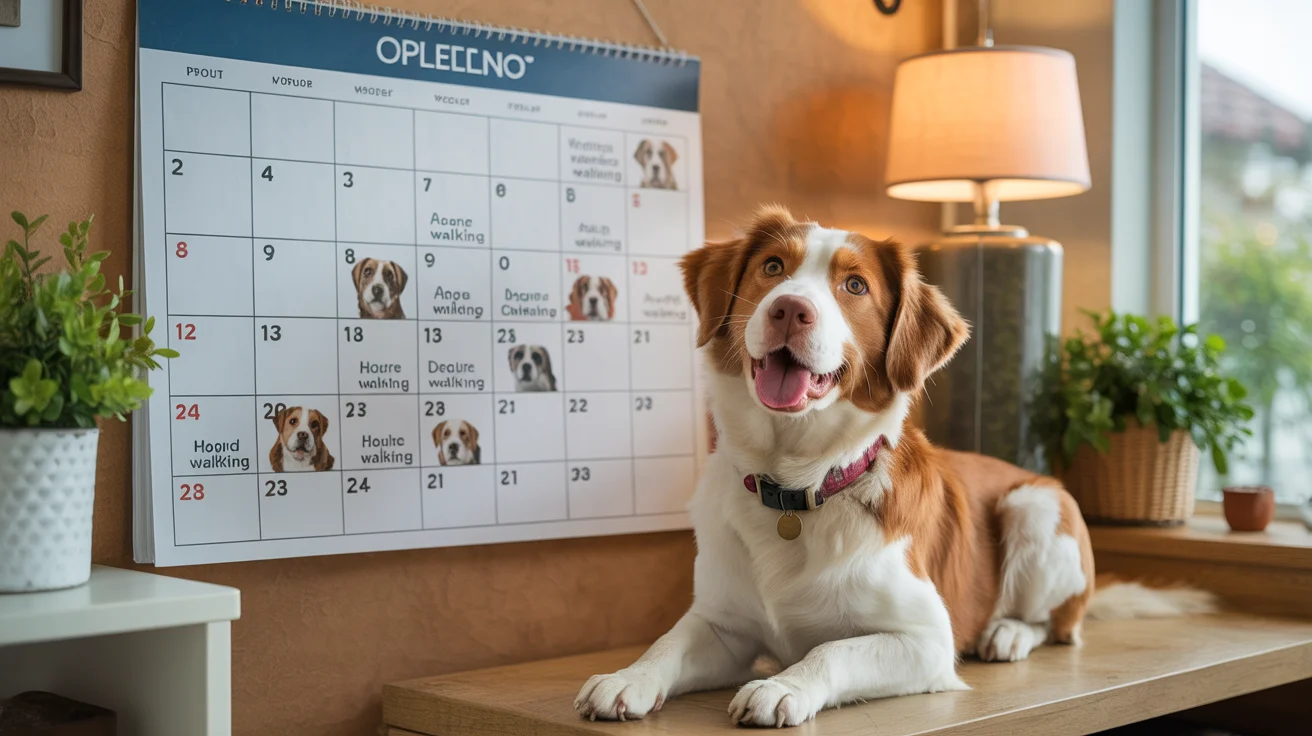
Scheduling regular walks ensures consistency even during busy periods
Cardiovascular Conditioning
Just like humans, dogs benefit from consistent cardiovascular exercise. Regular walking strengthens the heart muscle, improves circulation, and increases endurance. Dogs walked consistently develop better stamina and recover more quickly from exertion than those exercised sporadically.
The "Same Walker" Advantage: Why Familiarity Matters
Consistency isn't just about timing - it's about who provides the care. Research on human-animal relationships consistently shows that dogs benefit enormously from interacting with the same caregivers over time:
Trust Building With Familiar Handlers
Dogs form individual relationships with the people who care for them. A study published in Behavioural Processes found that dogs show significantly lower stress responses when handled by familiar people compared to strangers. Heart rate, cortisol levels, and behavioral signs of stress all decrease when dogs are with people they know and trust.
For professional dog walking, this means the same salaried W-2 team member walking your dog each day isn't a luxury - it's a fundamental component of reducing stress and maximizing benefit from the walk.
Early Detection of Health Changes
A consistent walker who knows your dog's normal behavior becomes an invaluable early warning system for health issues. According to PetMD, professional walkers often notice subtle changes that owners miss because they see the dog daily:
- Changes in gait or mobility that develop gradually
- Altered energy levels or enthusiasm for walks
- Changes in elimination patterns (frequency, consistency, straining)
- Behavioral changes like increased fearfulness or reactivity
- Subtle signs of pain like reluctance to jump or climb stairs
- Changes in drinking or panting during walks
A rotating cast of different walkers cannot provide this level of observation because they have no baseline for comparison. By the time changes become obvious to a stranger, problems may be advanced.
Understanding Individual Needs
Every dog is different. Some need slow, sniff-heavy walks. Others need vigorous exercise. Some are reactive to other dogs. Others are nervous in new environments. A consistent walker learns these individual needs and adjusts accordingly:
- Knowing which routes work best for your specific dog
- Understanding your dog's triggers and how to avoid or manage them
- Recognizing your dog's communication style and body language
- Adjusting pace and duration based on your dog's condition that day
- Building on training foundations you've established
✅ Signs Your Dog Benefits From Walker Consistency
- Excitement when they see their regular walker (rather than anxiety about a stranger)
- Relaxed body language during leash-up and departure
- Settled behavior after walks rather than continued restlessness
- Fewer accidents or anxious behaviors when you're away
- Your walker notices and reports small changes in behavior or health
Why Gig-Based Services Fail the Consistency Test
App-based dog walking platforms (Rover, Wag, Care.com, and similar services) operate on a gig economy model that fundamentally conflicts with the consistency dogs need. Understanding these structural limitations helps explain why many dogs don't thrive with such services:
Different Walkers Each Time
Gig platforms match available walkers with open requests - there's no mechanism to guarantee your dog sees the same person. Even if you request a specific walker, they may not be available when you need them. For dogs, this means constant adaptation to new people - new scents, new handling styles, new energy levels.
Variable Availability
Gig workers set their own schedules and can accept or decline work freely. Your preferred time slot may or may not have available walkers on any given day. This unpredictability gets passed on to your dog.
No Route Consistency
Different walkers take different routes based on their own preferences, familiarity with the area, and time constraints. Your dog never develops the comfort of familiar territory.
High Turnover
Gig work is inherently unstable. Walkers leave for full-time jobs, move away, or simply stop working the platform. Just as your dog develops a relationship with someone, they disappear.
Limited Accountability
Platforms take a percentage of fees but provide limited oversight. Quality varies dramatically between individual walkers, and there's no coordinated system to ensure your dog's ongoing needs are understood and met.
⚠️ The Hidden Cost of Inconsistency
A cheaper per-walk price from a gig service may actually cost more in the long run if inconsistency contributes to behavioral problems, anxiety, or missed health observations. The cost of treating separation anxiety, repairing destructive damage, or catching a health problem late far exceeds the difference in walking fees.
The 203 Pet Service Consistency Promise
For over 22 years, consistency has been the cornerstone of our approach to pet care. We structure our entire operation around providing the reliability dogs need:
Same Salaried W-2 Team Member Assigned
Your dog is assigned a specific team member who becomes their regular walker. This isn't a preference - it's our standard practice. Your dog sees the same familiar face every day, building the trust and relationship that makes walks truly beneficial.
Predictable Time Windows
We schedule walks in consistent time windows so your dog can anticipate when their walk will happen. This predictability reduces the anxiety of uncertainty and helps dogs settle between walks.
Backup Coverage From Known Team Members
When your regular walker is sick or on vacation, we don't send a stranger. Coverage comes from our existing team - people your dog has likely met before or who have been briefed on your dog's specific needs. Our office coordinates everything so there's never a gap in service.
Long-Term Staff Relationships
Our average employee tenure exceeds 10 years because we pay fair living wages to salaried W-2 team members. This isn't just good for our staff - it's essential for your dog. Low turnover means lasting relationships, deep familiarity with individual dogs, and the kind of observational expertise that only develops over time.
Detailed Communication
Because the same team member sees your dog regularly, they notice changes and can provide meaningful updates. You'll hear about your dog's mood, energy, elimination, and any observations worth noting - not generic "walk completed" notifications.
🐾 The 203 Pet Service Difference
We're not a platform that matches you with whoever's available. We're a local business with salaried W-2 team members who know your dog by name, know your home, know your preferences, and are invested in providing consistent, excellent care. That's the foundation our 22-year reputation is built on.
Building Consistency Into Your Dog's Life
Whether you walk your dog yourself or use a professional service, here's how to maximize the benefits of consistency:
Establish Regular Walk Times
Choose times that work with your schedule and stick to them as closely as possible. Dogs adjust to routines within a few weeks and begin anticipating walks at those times.
Use Consistent Routes
Familiar routes provide mental comfort. Dogs can relax and enjoy sniffing rather than being on high alert in unfamiliar territory. Vary routes occasionally for enrichment, but have a "home base" route that's reliably comfortable.
Maintain Consistent Rules
Whether it's you or a professional walker, dogs benefit from consistent expectations. If pulling isn't allowed on Monday, it shouldn't be allowed on Tuesday. Mixed messages create confusion and stress.
Consider a Midday Walk Service
If you work outside the home, a midday dog walk breaks up long stretches alone and provides the exercise and bathroom break your dog needs. Choose a service that prioritizes consistency over convenience.
Frequently Asked Questions
How long does it take for a dog to adjust to a new routine?
Most dogs adapt to consistent schedules within 1-2 weeks. You'll notice reduced anxiety around walk times and more settled behavior between walks as they learn to trust the routine.
What if my schedule is genuinely unpredictable?
A professional dog walking service can provide the consistency you can't. Even if your arrival home varies daily, knowing a reliable midday walk will happen gives your dog predictability to anchor to.
Does the same walker really make that much difference?
Yes. The science is clear that dogs show measurably lower stress responses with familiar handlers. Beyond stress reduction, a consistent walker provides observation, relationship-building, and individualized care that rotating walkers cannot match.
My dog seems fine with different walkers. Should I still prioritize consistency?
Some dogs are more adaptable than others. But "fine" isn't the same as "thriving." Even adaptable dogs benefit from reduced stress, better observation, and stronger relationships that consistency provides.
What about variety - don't dogs need new experiences?
Consistency in caregivers and schedules doesn't mean monotony. Within a consistent framework, you can provide enrichment through new sniff spots, occasional different routes, puzzle toys, and training challenges. The stability of routine actually frees mental energy for positive new experiences.
Experience the Consistency Difference
The science is clear: dogs thrive on consistent routines with familiar caregivers. If your current dog walking arrangement involves rotating walkers, unpredictable schedules, or high turnover, your dog may be experiencing chronic low-grade stress that undermines their wellbeing.
Ready to experience the consistency difference? Call us at (203) 682-6443 or schedule a consultation to learn how our approach to consistent, reliable dog walking can benefit your pet.
For more information on dog behavior and care, explore these resources: