Welcome to 203 Pet Service. How can I help you and your pet today?
Pet Care
Fairfield County
Connecticut
Why Your Dog and Cat Still Need an ID Tag Today
Jason Hofmann
September 16, 2026
15 min read
Share this article
Why Your Dog and Cat Still Need an ID Tag Today
Quick Answer: Your dog or cat still needs an ID tag because it is the fastest way for a neighbor or passerby to contact you if your pet gets loose. A microchip is a key backup that shelters and vets can scan, but most people cannot read it on the spot. A simple, clear tag on a collar often means a same day, stress free reunion.
Why Your Dog and Cat Still Need an ID Tag Today
If your pet is microchipped, you are already doing something smart for their safety. But your dog and cat still need a readable ID tag on their collar, because a tag is usually the fastest way a lost pet gets home. A chip is a great backup, not a full plan.
In plain terms, neighbors can read a tag. They cannot read a microchip. That one detail is what turns a scary missing pet story into a quick phone call and a happy reunion.
No. A microchip alone is not enough, because the person who finds your pet usually has no way to read it. Only a vet or shelter with a scanner can see the number in the chip and look it up.
Microchips matter. They are permanent, they do not fall off, and they save a lot of pets. The ASPCA explains how microchips help reunite lost pets by giving shelters a way to match a chip number to your contact info. That is a big deal if a collar slips off, or if someone finds your dog and brings them to a clinic hours later.
But that whole process needs a chain of steps. Someone has to catch your pet. Decide to drive to a vet or shelter. The clinic has to scan. Then they have to reach you.
Now compare that to a simple tag. A neighbor sees your dog in their yard. They crouch down, read your phone number, and call you while your dog is still wagging at their feet. Five minutes. No car. No scanner.
So think of the chip as your safety net if the tag fails. Not as a reason to skip a tag.
What will a stranger actually do if they find your dog?
Most people who find a friendly stray dog will check the collar first, not drive to a vet. They look for a tag, read the number, and call you if they can reach you right away.
I have watched this happen on the sidewalks of Bridgeport and along the beach in Fairfield. Someone spots a loose dog, calls them over, reaches for the collar, and you can almost see the relief on their face when there is a clear tag with a number.
That is human nature. People want the simple option. If they can call you, they will. If they do not see a tag, they have to decide what to do next.
On a busy afternoon in Westport or Southport, that might mean they bring the dog home for a while. Or post a photo in a local Facebook group. Or, if they have time, they drive to a vet to check for a chip. That all takes longer. Your dog is stressed. You are panicking.
VCA shares that safe dog walking includes proper identification so a lost dog can be returned quickly if they slip the leash or get startled on a walk in their dog walking safety tips. That same idea holds for daily life in your yard or on a quick potty break.
With the dogs we walk through our ongoing dog walking membership, we always look for a readable tag before we head out in any town. Whether we are walking a senior Lab near Seaside Park in Bridgeport, or a young doodle on quiet streets in Easton, we want that clear, fast way home if something unexpected happens.
One more piece most people do not think about. Not everyone feels comfortable driving a strange dog in their car. They might have kids in the back seat, or a dog of their own. A tag gives them a way to help without taking that step.
Yes. Even “indoor only” cats should wear a breakaway collar with a small ID tag, because indoor cats slip out surprisingly often. A tag on a cat works the same way it does for a dog, it lets a neighbor call you instead of guessing.
In real life, doors do not always shut, window screens pop, kids hold doors open for just a second too long. We have had cat sitting clients in Fairfield County who were sure their cat would never bolt, then one storm, one contractor visit, or one broken screen proved them wrong.
The cat health experts at Cornell explain that safe management and quick response matter a lot for cats, because stress and sudden changes in environment can trigger health and behavior problems in their feline health guidelines. A missing cat is a huge stressor for both you and your pet.
If your indoor cat slips out in Black Rock or Stratford, the person who spots them has two choices. Assume they are a stray and ignore them. Or check for a collar and tag. A tiny tag with your cell number is the difference between “We never saw her again” and “I just called the number on her tag and they came right over.”
For safety, use a breakaway collar that will snap open if the cat gets caught on something. Pair that with a light, easy to read tag. Many of our pet sitting and cat care clients choose a simple aluminum or stainless tag. Nothing bulky. Nothing that jingles loudly and bothers the cat.
For multi cat homes across Fairfield County, especially in apartments in Bridgeport and denser areas like parts of Devon or Trumbull, a collar and tag also help you and a sitter tell similar looking cats apart quickly. That is a small bonus, but it matters when we give medications or watch food intake.
What information should you put on a pet ID tag?
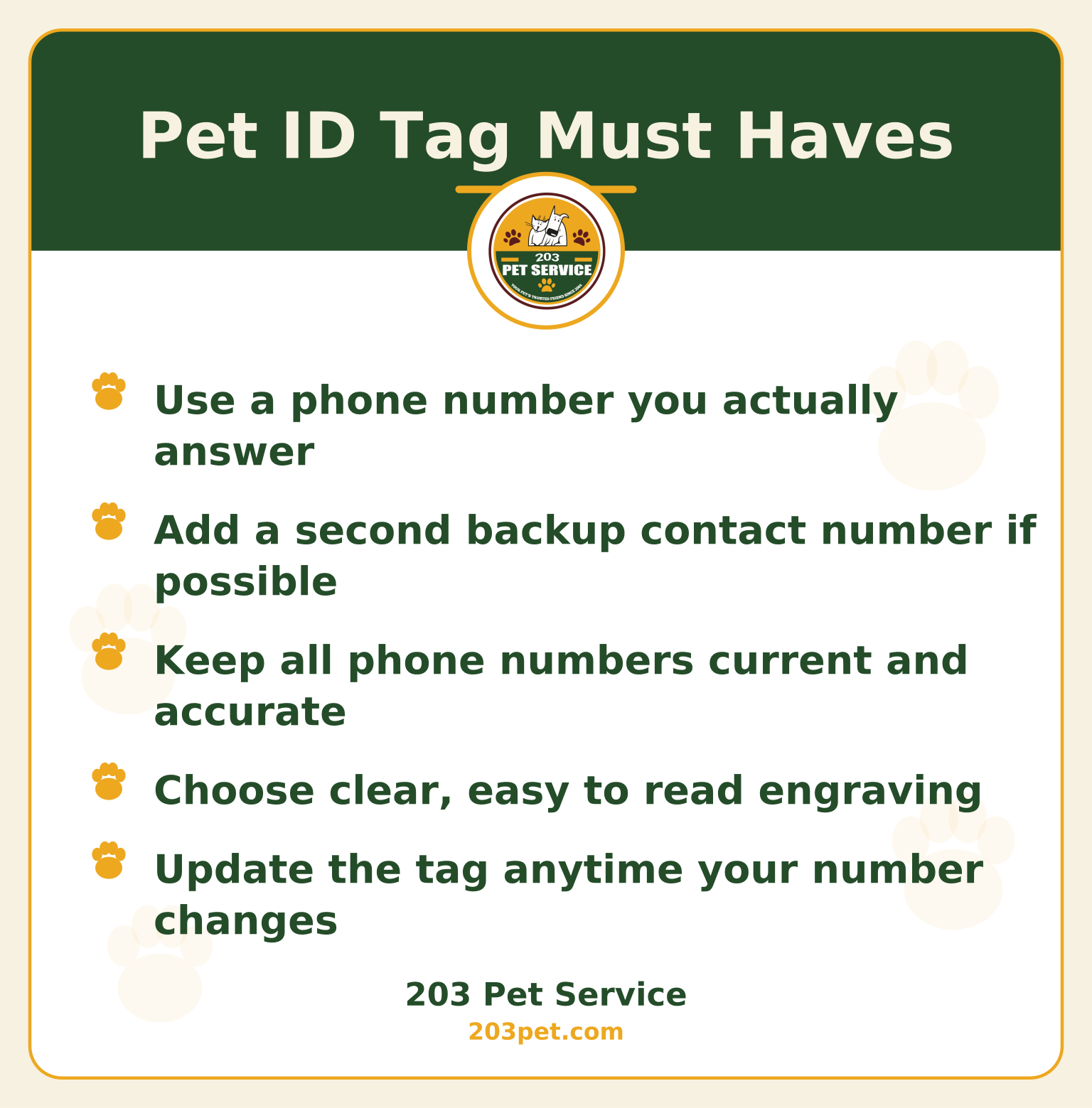
The one thing your pet’s tag must have is a current phone number that you actually answer. A second backup number is a strong idea. Everything else is optional.
When you design or order a tag, think like the person holding your dog by the collar in the middle of a busy street. They have just a few seconds. You want large, clear text and as little clutter as possible.
Good things to include on a tag:
Your primary cell number in big, clear digits
A second number for a partner, trusted friend, or neighbor
Your town and state, for example “Fairfield, CT”
Any hard medical needs, like “Needs insulin” or “On heart meds” if space allows
Some people put the pet’s name on the tag. Others skip it for safety, because they do not want a stranger calling their dog by name. Both choices are fine. What matters more is that the phone number is easy to read.
Choose a tag material that holds up. Stainless steel or high quality aluminum work well. Cheap tags can wear down until the text is barely visible. A worn tag helps no one.
PetMD talks about planning ahead for pet care, including things like ID, safe gear, and emergency planning, when you bring a new dog home in their guide to dog walking and daily routines. A good tag is part of that plan from day one, especially for puppies who are still learning not to bolt through open doors.
When we visit new clients for ongoing in home pet sitting, we often do a quick safety check. Collars, tags, gates, doors, even yard fences. It only takes a minute to flip a tag over and see if that number is sharp and readable.
Is a tag or a microchip better, or do you really need both?
You really want both. A tag gives you the instant phone call from a neighbor. A microchip is the backup that stays with your pet if the collar comes off.
Think of it like having a seatbelt and an airbag. You do not pick one. They work together.
A collar and tag handle the most common, simple story. Your dog slips out a gate in Wilton or Weston, trots a few houses down, and a neighbor catches them. Tag, phone call, you walk down the street to pick them up.
The microchip covers the harder stories. The times your dog loses their collar in the woods in Easton. Or your cat is missing overnight, and someone finally brings them to VCA Shoreline in Shelton or MedVet Norwalk to check for a chip.
The ASPCA breaks down how microchips link to a registration that holds your contact info, and why you need to keep that database up to date in their microchipping FAQ. Without a current registration, the chip number does not help much.
UC Davis veterinarians also stress that ID and planning are part of basic preventive care for both dogs and cats, not an extra bonus in their animal health topics. Identification is not just about a worst case scenario. It is everyday safety.
In our work caring for pets across Fairfield County, we have had missing pet situations go both ways. The lost dog with a tag who was home in 15 minutes. And the dog with no collar who only made it home because a chip was registered and a shelter worker took the time to dig through records.
You want the easy path and the backup path. Tag plus chip. Not one or the other. Video: The American Kennel Club explains how crate training can help keep your dog safe and build healthy routines at home. Training and safety go hand in hand. A dog who has solid leash skills, recall, and routines is less likely to bolt in the first place. The AKC puppy preparation guide talks about planning for safety gear and ID very early, right alongside training and house rules. For dogs who need help with leash manners or recall, our professional dog training can pair with regular dog walking visits so the training actually sticks in daily life. A good recall plus a good tag is a strong combination if something spooks your dog on the streets of Bridgeport or near the water in Southport.
How often should you update your pet’s ID tag and microchip info?
You should check your pet’s tag and collar every few months, and update both the tag and microchip details any time your phone number or address changes. Most people forget to do this unless they build a habit around it.
Start simple. Pick one or two times a year, maybe when you change the batteries in your smoke detectors or when you renew your dog’s license. Make those your “tag check” days.
Things to check on the tag and collar:
Is the phone number still current for you and your backup contact
Is the engraving sharp and easy to read
Is the tag ring solid and not stretched or rusted
Does the collar still fit snug but comfortable, not too loose or tight
For the microchip, log in to your chip registry and confirm your info. If you do not remember the registry, your vet or shelter can usually help look it up by the chip number.
VCA talks about regular gear checks as part of safe walks, especially with weather swings in New England, since worn collars or wet, frozen gear can fail when you need them most in their cold weather safety guidance. A quick tag check fits right into that routine.
In hot months, when we schedule midday walks across Fairfield County, we also watch for swollen necks or damp collars that might rub and make you loosen them. PetMD warns that heat and long walks can cause swelling and irritation, which can change how gear fits in their hot weather safety tips. If you adjust a collar, glance at the tag while you are there. Any time you move, cancel a landline, or change your primary cell number, plan to: Order a new tag the same day Update your microchip registry online Tell your vet and your regular pet care provider When clients in Fairfield County tell us they changed numbers, we update our records for our salaried employees right away. That way if something does happen on a walk or visit, we are calling the right phone within minutes.
How does 203 Pet Service handle tags, collars, and emergencies?
Whenever one of our W 2 dog walkers or pet sitters takes a pet out, we check that the collar or harness fits well and that the tag is readable. We treat ID and secure gear as non negotiable before we start a walk or visit.
PetMD points out that a good sitter should have safety training, understand emergency plans, and know how to handle lost pet situations in their advice on choosing a sitter. That lines up with how we train our salaried employees.
Our emergency protocol is simple and practiced. If a dog or cat in our care looks like they are in trouble, or if something happens on a walk, the sitter or walker calls Robyn, our office manager, first. Robyn calls you to explain what is going on and to get your direction. Your sitter or walker stays with your pet until there is a clear plan, whether that means meeting you at your home or heading to a vet you approve.
For serious issues, many clients choose MedVet Norwalk as an emergency hospital. Others use VCA Shoreline on Bridgeport Avenue in Shelton or their own regular vet. We follow your instructions, and we do not leave your pet alone.
On regular days, the safest outcome is actually the boring one. Good gear. A snug collar. A readable tag that never needs to prove itself. Our ongoing dog walking membership is built around that kind of steady safety, not just a random one time walk.
For cats, whether we are doing daily vacation visits or longer stays, we handle doors like airport security. We watch for bolters, secure doors and sliders, and look for collars and tags before we open anything. The About page explains more about Jason’s veterinary background and why we are a little picky about this. We have seen what can happen when one small detail gets missed.
In multi pet homes in places like Weston, Wilton, or larger properties in Easton, we also walk the fence line if there is a yard. It is not just about tags. It is about making sure the tag is the backup, not the first line of defense.
How can you fit ID tags into your everyday pet safety plan?
You can treat ID tags as one small part of a simple, everyday safety routine for your dog or cat. Tags go together with safe walks, secure doors, and training. For dogs, a safe routine might look like this:
A snug, well fitted collar with a readable ID tag.
A microchip registered with your current phone number.
A sturdy leash and a quick tag check before every walk.
Doors and gates checked before your dog goes outside.
Basic recall and leash manners kept up with regular practice.
Frequently Asked Questions
About This Topic
If my pet is microchipped, do they really still need an ID tag?
Yes, they really do. Most neighbors and good Samaritans can’t read a microchip, but they can read a simple collar tag and call you right away. The chip is your backup if the collar comes off or your pet ends up at a vet or shelter. A clear tag often means a same‑day, low‑stress reunion.
What should I actually put on my dog or cat’s ID tag?
Keep it short and useful: your pet’s name, your cell number, and optionally a second backup number. You can add “Microchipped” or “Indoor cat” if it fits. Skip your full address to protect privacy unless you’re comfortable sharing it. At 203 Pet Service, we recommend checking tags during leash-ups to make sure they’re readable and up to date.
How do microchips work, and can someone track my dog or cat with one?
A microchip is a tiny implant with a unique ID number that a vet or shelter scans and looks up in a database with your contact info. It’s not a GPS and can’t track your pet’s location. It only helps once your pet is taken to someone with a scanner. That’s why a visible tag is still important for quick, local reunions.
My cat never goes outside, do they still need an ID tag and microchip?
Indoor cats slip out more often than people expect, during moves, open windows, or contractors coming and going. A tag makes it easy for a neighbor to call you if your cat’s found on a porch or under a deck. A microchip is excellent backup if the collar comes off. Many 203 Pet Service cat clients in Fairfield County do both for peace of mind.
What’s the best type of ID tag and collar for an active dog?
Choose a sturdy, flat collar that fits snugly (you should fit two fingers underneath) and a metal or high‑quality silicone tag with deep engraving. Avoid cheap tags that wear smooth or hang so low they get caught. For very active dogs we walk at 203 Pet Service, we like rivet‑on or slide‑on tags that don’t jingle or snag as easily.
How often should I check or update my pet’s ID tag and microchip info?
Check the tag every few months to be sure it’s still readable and your phone number hasn’t changed. Any time you move or get a new number, update both the physical tag and your microchip registry online. Many 203 Pet Service clients in Westport, Fairfield, and surrounding towns make this part of their yearly vet visit or pet-sitter onboarding checklist.
About 203 Pet Service
What areas does 203 Pet Service cover in Fairfield County?
We provide professional dog walking, pet sitting, and training services across Eastern Fairfield County, Connecticut. We proudly serve families in Fairfield, Stratford, Westport, Easton, Southport, Black Rock, Bridgeport, Shelton, Devon, Trumbull, Weston, and Wilton. 203 Pet Service has cared for pets in Fairfield County since 2004, and every visit is handled by a trained, W-2 salaried employee who is background checked and fully insured.
Why does 203 Pet Service use salaried W-2 employees instead of independent contractors?
We believe salaried W-2 employees provide more reliable, accountable, and professional pet care. Unlike independent contractors, our salaried employees go through careful background checks, full training, and are fully insured. This employment structure means consistency, accountability, and peace of mind for Fairfield County pet families.
Does 203 Pet Service provide care for cats as well as dogs?
Yes. We offer full cat sitting services including feeding, litter box care, playtime, and medication. Whether you need daily visits while you are at work or full vacation care, our salaried employees are trained in feline behavior and health needs. We serve cat families throughout our 12 Fairfield County service towns.
Share this article
What Fairfield County Families Say About 203 Pet Service
Don't just take our word for it. Here's what real families in your community have shared about their experience with us:
"Jason and his team have been caring for our senior golden retriever for 5 years. When we lost him last month, they were incredibly supportive. These aren't just dog walkers - they become part of your family."
"The consistency of having the same walker every day made such a difference for our anxious rescue. When she passed, they sent the kindest card. 22 years in business for a reason."
"W-2 employees, background checked, insured - they do things the right way. Our cats have been with them for 3 years and we wouldn't trust anyone else."
Jason Hofmann is the owner and Animal Behavior College (ABC) certified dog trainer at 203 Pet Service, with 29 years of professional pet care experience. He founded 203 Pet Service in 2004 and has led the company for 22 years, building a team of salaried W-2 employees dedicated to exceptional pet care. Prior to founding his company, Jason worked for 2 years as a pet store manager and then 5 years as a veterinary technician at Greenfield Animal Hospital in Fairfield. As an ABC certified trainer and passionate animal advocate with 29 years of hands-on experience, Jason brings unmatched expertise and genuine care to every pet interaction.
Jason is also a proud co-founder of The Honey On Duty Project, a 501(c)(3) nonprofit that brings healing and comfort to communities in need.
Growing up with pets or currently owning a dog doesn't make someone a pet care professional - just like using a toilet every day doesn't make you a qualified plumber.
Jason's 29 years of professional pet care experience means:
•5 years working daily as a veterinary technician at a professional animal hospital
•2 years managing a pet store and advising pet owners
•22 years owning and operating a professional pet care business
•Formal Animal Behavior College (ABC) certification in dog training
•Thousands of hours of hands-on experience with diverse animal behaviors, medical situations, and emergency scenarios
This isn't hobby experience - it's a career built on professional training, veterinary medical knowledge, and decades of real-world problem-solving with animals.
Ready to Experience Professional Pet Care?
Schedule a meet and greet today and see the 203 Pet Service difference for yourself.
Need Professional Pet Care?
We provide professional dog walking, pet sitting, and training services across Eastern Fairfield County. Let our experienced team care for your pets with the same dedication we bring to sharing this knowledge.