

Winter Paw Care in Eastern Fairfield County: Safe Walks
Quick answer: To keep your dog’s paws safe in an Eastern Fairfield County winter, protect them before walks, check them right after, and be ready to shorten or change your route when it is icy or salty. Use paw balm or booties, avoid heavy salt where you can, rinse and dry paws as soon as you get home, and call your vet if you see limping, redness, or cracked pads. A safe winter walk starts with healthy paws. In Eastern Fairfield County, that means planning around cold, ice, and sidewalk salt so your dog can enjoy their walk without coming home sore or limping.
Winter paw care is really about three things. Protecting the skin from cold and chemicals, checking paws after every walk, and knowing when to change the route or cut a walk short. When you stay on top of those, your dog can keep walking happily all winter.
We have been walking dogs through Connecticut winters since 2004. From the beach areas of Fairfield to the hills of Easton and the city sidewalks of Bridgeport, we see the same paw problems over and over. The good news is you can prevent most of them with a simple routine.
How does winter in Eastern Fairfield County actually hurt your dog’s paws?

Winter here dries, irritates, and sometimes burns your dog’s paws. Cold air, rough sidewalks, and salt all work together to break down that tough paw pad skin.
In Eastern Fairfield County we get that classic freeze-thaw pattern. It snows, then it melts, then it freezes again overnight. Sidewalks in Stratford, Westport, and Easton end up coated in a mix of ice, sand, salt, and slush. That mix is hard on paws.
Local winter trouble: salt, sand, and rough concrete
Most towns use rock salt or other ice melts on streets and sidewalks. Many of these products sting when they touch raw or cracked skin. They also pull moisture out of the paw pads. According to VCA’s cold weather safety guidelines, de-icing salts can irritate paws and should be wiped off when your dog comes inside.
Sanded, scraped sidewalks in older neighborhoods, like parts of Black Rock and downtown Bridgeport, feel like sandpaper after a storm. When you walk over that every day, small cracks start to form. Add salt into those cracks and you have a dog that suddenly refuses to walk another step.
Common winter paw problems we see
In our years walking dogs around Fairfield County, we see the same winter issues show up:
- Dry, rough, or flaky pads
- Redness between the toes
- Raw spots or small surface cuts
- Ice balls stuck in paw fur
- Limping right after stepping in salty slush
- Licking or chewing paws for hours after a walk
Once a dog starts licking cracked paws, they can make things worse. Constant licking softens the skin and can invite bacteria. The PetMD dog walking guide points out that regular walks are great for health, but they also stress that you need to watch paws and adjust for weather.
Signs your dog is uncomfortable on a winter walk
Dogs usually tell you with their feet. You just have to watch for it. Look for:
- High-stepping or “prancing” instead of a normal gait
- Suddenly stopping and holding up one paw
- Trying to jump into snowbanks to get off the salted sidewalk
- Limping on the way home
- Refusing to leave the house after a few bad experiences
If your usually happy walker in Southport suddenly plants their feet on the driveway and will not move, there is a reason. Often it is cold pain or salt pain, not stubbornness.
Short-coated and small dogs feel this faster, and older dogs feel it more. Senior dogs already have thinner skin and less tolerance for cold. PetMD’s senior dog care guide notes that many older dogs need shorter, gentler walks and closer monitoring in weather extremes, including cold.
What quick daily paw checks can you do in two minutes?
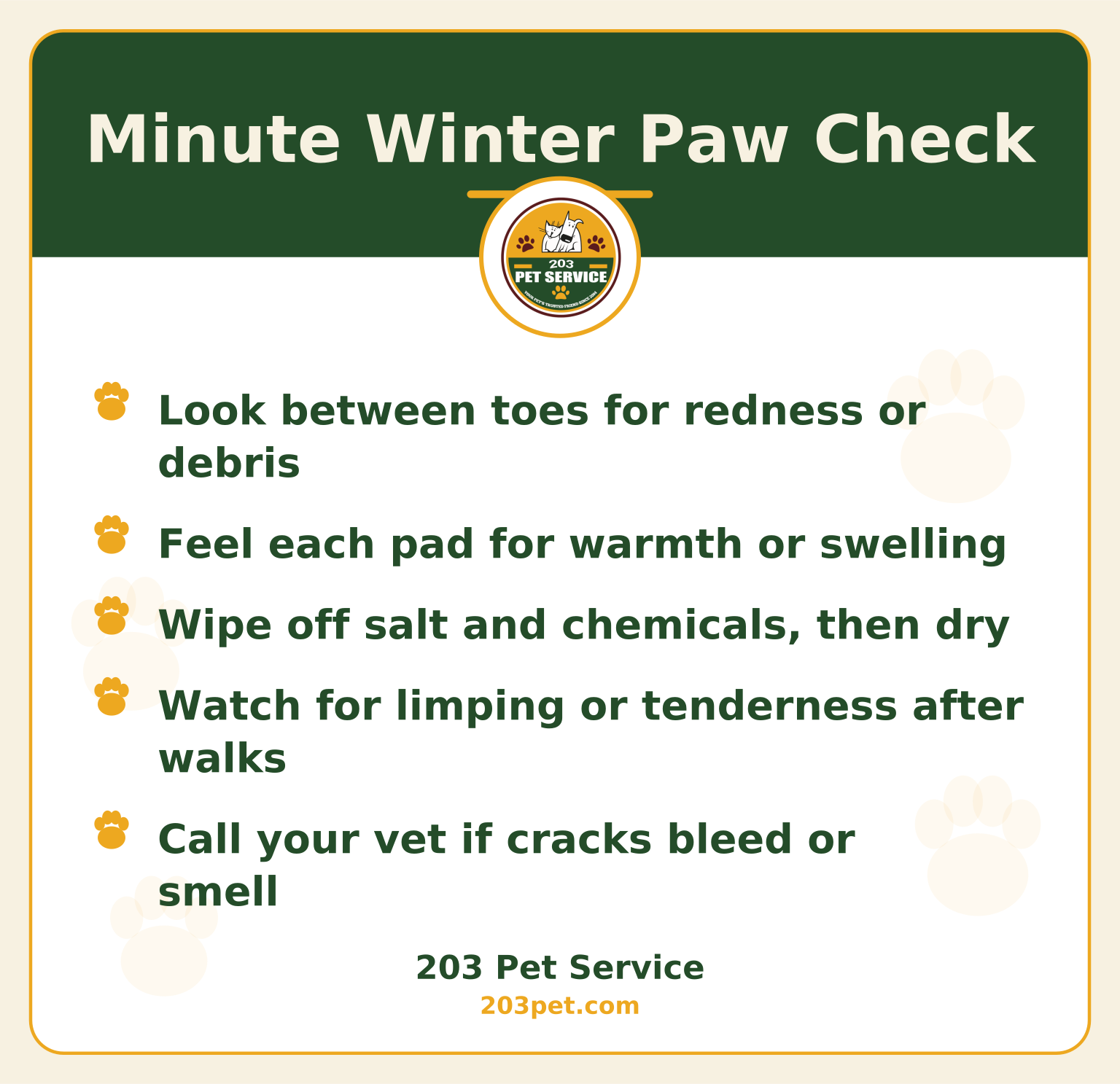
A two minute paw check after each walk can catch problems early and prevent a small irritation from turning into an infection.
We build this into every walk for our dog walking clients. It is simple. You can do the same thing at your front door in Fairfield, Bridgeport, or anywhere else in the county.
The “look, feel, wipe” routine at the door
Make this a habit every time you come inside:
- Look at each paw. Check pads and between toes. You are looking for redness, small cuts, or stuck debris like ice, salt crystals, or tiny stones.
- Feel with your fingers. Gently press each pad. Run your fingers through the fur between the toes. You are checking for tenderness, swelling, or warm spots.
- Wipe with a damp cloth or unscented baby wipe. Clean the pads and between the toes to remove salt and chemicals. Then dry with a towel.
This takes under two minutes once your dog gets used to it. A lot of dogs in Westport learn to flop on their side as soon as they hit the mudroom, because they know treats come after paw checks.
What is normal and what is not
Normal winter paws:
- Pads that feel smooth or slightly rough, like rubber
- No cracks that open when you flex the pad
- Skin between the toes that is pale pink or the dog’s normal pigment
- Dog allows gentle touching without pulling away
Warning signs that mean you should call your vet:
- Deep cracks that look like they could bleed
- Bright red or dark red skin between toes
- Swelling around one toe or one part of the pad
- Yellow, green, or cloudy discharge
- Strong odor from the paw
- Persistent limping, even indoors on soft surfaces
Those are signs of possible infection or a more serious injury. A quick call to your regular veterinarian, or to a partner like Greenfield Animal Hospital in Fairfield, is a smart move.
Simple first aid you can handle at home
For minor irritation, you can usually care for the paw at home. The AKC first aid guide for dogs suggests a basic approach for small scrapes and mild irritation.
For a mild, surface issue you can:
- Rinse the paw with lukewarm water to remove salt and dirt
- Pat dry and keep your dog off harsh surfaces for a day if you can
- Use a pet-safe paw balm on small dry areas, as long as the skin is not open or bleeding
- Use an Elizabethan collar if your dog keeps chewing the sore spot
Never use human creams, ointments, or pain relievers unless your vet specifically tells you to. Some human products are toxic to dogs if they lick them off. When in doubt, ask your vet or call a trusted emergency hospital like MedVet Norwalk.
If you are one of our pet sitting clients and we spot a paw issue during a visit, our salaried employees follow the same pattern every time. We call Robyn in the office, she reaches out to you, and your walker or sitter stays with your pet until you tell us how you want to handle it.
How can you avoid the worst salt, ice melt, and sidewalks in winter?

You protect your dog’s paws in winter by choosing better routes and better timing. Sometimes the smartest thing is to walk the long way around to skip one bad block.
We plan every winter route in places like Southport and Easton with this in mind. A small change in street choice can mean far less salt under your dog’s feet.
Why salt and ice melt sting so much
Salt and many ice melts are harsh chemicals. When they sit on the skin, they dry it out. When they land on broken skin, they sting. That is why dogs sometimes yelp or freeze in place right after stepping in a salty puddle.
Some products labeled “pet safe” are less harsh, but they can still irritate if your dog has cracked pads. They can also upset your dog’s stomach if they lick a lot of it off later. The VCA dog walking safety tips remind owners to avoid walking where you see heavy salt or chemicals whenever you can.
Choosing safer walking routes in Eastern Fairfield County
Every neighborhood has better and worse winter streets. Over time you learn which ones to avoid. In our daily walking, we notice:
- Schools and busy corners in Stratford often have very heavy salting
- Some quieter side streets in Fairfield and Southport use less salt and rely more on plowing
- Certain condo complexes in Bridgeport and Devon use strong de-icers on walkways
- Trails and grassy areas, when cleared enough, are usually gentler on paws than bare sidewalks
So where possible:
- Favor plowed but not heavily salted streets
- Use grassy strips or snow shoulders next to sidewalks when they are safe and not icy
- Avoid store entrances, parking lots, and building steps, which tend to be coated in ice melt
- Cross to the sunny side of the street where ice melts quicker and less salt collects
In newer parts of Trumbull and Wilton, sidewalks can be smoother and easier on paws compared with older broken pavement in some Bridgeport blocks. Even within one town the surface can change street by street.
Timing walks around plow and salting schedules
Timing matters. If you can, avoid walking right after the plow and salt truck pass. That is when there is a thick layer of salt and slush on the surface.
Instead, when your schedule allows:
- Walk a bit later in the morning after cars have broken up and pushed away some of the salt
- Skip the late night “just salted” pass when the surface is wet with chemicals
- After big storms, choose shorter, bathroom-focused walks until sidewalks are more cleared
If your life schedule does not easily bend around storm timing, that is where a consistent walking membership with a local service can help. Our salaried W-2 employees handle midday and afternoon dog walking visits across Fairfield County, so your dog still gets out, but we plan the route with current street conditions in mind.
What paw protection really works in winter, and how do you use it?

Paw balm, boots, and a simple fur trim can all help protect your dog’s paws. The trick is using them correctly and choosing what fits your dog’s personality.
No single tool solves everything. Often the best setup is a mix. A light balm on short walks in Black Rock, boots for long salty walks in Westport, or a trim plus balm for dogs who hate footwear.
When paw balm helps, and how not to make a greasy mess
Paw balms create a light barrier on the pad and help hold moisture in. They are handy for dogs with mildly dry or rough pads. They are not magic, but they reduce friction and make it harder for salt to penetrate the skin.
How to use paw balm without turning your house into a skating rink:
- Use a pea sized amount for each paw
- Rub it into the pad until it is mostly absorbed
- Apply 10 to 15 minutes before you leave so it can soak in
- Wipe off any extra when you come back in, once you have rinsed the paw
Think of it like lotion for your own hands. More is not better. A thin, well rubbed in layer works best. If the skin is cracked open or bleeding, skip the balm and call your vet instead.
Getting your dog used to winter boots
Some dogs take to boots right away. Others act like you have taped boxes to their feet. The key is to introduce boots slowly, long before that first icy week.
We use a simple step-by-step pattern:
- Let your dog sniff the boots and reward with treats.
- Touch the boots to their paws without putting them on. Treat again.
- Put one boot on, then off, with lots of praise and food.
- Once they tolerate one boot, put all four on for a short time indoors.
- Do a one or two minute walk around the living room. Keep it fun and short.
Short, positive sessions work better than wrestling the boots on right before a big walk. The AKC guide on exercise needs reminds owners to adjust activity to comfort and breed. For dogs that love long winter hikes, boots can make that exercise much safer.
If you use a walker, make sure they know how to put the boots on correctly. A twisted boot or loose strap can cause rubbing and sores. Our W-2 employees in Fairfield, Bridgeport, and Stratford get hands-on practice with common gear like boots and jackets so they can put them on calmly and correctly.
Why trimming paw fur helps in snow and slush
Dogs with longer fur between their toes often collect snowballs on winter walks. Those little ice balls pull at the hair, spread the toes apart, and sometimes cut into the skin. A simple trim can help a lot.
You or your groomer can:
- Use blunt-tip scissors or clippers to trim fur level with the pads
- Avoid cutting into the pad itself, just shorten the hair
- Keep the fur short enough that snow does not stick as easily
This matters in towns with more fields and trails, like Easton and Weston, where dogs run through deeper snow. It also helps on city sidewalks, because shorter fur holds less salt and stays easier to clean.
For many dogs, the best winter setup is trimmed fur plus a light balm for everyday neighborhood walks. Boots come out for the harshest days or longer adventures.
Video: Winter paw care basics, including boot training and simple at-home protection tips.
How should you change your winter walk routine to keep paws safe?

To keep paws healthy in winter, you often need shorter, smarter walks and a closer eye on your dog’s body language. Quality matters more than distance when it is bitter cold or very icy.
We adjust every walk based on the dog in front of us, the temperature, and the street conditions. A young husky in Wilton and a senior pug in Southport do not need the same plan.
Adjusting walk length for temperature and wind
Cold affects each dog differently. Size, coat, age, and health all play a part. The VCA cold weather safety article notes that very young, old, or thin-coated dogs are more sensitive to low temperatures and may need shorter outdoor time.
Simple guidelines:
- On mildly cold days, most healthy adult dogs can handle their normal walk, as long as the route is safe
- On windy, icy days, keep walks shorter and focus on bathroom breaks plus a little mental exercise
- On frigid days, do several short outings instead of one long walk
You can make a shorter walk more satisfying by letting your dog sniff more and practice a few cues they know. According to PetMD’s guide to dog walking, mental stimulation from sniffing and training games helps tire dogs out just as much as pure distance.
Watching for cold stress and sore paws
Cold stress shows up in small ways at first. Your dog might:
- Tuck their tail and hunch their body
- Shiver or tremble
- Keep lifting their paws off the ground
- Try to pull you back toward home
For paws specifically, watch for:
- Sudden limping that starts on the walk
- Refusal to put weight on one foot
- Constant paw licking once you get home
Senior dogs feel the cold and the rough ground more. PetMD’s senior dog tips suggest that older dogs often need softer, more stable footing and less time on slippery surfaces. That lines up with what we see in older Labs and shepherds around Bridgeport and Shelton every winter.
How a trained, attentive walker keeps winter walks safe
Safe winter walks are not just about gear. They are about the person on the other end of the leash. A good walker pays attention, reads your dog, and changes the plan on the fly. Our W-2 employees are trained for that level of care.
Frequently Asked Questions

About This Topic
How cold is too cold to walk my dog in winter?
Most healthy dogs do fine for short walks above 20°F, but small, short‑haired, senior, or thin dogs may need shorter walks or a coat even in the 30s. If your dog is lifting paws, shivering, or trying to turn back, it’s too cold for them. In Eastern Fairfield County, 203 Pet Service walkers adjust routes and walk length based on real‑time weather and your dog’s comfort.
What should I put on my dog’s paws before a winter walk?
Use a paw balm or wax before heading out to create a barrier against salt, ice melt, and rough sidewalks. Rub a thin layer into the pads and between the toes, especially on dogs who’ve had cracks before. Booties can add extra protection on heavily salted routes. Our 203 Pet Service team can apply paw balm before walks if you leave it out.
How do I clean my dog’s paws after walking on salty sidewalks?
As soon as you get home, rinse each paw in lukewarm water or wipe with a damp cloth, making sure to get between the toes and around the nails. Dry thoroughly with a towel so moisture doesn’t sit in those crevices. Check for redness, cuts, or stuck ice balls. 203 Pet Service walkers routinely wipe paws after winter walks when requested.
How can I tell if sidewalk salt actually hurt or burned my dog’s paws?
Watch for sudden limping, paw licking, or your dog refusing to walk on certain spots. When you check the paws, look for bright redness, raw patches, or cracks that weren’t there before the walk. If your dog flinches when you touch the pads, call your vet. Our walkers in Fairfield, Bridgeport, and nearby towns avoid heavily salted paths whenever possible.
My dog hates booties, what else can I do to protect paws?
If your dog fights booties, try a good paw wax plus shorter, more frequent walks instead of one long outing. Stick to less‑treated routes, like side streets or packed snow, and avoid visibly white, crusty sidewalks. Rinse and dry paws immediately when you come in. 203 Pet Service can help you test different routes and routines that work for your dog.
Are there safer ice melts I can use around my home for my dog?
Look for pet‑safe or paw‑friendly ice melts that are labeled as such, and still use them sparingly. Even pet‑safe products can dry out paw pads if they’re not rinsed off. Try shoveling early, using sand for traction, and clearing a specific potty path. Our sitters can stick to that cleared area during visits so your dog avoids the worst of the salt.
What should my dog walker know about my pet’s winter paw issues?
Tell your walker if your dog has had cracked pads, allergies, or trouble with salt in past winters. Let them know where you keep paw balm, towels, and any booties, plus which routes you prefer to avoid. In Eastern Fairfield County, 203 Pet Service customizes winter walks around each dog’s paws, age, and energy level so they stay safe but still get exercise.
About 203 Pet Service
What areas does 203 Pet Service cover in Fairfield County?
We provide professional dog walking, pet sitting, and training services across Eastern Fairfield County, Connecticut. We proudly serve families in Fairfield, Stratford, Westport, Easton, Southport, Black Rock, Bridgeport, Shelton, Devon, Trumbull, Weston, and Wilton. 203 Pet Service has cared for pets in Fairfield County since 2004, and every visit is handled by a trained, W-2 salaried employee who is background checked and fully insured.
Why does 203 Pet Service use salaried W-2 employees instead of independent contractors?
We believe salaried W-2 employees provide more reliable, accountable, and professional pet care. Unlike independent contractors, our salaried employees go through careful background checks, full training, and are fully insured. This employment structure means consistency, accountability, and peace of mind for Fairfield County pet families.
What qualifications do 203 Pet Service employees have?
Every member of our salaried W-2 team goes through careful background checks, professional pet care training, and ongoing education in animal behavior and safety. Owner Jason Hofmann personally trains each employee, drawing on 29 years as a veterinary technician, pet store manager, and ABC-certified dog trainer. We do not hire hobby pet sitters. We employ career pet care professionals.

What Fairfield County Families Say About 203 Pet Service
Don't just take our word for it. Here's what real families in your community have shared about their experience with us:
"Jason and his team have been caring for our senior golden retriever for 5 years. When we lost him last month, they were incredibly supportive. These aren't just dog walkers - they become part of your family."
— Sarah M., Westport CT (Google Review)
"The consistency of having the same walker every day made such a difference for our anxious rescue. When she passed, they sent the kindest card. 22 years in business for a reason."
— Michael K., Fairfield CT (Google Review)
"W-2 employees, background checked, insured - they do things the right way. Our cats have been with them for 3 years and we wouldn't trust anyone else."
— Jennifer L., Stratford CT (Facebook Review)
Read more reviews: Google Reviews | Facebook Reviews | Yelp Reviews
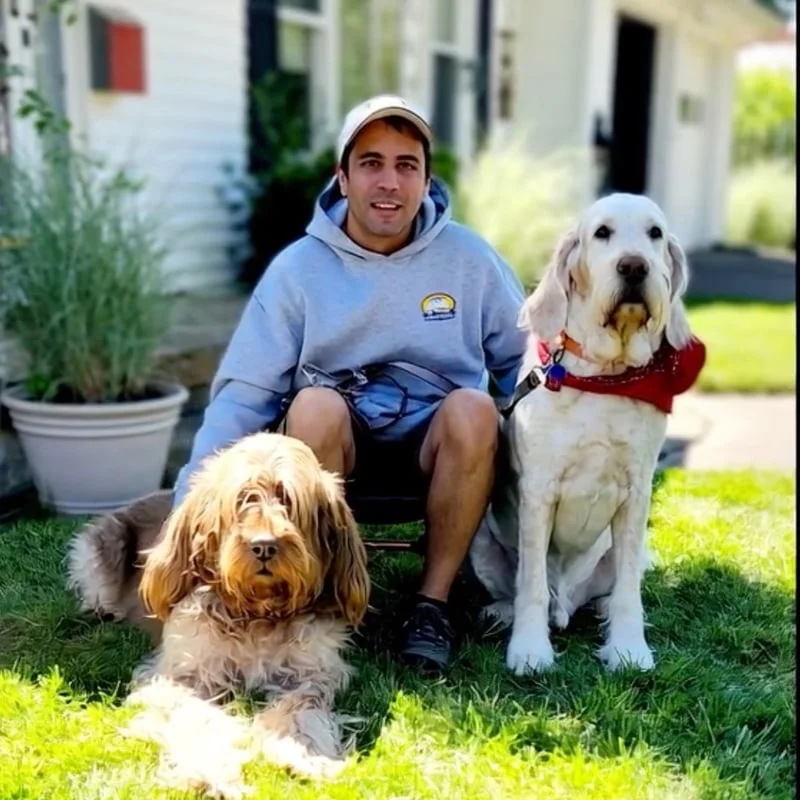
About Jason Hofmann
Jason Hofmann is the owner and Animal Behavior College (ABC) certified dog trainer at 203 Pet Service, with 29 years of professional pet care experience. He founded 203 Pet Service in 2004 and has led the company for 22 years, building a team of salaried W-2 employees dedicated to exceptional pet care. Prior to founding his company, Jason worked for 2 years as a pet store manager and then 5 years as a veterinary technician at Greenfield Animal Hospital in Fairfield. As an ABC certified trainer and passionate animal advocate with 29 years of hands-on experience, Jason brings unmatched expertise and genuine care to every pet interaction.
Jason is also a proud co-founder of The Honey On Duty Project, a 501(c)(3) nonprofit that brings healing and comfort to communities in need.
Learn More About Our TeamFeatured in the Media:
Why 29 Years of Professional Experience Matters
Growing up with pets or currently owning a dog doesn't make someone a pet care professional - just like using a toilet every day doesn't make you a qualified plumber.
Jason's 29 years of professional pet care experience means:
- •5 years working daily as a veterinary technician at a professional animal hospital
- •2 years managing a pet store and advising pet owners
- •22 years owning and operating a professional pet care business
- •Formal Animal Behavior College (ABC) certification in dog training
- •Thousands of hours of hands-on experience with diverse animal behaviors, medical situations, and emergency scenarios
This isn't hobby experience - it's a career built on professional training, veterinary medical knowledge, and decades of real-world problem-solving with animals.
Ready to Experience Professional Pet Care?
Schedule a meet and greet today and see the 203 Pet Service difference for yourself.