Rover and Wag Took Their Cut. You Took the Risk. Here Is What They Will Never Tell You.
A Florida woman's dogs were abused. Her home was robbed. The app sent a refund. Rover and Wag have a long, documented history of incidents like this one. And they have spent years making sure most of those stories never reach you.
Coverage by Gulf Coast News. Englewood, Florida. August 2026.
Natalie Jones left for a trip abroad in early July. Before she left, she did everything a responsible pet owner is supposed to do.
She went on Rover, one of the most heavily advertised pet care platforms in the country. She read the reviews. She found a sitter named Sara Bettencourt who had 39 recent reviews, listed herself as a vet tech, and owned a dog grooming business. Jones arranged a meet-and-greet. Everything looked fine.
It was not fine.
What the Cameras Caught

While Jones was abroad, she checked her home security cameras. She watched Bettencourt and another person screaming at her two dogs, Harry and Buddy, kicking them, and shoving them away when they tried to greet her.
That was only part of what the cameras recorded.
The footage also showed Bettencourt and her companion going through the cabinets and refrigerator, loading Jones' belongings into trash bags, and carrying them out to a vehicle. According to arrest reports covered by Gulf Coast News, The Daily Sun, and MySunCoast, the stolen items included credit cards, book bags, video games, bottles of liquor, antique bronze coins, and food. Total value: over $1,500.
The Charlotte County Sheriff's Office arrested Sara Christina Bettencourt and charged her with felony grand theft, possession of a controlled substance, and possession of drug paraphernalia. She was booked into Charlotte County Jail and released on a $5,500 bond. Her court date is set for September 8, 2026.
Rover refunded the booking fee and offered to cover house cleaning.
That is it. The booking fee. Not the stolen property. Not the long-term impact on the dogs. Not any measure of making Natalie Jones whole again.
That is not an oversight. That is the business model.
This Is Not a Rare Incident
The story from Englewood is one of countless incidents that have come out of Rover and Wag since both platforms launched.
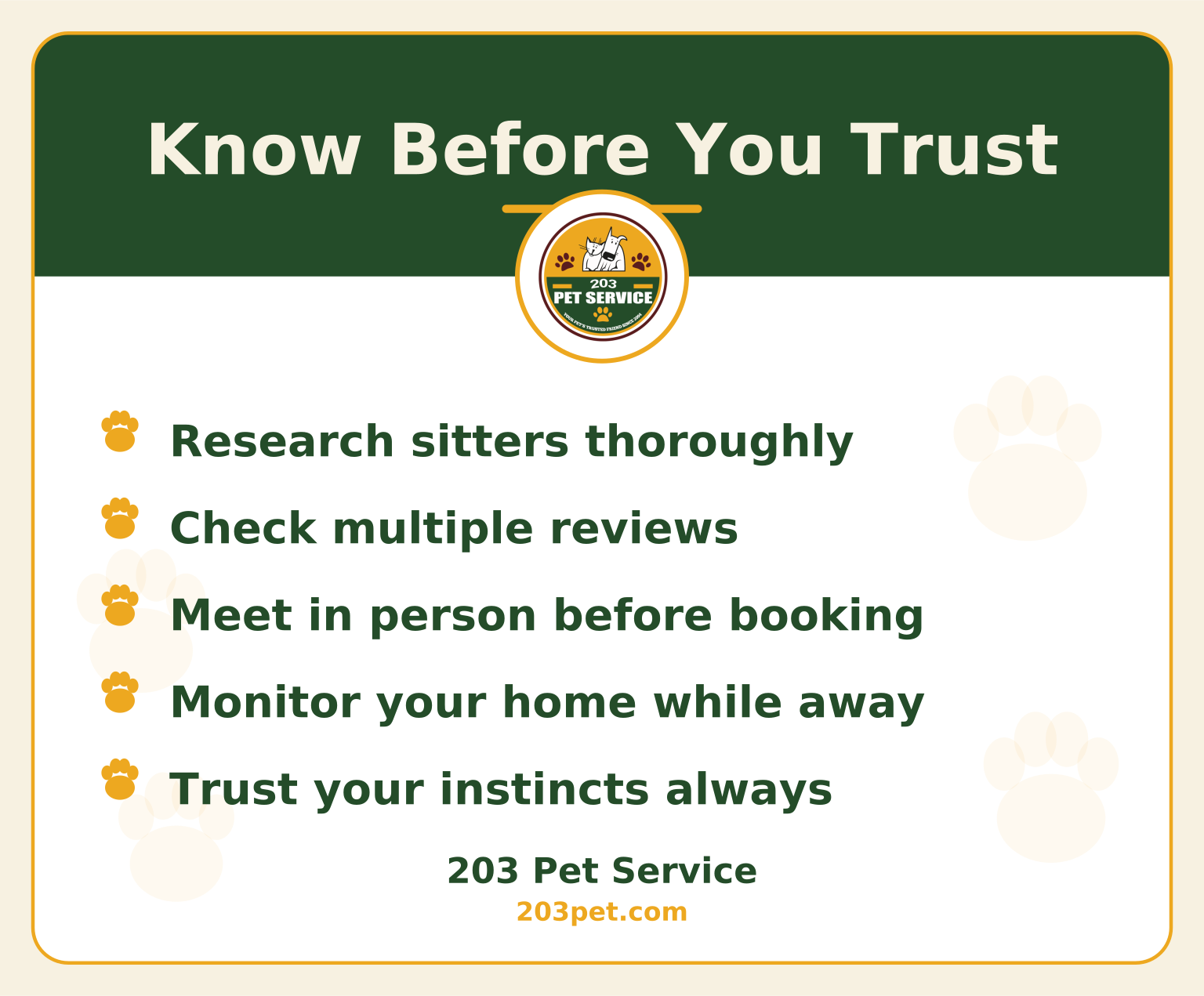
In March 2024, a Rover dog walker in Medford, Massachusetts was arrested and charged with animal cruelty after bystanders recorded him repeatedly striking a golden retriever in the head and lifting the dog off the ground by its collar. Rover suspended his account after the arrest.
In December 2025, a Rover sitter in San Francisco had at least two dogs die in his care. Other dogs were returned to their owners emaciated, dehydrated, and covered in urine and vomit. At least one dog tested positive for methamphetamine. Owners reported that the sitter was keeping multiple dogs crammed inside a parked vehicle during a rainstorm. San Francisco police opened an investigation. Rover deactivated the accounts and described themselves as "heartbroken." No arrests had been made as of early 2026.
In 2024, Gizmodo filed Freedom of Information Act requests to the Federal Trade Commission and obtained a trove of Rover consumer complaints. Those complaints document theft, pets killed during walks, severe neglect, and pet owners unable to reach anyone at Rover during an emergency. The complaints are on file with a federal agency. The platform is still operating the same way.
These incidents span the country. The Northeast is not exempt. Rover and Wag operate in Connecticut, including every town we serve in Fairfield County, under the exact same model they use everywhere else.
The Stories You Never Hear

Here is something Rover and Wag do not put on their profile pages.
When they pay out more than their standard reimbursement, they often require you to sign a non-disclosure agreement first. That means the story you are reading right now, and the many others like it, represent only the incidents that made it to the press. The ones where the owner refused to sign. Or where no reporter ever came looking.
A 2021 CNN investigation documented this with specific named cases.
Colleen Nolan's senior blind dog Mooshu died after falling two stories off a balcony while in the care of a Rover sitter. Rover offered to cover expenses. To receive the money, she was required to sign a release of claims and a non-disclosure agreement. She refused.
After refusing, Nolan started a Facebook group called Rover Kills Dogs Support Group for other Rover users who had experienced serious incidents. It now has nearly 600 members, each with their own story and no other place to share it.
Joy Collier's two dogs went missing while in the care of a Rover sitter. After she started getting local press attention, Rover offered her roughly $4,300 on the condition she sign an NDA. She refused and filed a lawsuit. That lawsuit was then pushed into private arbitration because of a clause buried in Rover's terms of service that every user agrees to at sign-up.
Wag used the same playbook. When a family went public about Wag losing their dog, Vox reported that Wag sent a cease-and-desist letter demanding they take down their Facebook posts and offered $2,500 to stop them from talking to the press.
CNN reported it plainly: others do not make it to the press at all, in some cases due to the company's efforts to tie payouts to non-disclosure agreements.
Rover's own guarantee terms state that the company may condition payouts on "an obligation to keep confidential the reimbursement amount and circumstances."
That is in their own published language.
When CNN asked Rover how many incidents they track internally, a company spokesperson confirmed they keep that data but said the company "does not currently disclose" the numbers. They know how bad it is. They count it. They just do not tell you.
What Their Background Checks Actually Cover
Rover's enhanced background check scans criminal databases at the federal, state, and county level. It checks the national sex offender registry. That is the version that earns the badge on a sitter's profile.
Rover's own terms state the company does not warrant these screenings are "accurate, complete, or up-to-date." The check was historically done once at sign-up, not on a recurring basis. Neither platform requires any prior pet care experience. Neither requires pet first aid or CPR certification.
Wag uses a third-party firm and runs a similar check. Wag also does not monitor active caregivers on an ongoing basis once they are on the platform.
Rover's onboarding also includes a six-question safety quiz. Six questions. Walkers have described the training on both platforms as "bare-bones" and "a complete joke," with more time spent on how to use the app than on how to actually care for an animal.
A criminal background check can only show you what someone has already been caught doing.
Sara Bettencourt had 39 reviews and passed Rover's check. She still robbed a home and abused two dogs.
As we wrote in Is Your Pet Sitter a Real Business?, relying on Rover or Wag as a primary service model is itself a red flag when evaluating any pet care provider. These platforms attract people looking for quick cash between jobs, not career professionals who have spent years building expertise in animal care.
There Is No Record. There Is No Registry.

When Rover deactivated Sara Bettencourt, that removal exists only inside Rover's system.
There is no industry-wide database. There is no shared blacklist between Rover and Wag or any other gig app. There is no registry of pet care contractors who have been removed from a platform for abuse, theft, or neglect.
Nothing in the industry prevents Sara Bettencourt from opening a profile on Wag, Care.com, or any other platform tomorrow. Nothing connects her removal from one app to her standing on the next one.
The effect of this system is that a contractor's record is never made public. Every new platform they join, they start with a clean slate.
That protects the platform too. If those incidents stayed visible, it would become harder to recruit new contractors and harder to convince pet owners that the safety badge on a profile means something.
Wag Went Bankrupt. Rover Paid $18 Million to Settle a Lawsuit.

These are not small companies operating on good intentions. These are venture-backed technology platforms that were built to scale, not to care.
Wag raised over $360 million in venture capital funding. In July 2025, the company filed for Chapter 11 bankruptcy. Between 2022 and 2024, Wag lost $69.5 million. Their shareholders were wiped out and the company was delisted from Nasdaq. Most pet owners we speak with have no idea any of this happened. The platform that was advertising itself as a trusted, reliable service was a company its own investors had already abandoned. Wag emerged from bankruptcy in September 2025 as a private company under new ownership. It is still actively taking bookings in Connecticut, including Fairfield County.
Rover went public through a merger that valued the company at $1.63 billion. From 2018 to 2023, Rover fought a class-action lawsuit alleging that they had illegally misclassified their workers as independent contractors to avoid paying them as employees. They settled in 2023 for $18 million. Five years of litigation. Five years of fighting to avoid making the very change we chose to make on our own.
Most local, independent pet care companies cannot sustain one year of serious legal proceedings, let alone five.
That is the gap between the legal infrastructure behind one of these platforms and the legal infrastructure behind a small local business. Their legal team exists to protect the platform, not you.
As we covered in W-2 vs. Contractor Dog Walkers: What Fairfield County Owners Must Know, Miriam Cherry, a professor at Saint Louis University School of Law who studies corporate responsibility in the gig economy, explained why this model keeps producing the same results:
"Whether you're talking about ride share or grocery delivery, there are lots of complaints about poor service. Because these platforms have decided to go down this route of using independent contractors, they actually cannot really train people to do a good job or screen people the way you would really want them to."
That is not a competitor talking. It is a legal scholar describing why the structure is broken by design.
Why the Platform Is Never Responsible

Rover and Wag classify all their sitters and walkers as independent contractors. That legal structure is the entire foundation of how they avoid liability.
Because their workers are contractors and not employees, the platform is not legally responsible for what those contractors do in your home. The contractor is. But most of them carry no liability insurance of their own.
The Rover Guarantee is not insurance. Their own terms say so. It covers up to $25,000 in vet costs and up to $100,000 in property damage, but only after a $250 deductible, and only after your personal homeowners or renters insurance has been fully exhausted first.
Wag's Service Guarantee works the same way with a $200 minimum contribution.
Before your next booking through one of these apps, it is worth asking your homeowners or renters insurance agent directly: if a Rover or Wag contractor causes damage or injury in my home or to my pet, does my coverage apply? How does my policy treat a contractor versus an employee? The answer may not be what you expect.
As we explained in Why We Use W-2 Dog Walkers, Not Gig App Contractors: "The guarantees often touted by these platforms are reimbursement programs that only apply after personal insurance, if it exists, is exhausted."
And if Rover decides your claim does not qualify, your only option is private arbitration. Not court. Not a public case. A confidential process where the outcome is sealed and no other pet owner ever knows what happened.
What Real Accountability Looks Like

At 203 Pet Service, our people are W-2 salaried employees. Not contractors. Not gig workers filling a shift between other jobs on their phone.
This was not always the case. When I started this company, I operated with contractors. I did not fully understand what that structure meant for the people doing the work or for the clients we were serving. When I looked more closely, I changed it. We moved to a W-2 employee model because it was the right call.
Rover and Wag have billions in funding and legal teams who understand that distinction better than most. They did not choose the contractor model out of ignorance. They chose it to protect their margins and their investors. Five years in court fighting to avoid making the same change is a clear enough statement of intent.
Actual employees. On a paycheck. Trained by us. Supervised by us. Accountable to us and to this community.
We have been doing this since 2004. Over 20 years. Our average employee has been with us for over 10 years. We are fully insured as a business. We vet every single person who enters your home the right way, before they ever set foot through your door.
When one of my employees was injured on the job, workers' compensation covered their recovery. The employee was protected. The homeowner never had to touch their own insurance.
We have not always been perfect. When something goes wrong at 203 Pet Service, we document it, we figure out what happened, and we update our standard operating procedures so it does not happen the same way again. That is how a real service business runs. It is what you do when your name is on every single visit.
Rover has years of documented failures. The same structural problems keep producing the same results.
When you hire 203 Pet Service, there is a real company standing behind every visit. A company with a name, a phone number, and two decades of accountability in Eastern Fairfield County.
Not a platform that will refund your booking fee, deactivate an account, quietly ask you to sign something, and move on to the next million bookings.
Natalie Jones said her dogs have not been the same since this happened. No refund fixes that.
You get what you pay for.
If You Are in Fairfield County
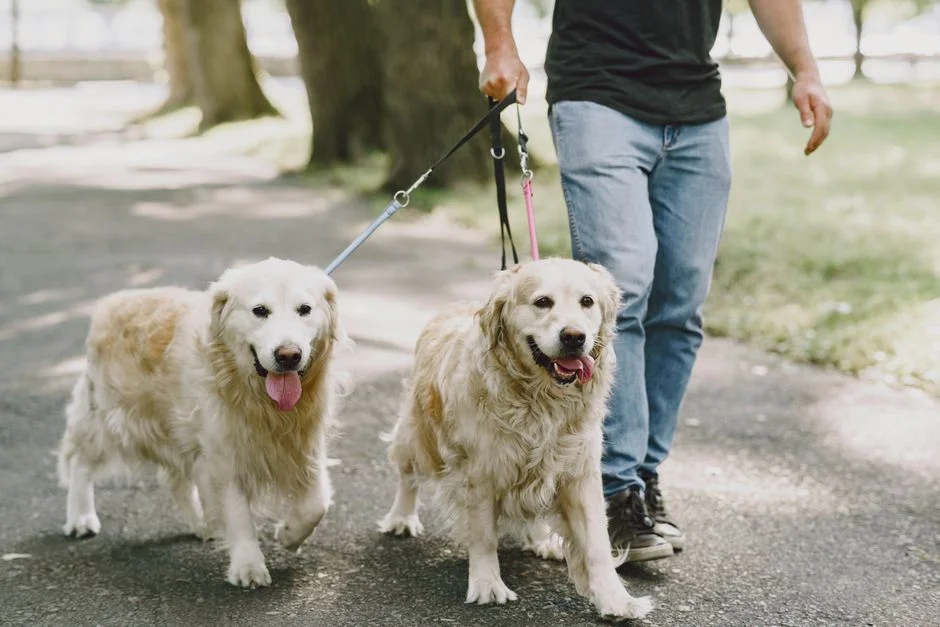
We would like to meet you and your pet before anything goes wrong.
Schedule a Meet and Greet with 203 Pet Service.
Sources: Gulf Coast News, August 1, 2026. The Daily Sun, July 31, 2026. MySunCoast / WWSB, August 6, 2026. CNN Business, July 30, 2021. Vox, September 12, 2018. Gizmodo, 2024. CBS Boston, March 2024. SFist / ABC7 News, January 2026. Rover Guarantee Terms of Service, rover.com. Wag Service Guarantee Terms, safety.wagwalking.com. Rover misclassification settlement, Sportsman v. A Place for Rover, Inc., February 2023. Wag Chapter 11 filing, U.S. Bankruptcy Court District of Delaware, July 2025.